New Approaches to Manage and Enhance 20th-Century Architectural Heritage Through Digital Archives
DAD - Department of Architecture and Design, University of Genoa, Italy
Email: giovanna.franco@unige.it; elena.geria@edu.unige.it
*Corresponding author
Abstract. This paper presents the initial findings of a research program funded by the EU Recovery Plan, which includes a doctoral project focused on promoting knowledge and enhancing contemporary architectural heritage through the creation of a digital archive dedicated to public works built in Genoa from 1945 to the present. Conducted in collaboration with national and international institutions, the research focuses on 20th-century architecture, a form of heritage often undervalued and in need of maintenance or refurbishment. In agreement with the Municipality of Genoa, the study begins with post-war museums, recognized for their national and international significance. These works are now facing the phase of renovation, and it is crucial to understand if and how their conservation and valorization can be combined with the adaptation needs. The project, based on the analysis of unpublished archival documents, aims to preserve materials otherwise at risk of deterioration and to support the development of a public documentation center. The archive enables the reconstruction of the museums’ complex histories, shedding light on design integrity, authorship, and transformation causes - key information for planned interventions. The critical selection, digitization, and dissemination of these materials will create a resource accessible to both scholars and the general public, fostering broader awareness of contemporary architectural heritage and its values.
Keywords: Contemporary architecture, Heritage, Museums, Enhancement, Digital archive.
1. Introduction
The construction and architectural production of the 20th century, which was quantitatively very significant compared to previous epochs, has attracted increasing attention from the cultural and scientific world in recent decades, for various reasons. On the one hand, we have witnessed a gradual and pervasive process of “patrimonialization” [1], which has extended the concept of “heritage” from individual objects of recognized historical and artistic value to broader episodes and contexts that recount the social and productive history of communities, including intangible and built landscapes. On the other hand, we are faced with a large amount of built heritage, often in a precarious state of conservation, for which there is no widespread public appreciation. It is therefore necessary to reflect on the reasons and criteria that could support the selection and valorization of works that are so diverse in terms of architecture, context, and construction.
For the last two decades, the Ministry of Culture (MiC) has also been dedicating resources to this area of research, launching an extensive national campaign for the selection of architectural works from the second half of the 20th century and the beginning of the new millennium, with a view to their potential protection, enhancement and dissemination to a wider audience. In October 2022, MiC’s Directorate-General for Contemporary Creativity (DGCC) and Fondazione Scuola Beni Attività Culturali organized two study days entitled “Inheriting the Present”, during which the new platform of the Census of Italian Architecture from 1945 to the Present [2] was presented. This mapping project has involved the collaboration of several Italian universities, including the University of Genoa (UniGe) since 2009 (under the scientific responsibility of Stefano F. Musso and Giovanna Franco).
Indeed, the many architectural heritages of the 20th century are part of a modern and contemporary history whose historical sense is not yet fully established, nor its value widely recognized. This historiographical and value indeterminacy constitutes a critical and methodological challenge, even before a technical one [3]. The approach to modern and contemporary architectural and urban heritage - whether through efforts to experience, preserve, and assimilate it, or, conversely, to deny and destroy it - is shaped by complex and still unsettled processes of selection.
2. State of the Art
A first look at this heritage cannot ignore historiographic approaches aimed at identifying meanings and values beyond everyday use. The more recent the heritage, the more we perceive it as embedded in a condition of processuality and simultaneity, which makes attributing shared values difficult. This requires both temporal distance and a respectful attitude in terms of conservation and enhancement. The 20th century has brought a level of complexity in which individual and collective actions, as well as economic, political, social, cultural, and technical values, are intertwined. These works are «the repository of attempted institutional, bureaucratic, technical and artistic rationalities; they bear witness to the layering of constantly renewed policies and social imaginaries» [4]. This complexity, together with a dimension of simultaneity or synchronicity (one of the fundamental implications or possible declinations of the term “contemporary”) [5], inevitably influences the way we perceive built artifacts. Time is a fundamental key in the processes of “signification”: it transforms the built material, determining new aesthetic canons and evolutions in taste.
The legacy of the recent past plays a crucial role in shaping both individual and collective memory [6]. It is therefore legitimate and necessary to ask whether a “cultural memory” of 20th-century architecture exists and whether this memory constitutes a basis for its recognition as heritage. Addressing these questions requires interpreting the idea of testimony or trace [7] and reflecting on the possibility that places can transmit values strong enough to justify protection, preservation, and appropriation by the communities that inhabit them. However, a close examination of the 20th-century production is not limited to the historiographical theme alone. Studying this topic provides an opportunity to reflect on possible interpretations of controversial yet unavoidable history [8-9].
The research project presented here is situated within this broader context and aims to document, study, digitize, and disseminate a cultural heritage emerging from historically significant episodes that remain only partially understood and therefore potentially neglected. The idea of a digital archive stems from the national census campaign on contemporary architecture initiated by the former Directorate General for Contemporary Art and Architecture (now DGCC), in collaboration with the then Regional Directorates and local Superintendencies. In Liguria, this campaign was carried out by the Department of Architecture and Design at the University of Genoa and resulted in the publication of “Architetture in Liguria dopo il 1945” (Figure 1) [10].
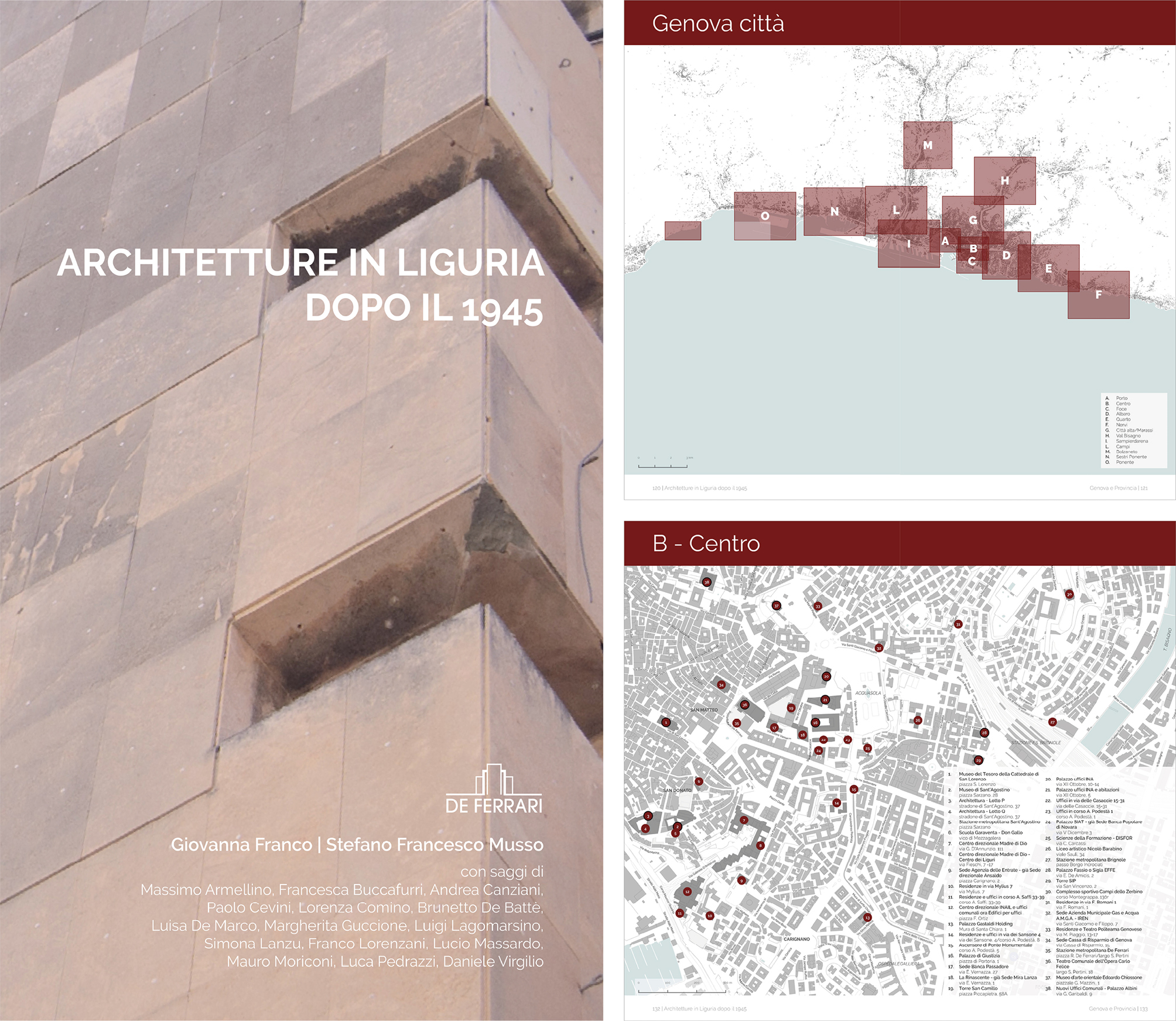
A key methodological challenge of the census, published in 2016 (Figure 1), was to define criteria for identifying works of «relevant historical-artistic interest» (according to the Cultural Heritage Code). These criteria sought to assess each work’s critical significance within its historical period from diverse disciplinary, cultural, and technical perspectives. Evaluations focused on:
– The importance of the author, regardless of the critical fate of each work.
– The building types and uses, also considering some particular innovations in the relation between the creation of space and its perception.
– The relevance and significance of the work for the social community of reference (industrial architectures, maritime colonies) or in the Italian and international cultural debate.
– The relationship with the urban or landscape and environmental context, particularly important in the complex, fragile, and delicate Ligurian territory, where construction is traditionally based on terracing.
– The evolution of the construction logic and principles, along with the use of materials that were innovative for the period.
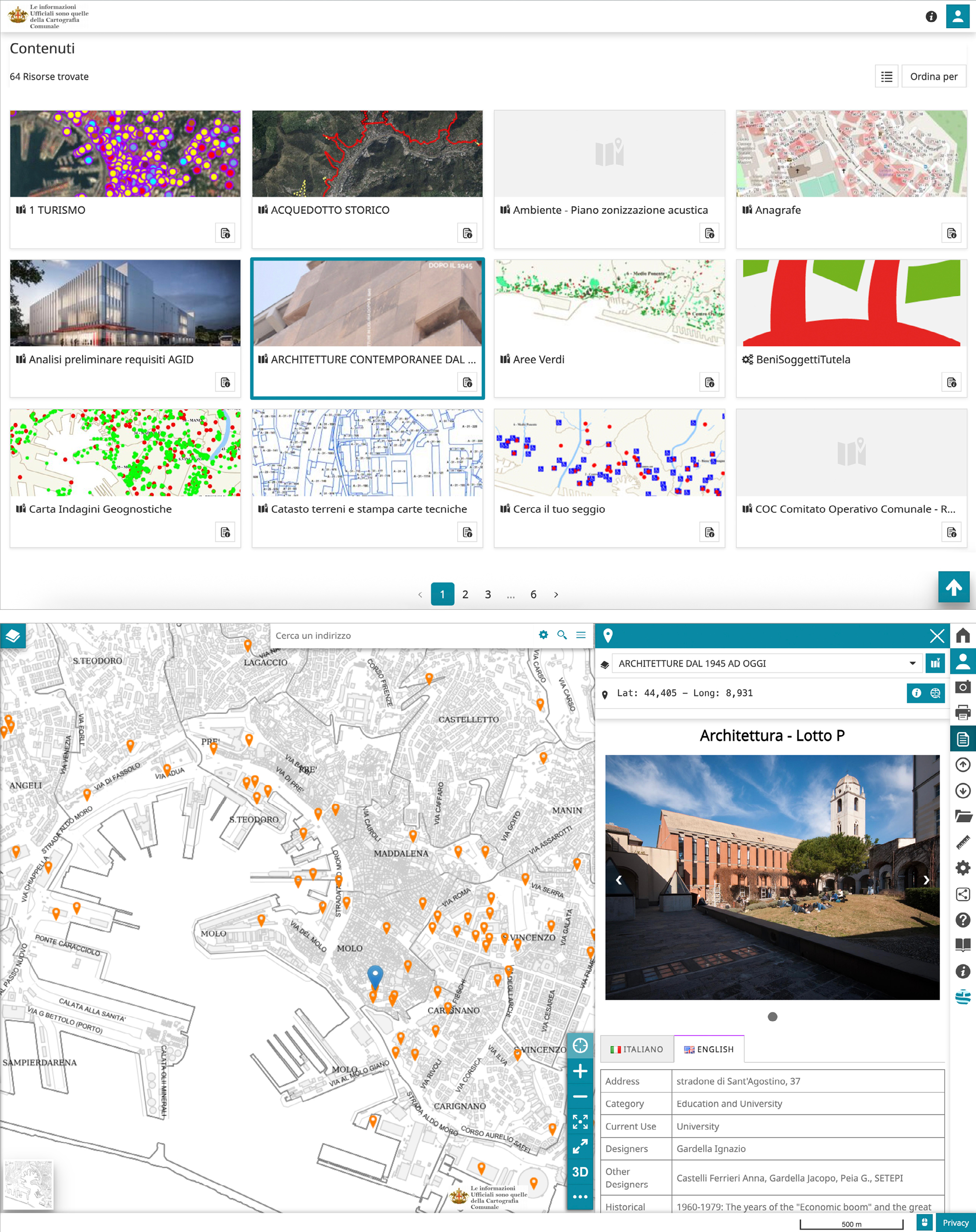
This effort led to a census of approximately 600 works spread across the regional territory. For each, descriptive records were created based on ICCD (Central Institute for Cataloguing and Documentation) cataloguing standards (Sheet A), then uploaded to the MiC portal and the geoportals of the Liguria Region [11] and the Municipality of Genoa [12] (Figure 2). This large amount of data forms the basis of the research presented here.
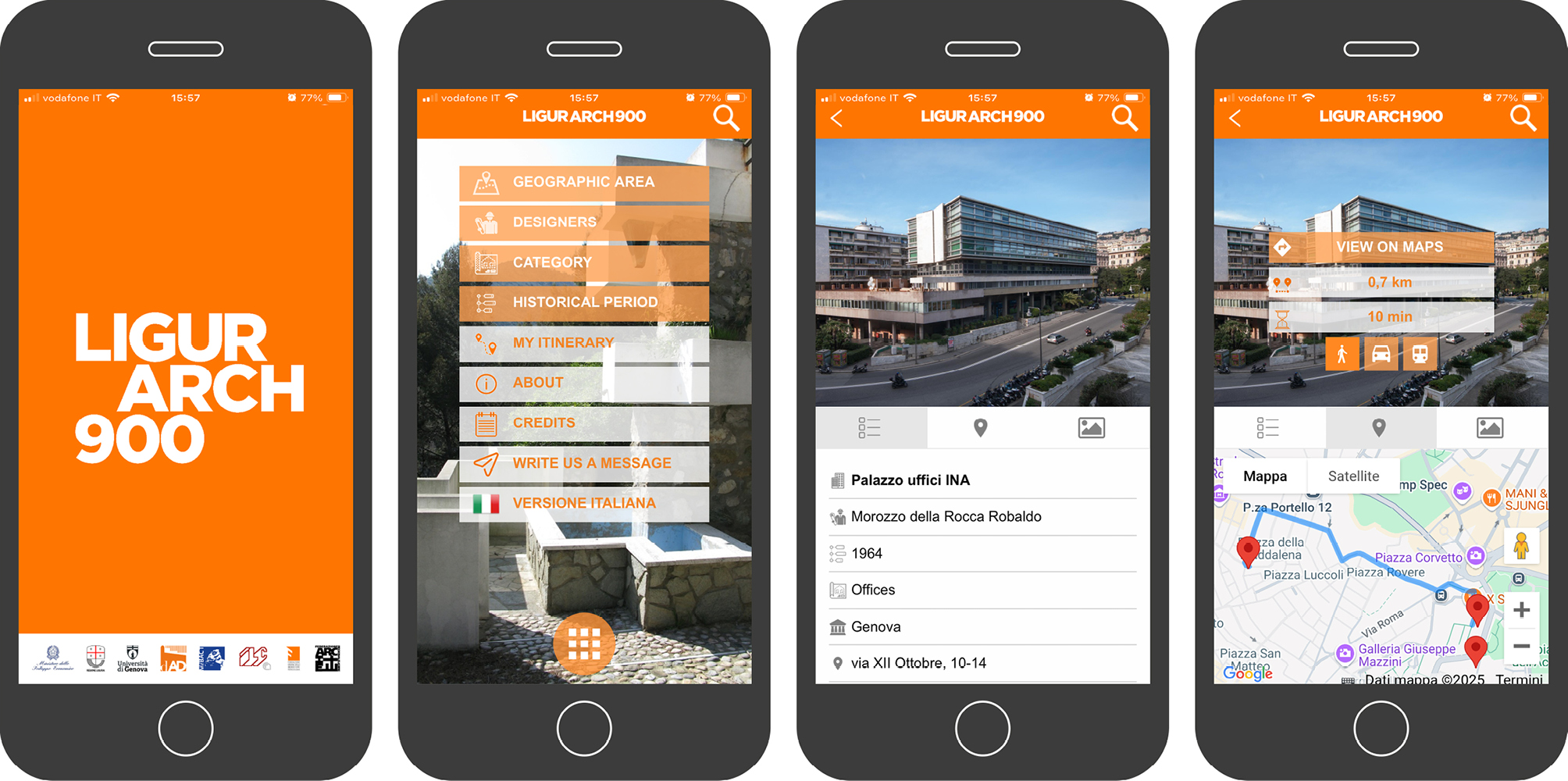
An additional outcome was the development of LigurArch900 (Figure 3), a mobile application offering dynamic, keyword-driven, and thematic itineraries. While the printed volume presented a curated selection, the broader aim of the census was to promote the widespread dissemination of its results. This has opened new research directions, particularly the creation of a digital archive to organize and provide access to the extensive iconographic, bibliographic, and documentary materials collected during the campaign. Such a resource would help overcome the current fragmentation and dispersal of documentary materials, scattered among various public and private institutions, and serve as a critical infrastructure for preserving, studying, and disseminating recent architectural heritage.
This initiative also aligns with ongoing trends in the digital transformation of architectural archives, which have accelerated the digitization of analog collections and increasingly deal with born-digital records. Additionally, it builds on a growing ecosystem of digital archives and catalogues dedicated to contemporary architecture, both nationally and internationally. In Italy, notable examples include the Archivio degli Architetti portal of the National Archival System (SAN), the platforms of MAXXI’s Architecture Archive Center, IUAV’s Archivio Progetti, the CSAC of the University of Parma, and the Carlo Scarpa Archive in Castelvecchio. International references, such as the DOCOMOMO Virtual Exhibition (MoMove), the Collection Platform of Het Nieuwe Instituut, and the Getty Research Institute’s Architecture & Design Collection, exemplify how public engagement is promoted through the adoption of narrative approaches, interactive tools, and user-friendly interfaces. These cases highlight how architectural archives are evolving from static repositories into active instruments of cultural dissemination, capable of shaping collective memory and reaching audiences beyond the academic sphere. In line with this perspective, the Genoese project seeks to position itself within this international network, experimenting with open-access models and interpretative approaches that engage both specialists and the general public.
However, despite the proliferation of such digital repositories, the consistent and coordinated adoption of international archival description standards, such as ISAD(G) and ISAAR(CPF), and metadata standards, such as METS and Dublin Core, remains uneven. Initiatives like the International Image Interoperability Framework (IIIF) aim to promote further standardization and interoperability, fostering the shared use and cross-institutional circulation of digital content. Growing attention to accessibility, openness, and collaboration is reshaping archival practices, with the broader goal of democratizing access to knowledge and promoting a more inclusive cultural memory.
3. Objectives of the Research
The main outcome of the research is the design of a digital archive that will collect the most significant public architectures built in Genoa from the second half of the 20th century to the present, creating an irreplaceable knowledge base for the proper management, preservation, and enhancement of this heritage, rightly considered more fragile than the historical one.
The digital archive, initially developed through collaboration between the University of Genoa (which already hosts its own Archivio di Architettura) and the Municipality, may be enriched with private acquisitions, following the example of other major Italian architectural archives and in agreement with other local institutions (Fondazione Ordine Architetti, Fondazione Palazzo Ducale, Archivio Wolfsonian, Archivio Fondazione Renzo Piano). A specific agreement has been signed between the Department of Architecture and Design (UniGe) and the Directorate of Public Property and Heritage (Municipality), which is responsible for coordinating with other municipal offices to provide access to their respective archives, currently only paper-based and fragmented. The research may also involve the Territorial Information Systems Office (Municipality), whose GeoPortale already includes the results from the University-led census of key architectural works.
This project is intended to foster connections among public institutions, such as the Municipality, the Metropolitan City, the University, and peripheral bodies of the MiC, and to join a national and international network of contemporary architecture archives and research centers. Although the archive prototype is being developed within the scope of doctoral research, its structure has been conceived for future scalability, with the long-term goal of establishing a replicable and adaptable model to support local authorities, cultural organizations, and academic research at multiple levels. This approach seeks to address the knowledge gaps critical for future interventions and to promote greater awareness and sensitivity toward contemporary architecture, a form of heritage whose values are not yet fully consolidated or unanimously recognized.
The research also aims to expand the current specialized and sector-specific knowledge on the subject, while promoting the development of accessible itineraries for a broader, more diverse audience. Its interdisciplinary approach compares the fields of Information and Communication Technologies and Archival Science with those of Cultural Heritage, intending to contribute to the digital transition process already underway in other sectors. The project aligns with the objectives of Mission 1 “Digitalization, Innovation, Competitiveness, Culture, and Tourism” of the National Recovery and Resilience Plan (NRRP), ensuring that its horizontal principles are met, particularly with the themes of Open Data, tourism, and innovative mapping tools for cultural heritage.
4. Materials and Methods
4.1 Digital Archives of Architecture: Methods of Creation and Management
After conducting a preliminary reconnaissance of the front ends of major architectural archive web platforms, the first phase of the research involves analyzing their creation and management methods. The objective is to identify and study models of preservation and use of digital documentary heritage, particularly regarding access, dissemination, licensing, and copyright.
The survey began with the drafting of a questionnaire, created using Microsoft Forms, to gather information from institutions on the administrative and organizational structure of their archives. It addressed several key aspects: the origin of the archive; the quantity and types of materials held; agreements with public and private fonds owners and possible loan arrangements; inventory and metadata standards; file formats resulting from digitization; software used for archival inventory and digital libraries; and information and services made freely available for users.
The questionnaire has been distributed in Italian to the members of the National Association of Archives of Contemporary Architecture (AAA/Italia) and in English to institutions affiliated with DOCOMOMO International, to reach the most important modern and contemporary architecture archives worldwide. Although the data collected so far are partial, as additional responses are still being received, they already reveal a widespread lack of homogeneity in the methodologies and standards applied, which in some cases align more with bibliographic or cataloging domains than with archival practice. Nevertheless, promising examples have emerged, especially in the integration of user access strategies, digital storytelling tools, and participatory features.
These initial findings underscore the urgency of adopting shared methodological frameworks and validate the relevance of the Guidelines of the National Plan for the Digitalisation of Cultural Heritage (NPD), issued by the Central Institute for the Digitalisation of Cultural Heritage (MiC) [13]. The NPD offers practical solutions to the observed inconsistencies: it establishes technical parameters for digitization, metadata standards, file formats, and licensing policies, thereby promoting alignment among institutions. Framing and comparing the questionnaire results within this regulatory context, the research outlines a roadmap for the methodological structuring of the new archive.
4.2 Consistency Check and Selection of Documentation of Interest
Following the agreement reached, an archival investigation has been conducted on the documentary material deposited in various offices of the Municipality of Genoa. After consulting these archives and reviewing the available documents, the research was directed toward Genoa’s post-war museums (Figure 4): the exhibition designs of Palazzo Bianco (Franco Albini, 1950) and Palazzo Rosso (Franco Albini, 1952-62), the Museo d’arte orientale Edoardo Chiossone (Mario Labò, Cesare Fera, and Luciano Grossi Bianchi, 1949-71), the Museo del Tesoro della Cattedrale di San Lorenzo (Franco Albini, 1952-56), and the Museo di Sant’Agostino (Franco Albini and Franca Helg, 1962–85).

These architectures, recognized nationally and internationally as exemplary works, have recently undergone, or are currently undergoing, the phase of renovation, and it is crucial to understand if and how their preservation and enhancement can be combined with the current adaptation needs. These interventions are driven by increasing visitor numbers, safety and energy-saving regulations, more innovative lighting solutions, and new ways of conserving and communicating the exhibits [14].
The maintenance, conservation, restoration, enhancement, and renovation of these museums raise fundamental questions relating to the concepts of “original” and “authentic”.
– How much of the original projects by the masters of museography has been preserved, or can still be traced?
– What is the authorship of these works, and how much is the result of later interventions?
– What were the main reasons for their alterations and modifications?
The research aims to address these questions through the study and critical analysis of archival documentation, comparing it with existing literature and verifying the current state of the works. This in-depth investigation may yield new interpretative keys and insights into the various phases that have shaped their history, informing future design decisions. In this context, the digital archive plays a central role: by organizing and linking materials that are fragmented across multiple institutions and often at risk of deterioration, it enables a more comprehensive reconstruction of each museum’s evolution. Unlike conventional archival consultation, it provides structured access, cross-referencing, and thematic exploration, supporting both critical inquiry and practical planning.
The archival investigation involves a critical selection of documents related to these museums, which are now scattered among various municipal offices, and are collected to form the prototype of the new digital archive of contemporary Genoese architecture. Given the interdisciplinary nature of museum design and the recurring issues these buildings face, this selection methodology may serve as a model for documenting other major public works constructed in Genoa since 1945.
As with other notable examples from the Italian museum season, these projects have undergone modifications and rethinking during both the design and construction phases, often resulting in outcomes that diverge from original intentions. Additional interventions have followed over time, driven by regulatory requirements, exhibition needs, or changes in taste. Therefore, the selection of documentary material intended to reconstruct and preserve the full history of these architectures will have to bear witness not only to their authors’ original ideas, but also to the stages of realization and the various transformations, «silent» [15] and otherwise, that have taken place to date.
The research also implies a comparison with the experiences developed in other «Musei dei Maestri», such as the Museo di Castelvecchio in Verona (Scarpa), the Sale dei Primitivi at the Uffizi (Michelucci, Scarpa, Gardella, Morozzi), and the Musei Civici in Padua (Albini, Helg), to name but a few, which have faced similar problems and proposed different answers and solutions to the challenges related to the preservation of documentation and the renewal of architectural works [16].
4.3 The Process of Inventorying and Digitization following the NPD
To facilitate the inventory and digitization of the material of interest identified during the second phase of the research, a relational database was set up to organize the various documentary items and associate them with the folders, binders, fonds, and archives in which they are held, as well as with the architectural works they document. The database, divided into tables (Table 1), was created using the pgAdmin 4 application of the open-source PostgreSQL 16 software. This structure ensures rapid data retrieval and continuous updating, and it is already configured for future online consultation through the development of a public, read-only APIs that will enable structured web access. Its standardized design also facilitates integration into digital library platforms.
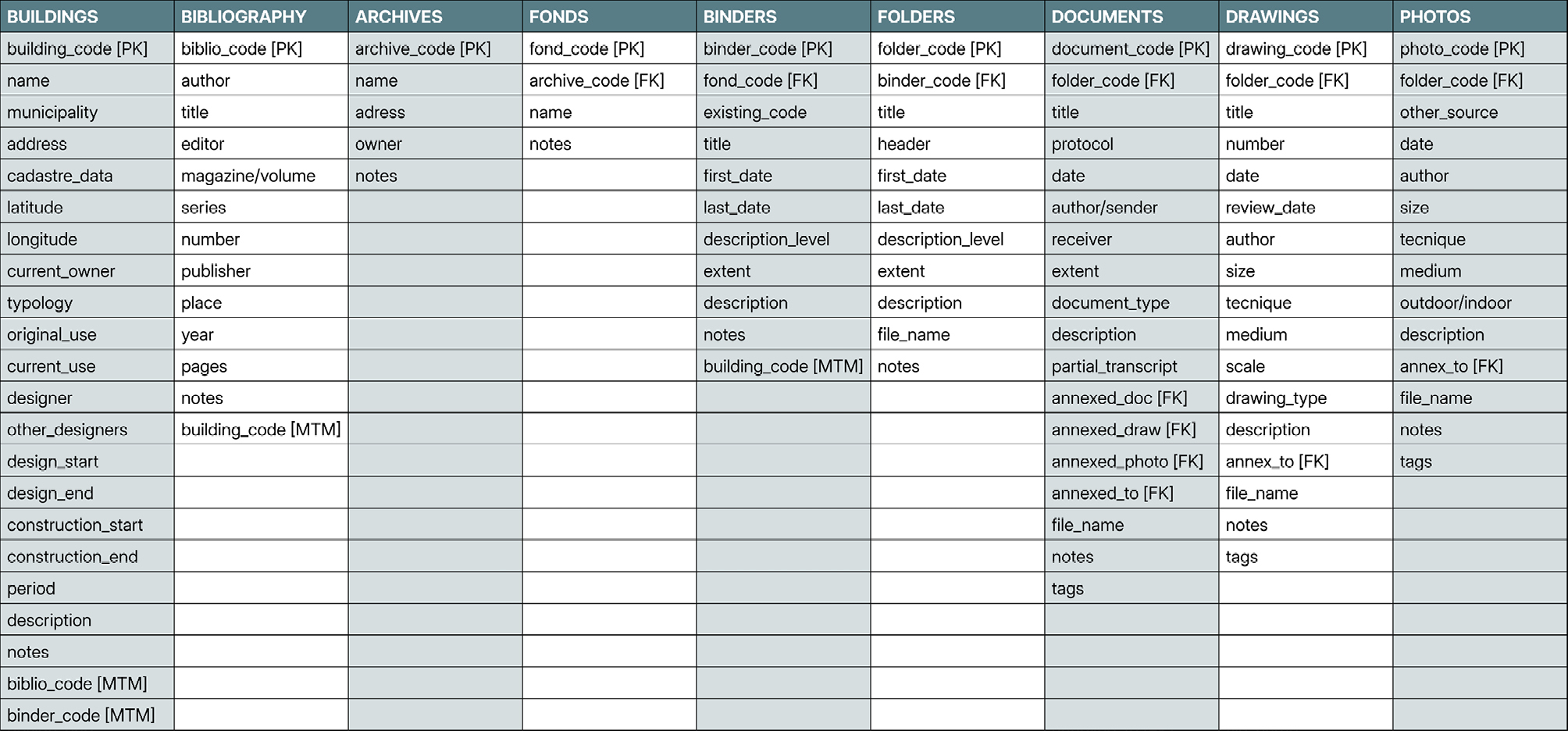
The selection of fields within the tables aligns with the core descriptive elements outlined in the General International Standard Archival Description (ISAD(G)) [17], developed by the International Council on Archives. This framework has been widely adopted to ensure consistency and interoperability in archival descriptions across institutions. ISAD(G) is included in Italian national standards published by the Istituto Centrale per gli Archivi (ICAR) and is also referenced by the NPD [18] for the generation of descriptive metadata in the archival domain.
Beyond the mandatory ISAD(G) elements - Reference Code, Title, Date(s), Level of Description, Extent and Medium, and Name of Creator(s) - the database incorporates additional attributes tailored to architectural documentation, reflecting practices observed in major national and international digital archives of architecture. These include specific details for drawings (such as scale, technique, and support) and photographs (including interior or exterior views and source information), thereby extending the descriptive capacity to meet the nuanced requirements of architectural records.
Genoa’s post-war museums serve as pilot cases for the future expansion of the new digital archive, which will eventually include all the city’s major contemporary public works. Using the census of contemporary Ligurian architecture carried out by the Department of Architecture and Design as a starting point, the methodology for selecting buildings will follow the quality criteria defined by the MiC for the Census of Italian Architecture from 1945 to the Present [19]. In preparation for this expansion, the data tables have been linked to QGIS software, into which the shapefile derived from “Architetture in Liguria dopo il 1945”, freely downloadable from the Municipality’s GeoPortale, has been imported. The shapefile uses georeferenced points to locate the surveyed architectures in the city area, along with their corresponding descriptive data, from which the building table is derived.
The research has also included an update of bibliographic sources for each building already featured in the volume, through consultation of online library catalogs. These additions are reflected in the bibliography table. Ultimately, this database model was designed to support a comprehensive inventory system, facilitating effective search and analysis of the collected iconographic, bibliographic, and documentary materials, and explicitly linking them to the architectural works they reference.
In agreement with the holding institutions, the documentation selected during the second phase will be digitized according to the NPD Guidelines. As for the image files resulting from the scans of the documentary material, «the output master file consists of a package of files including:
– the uncompressed 16- or 48-bit (grayscale* or RGB) TIFF 6.0 file, depending on the chromaticity of the item
– the uncompressed RAW file, with the XMP collateral file attached» [20].
Also necessary for the digitization process is the description of the digital objects through appropriate metadata, including descriptive metadata, administrative and management metadata (divided into technical and intellectual property components), structural metadata, and preservation metadata. The Guidelines recommend the use of METS (Metadata Encoding and Transmission Standard), a standard widely used internationally and serving as the exchange language between afferent systems and the MiC’s Digital Library at the national level [21].
5. Discussion of First Results
As the result of the survey conducted on the main digital archives of interest, a management model is being developed, to be shared with the Municipality of Genoa, for the creation of a new digital archive aimed at providing access, by the principles of Open Science and FAIR Data, to the documentation related to the most significant examples of contemporary public architecture in the city. This model will define the selection of software for archival inventory and digital library, as well as digital acquisition parameters, file formats, and archiving and metadata standards, all aligned with the NPD Guidelines. Agreements will also be established with holding institutions for the digital loan of fonds, as well as with the heirs of the creators, to enable public access and use of the materials through a university institute.
Conceived as a unified repository, the archive is designed to promote transparency, accessibility, and collaborative knowledge production. Its alignment with Open Science reflects a commitment to democratizing access to archival content, enabling its use by scholars, professionals, institutions, and a broader public. The FAIR framework informs the structured data description, combining general archival standards with architecture-specific metadata to enhance discoverability and machine readability. Adherence to national and international standards also guarantees long-term accessibility and preservation.
In its initial phase, the project will be based on the prototype focused on post-war Genoese museums, with the primary objective of displaying and communicating to different audiences the documentary material selected and digitized during the archival investigation. Although centered on these case studies, the prototype is conceived as a scalable and interactive platform for exploring the broader city’s contemporary production. Items will be organized according to the traditional archival hierarchy (holding institution, fond, binder, folder) and classified by type (document, drawing, photograph), as displayed in the relational database structure. Building on this foundation, the archive will incorporate semantic tagging, interpretive filters, and thematic paths to support navigation and improve Findability and Accessibility. These features will enable layered readings of the projects, revealing not only technical and design aspects but also the sociocultural contexts in which they were conceived and transformed. The integration of Linked Open Data protocols and interactive APIs will further promote cross-domain interoperability, support data reuse, and foster wider engagement. (Figure 5).
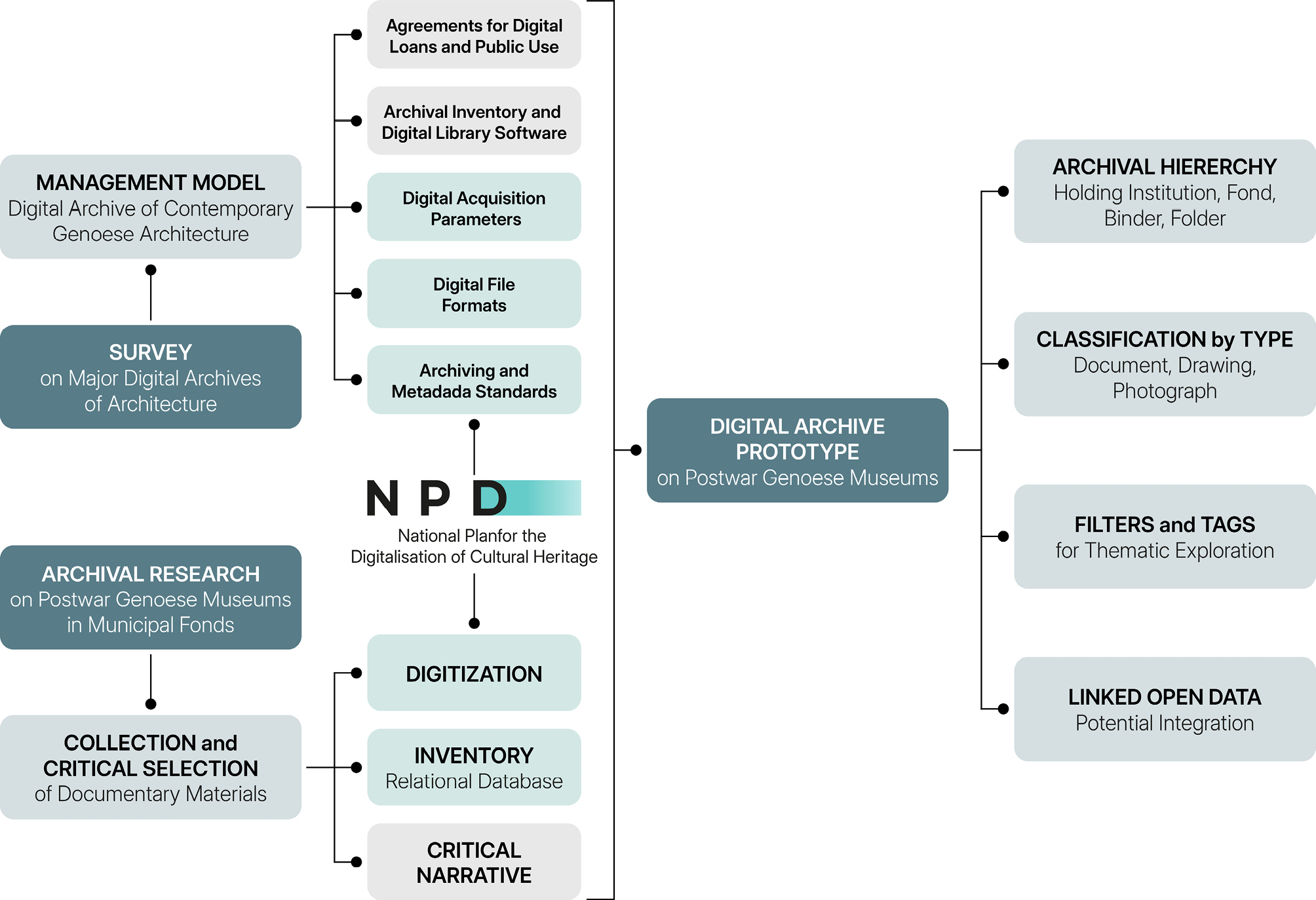
In line with Open Science objectives, the archive will be designed as an evolving and participatory platform, expandable through future acquisitions and collaborations with public and private archives. These partnerships will enrich the collections and encourage dialogue between disciplines and institutions on regional, national, and international levels. Drawing on the experience of the LigurArch900 application, the long-term ambition is to create a unified digital access platform dedicated to contemporary Genoese architecture. In addition to documentary materials, this portal would include descriptive records, thematic essays, multimedia galleries, and interactive tools such as virtual tours, supported by linguistic and semantic analysis technologies enabling personalized queries.
Several technological infrastructures are under consideration for the prototype, with the goal of long-term integration into a more comprehensive digital library. One option is DoGe (Digital object Genova) [22], the University of Genoa’s digital library based on the open-source platform DSpace-GLAM, which enables preservation, full-text search, and thematic navigation. Another is the Biblioteca Digitale Ligure (BDL) [23], a regional initiative that aggregates materials from local institutions into structured digital collections supporting diverse media. A third candidate is I.PaC (Infrastructure and Digital Services for Cultural Heritage) [24], developed by the MiC Digital Library, which offers advanced cloud services, predefined data models, AI integration, and APIs for domain-specific and cross-domain interoperability.
6. Conclusion
Archives, as collections of direct sources, reports, photographs, sketches, drawings, and models, provide the necessary pieces with which to assemble the map of the architecture closest to us, yet also the most fragile and exposed to upheavals: a heritage too recent to receive the same protection and recognition of value reserved for historic buildings, but old enough to require maintenance or adaptation. In this context, the archive becomes an irreplaceable resource for ensuring the coherence of conservation choices with the essence of the work, on which current designers and restorers can refine their skills, returning to the creative stages from which the author’s choices originated.
In addition to the primary function of managing and inventorying the documentary heritage, carried out according to archival practices that have become more rigorous over time due to national and international standards, archives can prove to be strategic tools for the valorization of contemporary architecture. Through a cultural and communicative strategy, they can become a starting point for engaging local communities and reaching broader audiences, extending beyond traditional stakeholders. In this sense, the research highlights the active function of archives as a foundation for constructing a language capable of narrating and enhancing not only the content [25], but also of revealing new meanings and values to be rediscovered.
In the past, as information about architecture was mainly found in books, specialist journals, and exhibition reviews, the protection and preservation of cultural heritage were tasks for experts. Today, these issues need to be shifted to new platforms that take advantage of digital opportunities. These tools go beyond mere preservation, offering access to a broader audience that often lacks the specific knowledge to interpret this heritage and must be made aware of and empowered to understand its value and potential. It’s not only a matter of communicating contemporary architecture, but also of drawing attention to the built and lived spaces and to their significant contribution to the debate on quality of life in our cities, despite the technical complexities of the field.
7. Acknowledgements
This research has been carried out within the framework of the Italian NRRP - Next Generation EU, under a Doctoral Fellowship for Public Administration (Ministerial Decree No. 118/2023).
8. Authors Contributions
Giovanna Franco: Conceptualization; Funding acquisition; Methodology; Project administration; Supervision; Writing - original draft; Writing - review & editing.
Elena Geria: Conceptualization; Data curation; Investigation; Methodology; Visualization; Writing - original draft; Writing - review & editing.
9. References
[1] Choay F (1996) L’allégorie du patrimoine. Éditions du Seuil, Paris
[2] Direzione Generale Creatività Contemporanea (2022) Censimento delle architetture italiane dal 1945 ad oggi. http://censimentoarchitetturecontemporanee.cultura.gov.it. Accessed Oct 2025
[3] Musso SF, Franco G (2020) The time of the short twentieth century. Growth of values and decay of matter in TECHNE. J Technol Archit Environ 20:255–264. https://doi.org/10.13128/techne-8276
[4] Olmo C (2010) Architettura e Novecento. Diritti, conflitti e valori. Donzelli, Roma
[5] Guarracino S (2001) Le età della storia. I concetti di Antico, Medievale, Moderno e Contemporaneo. Bruno Mondadori, Milano
[6] Halbwachs M (1950) La mémoire collective. Presses Universitaires de France, Paris
[7] Ricoeur P (2000) La mémoire, l’histoire, l’oubli. Éditions du Seuil, Paris
[8] Musso SF (2012) Restoration and the “Modern City”. In: Peghin G, Sanna A (eds) Modern Urban Heritage. Umberto Allemandi & C., Torino
[9] Reichlin B, Pedretti B (eds) (2011) Riuso del patrimonio architettonico. Mendrisio Academy Press, Mendrisio
[10] Franco G, Musso SF (eds) (2016) Architetture in Liguria dopo il 1945. De Ferrari, Genova
[11] Dipartimento Architettura e Design (2021) Architetture in Liguria dal 1945 ad oggi. GeoPortale Regione Liguria. https://srvcarto.regione.liguria.it/geoviewer2/pages/apps/geoportale/index.html?id=2319. Accessed Oct 2025
[12] Dipartimento Architettura e Design (2021) Architetture contemporanee dal 1945 ad oggi. GeoPortale Comune di Genova. https://mappe.comune.genova.it/MapStore2/#/viewer/1000013910. Accessed Oct 2025
[13] Istituto Centrale per la Digitalizzazione del Patrimonio Culturale (2025) Digital Library. https://digitallibrary.cultura.gov.it/. Accessed Oct 2025
[14] Curzi V (ed) (2022) Musei italiani del dopoguerra (1945–1977). Ricognizioni storiche e prospettive future. Skira, Milano
[15] Musso SF (2019) Per una riflessione critica sul destino dei Musei dei Maestri. In: Tinè V, Pinna E (eds) Rinnovare i Musei dei Maestri. Sagep, Genova, pp 60
[16] Tinè V, Pinna E (eds) (2019) Rinnovare i Musei dei Maestri. Sagep, Genova
[17] Istituto Centrale per gli Archivi (2025) ISAD(G) in Standard internazionali. ICAR – Istituto Centrale per gli Archivi. https://icar.cultura.gov.it/standard/standard-internazionali/isad-g. Accessed Oct 2025
[18] Istituto Centrale per la Digitalizzazione del Patrimonio Culturale (2022) Metadati descrittivi in Linee guida per la digitalizzazione del patrimonio culturale. Docs Italia. https://docs.italia.it/italia/icdp/icdp-pnd-digitalizzazione-docs/it/v1.0-giugno-2022/metadati/metadati-descrittivi.html. Accessed Oct 2025
[19] Direzione Generale Creatività Contemporanea (2022) Metodologia. Censimento delle architetture italiane dal 1945 ad oggi. https://censimentoarchitetturecontemporanee.cultura.gov.it/metodologia. Accessed Oct 2025
[20] Istituto Centrale per la Digitalizzazione del Patrimonio Culturale (2022) File immagine in Linee guida per la digitalizzazione del patrimonio culturale. Docs Italia. https://docs.italia.it/italia/icdp/icdp-pnd-digitalizzazione-docs/it/v1.0-giugno-2022/formati/file-immagine.html. Accessed Oct 2025
[21] Istituto Centrale per la Digitalizzazione del Patrimonio Culturale (2022) Metadati in Linee guida per la digitalizzazione del patrimonio culturale. Docs Italia. https://docs.italia.it/italia/icdp/icdp-pnd-digitalizzazione-docs/it/v1.0-giugno-2022/metadati.html. Accessed Oct 2025
[22] DoGe – Percorsi digitali dell’Università di Genova (2025) https://doge.unige.net. Accessed Oct 2025
[23] BDL – Biblioteca Digitale Ligure (2025) https://bibliotecadigitale.regione.liguria.it/opacbdl/opac/bdl/index.jsp. Accessed Oct 2025
[24] I.PaC – Infrastruttura e servizi digitali per il Patrimonio Culturale (2025) https://ipac.cultura.gov.it. Accessed Oct 2025
[25] Massaccesi F (2020) Il linguaggio dell’archivio. Dalla storia allo ‘storytelling’. TECA 10(1ns):391–409. https://doi.org/10.6092/issn.2240-3604/11707