Tabarca Building Renovation Project:
A Historical Perspective in Genoa’s Port
1 Department of Civil Engineering and Architecture, University of Catania, Italy
2 Freelance Archaeologist, Catania, Italy
3 DAD - Department of Architecture and Design, University of Genoa, Italy
4 Independent Researcher, Catania, Italy
Email: santimaria.cascone@unict.it; lucrezialonghitano@gmail.com; salvatore.polverino@unige.it; sciaccagiuliana.ing@gmail.com
*Corresponding author
Abstract. The revitalization of long-disused sites with a focus on production activities is a critical endeavor for the preservation and integration of such sites into the urban fabric, a challenge that Italy also faces. Buildings once deemed “modern” are now key markers of local historical and economic evolution, yet the process of their revitalization demands both careful study and practical solutions. Any effort to adapt these structures must balance conservation with modern functionality, ultimately hinging on the broader theme of restoration and reuse. The Tabarca Building in Genoa serves as a paradigmatic case in point, given its profound cultural significance for both the city and the nation. It was the inaugural facility in Italy to incorporate refrigeration technology for the preservation of goods, a groundbreaking innovation in the early 20th century that profoundly reshaped global commerce and gave rise to new architectural forms. Despite its notable legacy, the full potential of the Tabarca Building remains largely underappreciated. This paper demonstrates that restoration and repurposing work on this historic warehouse highlights the importance of forward-looking interventions, ensuring heritage buildings remain both relevant and respectful of their unique characteristics and surrounding context.
Keywords: Architectural Engineering, Adaptive Reuse Strategies, Maritime Architectural Heritage, Integrated Multidisciplinary Approach, Traditional Building Techniques.
1. Introduction
The transformation of decommissioned industrial areas into spaces integrated within the modern urban fabric represents one of the most complex and stimulating challenges for contemporary architecture. The process of repurposing such areas is particularly critical in port zones, which retain significant historical and industrial heritage. With the advent of the post-industrial era, many of these spaces have undergone a gradual decline, raising urgent questions about their redevelopment and reactivation. In Italy, as in the rest of Europe, the renewal of these areas not only addresses the challenges of urban decline but also presents an unprecedented opportunity to reimagine the use of built heritage and promote more sustainable and inclusive territorial planning [1].
In Europe, cities such as London, Liverpool, and Hamburg serve as emblematic examples of port area transformation. In London, Canary Wharf stands as a significant example of profound territorial renewal: while some historic buildings were preserved for museum purposes, most pre-existing structures were demolished to make way for a new financial district. The process of urban regeneration radically transformed the area, leaving only the docks as remnants of the original conurbation. The connection between the industrial past and the new financial district is therefore primarily intangible, marked by the continuation of the area’s production vocation [2]. In stark contrast, other cities have opted for a more conservation-focused approach to regenerating their port areas. Liverpool’s Albert Dock and Hamburg’s Speicherstadt are excellent examples of how historical memory can be preserved through targeted repurposing interventions that respect the existing urban fabric. These sites, listed as UNESCO World Heritage Sites, effectively demonstrate how industrial heritage can be valued and integrated into the contemporary urban landscape [3, 4].
In Italy, the transformation of decommissioned port spaces poses a critical challenge for urban planning in major coastal cities. Genoa, the second-largest Italian port by cargo traffic [5], offers a striking example. Historically, the Port of Genoa has always been the city’s beating heart, significantly influencing its urban development. The first major urban reconversion and port space reuse initiative materialized with the project coordinated by architect Renzo Piano for the Old Port (Porto Antico) during the 1992 Expo, held to celebrate the 500th anniversary of the discovery of America. This intervention transformed the Old Port area into a vibrant urban center, combining new constructions such as the Piazza delle Feste and the Genoa Aquarium with the restoration of monumental structures such as Porta Siberia and the Palazzine del Porto Franco, as well as the repurposing of abandoned warehouses like the Cotton Warehouses (Magazzini del Cotone) and the Millo Building [6].
The successful transformation of the Old Port inspired, in subsequent years, the redevelopment of the Darsena, a previously decommissioned port area whose urban recovery process is still ongoing. Originally developed at the end of the 19th century, the modern Darsena functioned for decades as a vital logistics hub for goods arriving at the Port of Genoa, yet it remained isolated from the surrounding urban context despite its central location within Genoa’s historic center. Despite numerous proposed redevelopment projects, many of which were never realized [7], the area’s revival began only in 1995 with the opening of the Faculty of Economics and Commerce in the Scio District, designed by architects Aldo Pino and Aldo Luigi Rizzo. This intervention emulated the success of the Faculty of Architecture redevelopment by Ignazio Gardella, which had already initiated a virtuous regeneration process in Genoa’s historic center. The area subsequently benefited from further interventions, such as the transformation of the Galata District into the Museum of the Sea and Navigation in 2004, designed by Guillermo Vázquez Consuegra, and the conversion of the Cembalo District into residential spaces in 2005, executed by Enrico Bona. Despite these developments, some structures remain abandoned, highlighting the persistent challenges in urban redevelopment processes [8]. Among these, the Tabarca District, built at the end of the 19th century as the site of Italy’s first refrigerated warehouse, is an example of significant historical value awaiting adequate recovery. A historical and typological analysis is essential to appreciate not only the building’s history but also its potential for transformation within the current urban context.
This study aims to examine the Tabarca building using a methodological approach that integrates multiple scales and disciplines, exploring its topographical context and historical, economic, and functional aspects. The objective is to provide a comprehensive overview of the building by analyzing its location within Genoa’s urban fabric, its historical-functional context, its current state, and the ongoing repurposing project. This investigation aims to highlight the historical legacy of the Tabarca District and offer a model for the recovery of similar structures in Italian and European port cities.
2. Methodology
The conservation of historic buildings always requires following a precise interdisciplinary approach, which means following a method. The concept of a “methodological approach” means following specific phases in sequence and interacting with each other, then allowing an intervention on the building without creating information gaps that could then compromise the result. It is a fundamental theme that cannot be avoided in the knowledge, intervention, and valorization of buildings.
The object of this study, the Industrial complex of Tabarca, presents itself simultaneously as a single element and as part of a contextual complex (the Darsena), which must be understood in all its aspects: historical, functional, geometric, and topographical. Without this framework, it would also be difficult to implement an authentic restoration project and, above all, enhance the property’s characteristics. In line with this aim, a team of specialists examined the various aspects of the property in an integrated manner. This approach involved integrating multiple surveys, each conducted with its own precise methods.
Firstly, the contextual and topographical framework was defined, since, as mentioned, the building cannot be understood as a “white elephant” but as part of an essential historical economic system, such as the Genoese Darsena. Then, an analysis of the historical features was carried out, as the Tabarca building is a fundamental emblem for the history of cold storage; the analyses concerned a targeted study on the functional system that was crucial also to compare with other similar structures to deduce their origins and models; this research has mainly acted through bibliographic and archival funds. Lastly, the work included an analysis of the current state, involving a technical construction assessment of the structural condition, the state of conservation, and a geometric survey.
3. Discussion and results
3.1 Historical Development of the Darsena Area
The industrial archaeology building that is the subject of this study does not represent an isolated architectural element separated from its context; on the contrary, it is part of an important organic system of multi-layered buildings born in response to common and connected policies. The context in question is the Genoese port of Darsena (Figure 1).
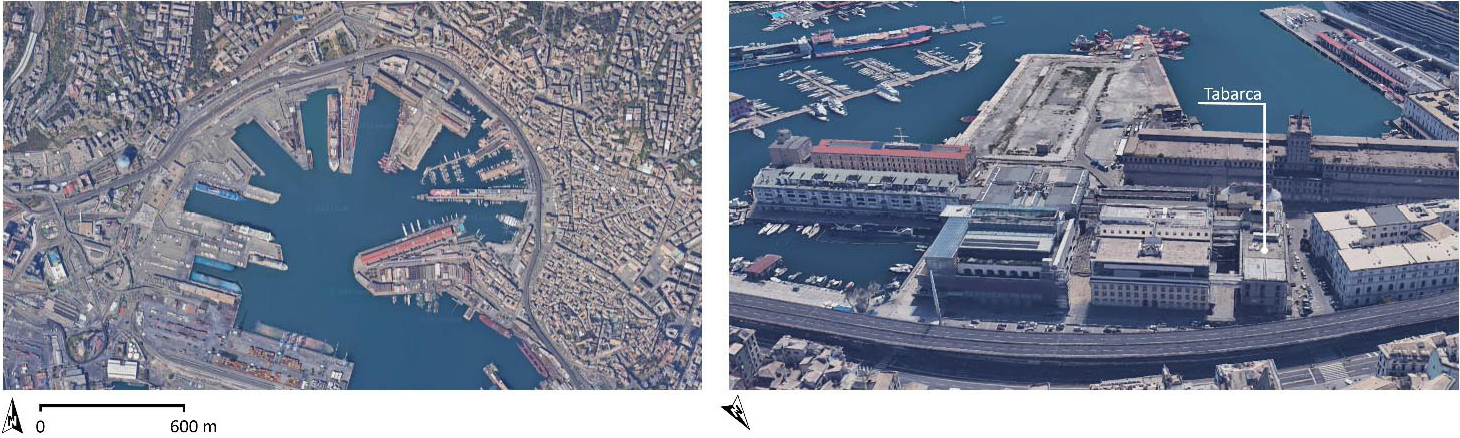
The maps and historical documents were fundamental for this purpose. The area was used as a port from the end of the 13th century. From this moment, its history and growth officially started [9-11].
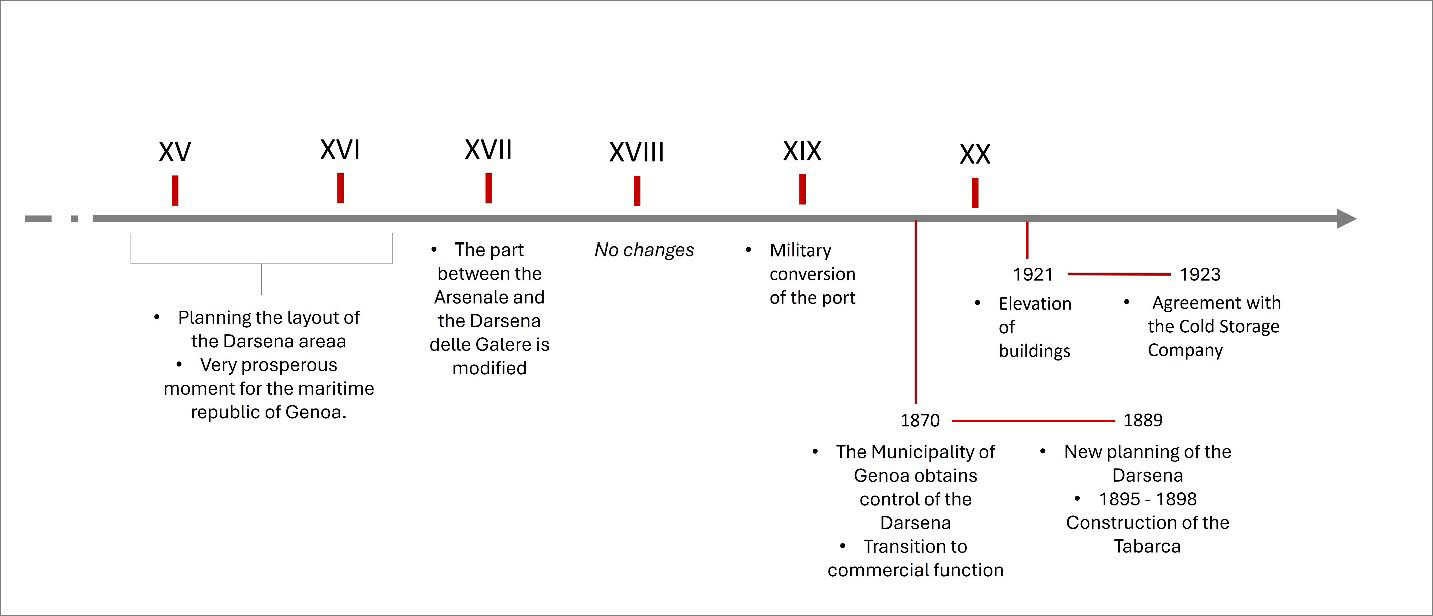
During the 15th and 16th centuries, the layout of the area was planned in a more specific way by the Consuls of the Municipality of Genoa: on the north-west side there is the arsenal, in the central area there is the “Darsena delle Galere” and on the south-east side the “Darsena del Vino”, the latter is separated from the previous part thanks to a north-south pier. This moment coincides with a period of great prosperity for the maritime Republic of Genoa.
In the 17th century, a slight modification was documented in the area between the Arsenale and the Darsena delle Galere. In this part, a large structure characterized by a series of arches was inserted, probably used as warehouses and workshops (Figure 2).
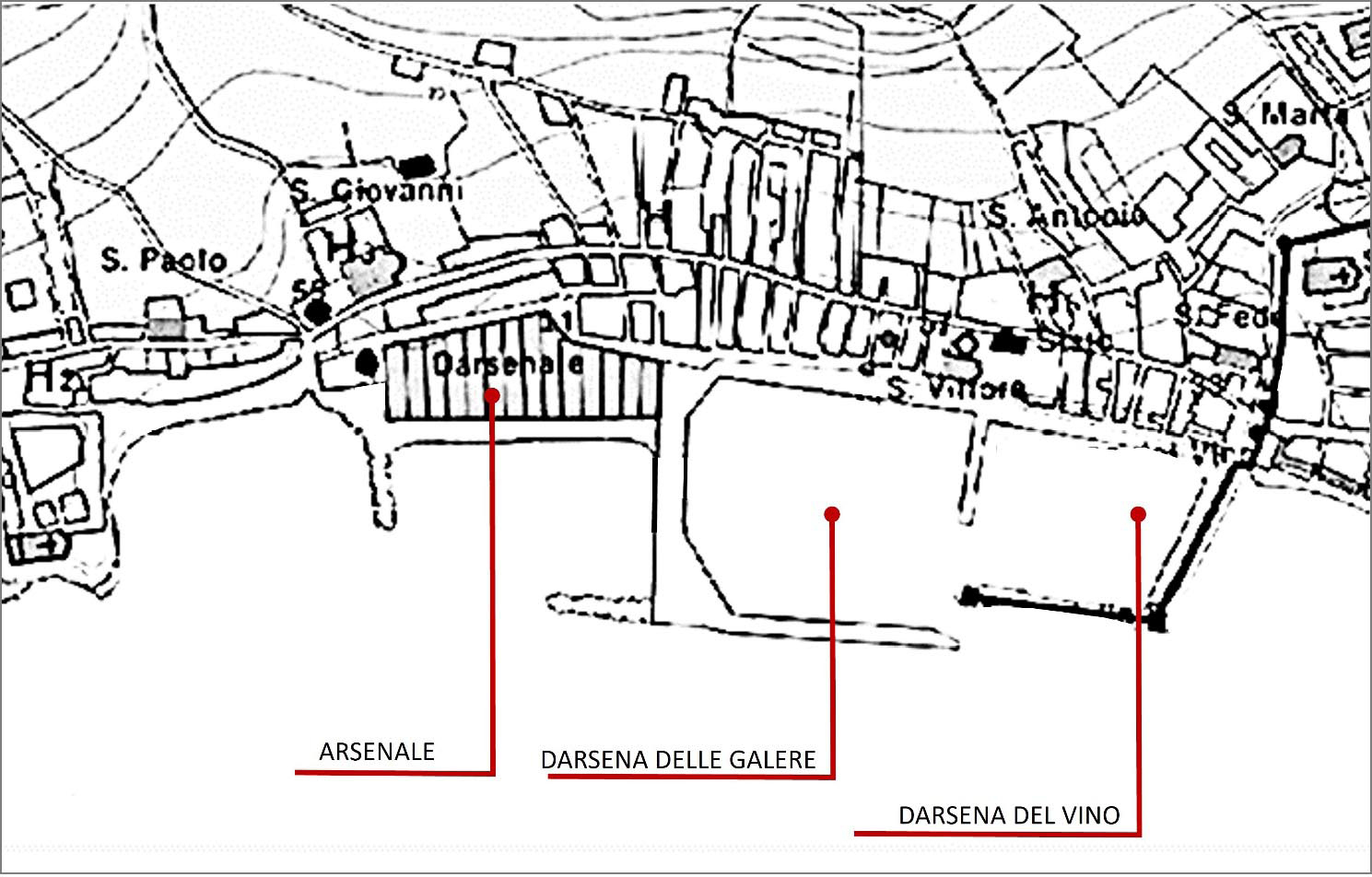
Military use was the primary vocation of the place, and as a consequence, the arsenal and the military services were the key points for the area. The context maintained its characteristics unchanged until the end of the 18th century. The area continued to be divided into the Carenaggio Darsena, the Galee Darsena, where galleys for both military and commercial uses were moored and the Arsenale, where the galleys were equipped for war [12].
In 1870, the municipality of Genoa obtained the transfer of the Darsena, which brought about a radical transformation. In fact, in 1873, the area was converted to commercial use and definitively lost its military value. This event is responsible for the subsequent construction of the Tabarca building, the subject of this study, and many other transformations in the area. In 1889, a comprehensive project to arrange the area was approved. The Tabarca, which is part of this scheme, was built between 1895 and 1898 [13].
In addition to this building, warehouses, and neighborhoods were built that took their names from the Genoese colonies: Cembalo, Scio, Galata, Metelino, Caffa, and Farmagosta (destroyed to make way for the Sopraelevata). The modifications continued after the First World War, when there was a need for more space. To facilitate this, the series of works to raise the buildings began in 1921.
An important moment for the Tabarca building came in 1923 when the Municipality of Genoa signed an agreement with the Società dei Magazzini Frigoriferi Genovesi for the raising of the Scio district and the installation of a new Frigorifero to replace the one in the Tabarca district. From this moment on, the structure took on the main connotation that would characterize it until the present day and that also connects it to the other structures, all of which were designed to fulfil the same purposes and destinations [14].
In conclusion, examining the history of the single building and the entire context (Figure 3), as briefly described, two important phases can be summarized: the first, of a military nature; the second, of an economic nature. The building subject to this study falls within this second phase, which should be seen not only as a single structure but also as part of an organic system. This system has made the Genoese Darsena unique in terms of its characteristics, history, and composition [15].
3.2 Historical Framework of the Building Typology
At the start of the 20th century, the Quartiere Tabarca assumed a distinct role within the Genoese port as the site of Italy’s first refrigerated warehouse dedicated to food storage [16]. Examining the state of the refrigeration industry during this period is crucial to understanding how engineering disciplines tackled the challenges presented by this innovative building typology. Such an analysis sheds light on the structural and technical features of the Quartiere Tabarca.
Interest in industrial refrigeration began in the 19th century, particularly in its latter half, with the invention and mass production of early refrigeration systems. These systems relied on cooling achieved through the compression and expansion of specific refrigerants. Initial technologies used ammonia and sulfur dioxide due to their ability to liquefy under pressure. However, ammonia was gradually phased out because of its corrosive properties and health risks. Alternatives such as carbon dioxide and methyl chloride, though safer for humans, introduced technical challenges due to the high operating pressures required [17].
Various methods were employed to cool storage rooms. One involved piping refrigerant gases directly into the storage areas, offering high efficiency but posing risks of gas leakage that could harm both stored goods and personnel. Another approach utilized refrigerants to cool a non-freezing liquid circulated through coils along the ceilings of storage rooms. This method required forced ventilation to prevent frost accumulation, which could disrupt optimal environmental conditions for food preservation [18]. A third technique used brine solutions to cool air circulated into storage rooms through wooden ducts. This method capitalized on convective airflows driven by density differences between hot and cold air [19].
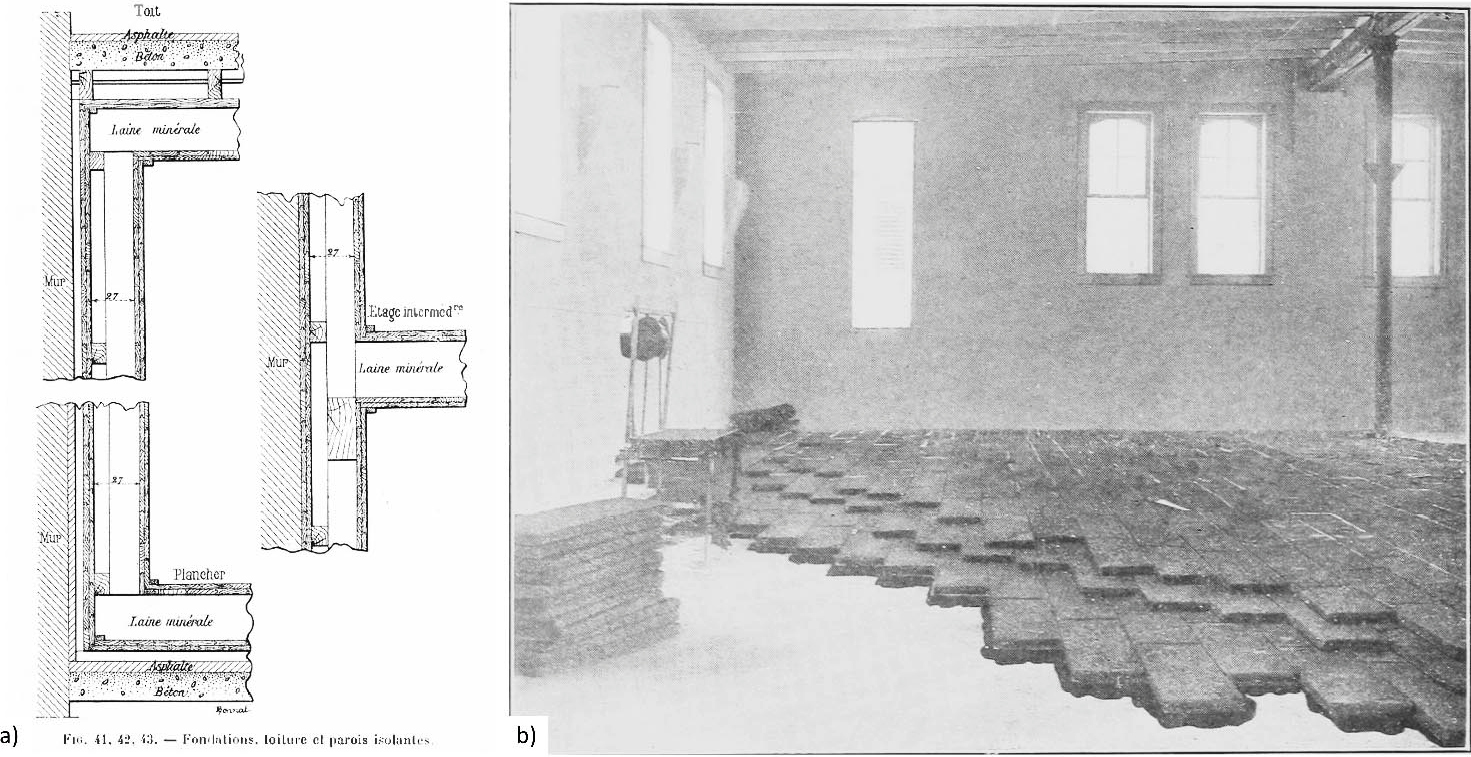
The construction of refrigerated warehouses necessitated the adoption of novel building techniques to achieve unprecedented performance levels. Insulation materials became critical, selected for properties such as resistance to moisture, non-flammability, and resistance to pests. Early methods involved creating air gaps between cold storage rooms and exterior walls using lightweight bricks known as “voids” (Figure 4a). Subsequently, cork elements, particularly corkboard, were used to fill wall cavities, though this approach proved costly and difficult to implement (Figure 4b) [18]. This challenge led to the development of compressed cork panels patented by Grunzweig and Hartmann of Ludwigshafen. Marketed under the brand “Reform,” these panels were praised for their ease of installation and mechanical reliability, making them suitable for insulating floors and roofs. Alternative materials included pumice, peat, vegetable or mineral charcoal, often used in loose form as fillers for vaulted ceilings. Advances in insulation materials also enabled lightweight construction of cold rooms using timber frames combined with insulation layers and external claddings [20].
Flooring materials in cold rooms were selected for durability, waterproofing, and ease of cleaning. Asphalt was initially used but was later replaced by cement-based screeds, offering higher mechanical performance. Linoleum, patented in the 19th century, provided another option, offering ease of maintenance, though it remained more expensive than cement-based alternatives [18]. Roofs in masonry cold stores typically consisted of metal I-beams supporting solid brick vaults, topped with a lightweight concrete layer mixed with cork or peat for improved thermal performance. The interiors of cold rooms were finished with washable cement plaster or enamel coatings, with enamel more common in English-speaking regions.
Doors and windows in cold storage facilities were designed for airtight sealing, with wooden doors large enough to accommodate foodstuffs. Lighting solutions varied between European and American contexts. French, British, and American cold stores lacked natural lighting (e.g., Lyon Cold Storage, Villette Factory), whereas German facilities incorporated natural light to meet hygiene standards. Well-lit environments facilitated thorough cleaning, which was challenging under artificial lighting at the time due to the limitations and maintenance costs associated with incandescent bulbs. Alternatives like oil or gas lamps were unsuitable as they altered internal climatic conditions. Natural lighting in German facilities was achieved using reinforced glass panes with metal meshes to enhance mechanical strength – a technique that gained popularity in early 20th-century Central Europe [19].
Ventilation was another critical aspect in cold store design, essential for preventing food spoilage, condensation, and mold during periods of system inactivity. To address these issues, the “Schwarz device” was introduced. This device comprised a metal cylinder with threaded plugs, including an insulated outer plug. Natural rubber gaskets ensured airtight sealing, while a metal grille prevented insect or unauthorized entry [21].
To contextualize the techniques used in constructing cold stores, it is essential to examine the development of the refrigeration industry in Europe and Italy. At the beginning of the 20th century, the global evolution of refrigeration was marked by significant heterogeneity. The United Kingdom played a leading role, establishing itself as a pioneer in constructing refrigerated port warehouses and developing one of the first commercial fleets equipped with refrigerated environments [21]. In the UK, the growth of manufacturing industries facilitated the commercialization of ammonia-based and, later, carbon dioxide-based refrigeration systems. These advancements enabled applications ranging from transporting frozen meat to early scientific research in laboratory settings. One notable example was the Baerselman Cold Storage facility on London’s Southbank, one of Europe’s first large-scale cold stores [22].
Notably, the Genoa cold store, located in the Quartiere Tabarca, was Italy’s first refrigerated warehouse. Established in 1901 by the Società Anonima dei Magazzini Frigoriferi Genovesi, the facility became operational in April 1902 and underwent significant expansion in 1906 [16].
The Genoese cold-storage depot featured rooms distributed across four levels, interconnected via an internal staircase and an electric lift system. A single corridor illuminated by windows facilitated access to the cold rooms. These windows were located exclusively at the junctions, as the cold rooms themselves lacked natural light. Instead, visibility within the storage areas relied entirely on electric lighting. Insulation materials included cork, applied as loose fill for the roofs and as panels for the floors and perimeter walls. In cold rooms requiring lower temperatures (-6 °C), additional insulation was achieved using mineral wool, then commercially known as Cotton Silicate [23].
The facility’s refrigeration system, manufactured in England by F&Hall of Dartford (UK), utilized carbon dioxide technology with a total capacity of 45,000 refrigeration units per hour [18]. This system supported 32 cold rooms, designed to store various foodstuffs with a total volume of 6,500 cubic meters, maintaining temperatures between -7 °C and 2 °C [24].
In 1926, in response to growing demand for refrigerated storage, the Quartiere Scio, also located near the docks, was repurposed for this purpose, effectively replacing the Quartiere Tabarca. As a result, the refrigerated facilities in the Quartiere Tabarca were gradually dismantled, and the area was repurposed for general storage without specific temperature requirements [24].
3.3 Existing Conditions
The Quartiere Tabarca exhibits structural and functional features typical of late 19th-century industrial buildings. The structure rises four stories, with each level internally divided into six sections (Figure 5a), separated by masonry load-bearing walls. The façades present a regular arrangement of openings, creating a consistent visual rhythm (Figure 5b). The southeastern and northwestern elevations are currently plastered and painted, whereas the northeastern façade remains unfinished.
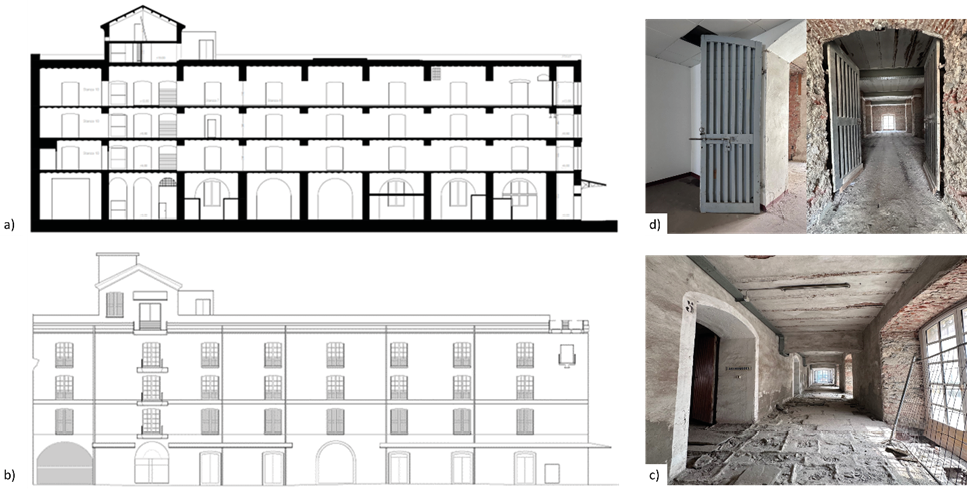
At present, all extensions facing Via Lercari and part of Via Rubattino have been demolished, though some remnants of surface finishes can still be found on the north-west elevation. Meanwhile, the southeastern façade retains a steel canopy that has suffered significant deterioration due to oxidation of its metal components and the complete lack of maintenance throughout the 20th century.
The flat roof has been repurposed to accommodate shared technical installations serving both the building itself and adjacent structures. Internally, most ground-floor units have independent access from the exterior, and some feature internal mezzanines. These are composed of hybrid timber-steel trusses, which are directly anchored to the building’s structural masonry. Vertical circulation is provided by staircases made from a combination of timber, steel, and reinforced concrete, which have undergone significant degradation, as evidenced by the pronounced warping of the supporting beams.
On the upper floors, access is provided by a stairwell and an elevator, both located at the southernmost section of the last bay. The horizontal circulation on each level is organized around a central corridor running along the eastern side, from which individual rooms are reached (Figure 5c).
The former layout of the cold storage areas is now challenging to discern. Still, their former presence is indicated by several large, hermetically sealed wooden doors that once connected these spaces to adjacent rooms (Figure 5d).
Inside, the upper floors remain unfinished, revealing the load-bearing masonry. The masonry follows a striped construction technique, consisting of horizontal layers of solid bricks alternated with squared stone courses measuring approximately 85 cm in height (Figure 6a). The stone material, known as Promontorio stone, was widely employed in Genoese architecture and quarried in the Sampierdarena area [25]. Like the primary metal beams, the walls incorporate granite stiffening elements, enhancing their connection with the horizontal structural framework.
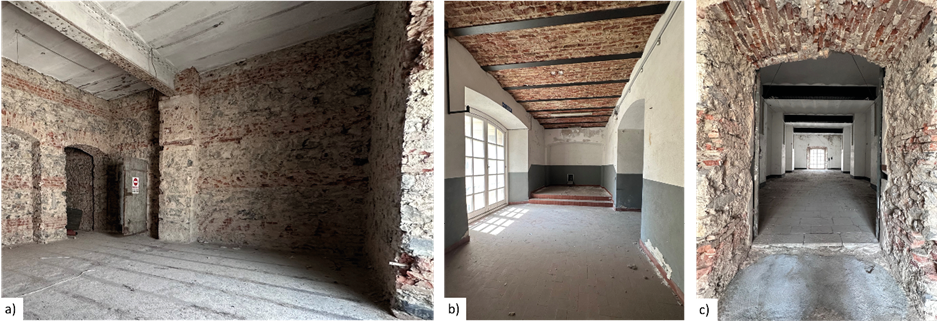
At the surface level, the walls exhibit widespread deterioration, with clear evidence of multiple modifications over time. The presence of replastering, inconsistencies in surface finishes, and areas of renewed, restored, or removed coatings reflect the numerous interventions carried out on the building during the 20th century, none of which resulted in a comprehensive restoration. Additionally, window frames have been partially replaced.
Beyond the absence of plaster and unfinished surfaces across much of the upper two floors, other visible signs of masonry deterioration include flaking, discoloration, peeling, and cracks in the plasterwork. The cracks, particularly concentrated on the ground floor, are likely due to settlement in the masonry structure.
The load-bearing masonry is supported by intermediate floors composed of metal girders, upon which brick vaults are constructed (Figure 6b). The area above the vaults was originally filled with a lightweight cast mixture based on lime and pozzolanic aggregates. A 3–5 cm thick lime screed was then applied over this layer, followed by the final flooring. The building features a variety of floor types, differing in materials and structural patterns, each contributing to its historical significance. Notably, some sections of what is believed to be the original flooring remain intact within the Tabarca factory, consisting of 8 cm thick stone tiles (Figure 6c).
3.4 Reuse and conversion design project
The proposed reuse project for the Tabarca building is designed to address the client’s functional needs while integrating contemporary architectural, technological, and infrastructural innovations. The intervention seeks to enhance energy efficiency, seismic safety, and social functionality, ensuring cost-effective management and maintenance while prioritizing the historical preservation of the structure.
The building will be repurposed as an Advanced Maritime Training Center for students of the Italian Merchant Marine Academy. The restoration project was executed using Building Information Modeling (BIM) in full compliance with current regulations (Figure 7a).
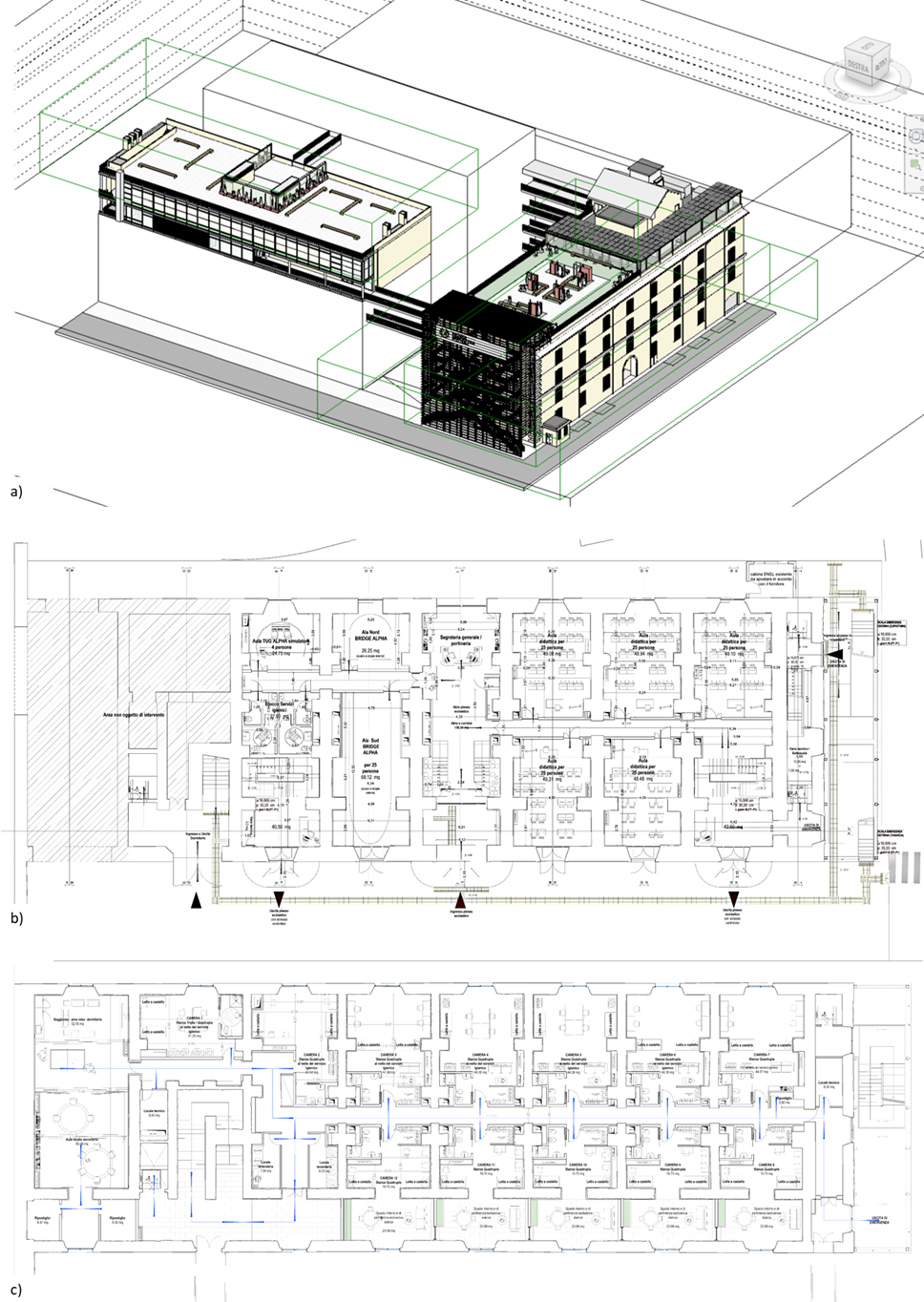
The ground, first, and second floors will be dedicated to academic and training activities, while the third floor will accommodate student residences designed according to current regulations, with multi-functional spaces balancing educational and residential needs. The distribution of spaces is based on the need to preserve the material and spatial integrity of the historical structure while implementing necessary functional adaptations. The architectural approach respects the original layout of Tabarca, minimizing demolition while optimizing spatial organization. The circulation layout is designed for clarity, accessibility, and spatial continuity.
At the ground floor, navigation simulators will be installed in dedicated classrooms. These high-tech systems replicate ship operations, enabling trainees to simulate real-world conditions, including port entries and exits in digitized maritime environments (Figure 7b). To enhance teaching effectiveness, mezzanine levels have been introduced in the simulation classrooms, allowing instructors to observe training activities from an elevated perspective.
The adaptive reuse strategy considers the spacious warehouse layouts at different levels. The upper floors are reorganized to accommodate student residences, maintaining the original structural configuration while optimizing the distribution of living spaces (Figure 7c).
The middle floors are designated for academic activities, respecting the building’s historical geometry while introducing modern educational infrastructure. To comply with safety regulations, a new vertical circulation system has been implemented, separating residential and academic functions through the installation of independent stairwells and elevators.
The design of the interventions was driven by the intent to respect the historical building and enhance its original structure. New partitions constructed using drywall systems are fully reversible, thereby preserving the integrity of the building’s original spatial configuration. Particular attention was devoted to the conservation and enhancement of the original masonry arches along the corridor, achieved by inserting lightweight partitions designed to emphasize these features through the integration of seating elements and transparent panels (Figure 8a). This approach not only safeguards the existing architectural components but also reinterprets them with new functions and renewed significance. Similarly, new internal claddings were introduced where required to accommodate technical systems; these were conceived with the same guiding principle, contributing to a balanced dialogue between preservation and innovation (Figure 8b). An additional reversible intervention, in line with the building’s conservation constraints, involved the use of non-invasive partition walls limited to a height of 2.70 meters (Figure 8c). These elements integrate building services while enabling flexible layouts for furnishings and equipment, all without compromising the original masonry.
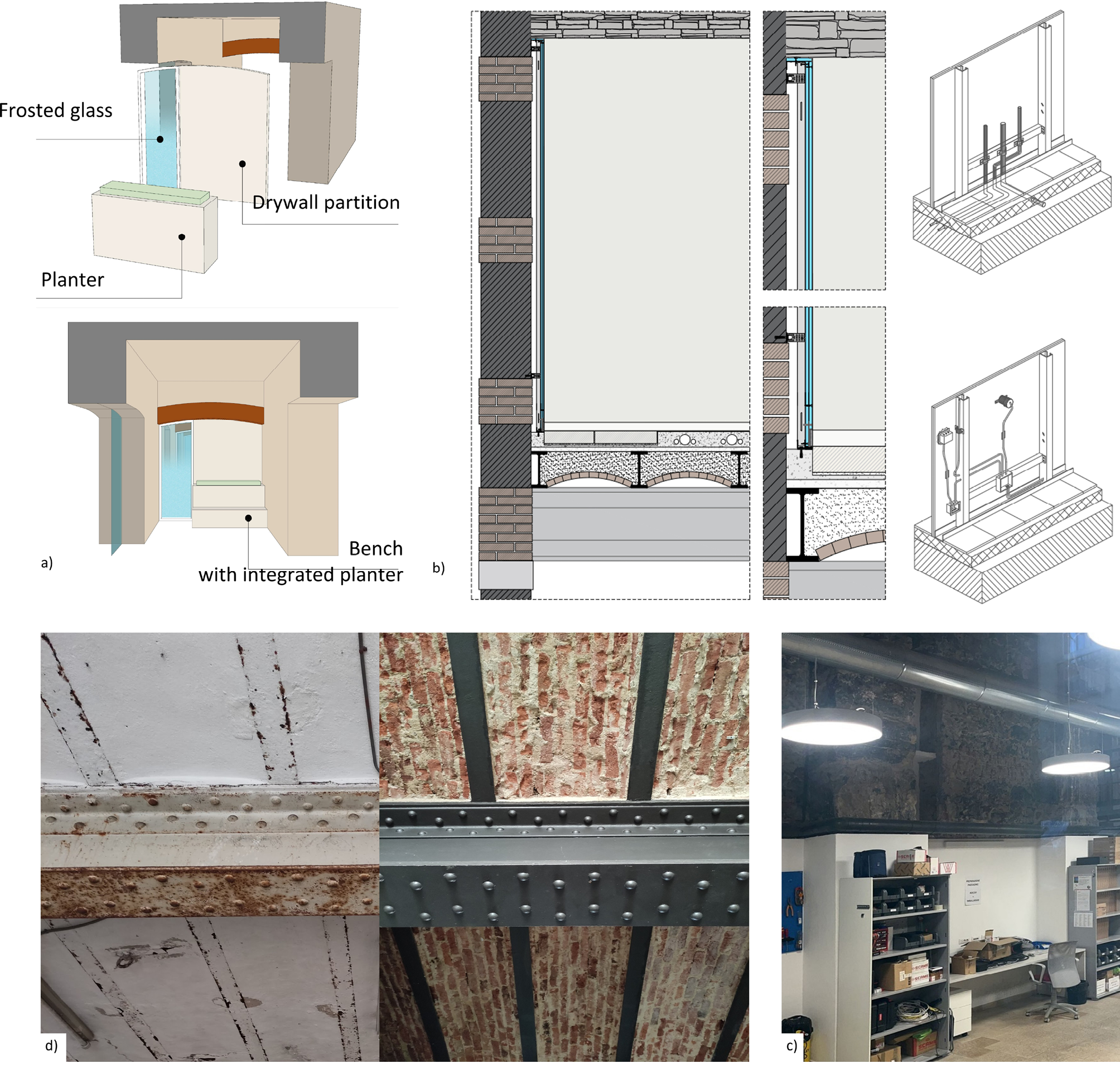
The flooring follows a continuous system, blending with existing historical surfaces and enabling spatial reconfiguration through the repositioning of lightweight partitions. For the slab, a conservation-based approach is adopted. This involves cleaning vaulted surfaces and steel beams to remove deteriorated materials while preserving the structural integrity of the brick vaults. If necessary, mechanical removal techniques will expose the original structural components, restoring their aesthetic and functional integrity (Figure 8d).
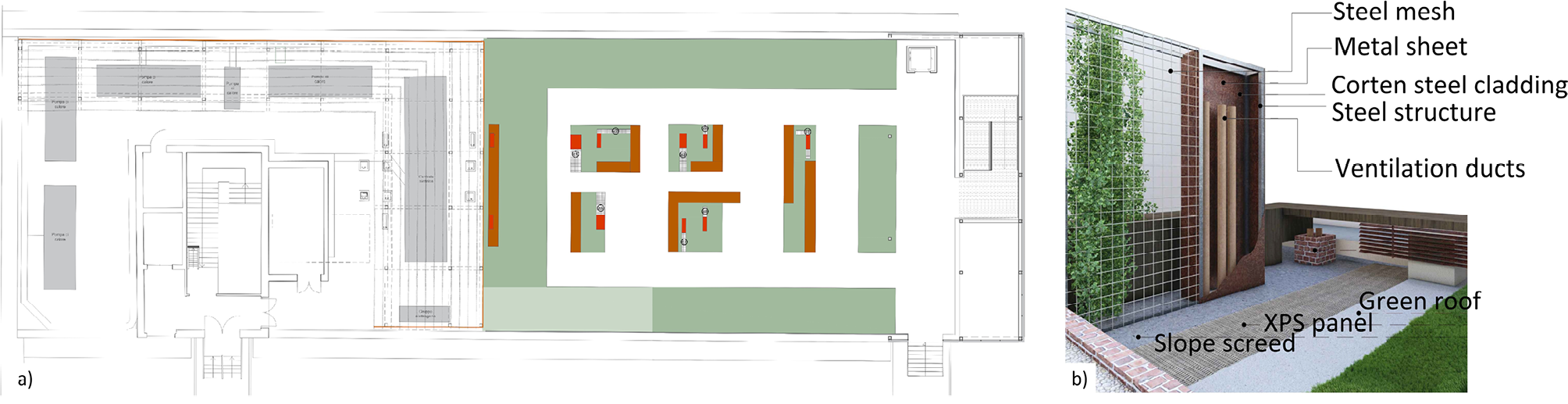
The functional reconfiguration of the Tabarca building culminates in the adaptive reuse of the rooftop. This area will be accessible to the public and will feature a green roof and photovoltaic panels, underscoring the project’s commitment to environmental sustainability (Figure 9a). The design sought to reconcile the goal of creating a usable space with the need to accommodate both existing and newly installed building systems. To this end, specific mitigation strategies were implemented, including the shielding of air handling units (AHUs) and drainage columns through corten steel cladding and steel framing systems (Figure 9b). This approach aims to reestablish the material dialogue that characterizes the structural reinforcement interventions on the lower floors.
The intervention meets key regulatory requirements for seismic and fire safety. The seismic strategy preserves the building’s spatial layout by reinforcing foundations, strengthening existing structural openings, and upgrading localized slabs. For fire safety, a major issue was ensuring proper evacuation routes, resolved by adding a transparent glass enclosure on the north façade containing an independent steel-framed emergency stairwell. The addition improves safety while remaining reversible and architecturally integrated.
4. Conclusion
The study has highlighted the historical and technological significance of refrigerated warehouses, a rare yet highly relevant typology in the evolution of industrial architecture between the late 19th and early 20th centuries. These buildings exemplify the integration of mechanical systems with architectural design, incorporating innovative construction solutions to ensure high thermal insulation performance and compliance with hygienic and sanitary requirements. Within this framework, the Tabarca building emerges as a particularly significant case, not only as the first refrigerated warehouse built in Italy but also for its strategic location within the Darsena of the Port of Genoa.
The original spatial configuration of the building has facilitated its adaptive reuse as an Advanced Maritime Training Center for the Italian Merchant Marine Academy. The generous interior spaces have allowed for the integration of student accommodations and dedicated areas for high-tech navigation simulators, ensuring that the new function aligns seamlessly with the building’s maritime heritage.
The Tabarca reuse project serves as a model for sustainable repurposing of industrial heritage, contributing to the revitalization of an area already characterized by academic institutions. The intervention demonstrates the feasibility of a rehabilitation strategy that effectively balances technological innovation with heritage conservation, offering a replicable approach for the adaptive reuse of historical structures in port and industrial settings.
5. Acknowledgments
The Authors would like to thank the Technical Office and the entire Public Works Infrastructure Directorate of the Municipality of Genoa, as well as the Temporary Consortium of Professionals (RTP) responsible for drafting the Executive Refunctionalization Project commissioned by the Municipality of Genoa and analyzed in this study.
In particular, we wish to acknowledge: Arch. Giuseppe Cardona, Arch. Giacomo Gallarati, and Eng. Lorenzo Scandolo of the Municipality of Genoa; the engineering firms SICEF S.r.l., Tecno2o Engineering S.r.l., Artec S.r.l., and BCD Progetti S.r.l.; Dr. Antonio Mendolia (geologist) and Dr. Ileana Contino (archaeologist).
6. Authors Contributions
Although the research conducted and presented in this contribution is unified, the Authors individually assume editorial responsibility for the text, as follows: Salvatore Polverino for paragraphs 1 and 3.2; Lucrezia Longhitano for paragraph 2 and 3.1; Giuliana Sciacca for paragraph 3.3; Santi Maria Cascone for paragraph 4; and paragraphs 3.4 jointly by Santi Maria Cascone and Giuliana Sciacca.
7. References
[1] Hoyle B (2000) Global and local change on the port-city waterfront. Geogr Rev 90(3):395–417. https://doi.org/10.2307/3250860
[2] Gordon D, Warren P (2022) Canary Wharf’s transformation from ‘planning disaster’ to London’s second business district. In: Landis J (ed) Megaprojects for Megacities: A Comparative Casebook. Edward Elgar Publishing, pp 382–406
[3] Balderstone L, Milne GJ, Mulhearn R (2014) Memory and place on the Liverpool waterfront in the mid-twentieth century. Urban Hist 41(3):478–496. https://doi.org/10.1017/S0963926813000734
[4] Sepe M (2014) Urban transformation, socio-economic regeneration and participation: two cases of creative urban regeneration. Int J Urban Sustain Dev 6(1):20–41. https://doi.org/10.1080/19463138.2013.866560
[5] Assoporti (2022) Movimenti portuali annuali 2022. https://www.assoporti.it/it/autoritasistemaportuale/statistiche/statistiche-annualicomplessive/movimenti-portuali-2022/. Accessed 31 Jan 2025
[6] Grassetti A (2023) Renzo Piano and the Porto Antico of Genoa: A Research Path on Public Space. PORTUSplus 15:1–18
[7] Bordoni S, Ighina AG, Tuscano C (1987) La darsena di Genova: un progetto di recupero. Italsider, Genova
[8] Franco G, Armellino M, Musso SF (2016) Architetture in Liguria dopo il 1945. De Ferrari, Genova
[9] Comune di Genova (1921) La Darsena. Boll Munic Mens 5:1–10
[10] Concina E (1984) L’arsenale della Repubblica di Venezia. Mondadori Electa, Milano
[11] Gatti L (1999) Navi e cantieri della Repubblica di Genova (secoli XVI–XVIII). Brigati, Genova
[12] Canziani A, Pittaluga D (2004) Analisi storico-archeologica del ‘quartiere Galata’ a Genova: brevi considerazioni su archeologia dell’architettura e restauro. NAM Notiziario Archeol Mediev 77:10–13
[13] Cabona D, Gallino MG (1995) Il porto visto dai fotografi 1886–1969. Autorità portuale di Genova, Genova
[14] Canziani A, Pittaluga D (2005) L’arsenale seicentesco della Repubblica Genovese: l’impianto e le prime trasformazioni (prima parte). Archeol Archit X:125–152
[15] Podestà F (1913) Il porto di Genova dalle origini fino alla caduta della repubblica genovese (1797). Spiotti, Genova
[16] Maineri B (1920) La Darsena della Superba. Gazz Genova, pp 7–18
[17] Borghesi M (1916) Censimento delle fabbriche di ghiaccio esistenti in Italia alla fine del 1915. Boll Ispettorato Ind Lav, pp 41–130
[18] Ferretti U (1911) Le carni conservate col freddo artificiale. Hoepli, Milano
[19] Ferretti U (1918) L’opera della S.A. dei Magazzini Frigoriferi Genovesi durante la guerra e la costruzione del frigorifero del ‘Cembalo’. Tipografia Editrice L’italiana, Roma
[20] Wilton O, Barnett Howland M (2020) Cork: an historical overview of its use in building construction. Construction History 35(1):1–22
[21] Mancini E (1908) Il progresso delle industrie frigorifiche. Nuova Antologia, Roma
[22] Valvassori V (1905) Le applicazioni dei sistemi frigoriferi alla conservazione e al trasporto delle sostanze alimentari e in particolare dei prodotti dell’orticoltura. Boll Uff Min Agric Ind Commercio 20:529–546
[23] Ufficio del commercio, lavoro e statistica Municipio di Genova (1910) Gli Stabilimenti commerciali marittimi del Comune di Genova. Stabilimento Fratelli Pagano, Genova
[24] Aragosta E (1928) Emporio civico della Darsena nel passato e nel presente. La Grande Genova, Boll Munic 12:641–646
[25] Cimmino F, Faccini F, Robbiano A (2004) Stones and colored marbles of Liguria in historical monuments. Period Mineral 73(3):71–84