Information Management for Built Heritage: CDE and HBIM for Educational Buildings. The Case of the Pistelli School in Rome
Department of Civil, Building and Environmental Engineering, DICEA, Sapienza University of Rome, Italy
Email: alessandro.damico@uniroma1.it; debellis.1652717@studenti.uniroma1.it; edoardo.curra@uniroma1.it
*Corresponding author
Abstract. The integration of Heritage Building Information Modeling (HBIM) with Common Data Environment (CDE) is essential for the efficient management and preservation of historical school buildings. This study explores their combined application through the case of the Ermenegildo Pistelli school in Rome. The methodology involves advanced surveying techniques, archival research, and digital modeling to create an accurate HBIM model, stored and managed within a CDE. The results highlight the role of public administration and stakeholder collaboration in ensuring effective data structuring, accessibility, and long-term conservation. Despite challenges in interoperability and digital literacy, the findings emphasize the importance of standardized workflows and stakeholder engagement in heritage management. Future research should enhance open-source solutions, improve training programs for public entities, and promote broader interdisciplinary cooperation. This study contributes to advancing digital strategies for the sustainable preservation of educational building heritage.
Keywords: HBIM, CDE, School Building, Built Heritage, Digital Preservation.
1. Introduction
The integration of advanced technologies in the management of school buildings plays a critical role in the context of contemporary educational environments. As institutions strive to create conducive learning spaces, the adoption of Heritage Building Information Modeling (HBIM) offers an effective solution. This approach not only facilitates the preservation of historical school buildings but also enhances the management of information related to their structural and functional attributes [1-2]. This paper explores the intersection of HBIM, school buildings, Collaborative Data Environments (CDE), and information management, highlighting their collective potential to optimize educational facilities.
The concept of HBIM extends beyond traditional Building Information Modeling (BIM) by incorporating the unique characteristics and historical significance of the building. This approach allows for the detailed documentation and analysis of school buildings, ensuring that their architectural integrity is maintained while simultaneously improving operational efficiency [3-4]. By leveraging HBIM, educational institutions can create a comprehensive digital representation of their facilities, enabling better decision-making regarding maintenance, renovations, and resource allocation.
The implementation of CDEs similarly plays a crucial role in enhancing collaboration among stakeholders involved in school building management. CDEs provide a centralized platform for sharing, facilitating communication, and streamlining workflows among architects, engineers, facility managers, and educators. This collaborative approach ensures that all parties have access to up-to-date data, thereby reducing the likelihood of errors and miscommunication during the planning and execution of the design. The integration of these platforms with HBIM can further improve school facility governance by providing a seamless exchange of relevant insights throughout the building’s lifecycle. Effective information management is essential for optimizing the performance of educational facilities. The ability to collect, analyze, and utilize data related to building performance, occupancy, and environmental conditions can significantly impact the overall quality of the educational experience. By employing robust data-driven strategies, institutions can make informed decisions that enhance the functionality and sustainability of their facilities. This paper will examine various information management frameworks and their applicability to school buildings, emphasizing the role of data-driven decision-making in educational environments. The integration of HBIM and CDEs presents an opportunity to address the unique challenges associated with school facilities, particularly those of historical significance. In Rome, where the study is based, many educational institutions occupy buildings from different historical periods. Preserving these structures while adapting them to modern needs requires a careful balance. To illustrate effective strategies, this study will explore case studies showcasing successful implementations of HBIM and CDEs in school building management, highlighting best practices and key lessons learned.
1.1 HBIM for school buildings
HBIM integrates various data acquisition techniques, including terrestrial laser scanning (TLS) and photogrammetry, to create detailed 3D models of historical buildings [1-3]. The process typically involves several stages: data collection, point cloud generation, model creation, and the incorporation of historical and architectural information into a cohesive digital framework [4]. For instance, Liu et al. [1] emphasize the importance of interdisciplinary integration in developing HBIM models for ancient structures, including educational buildings such as the Rosenwald Schools in the United States. The application of HBIM in school buildings has been documented in various case studies, showcasing its utility in preserving educational building heritage. The digital documentation of the Tankersley School in Alabama utilized HBIM techniques to reconstruct the building’s historical significance and architectural details [1]. This approach not only aids in restoration efforts but also serves educational purposes by providing a digital archive of the building’s history and architectural features. Moreover, the integration of HBIM with virtual reality (VR) technologies has been explored to enhance the immersive experience of historical school buildings. This combination allows for interactive learning environments where users can explore the architectural heritage [5-6]. Such applications demonstrate the potential of HBIM to preserve and actively engage the public in historical educational sites.
The use of HBIM for school buildings facilitates comprehensive data management, allowing for the integration of various types of information, including architectural, historical, and structural data [7-8]. This holistic approach enhances the understanding of the building’s lifecycle and informs conservation strategies. For instance, the use of HBIM in the management of the Master Gate of San Francisco in Portugal illustrates how detailed modeling can support diagnostic assessments and maintenance planning [2]. Secondly, HBIM promotes collaboration among stakeholders involved in heritage conservation, including architects, historians, and conservationists. By providing a shared platform for data access and visualization, HBIM fosters interdisciplinary cooperation, which is essential for effective heritage management [9, 10]. This collaborative aspect is particularly crucial in educational contexts, where multiple parties may be involved in the preservation of the buildings.
Despite its advantages, the implementation of HBIM in school buildings faces several challenges. The complexity of modeling intricate architectural details and the need for specialized skills in both heritage conservation and digital modeling can hinder widespread adoption [11-12]. Additionally, the integration of intangible cultural heritage aspects into HBIM models remains an area requiring further exploration [9, 13]. Future research should focus on developing standardized protocols for HBIM applications in educational building heritage, enhancing training programs for practitioners, and exploring the integration of emerging technologies such as artificial intelligence to automate certain aspects of the modeling process [14-15]. Furthermore, expanding the scope of HBIM to include community engagement initiatives could enhance public awareness and appreciation of historical school buildings. HBIM represents a transformative approach to preservation and management. By facilitating collaboration among stakeholders and integrating diverse data types, HBIM holds significant promise for advancing the preservation and management of educational built heritage.
1.2 Information management: platforms and uses
BIM implementation requires integrating the diverse professional roles involved in a project, facilitating efficient knowledge exchange. This approach ensures the continuous and accurate updating of available information, minimizing errors and optimizing processes. Specific tools, such as collaborative platforms based on open systems, are required to achieve these objectives. These platforms must support professionals in the architecture, engineering, and construction sectors in general, including Public Works Managers and contracting authorities, in the proper management of BIM models. This encompasses specialized aspects such as plant design, energy analysis, structural analysis, site management, maintenance of works, and much more. The integration of BIM and Common Data Environments (CDE) has emerged as a pivotal aspect of modern construction management and architectural design.
This literature review synthesizes current research on the interplay between HBIM and CDEs, highlighting their roles in enhancing collaboration, data management, and project efficiency. CDEs are essential for facilitating effective collaboration among stakeholders in BIM projects. They provide a centralized platform for data sharing, which is crucial for maintaining consistency and accuracy in project information. According to Patacas et al. [16], a well-structured CDE can significantly enhance the operational efficiency of BIM processes by ensuring that all participants have access to the latest project data, thus reducing the likelihood of errors and miscommunication. Furthermore, Min Ho Shin [17] emphasizes the necessity of standardized data definitions within collaborative environments, asserting that commercialized CDEs can streamline the implementation of BIM across various participants in the architecture, engineering, and construction (AEC) sectors. The use of CDEs not only improves data accessibility but also enhances data quality and interoperability among different systems. Sheehan et al. discuss how CDEs facilitate cross-study comparisons and data aggregation, which are vital for meta-analyses in clinical research, and these principles can be analogously applied to BIM environments. The standardization of data through CDEs allows for better integration of various tools and technologies used in BIM, promoting a more cohesive workflow. This interoperability is particularly important in projects involving multiple stakeholders, as it ensures that all parties are aligned in terms of data usage and project objectives. The development of frameworks for CDEs is crucial for their successful implementation in BIM projects. Patacas et al. [16] propose a framework that incorporates open standards and existing technologies to create a prototype CDE aimed at improving facilities management through BIM. This framework addresses the operational aspects of BIM and emphasizes the importance of a collaborative approach to data management. Similarly, Abbas et al. [18] highlight the necessity of a Master Information Delivery Plan (MIDP) within the BIM Execution Plan (BEP), which outlines the information deliverables and protocols necessary for effective collaboration in BIM projects.
Despite the advantages of integrating CDEs with BIM, challenges remain in achieving seamless collaboration and data management. The complexity of managing diverse data sources and ensuring data integrity across platforms can hinder the effectiveness of CDEs [19]. Future research should focus on developing stronger frameworks that address these challenges while enhancing user experience and data security in collaborative environments. Additionally, exploring the potential of emerging technologies, such as cloud computing and artificial intelligence, could provide innovative solutions for improving the functionality of CDEs in BIM applications [20]. CDE integration within BIM frameworks is essential for fostering collaboration, enhancing data quality, and improving overall project efficiency. As the construction industry continues to evolve, ongoing research and development will be crucial for addressing existing challenges and leveraging new technologies to optimize collaborative workflows.
These new workflows also bring some new issues to deal with, such as the critical need for improved collaboration, interoperability, and data security in heritage conservation efforts. As highlighted by Zhou et al. [21], who propose a framework that utilizes blockchain technology to enhance data security and collaborative efficiency. Furthermore, the role of CDEs in facilitating high-quality data exchanges and ensuring the effective management of heritage data is underscored by Oostwegel et al. [22], who emphasize the importance of openBIM standards in mitigating data loss during the digitalization of culturally significant buildings. Additionally, the potential of CDEs to support dynamic information integration, as discussed by Moyano et al. [23], illustrates the need for a comprehensive understanding of how these environments can streamline workflows and improve decision-making processes in HBIM applications.
1.3 Paper aim and research question
The integration of CDEs and effective information management strategies, within HBIM methodologies, holds significant promise for enhancing the management of school buildings. By embracing these technologies, educational institutions can create environments that support academic achievement and highlight the historical significance of their facilities. This paper aims to address some fundamental issues related to the use of CDE in HBIM applications, with a specific case study on a school building of public heritage in Rome, Italy, the Ermenegildo Pistelli Complex. The research unit cooperates for the historical-constructive investigation and performance verification of historic schools in Rome in a knowledge transfer path [24, 25]. The paper presents a consolidated workflow developed and used in collaboration with the Public Administration owner of a vast public patrimony of school buildings in the city of Rome, in particular those of the I Municipality. The following research question not only aligns with current trends in digital heritage management but also seeks to contribute to the development of best practices for implementing CDEs in the context of architectural heritage: How can the integration of CDEs enhance interoperability and data management in Heritage Building HBIM applications, particularly in the context of architectural heritage restoration design and their management?
2. Methodology
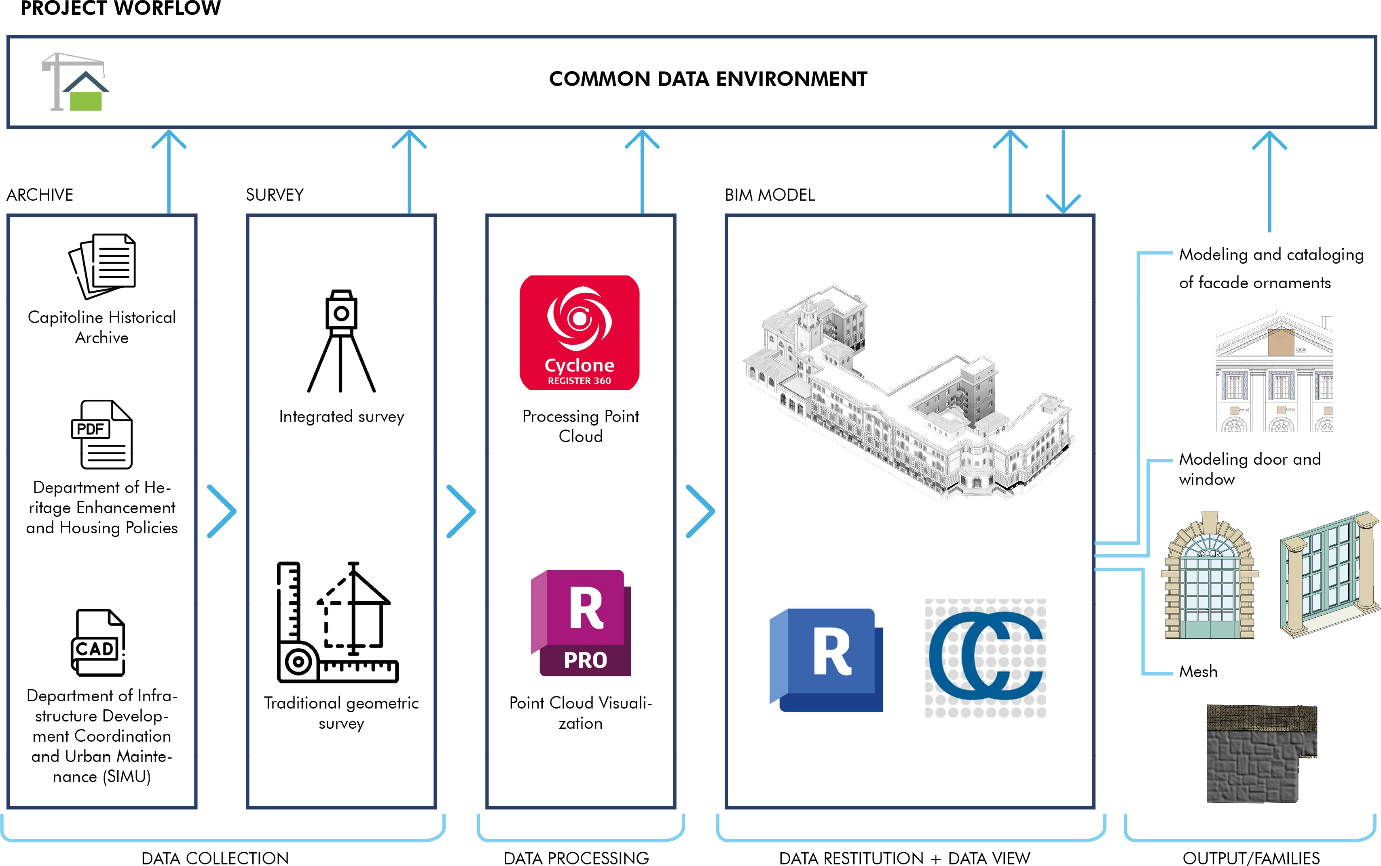
The research methodology presented in this paper, designed for the development of integrated planning and management processes of public school assets in alignment with and supporting the Public Administration, is structured into activities: 1. Data Collection and Data Processing (§ 2.1); 2. Data Restitution and Modelling Output (§ 2.2); 3. Management of CDE for HBIM (§ 2.3). The core of the process is represented by the last subsection concerning the use of the CDE. The chosen platform allows integrating the documentary aspects, technical documents, and information modeling, specifically to create a complete HBIM of all the fundamental aspects for the management of a public heritage. The methodology is illustrated in Figure 1.
2.1 Data Collection and Data Processing
The integrated survey involves both traditional and TLS (Terrestrial Laser Scanning) methodologies. The point cloud of the Ermenegildo Pistelli school building in Rome was created using Leica’s RTC360 3D laser scanner. This device operates based on the high-speed time-of-flight principle, enhanced by Wave Form Digitizer Technology (WFD). This type of survey provides a precision of up to 5 millimeters and a maximum range varying between 800 and 1000 meters. The scanner can collect up to tens of thousands of points per minute (up to 2 million points per second) by directing the laser pulse across the surface of an object using a rotating mirror or prism. It also allows for data acquisition in less than 2 minutes per scan and provides an HDR spherical image with a resolution ranging from 6 mm to 10 m.
The scanner also enables automatic alignment of the point cloud based on real-time motion detection through a mobile device, which simultaneously offers a 3D and 360° visualization of a single scan or the entire point cloud. The automatic in-field registration without targets (based on VIS technology) and automated data transfer to the office further maximizes productivity, significantly reducing survey time.
The Leica Cyclone FIELD 360 app (version 5.2.1) was employed as part of Leica Geosystems’ 3D reality capture solutions, connecting field-acquired data to the scanner and office data registration using Cyclone REGISTER 360 (version 2021.1.2 build r20092). In the field, users can acquire, register, and automatically review scan data and images. The reduced “noise” in the data results in sharper, high-quality scans rich in detail and ready for use in various applications. Combined with the Cyclone FIELD 360 software for automatic in-field registration, the Leica RTC360 scanner ensures high accuracy that can be verified directly on-site.
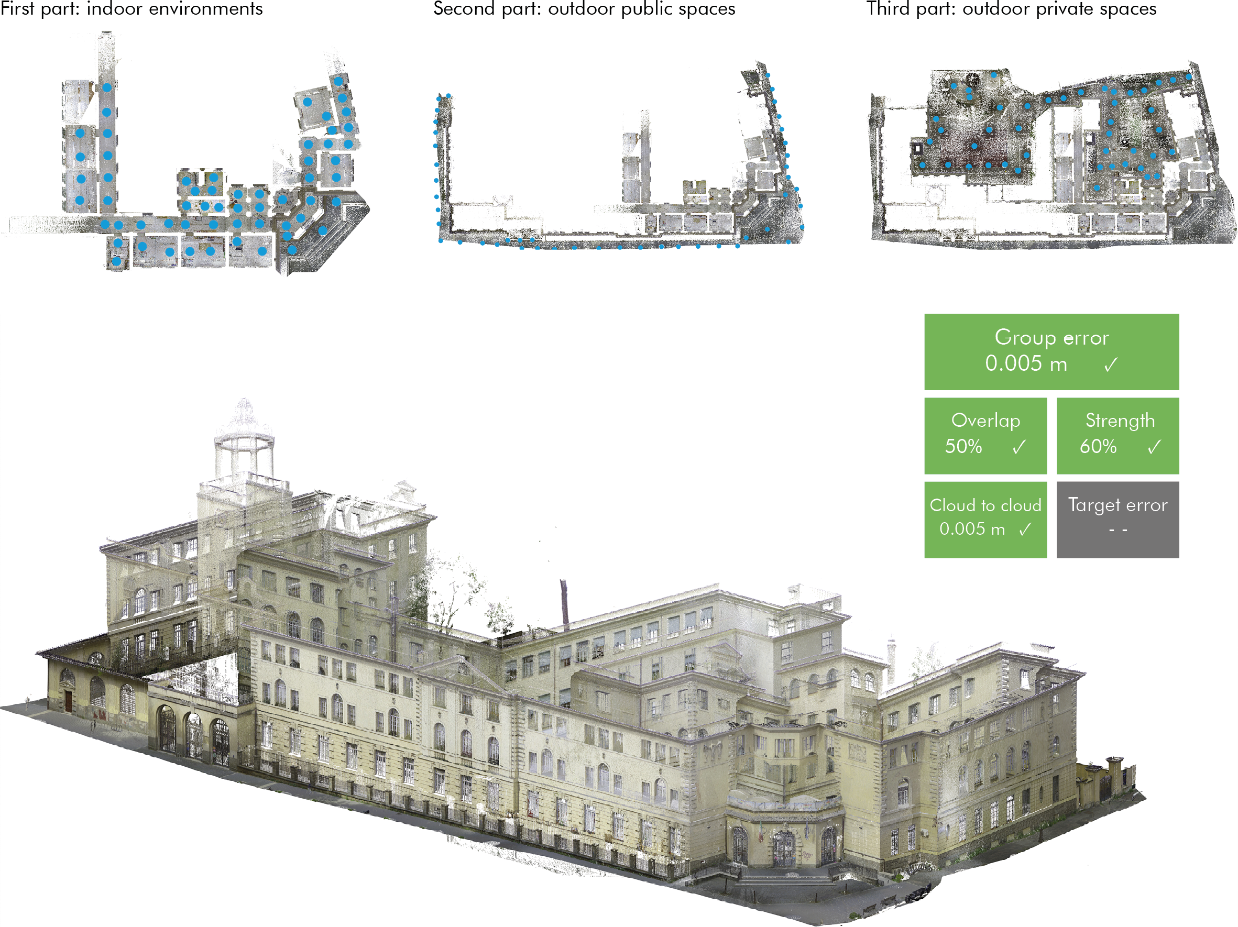
The survey of the E. Pistelli complex consisted of 157 scans, resulting in 272 connections between different setups. There is a 50% overlap between the scans, which makes the connections robust. The margin of error for the point cloud is 0.0005 m. It is therefore possible to conclude that the survey was carried out correctly.
In the process of reconstructing the building’s original design, it is undoubtedly essential to conduct a cognitive investigation of the existing heritage, consulting and carrying out a careful analysis in several archives in Rome. In this specific case, the Capitoline Historical Archive, the Department of Infrastructure Development and Urban Maintenance (SIMU), and the Department of Heritage of Rome Capital were consulted. From these results, it was possible to reconstruct and structure the model in several phases, mainly reconstructing the historical evolution of the building, consisting of extensions and adjustments to fire regulations. Through this phase of consulting the existing documentation, it was possible to simplify the subsequent phases of survey and modeling.
The survey campaign for the building was conducted over multiple days due to organizational constraints and the availability of the school. Once the survey campaign was complete, all scans were merged and aligned using the Cyclone Register 360 software (version 2021.1.2 build r20092). This software enables the merging of various point clouds, aligning them, and strengthening the connections between setups, i.e., the different scanning points. A separate point cloud was created for each survey day, and these were subsequently “cleaned” to remove noise and unwanted elements. After processing the point clouds, they were exported in the .rcp format, which is readable and compatible with Autodesk software.
A key feature of Leica’s RTC360 laser scanner is its ability to orient the model based on the geographic coordinates of the location. This ensures that the point cloud is automatically georeferenced, eliminating the need for additional steps once the data is processed in the office. The point cloud was then imported into Autodesk’s Recap software to be used for visualization, analysis, and sectioning according to specific needs.
2.2 Data Restitution: BIM Modelling
To create the BIM model of the Ermenegildo Pistelli Complex, the Autodesk Revit v2024 BIM Authoring software was selected. The first step involved identifying and semantically defining the various building components. The primary structural elements and detailed components were identified. The modeling process was developed in accordance with Italian regulation UNI 11337-part 3 and 4, and ISO 19650 standards, with the specific request from the Public Administration to achieve a Level of Development (LOD) E-F-G and a high granularity of Level of Information Need (LOIN) for windows, doors, and ornamental elements, to support future restoration and conservation interventions. LOD has evolved both in geometrical aspects (LOG – Level of Geometry) and information (LOI – Level of Information). LOIN was articulated across three distinct dimensions: the geometric component (representation of shape, size, dimensional accuracy, and spatial positioning of elements), the alphanumeric (data expressed through characters, numerical values, codes, and symbolic identifiers necessary for classification and analysis), and the documentary component (structured set of historical records, technical drawings, and supporting documents associated with each modeled element). Specifically, all appropriate components were set up with the correct dimensions based on the surveys and accurately positioned. Thanks to the historical information gathered and the on-site survey, it was possible to recreate a highly accurate model. The majority of components were modelled as loadable families, while for some complex elements, conceptual mass modelling was employed, allowing for the creation of any shape. The parametric modelling of families facilitates their reuse, as families within the same category can be adapted by changing parameters, such as length. Each model component is assigned parameters defining its creation and demolition phases. These alphanumeric characteristics are managed within the model’s database or schedules to produce thematic deliverables or interact more effectively with the information component, even remotely and using specialized tools. Information was added to the building model during and after its creation. A BIM model can incorporate extensive and multidisciplinary information, including: Building geometry, Materials and their properties, Images of various kinds of the investigated asset, Historical documentation, Traditional or high-definition surveys with point clouds, and other types of information. All this data is collected and managed within the BIM model, which functions as a three-dimensional and virtual database.
The main phases of the standard modelling process were: 1. Importing the point cloud into the modelling software, 2. Generating the primary geometries based on the point cloud, 3. Defining system families, 4. Creating, parameterizing, and inserting loadable families, 5. Creating local families.
2.3 CDE: Information Management
National (UNI11337 – part5) and international regulations (ISO 19650) describe the CDE as a virtual environment, such as a Cloud or Server, where all project stakeholders can store their work. This environment is organized and structured to track all activities, define roles and responsibilities, and provide up-to-date and comprehensive information to all participants. Within this context, the collaborative and integrative aspects typical of the BIM methodology take shape. This tool is central to the digital construction process because it allows digital models to fulfill their primary function: serving as the basis for integrated and shared decision-making.
A collaborative BIM platform (namely CDE) must provide a range of functionalities to enhance team productivity, stakeholder engagement, and achieve several benefits, including: 1) comprehensive control of construction processes (use of cloud infrastructures accessible from any device and by all operators, ensuring continuous supervision of processes); 2) defined roles and responsibilities (clear and precise assignment of roles and responsibilities to protect informational assets, ensure data security, and prevent fraud and errors); 3) action traceability (monitoring actions performed and recording revisions and modifications made to shared data among various stakeholders. Each user is granted specific permissions based on their role, ranging from read-only access to full editing rights); 4) review and approval (implementation of structured processes for the review, approval, and validation of documentation, facilitating control and sharing of updated document and model versions); 5) effective communication (promoting continuous communication among stakeholders through information coordination and management of the internal CDE, rather than external channels, such as email). Finally, the use of CDE permits automatic data backup, ensuring data recovery in case of partial or total loss.
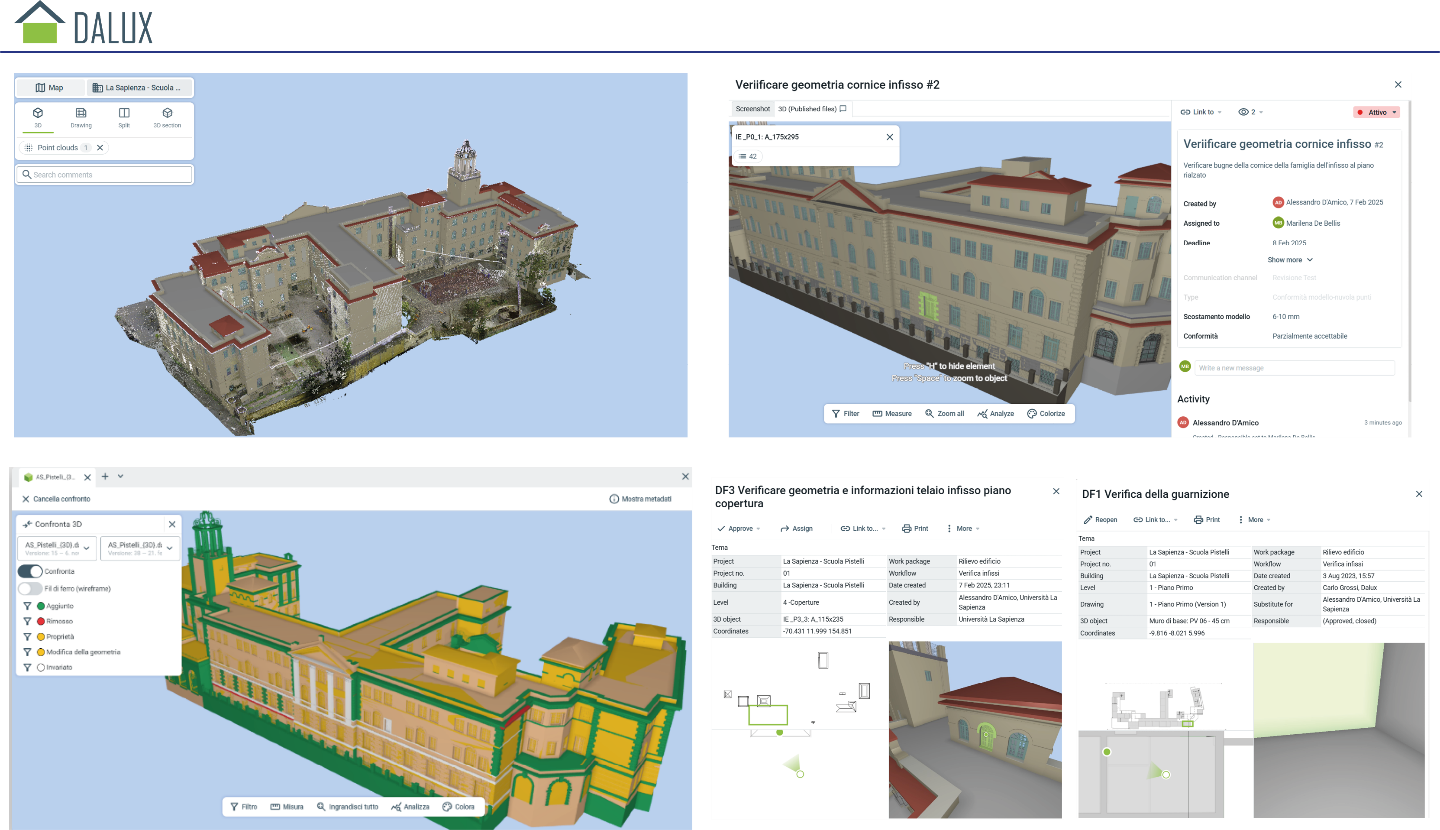
In this research, it was possible to share and review all acquired materials and work progress using the Dalux software provided by the developer for the purposes of the research and study (Figure 2). This software, structured according to BIM regulations, allows project participants to manage file access, consult the project in its three-dimensional form while overlaying it with the point cloud, and create two-dimensional sections and plans directly from the viewer itself.
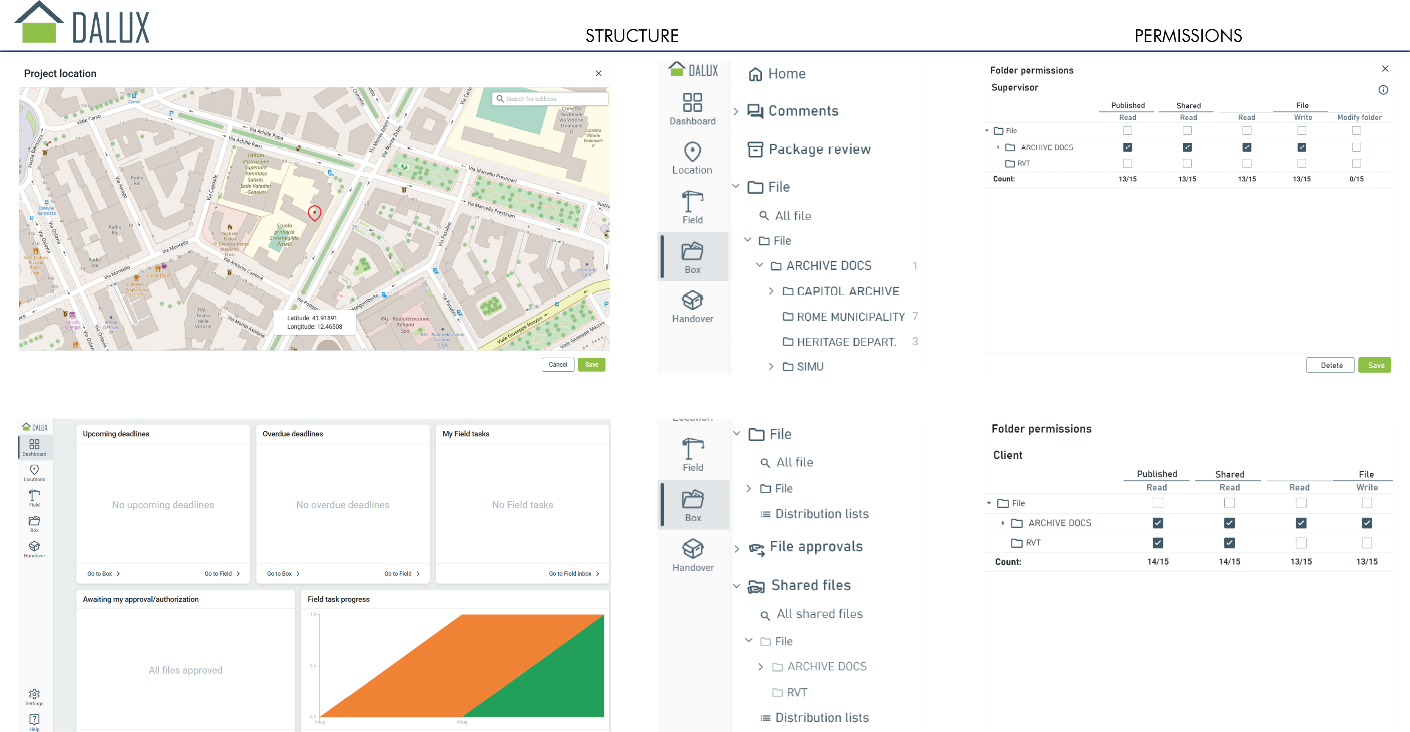
The digital archive thus constructed contains all documents organized into defined categories and sections. The database can be continuously updated over time. This ensures the orderly and ongoing management of documents by incrementally adding new ones as needed. The main advantages of managing an entire asset in this manner include: accessibility and retrieval of documents; measurement of the available archival assets; management and continuous updating; and stakeholder discussions on design objectives.
All the archive documentation, the 3D model of the building, and the elaborated point cloud were archived within the Dalux software. The peculiarity of this CDE is to update, comment, and keep track of all the people and changes that make up the project. In particular, it is possible to keep track of the progress of the modeling thanks to the plugin that allows for instant connection of Revit and Dalux. Furthermore, in the Dalux viewer section, it is possible to view the overlapping of the model with the point cloud.
3. Case Study: the Pistelli School in Rome
The case study is the Ermenegildo Pistelli school building, part of the Claudio Abbado Comprehensive Institute, which houses a kindergarten and elementary school. It is located in Rome’s Municipality I, at Via Monte Zebio 35 (Figure 3). The building, large and C-shaped, is arranged along the perimeter of the lot, defining the entire frontage on Via Monte Zebio and extending along two sides to create two distinct angular spaces [26]. The corner between Via Monte Zebio and Via Cantore is notable for the low gymnasium structure, which visually balances the clock tower, and for the portal of one of the building’s original entrances, which once separated the male and female sections of the school. Another corner, located at the intersection of Via Monte Zebio and Via Achille Papa, features a recessed entrance portico relative to the two main façades. This design harmoniously connects the two wings of the building and creates an inviting urban access space to the school. The internal garden could originally be accessed both from the building and through two side gates located on the wings of the building; today, only one gate remains, on Via Achille Papa.
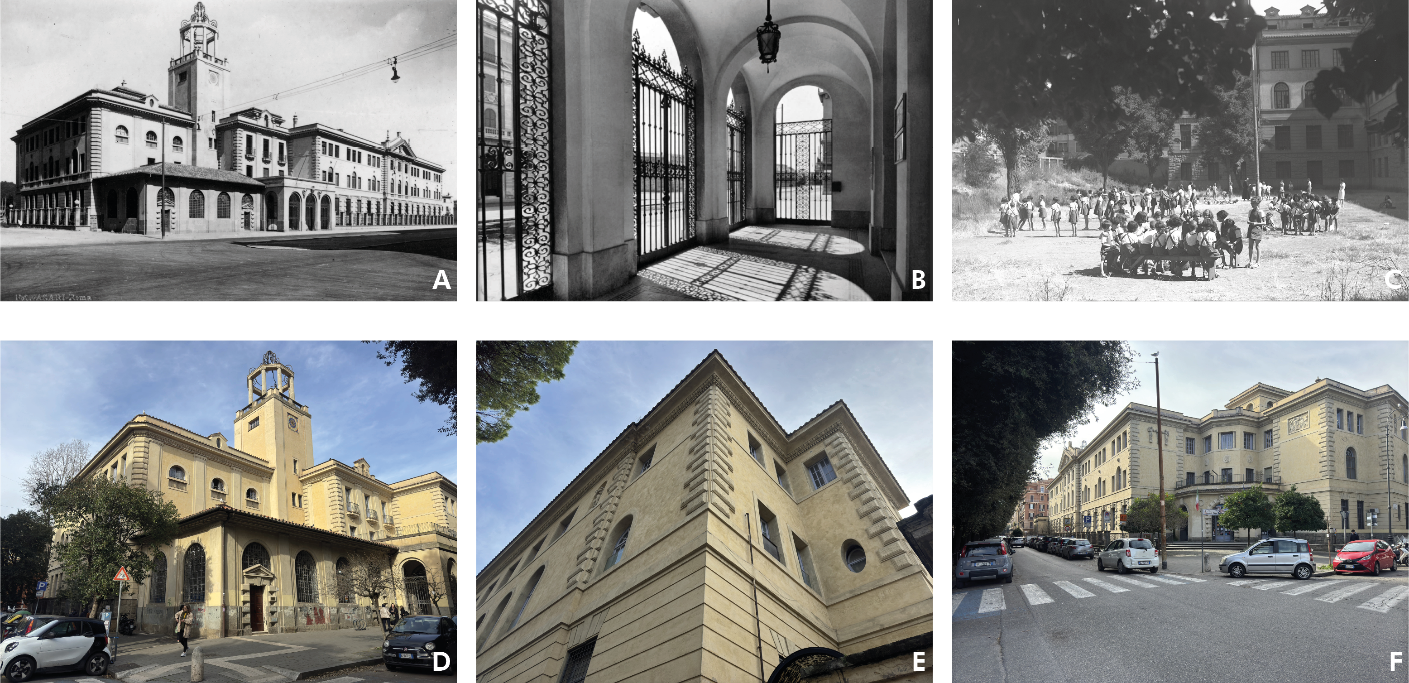
The school building was designed according to modern criteria. The classrooms are spacious and bright, with large and tall windows that allow natural light and sunlight to enter. Gardens and terraces were conceived to enable outdoor teaching. However, following the subdivision of the courtyard, the original layout of the garden was lost, with most of the area now paved except for a small portion allocated to the kindergarten [26]. The building consists of three above-ground floors and a semi-basement, also featuring large windows on the main frontage. The interior spaces were organized based on solar orientation, with all classrooms facing southeast or southwest. The layout is serial, with rectangular classrooms of identical dimensions, each approximately 27 square meters.
The building’s façades follow a classical design approach, with a clear hierarchy of floors. On the first floor, the central body windows feature a serliana motif, while the entrances are marked by arcaded porticos with round arches. The building’s volume is complex and well-balanced, with a clear distinction among its various architectural components [26]. Distinct elements include the entrances with their terraces, the gymnasium, and the clock tower topped by a belvedere. The architecture is enriched with extensive use of stucco and decorative elements, enhancing its aesthetic value. The building was designed and constructed as an integral part of the new Piazza D’Armi district, now known as Piazza Mazzini. Morphologically, it has a traditional layout, adhering to the lot’s shape and responding to the surrounding urban requirements. At the intersection of the tree-lined avenues of Via Monte Zebio and Via Achille Papa, the designer conceived a small resting area that expands the public space, providing a place of relief within the urban fabric.
The school building was designed in 1909 by architect G. Venturi. In 1924, following the signing of the contract, construction began under the supervision of the Gianicolense Cooperative Construction Company. By 1926, as the building neared completion, heating systems were installed. Prof. G. Jacobucci and Prof. B. Marescalchi were responsible for the façade decorations in 1928. In the same year, consolidation and underpinning work were required due to widespread structural settlements. The building works were officially tested and certified in 1932, and in the following year, the Fire Brigade Guard Post was constructed within the same block. The original design of the school was modified during construction, including lowering the level of the internal garden to match the basement floor. This change affected the internal façades and, functionally, altered access to the garden, which became primarily accessible from the basement level. In 1953, expansion plans for the school were drafted, involving the construction of the central block that divided the internal courtyard into two sections. The work commenced in 1955 and was completed in 1956. The expansion retained the proportions of the main building in terms of distribution and functionality but differed in terms of materials and, especially, window design. The architectural language of the façades was distinct, with a minimalist layout without decorative elements. In 1971, final testing was conducted for fire safety compliance, which included the construction of two external emergency staircases made of reinforced concrete. In 2019, the first-floor premises of the building, previously used by the former Opera Sante de Sanctis, were returned to their original use.
4. Results
The results of the developed process are divided into three areas: 1) integrated survey, where archive documents, traditional techniques and TLS survey are merged to establish the basis for information modelling (§ 4.1); 2) information modelling for heritage, the HBIM process, with particular attention to the modelling of building components subject to cataloguing for subsequent redevelopment and restoration interventions (§ 4.2); 3) conscious use of the CDE for the HBIM specifications, cataloguing the construction elements and the archival information (§ 4.3). The modeling in particular proposes different approaches depending on specific construction elements; some with more regular geometries can be parameterized with a defined procedure, while for those with more irregular ones, it is necessary to develop ad hoc strategies which, in the proposed case, combine the use of meshes with informative modeling.
The greatest challenge is certainly represented by the management of information for heritage buildings, where it is necessary to correctly store the archival information, create catalogues of the construction elements, and then generate the relative HBIM models, complete both from a geometric and an informational perspective. Furthermore, the possible and facilitated interaction between the stakeholders involved assumes a fundamental aspect in the phase of model development first, and of management of the heritage asset afterwards.
4.1 Integrated survey
The survey campaign for the building was conducted over multiple days due to organizational constraints and the availability of the school. Once the survey campaign was completed, all scans were merged and aligned. The 157 scans performed are shown in Figure 4. For a total of 2,158,318,110 points, which constitute the entire point cloud.
In order to outline the history of the building, it was necessary to consult as much archive material as possible (Figure 5). The only document in possession at the beginning of the work was the knowledge sheet of the building, drawn up by the architect P. Capolino. This document proved to be essential to understand, in general terms, all the aspects of the building, which allowed us to outline the subsequent historical investigations in the various archives of the Municipality.
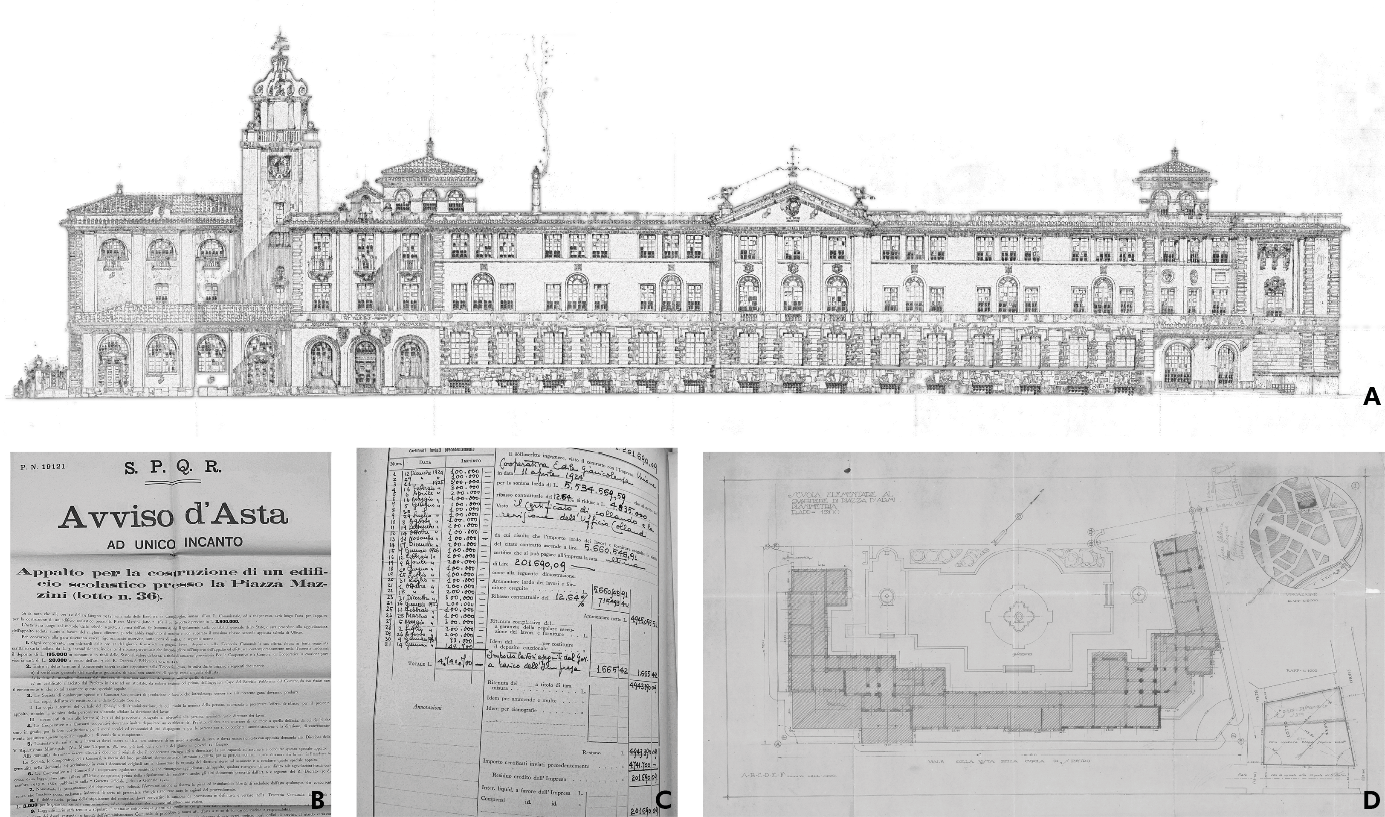
The Capitoline Historical Archives of Roma Capitale preserves most of the documentation found on the case study. Thanks to the archival sources, which also included design plans for the heating systems, it was possible to identify the different figures involved in the construction of the building and, at the same time, the problems faced during its construction. It was interesting to note how, after about a century, due to the war and the consequent increase in costs, a request was made by the construction company to review the prices, because both the labour and the materials had undergone increases. In addition, the Capitoline Archives also preserve the last progress report with the reservations made by the construction company for works not provided for in the contract and for increased costs. The accounting of the work also made it possible to identify the assignment of the decoration and sculpture work to the two professionals in charge, a document that proved crucial in cataloguing the façade elements.
The Department of Heritage Valorization and Housing Policies of Rome Capital preserves the original design layouts of the building. Furthermore, it was possible to view the documents relating to the expansion of the building, and consequently, it was possible to reconstruct its history, namely the planning that took place in 1953, the construction that began in 1955, and ended in 1956.
To conclude the historical investigations on the building, an inspection was also carried out at the Department of Infrastructure Development and Urban Maintenance of Rome Capital (SIMU), where the latest interventions carried out on the school are archived, including maintenance of the systems and checks of compliance with fire regulations. In addition to the verification documentation of the building, it was also possible to recover the plans of the building in CAD format, whose last update dates back to 2010.
4.2 HBIM Model and Building Components Informative Modelling
The modeling process followed the consolidated Scan2BIM process, where the elaborated point cloud served as a scaffolding on which to model the building. The historical analysis elaborated through archival sources also allowed us to obtain essential information for information modelling.
An explicit request from the public administration was to pay attention to the valuable elements of the school, which had to be modeled with great attention to detail (always both geometric – LOG – and informative – LOI). Among these, in the case study analyzed in the paper, the following certainly stand out (Figure 6): the geometric rustication of the ground floor, the irregular rustication of the basement, the vaults of the ground floor, the ornamental elements of the façade, and the windows and door frames (internal and external ones). In particular, on these last two elements, it was considered essential to develop a filing system that would allow the information to be stored in order to proceed with a restoration (for the ornaments) and a performance requalification with conservation of the historical-constructive values (for the windows and door frames).
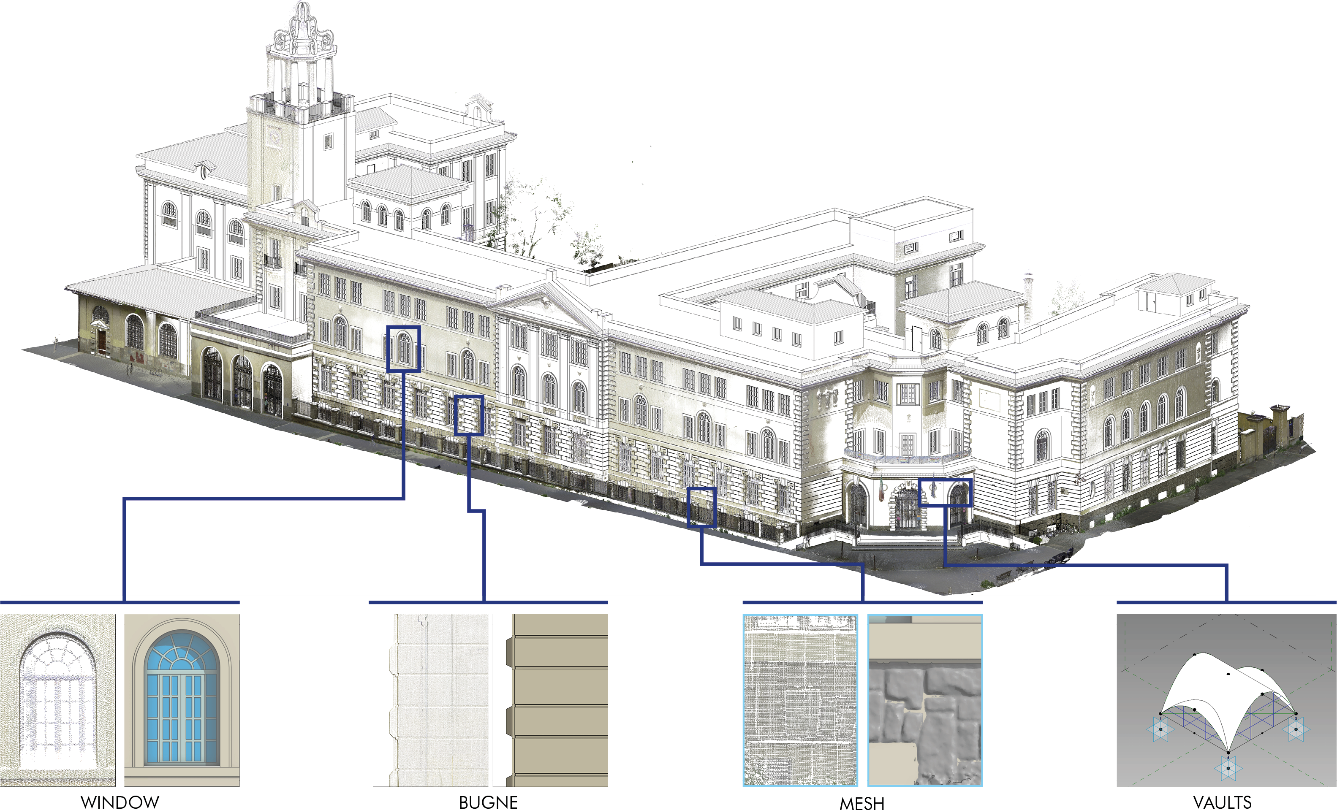
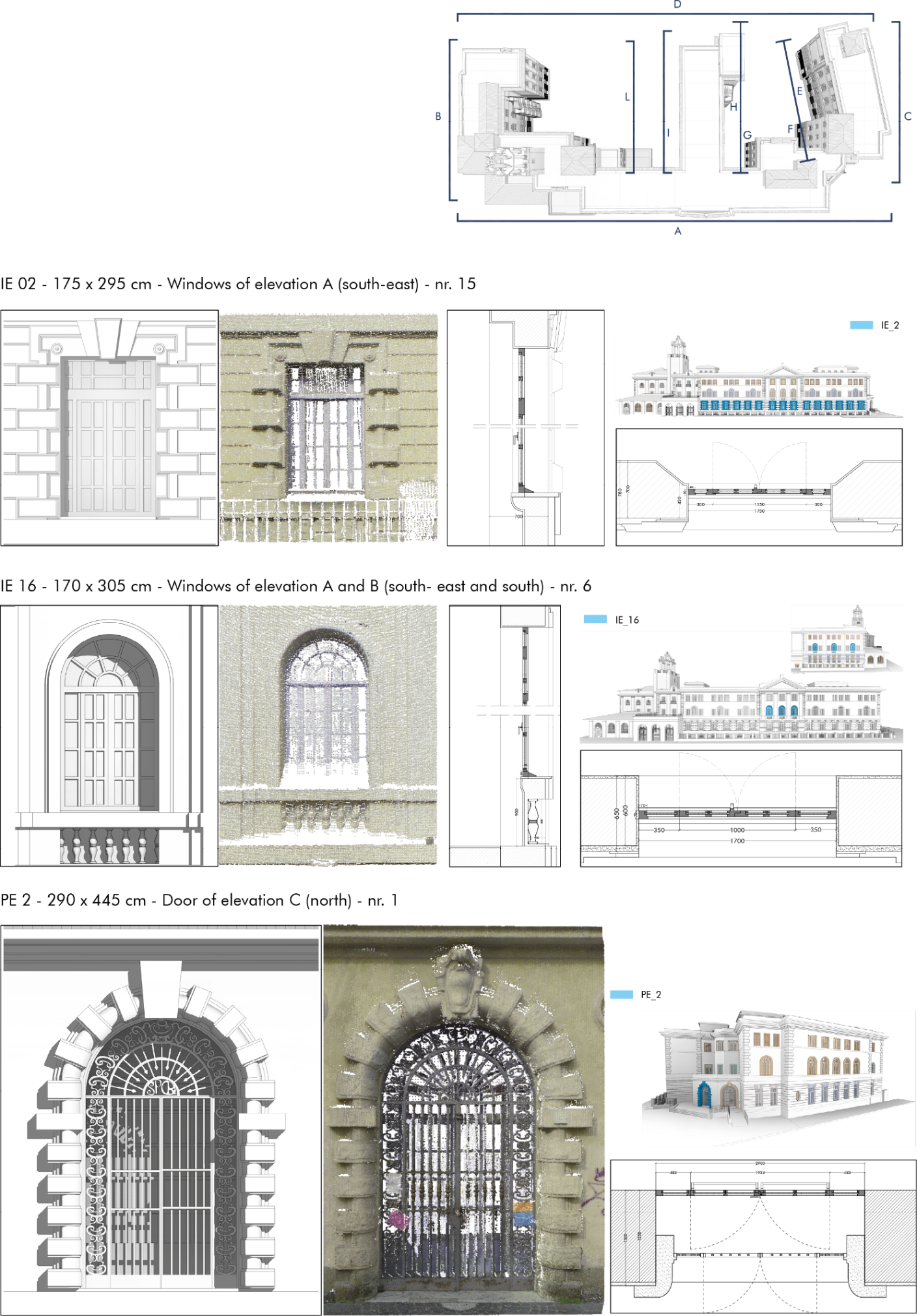
A critical aspect of this study was the approach to modelling the external and internal windows and door frames. Staying within the constraints of Revit’s built-in libraries proved nearly impossible, especially considering the unique elements required, such as the fixtures and frames in this case. These elements, inherently unique, are difficult to simplify into generalized categories because they were specifically designed and constructed for particular applications. Additionally, they often reflect the craftsmanship and modifications introduced over time. For the windows, it was decided to create specific families for each type, nesting them based on their components and decorative elements while geometrically simplifying them as much as possible. A closer inspection of the building reveals a division of the façades into three distinct architectural orders, each corresponding to a specific type of fixture. The fixtures are more ornate at the lower levels and become progressively simpler on the upper levels. Furthermore, on each façade, the decorations of the fixtures differ, making it necessary to identify each façade of the building using letters of the alphabet. Overall, the building contains 435 windows and French doors, along with 227 internal and external doors.
In the HBIM modeling of the E. Pistelli school, the development of the digital model was structured according to the Italian regulation UNI 11337 for LOD and the ISO 19650 standard for LOIN. The overall model reached a geometric development corresponding to LOD C-D (according to Italian UNI 11337), ensuring sufficient accuracy for general analysis and decision-making processes. However, for specific components explicitly prioritized by the Public Administration (i.e., windows, doors, and ornamental elements), the geometric modeling (LOG) attained a higher level of detail, corresponding to LOD E-F. These elements were modeled with a high degree of morphological accuracy, often through bespoke parametric families and mesh modeling to capture irregularities and artisanal features. From an informational perspective (LOI), the objective was to reach LOD F-G for selected components, with a focus on comprehensive metadata supporting maintenance, restoration planning, and performance assessment. The LOIN defined for the project required high granularity of information, including historical references, construction features, material properties, typological classification, and performance-related data. This level of detail enabled an accurate and interoperable dataset aligned with the asset management needs of the Public Administration, supporting long-term conservation strategies and integration into broader heritage information systems.
A great deal of cataloguing work was carried out on the doors and windows (Figure 7). Given the number and the difference in types for each façade, first, the elevations were distinguished with a letter (from A to L). Secondly, they were coded with an acronym IE (external frame) and a number regarding the different typologies. The modelling followed the same cataloguing, so the informative family was named with the cataloguing IE - NN (code-number) and then each different family (which therefore corresponds to a typology different from frame).
As with the windows, another distinctive feature of the façade of the E. Pistelli school is the rusticated finish on the external walls. The ornamental and rusticated masonry follows the same principle as the fixtures: more elaborate on the lower levels adjacent to the street and progressively simpler as the height of the building increases. Rustication is present on all façades of the building, except for the new construction, which is devoid of any decorative elements. For all the rusticated elements that characterize the ground floor façade of the building, a highly realistic modeling approach was achievable, given their regular geometry (Figure 8). The same principle was applied to other elements of the façades, such as string courses and quoins.
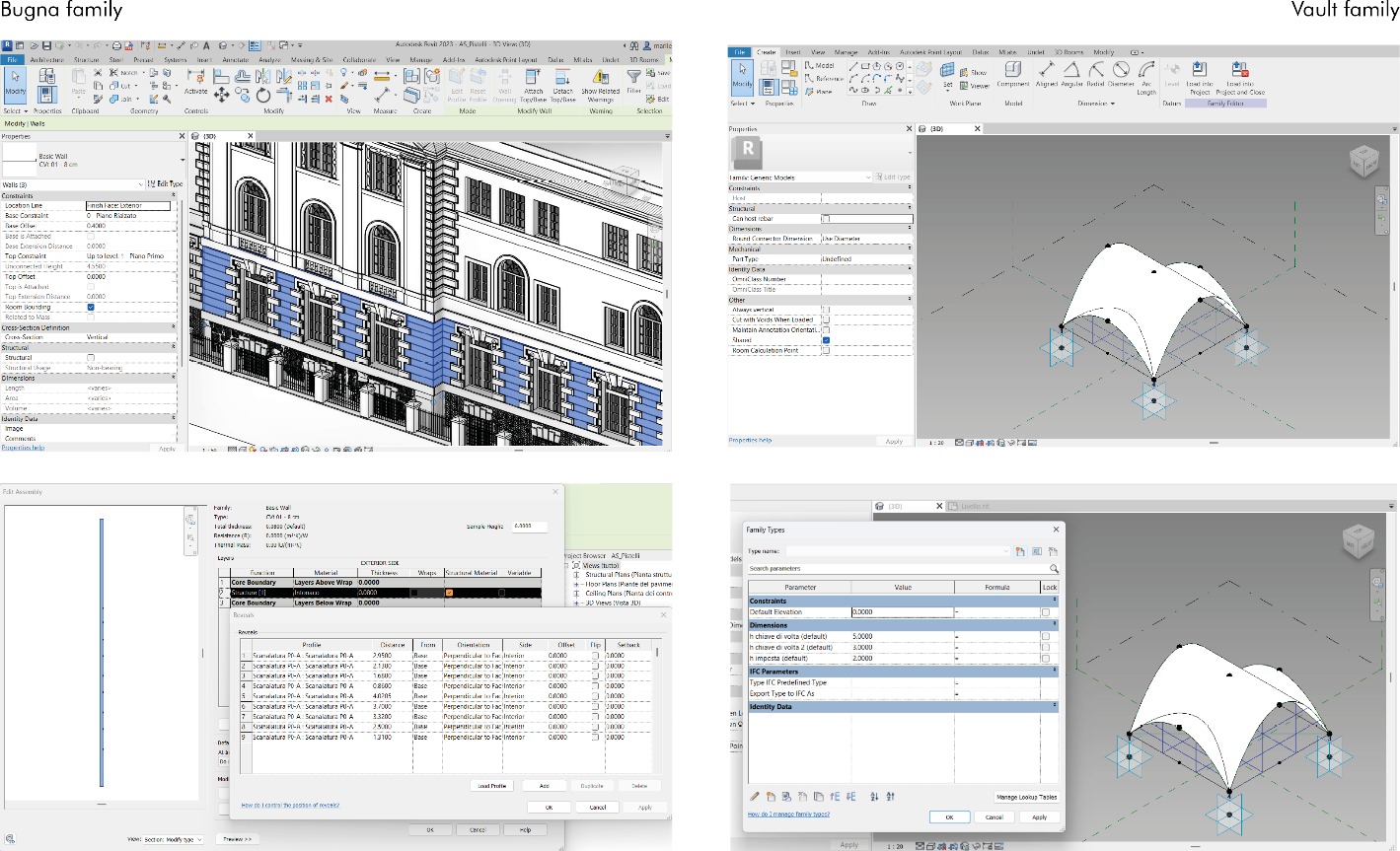
Almost all the interior spaces on the ground floor are covered by vaults. It was discovered that the majority of the vaults are ribbed, but the building also features barrel vaults with lunettes and dome vaults. Since Autodesk Revit does not have a specific command for creating vaulted ceilings, several methods were experimented with to reproduce and catalog the various vaults present in the rooms of the building, to evaluate which methodology could be considered the most effective, reliable, and easiest to implement.
In order to create a model as faithful to reality as possible, and given that the spaces covered by the vaults have different geometric dimensions, it was decided to use adaptive component families as the basis for modeling the vaults. This type of family adjusts to the irregularities that typically characterize existing buildings.
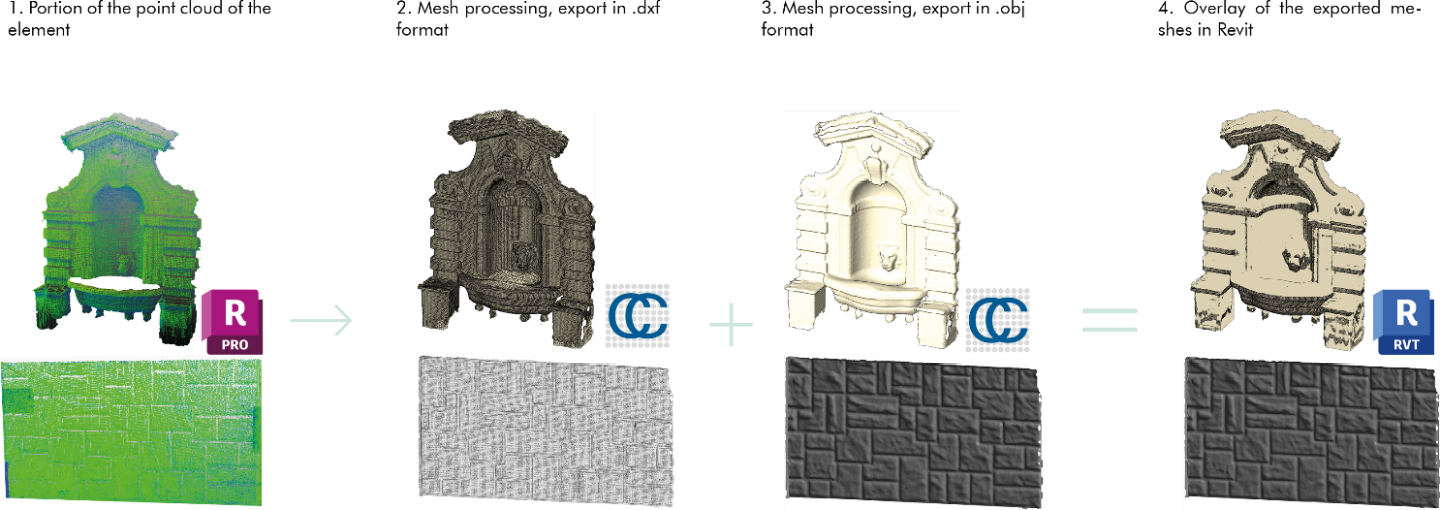
For the elaboration of the more complex ornaments of the façade, in order to provide a comprehensive interpretation, it was decided to approach them through the development of meshes (Figure 9). This choice was also influenced by the fact that modeling programs typically assume the design of a new building, where the geometries are perfectly aligned and free of irregular elements. In the specific case of the E. Pistelli school, the elements in question were the fountain, located in the internal courtyard of the school, and the rustication of the raised basement. The latter, in fact, features rustication that does not follow a precise and repeated geometric pattern, in addition to being made of an equally irregular surface, which overall adds movement to the façade. Moreover, this type of decoration is characteristic of the neighbourhood and the period of construction, and consequently, it was deemed essential to represent it. The software used for data processing was Autodesk’s Recap and Cloud Compare.
4.3 Use of CDE for HBIM applications
The use of CDE is a real challenge in the information management of the built heritage. In the research project presented, the Dalux platform was selected for a series of specific functions that allow for expanding the capabilities of the HBIM as much as possible. The process according to which the CDE is structured is the classic one, divided into 4 phases by technical regulations: WIP - SHARED - PUBLISHED - ARCHIVED. The information passes to the next step depending on the approvals provided by the actor of the building process responsible for validating each phase. Commercial CDE platforms have undergone significant developments and can lend themselves significantly to implementation in the HBIM process if used consciously.
They certainly present a series of fundamental functions in the HBIM process, such as: cataloguing in a single storage of all the information relating to the building, even if in different formats; the interaction between the stakeholders involved, in particular the public administration, still not very familiar with the logic of BIM modeling, but instead more willing to interact with BIM Viewers and management platforms; the possibility of verifying responsibility and completion of tasks and activities; and finally the cataloguing of construction elements through the detailed explanation of information models and other documentary sources.
First of all, the possibility of interacting between the interested stakeholders has allowed sharing information, revisions, and comments on all shared aspects: archival information, technical representations, point clouds, and models (Figure 10), and also visualizing by overlapping them. Each comment can also be assigned to a process actor and has a deadline. In this way, it is always possible to verify responsibilities and implementation times of the activities (Figure 10). Secondly, a fundamental aspect is to verify the progress of the information modeling, comparing the versions uploaded by the operators. In Figure 10, it is possible to view the HBIM model divided by colours depending on the updates (i.e., red: removed; green: added; yellow: modified).
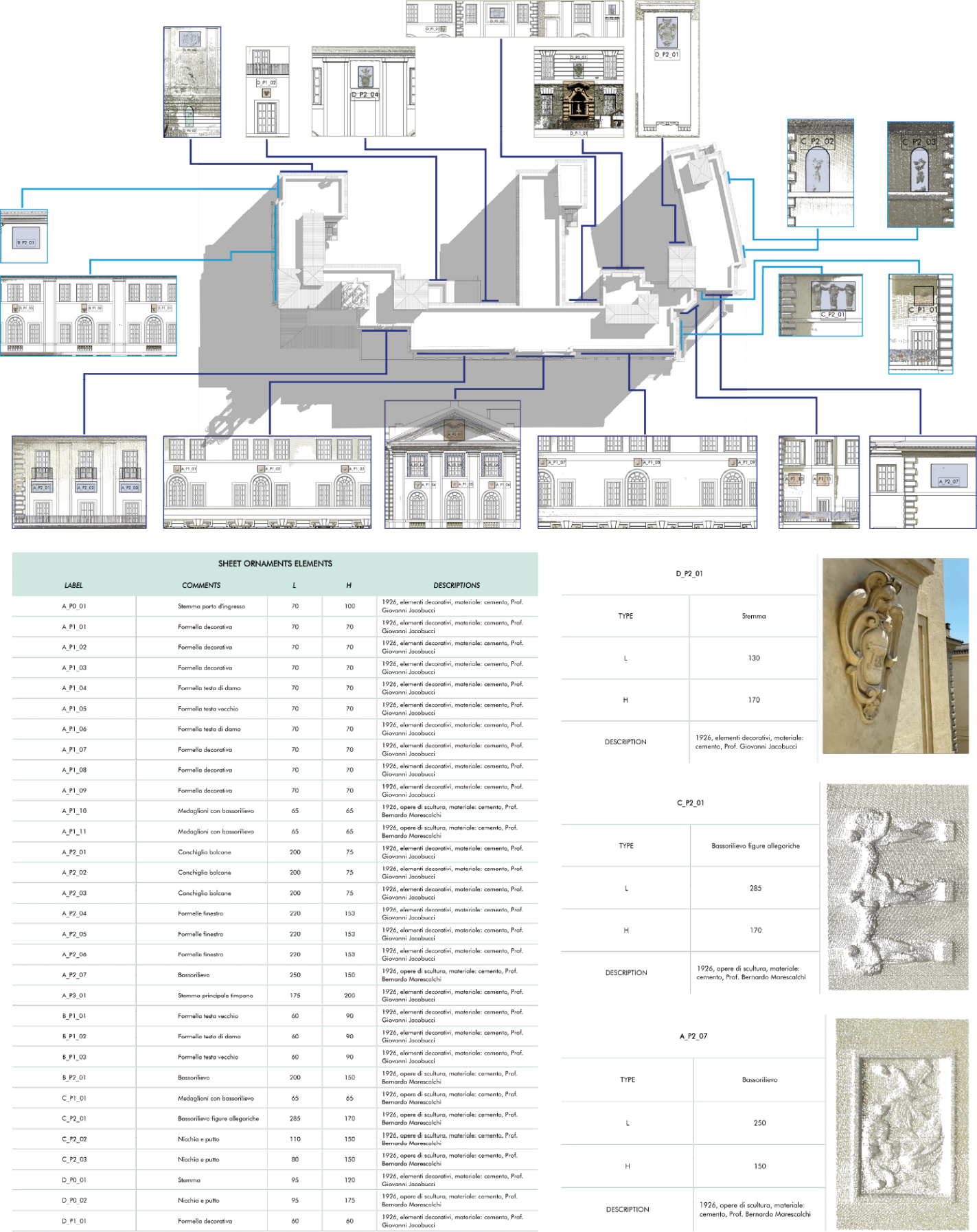
Finally, the cataloguing for the detail elements (described specifically in 4.2 for the fixtures) is reported with all the aspects of the digital archive produced within the CDE in Figure 11 for the façade ornaments. The archive is translated into a table that reports the label of the modeled element, explanatory comments, geometric aspects, and archival descriptions; to these are added photographs of the survey carried out and meshes extracted from the point cloud. This procedure allows for a complete archive of the aspects necessary for the analysis and possible restoration of the construction elements, and is open, since it can be implemented at any time, with data and documents relating to specific analyses that the public administration will want to conduct (e.g., material, degradation, performance analyses for the fixtures, etc).
5. Discussions
The findings of this study highlight the significant advantages of integrating HBIM with CDE for the information management of built heritage, and in particular, with a case study on school buildings. The methodology exposed allowed for a comprehensive approach to digital documentation, fostering interdisciplinary collaboration among the stakeholders (architects/engineers, historians, real estate and facility managers, and public administrators). The integration of advanced surveying techniques, including TLS, ensured a high level of precision in data collection, which was instrumental in creating a robust and information-rich HBIM model of the Ermenegildo Pistelli school in Rome.
The use of CDEs proved to be a pivotal component of the research, facilitating seamless communication and data exchange among stakeholders. By structuring the digital environment according to standardized workflows, it was possible to efficiently manage historical documentation, architectural and construction modeling, and collaborative decision-making. The research also demonstrated the effectiveness of cataloguing construction elements and archival information within the HBIM framework, offering a replicable model for other heritage preservation projects.
The study also encountered limitations. One of the primary challenges was the complexity of modeling intricate architectural details and integrating them with historical data in a structured manner. The use of HBIM methodology proved to be effective in documenting tangible aspects of the building, but the inclusion of intangible cultural heritage remains an ongoing challenge. The reliance on authoring software, such as Autodesk Revit and Dalux, may also pose constraints in terms of interoperability and long-term data accessibility.
Furthermore, the process of historical data collection presented obstacles due to fragmented archival records, requiring efforts to piece together a coherent reconstruction of the building’s evolution. The accuracy of the final model is inherently dependent on the quality and availability of archival materials, which may not always be sufficient. Another limitation is the adoption of CDEs by public administration entities, which often lack the necessary technical expertise to fully utilize these digital tools. The study underscores the need for tailored training programs to enhance the digital competencies of heritage management professionals.
To address these limitations and expand upon the research findings, significant future directions can be proposed. The development of standardized protocols for HBIM applications in educational heritage management could also improve consistency and facilitate broader adoption. Further research should focus on enhancing the interoperability of HBIM and CDEs through open-source platforms and standardized data exchange formats. This would mitigate the challenges associated with proprietary software and ensure long-term accessibility and usability of heritage data. Additionally, community engagement initiatives could be developed to involve local populations in heritage conservation efforts, ensuring that HBIM applications align with broader societal and cultural objectives.
The debate on data ownership, in terms of security and protection, certainly remains open. In accordance with the actual legislation (UNI 11337), the responsibility for the CDE is assigned to the client, who can either manage it directly or delegate this function to an external entity. The client specifies the procedures for managing the flow of information to and from the CDE in the Information Specification, also defining the parties responsible for and/or custodians of the CDE. The regulations establish a general framework for the information flow within the CDE. The presented work could allow a framing in the proposed framework, also of the issues of data management to support the public administration for the future conservation and sharing of information.
6. Conclusions
The study highlights the significant role of integrating HBIM with CDE for the efficient management and preservation of historical school buildings. The case study of the Ermenegildo Pistelli school in Rome demonstrated that HBIM not only enables accurate digital documentation of architectural and historical features but also enhances data structuring for long-term conservation. The involvement of public administration and stakeholders played a fundamental role in ensuring the effective storage, management, and accessibility of models and data within the CDE. By fostering collaboration among architects, engineers, historians, and facility managers, the structured digital workflow facilitated informed decision-making and optimized heritage management processes. Despite challenges related to the complexity of architectural modeling, data interoperability, and the digital literacy of public entities, this research underscores the necessity of robust digital strategies in heritage conservation. Future efforts should focus on enhancing interoperability through open-source platforms, developing training programs for public administration, and promoting stakeholder engagement to ensure sustainable and inclusive heritage management practices.
7. Acknowledgments
Scientific collaboration agreement between the DICEA of the Sapienza University of Rome and the Municipality I of Rome Capital and focused on the architecture for education designed and built in Rome from the Unification of Italy to the first thirty years of the twentieth century. Scientific referee: Edoardo Currà.
The researcher A. D’Amico worked on the following publication as part of the research contract co-financed by the European Union—PON Research and Innovation 2014–2020 pursuant to art. 24, paragraph 3, letter. a), of Law 30 December 2010, n. 240, and subsequent amendments, and the Italian Ministerial Decree 10 August 2021 n. 1062.
8. Funding
Project 2022–Sapienza University of Rome: SMARTEST “Digital tools for indoor environmental quality in school buildings”. Protocol number: RP1221816BF46A04. Scientific referee - PI: Alessandro D’Amico.
9. Author Contributions
A.D. Conceptualization, Methodology, Validation, Writing - Original Draft, Supervision, Project administration, Funding acquisition; M.B. Visualization, Investigation, Surveys, Formal analysis; E.C. Writing - Review & Editing, History of construction supervision.
10. References
[1] Liu J, Bird G, Willkens DS, Burt RA, McGonagill H (2023) Preserving the history of African American Education: Digital Documentation of Rosenwald Schools-A Case Study on the Tankersley School in Hope Hull, Alabama, USA. Int Arch Photogramm Remote Sens Spatial Inf Sci XLVIII-M-2-2023:951–958. https://doi.org/10.5194/isprs-archives-XLVIII-M-2-2023-951-2023
[2] Garcia-Gago J, Sánchez-Aparicio LJ, Soilán M, González-Aguilera D (2022) HBIM for supporting the diagnosis of historical buildings: case study of the Master Gate of San Francisco in Portugal. Autom Constr 141:104453. https://doi.org/10.1016/j.autcon.2022.104453
[3] Liu J, Willkens DS, Foreman G (2022) An introduction to technological tools and process of Heritage Building Information Modeling (HBIM). EGE-Expresión Gráfica en la Edificación 16:50–65. https://doi.org/10.4995/ege.2022.17723
[4] Tagliabue LC, Villa V (2017) Il BIM per le scuole: analisi del patrimonio scolastico e strategie di intervento. Hoepli, Milano
[5] Lin YC (2017) Application of integration of HBIM and VR technology to 3D immersive digital management-Take han type traditional architecture as an example. Int Arch Photogramm Remote Sens Spatial Inf Sci XLII-2/W5:443–446. https://doi.org/10.5194/isprs-archives-XLII-2-W5-443-2017
[6] El Barhoumi N, Hajji R (2024) HBIM and Extended Reality for cultural mediation of Historical Heritage: a Review. Int Arch Photogramm Remote Sens Spatial Inf Sci XLVIII-4/W9-2024:125–132. https://doi.org/10.5194/isprs-archives-XLVIII-4-W9-2024-125-2024
[7] Matrone F, Colucci E, De Ruvo V, Lingua A, Spanò A (2019) HBIM in a semantic 3d gis database. Int Arch Photogramm Remote Sens Spatial Inf Sci XLII-2/W11:857–865. https://doi.org/10.5194/isprs-archives-XLII-2-W11-857-2019
[8] Ferro A, Lo Brutto M, Ventimiglia GM (2023) A Scan-to-BIM process for the monitoring and conservation of the architectural heritage: Integration of thematic information in a HBIM model. Int Arch Photogramm Remote Sens Spatial Inf Sci XLVIII-M-2-2023:549–556. https://doi.org/10.5194/isprs-archives-XLVIII-M-2-2023-549-2023
[9] Heesom D, Boden P, Hatfield A, Rooble S, Andrews D, Hallam G (2021) Developing a collaborative HBIM to integrate tangible and intangible cultural heritage. Int J Build Pathol Adapt 39(1):72–95. https://doi.org/10.1108/IJBPA-04-2019-0036
[10] Jordan-Palomar I, Tzortzopoulos P, García-Valldecabres J, Pellicer E (2018) Protocol to Manage Heritage-Building Interventions Using Heritage Building Information Modelling (HBIM). Sustainability 10(4):908. https://doi.org/10.3390/su10040908
[11] Bacci G, Bertolini F, Bevilacqua MG, Caroti G, Martínez-Espejo Zaragoza I, Martino M, Piemonte A (2019) HBIM methodologies for the architectural restoration. The case of the ex-church of San Quirico all’Olivo in Lucca, Tuscany. Int Arch Photogramm Remote Sens Spatial Inf Sci XLII-2/W11:121–126. https://doi.org/10.5194/isprs-archives-XLII-2-W11-121-2019
[12] Oreni D, Brumana R, Georgopoulos A, Cuca B (2013) HBIM for conservation and management of built heritage: towards a library of vaults and wooden beam floors. ISPRS Ann Photogramm Remote Sens Spatial Inf Sci II-5/W1:215–221. https://doi.org/10.5194/isprsannals-II-5-W1-215-2013
[13] Fernandes Dionizio R, Dezen-Kempter E (2024) Cultural heritage management: towards informed decision-making based on integrated HBIM-GIS. Blucher Soc Sci Proc 7:501–516. https://doi.org/10.5151/FGKD24-48
[14] Attenni M (2019) Informative models for architectural heritage. Heritage 2(3):2067–2089. https://doi.org/10.3390/heritage2030125
[15] Khodeir LM, Soliman HE (2017) Sustainable Development of Heritage Areas: Towards Cyber-Physical Systems Integration in Extant Heritage Buildings and Planning Conservation. Int J Recent Contrib Eng Sci IT (iJES) 5(1):40–52. https://doi.org/10.3991/ijes.v5i1.6623
[16] Patacas J, Dawood N, Kassem M (2020) BIM for facilities management: A framework and a common data environment using open standards. Autom Constr 120:103366. https://doi.org/10.1016/j.autcon.2020.103366
[17] Shin MH, Kim SA (2024) Analyzing the variances in perspectives on BIM implementation among Korea AEC participants. Adv Civ Eng 2024:4809957. https://doi.org/10.1155/2024/4809957
[18] Abbas M, Ajayi S, Oyegoke A, Alaka H (2022) A Cloud-based Collaborative Ecosystem for the Automation of BIM Execution Plan (BEP). J Eng Des Technol 21(5):1229–1252. https://doi.org/10.1108/JEDT-02-2022-0128
[19] Tang B, Luo J, Zhang J (2024) Container-based data-intensive application scheduling in hybrid cloud-edge collaborative environment. Softw Pract Exp 54(7):1217–1240. https://doi.org/10.1002/spe.3195
[20] Lim G, Lee D, Suh S (2015) Cloud-Based Content Synchronization Method for Collaborative Learning Environment. Int J Adv Corp Learn (iJAC) 8(1):24–29. https://doi.org/10.3991/ijac.v8i1.4410
[21] Zhou C, Dong X, Zou Y, Chen L, Xu F (2024) A Historical Building Information Modeling-Based Framework to Improve Collaboration and Data Security in Architectural Heritage Restoration Projects. Buildings 14(5):1431. https://doi.org/10.3390/buildings14051431
[22] Oostwegel LJN, Jaud Š, Muhič S, Malovrh Rebec K (2022) Digitalization of culturally significant buildings: ensuring high-quality data exchanges in the heritage domain using OpenBIM. Herit Sci 10:1. https://doi.org/10.1186/s40494-021-00640-y
[23] Moyano J, Fernández-Alconchel M, Nieto-Julián JE, Barrera JA, Fernández-Valderrama P (2023) Integration of dynamic information on energy parameters in HBIM models. Int Arch Photogramm Remote Sens Spatial Inf Sci XLVIII-M-2-2023:1089–1096. https://doi.org/10.5194/isprs-archives-XLVIII-M-2-2023-1089-2023
[24] Currà E, Russo M, Severi L, Morganti M, Habib E, Grignaffini S (2020) Recupero e riqualificazione integrata delle scuole del Regno a Roma. Strategie di intervento energetico sostenibile. In: Cascone SM, Margani G, Sapienza V (eds) New Horizons for Sustainable Architecture – Nuovi orizzonti per l’architettura sostenibile. Edicom, Monfalcone, pp 1398–1413
[25] D’Amico A, Currà E, Di Livio P, Del Lucchese F, Pini A, Rognoni M (2025) BIM and Code Checking for School Buildings: Standard Checks for IAQ. In: Corrao R, Campisi T, Colajanni S, Saeli M, Vinci C (eds) Proceedings of the 11th International Conference of Ar.Tec. (Scientific Society of Architectural Engineering) Colloqui.AT.e 2024. Lecture Notes in Civil Engineering, vol 611. Springer, Cham, pp 249–266. https://doi.org/10.1007/978-3-031-71863-2_16
[26] Remiddi G, Bonavita A (2005) Guida alle scuole del I Municipio: il moderno attraverso Roma. Palombi, Roma