https://doi.org/10.36253/rea-17351
Received: May 01, 2026; Revised: May 19, 2026; Accepted: May 19, 2026
Keynote article
Policies and prospects for UK agriculture and rural areas after Brexit – navigating turbulent times at home and abroad
University of Gloucestershire and Theo Lenormand, OFGEN, Wales
*Corresponding author. E-mail: jdwyer@glos.ac.uk
Abstract. This paper reflects on the Brexit process, impacts and influence upon UK agri-rural businesses, communities and policies. Tracing a timeline, we cover the stages of Brexit debate, development and implementation and note the complexity of identifying impacts against a turbulent external context. Impacts from new trade policy have been modest but negative, particularly for smaller agri-food and rural businesses, whilst impacts from changing agri-rural policies have diverged across the four nations of the UK, with the most dramatic changes in England. Significant uncertainty remains around the future evolution of UK agri-rural policies and trading relations with Europe. We see a risk of reduced political attention towards farming, food production and rural development, notably in England but also in the UK policies led from London which affect farming and rural areas including trade, taxation and migration. At the same time, interest in agri-rural policies across Wales, Scotland and Northern Ireland seems likely to remain strong. We suggest this imbalance is unwise for a country which is strongly committed to a successful climate transition, where careful management of UK land and agri-rural resources will become ever more critical, in the years ahead.
Keywords: Brexit, agri-rural policy, policy design and implementation, future prospects.
JEL codes: H50, Q18.
Contents
1. Introduction – setting the agenda and describing the timeline
2. Timeline and process – a brief narrative
3. Post-Brexit trade policy and its impacts
4. Brexit impacts on UK agri-rural policies – considering the context
5. Implementation pathways for post-Brexit agri-rural policy
6. Policy learnings: reflections on process management
7. Overview of Brexit impacts and future prospects
8. Future prospects – no agri-rural reprieve?
Highlights
- –Brexit impacts on UK agri-rural policy and issues are complex, compounded by both external global, and internal policy turbulence, post-2020
- –Post-Brexit agri-rural policies are markedly divergent across the UK’s nations with the most dramatic changes in England, increasing sector uncertainties
- –Impacts from new trade policies are modest but negative for agri-food and rural businesses
- –UK government should increase its focus on rural resource management and enhance policy design and implementation to reach its climate and SDG targets
1. Introduction – setting the agenda and describing the timeline
It is almost ten years since the results of the UK Brexit referendum were made public, and more than five since the UK ceased to be a member of the European Union. This might be regarded as a sufficient period in which to analyse its impacts. Nevertheless, these years have been marked by major unanticipated global ‘shocks’ – external effects which have also affected UK policies. In turn, those policies have undergone significant change with increased divergence among the UK’s four nations in internal policy development, its drivers and consequences. Therefore, it is essential to build contextual understanding when examining the empirical evidence, and to consider the policy process, as well as counterfactual hypotheses and reasoning, to achieve a useful understanding of causes, lessons and likely implications. This paper adopts a largely qualitative approach combining policy narrative, evidence review, expert interpretation and forward-looking reflections to respond to its chosen topic. As authors, we first address the question of ‘What did Brexit mean in practice?’ before moving on to ‘What have been the impacts and implications, for markets and policies?’, and conclude with suggestions about future remaining challenges and possible developments. Our aim is to synthesise, interpret and compare UK post-Brexit agri-rural policy trajectories as a ‘real-time experiment’ in post-CAP policy, and assess their implications for meeting future needs.
This paper is organised as follows: section 2 provides a narrative of the Brexit process; section 3 examines Brexit impacts on trade and its implications for agri-rural sectors; sections 4 and 5 detail the UK’s specific agri-rural policy changes since Brexit and section 6 analyses specific features of the process in England, the UK’s largest agri-rural region. Section 7 discusses and analyses overall impacts of the post-Brexit changes and prospects for the future. Section 8 summarises the current situation, identifies shortfalls and offers concluding reflections.
2. Timeline and process – a brief narrative
The summer 2016 UK Brexit referendum resulted in a small margin in favour of leaving the European Union (48% voted to remain, 52% to leave, with a turnout of 72% of the registered electorate). Among UK nations, England and Wales voted to leave while Scotland and Northern Ireland voted to remain (UK Parliament, 2016). The result set in train a process for departure, initiated following Prime Minister David Cameron’s resignation as he had campaigned strongly on the ‘remain’ side. His replacement Theresa May, from his same centre-right party, committed to secure the UK’s exit from the EU.
However, a long period of negotiation followed over the ‘type’ of Brexit to be implemented, due at least in part to the lack of political consensus on this point before the vote. Early decisions by party leaders to allow MPs a ‘free vote’ in the referendum led to prominent ‘leavers’ and ‘remainers’ in each of the two main parties (centre -left and -right), although the smaller parties took clear positions. Thus, the voting public had no clear idea of exactly what leaving the EU meant, as both referendum campaign groups included people from different parties, with very different policy ideas about this.
It could also be argued that prior to 2016, there was insufficient detailed preparation for the possibility and consequences of a leave vote within the government administration. The period was marked by a strong ‘austerity’ agenda applied to help the UK recover from the impact of the 2008 global financial crisis. Implemented under a centre-right coalition, this drove deep, sustained and cumulative cuts in public spending (in real terms), and in public sector employment. Ministries and government agencies increasingly had to concentrate on maintaining only their essential roles, so capacity to explore future scenarios was limited. A government exercise to examine the impacts of EU membership (‘Review of the balance of competences’) across national Ministries and Departments in 2014 had concluded that its benefits significantly exceeded costs, but little work was devoted to designing feasible or desirable Brexit processes before 2016. Interestingly, a very different position was taken by the Irish government: officials in Dublin already had clear understanding about the implications of different types of Brexit by early 2016, publishing a framework immediately following the UK’s announcement of the referendum result (Rte, 2016).
During 2017-2018 the UK underwent a gradual shift of focus from a ‘soft’ Brexit, partially negotiated but not agreed under Theresa May, to a ‘hard’ one supported by others in her party who unseated and succeeded her. Key elements affirmed 1) leaving the single market, and 2) leaving the customs union, plus statements about tightening UK border controls and shifting public funds away from agriculture and Europe towards the core UK institutions of the National Health Service and state education. Brexit lobby groups effectively orchestrated this shift, using strong rhetoric criticising open borders and high levels of immigration, inaccurately portrayed as linked mainly to EU obligations.
In this same period, the negotiation changed from a detailed and carefully discussed process with stepwise clarification and deliberation, to something appearing increasingly desperate as time passed and no firm agreement emerged. Mainstream media increasingly voiced frustration over the timetable but offered little deep analysis of choices and their implications. In 2019, new elections gave Boris Johnson a strong mandate for a ‘Get Brexit Done’ agenda, echoing media sentiment, and his Conservative administration adopted unorthodox (later judged illegal) methods to accelerate decision-making. The departure agreement was signed as Johnson had promised on 31 January 2020, but the deadline was achieved only by leaving many detailed issues unresolved.
2020-2023 then saw enormous turbulence in the agri-food and rural arena caused by external shocks and crises: the Covid 19 epidemic, then the invasion of Ukraine by Russia which markedly disrupted key food production, global food markets and trade patterns. In this difficult period the UK was setting up new systems and approaches to agri-rural support, which had previously been strongly shaped within the EU’s Common Agricultural Policy. And partly influenced by the Brexit sentiment, internal UK agri-rural policy became increasingly divergent and contested, with impacts on farm structures, sectors, and morale.
In the 2024 election, the UK’s main political parties had only slightly different “manifesto” visions for the agricultural sector: the centre-right conservatives adopting a laissez-faire liberal approach noting sector inefficiencies to remedy, whilst recognising a need to pay for the environmental public goods provided by farmers; while centre-left labour expressed a less clear political view on farming but consistent support for the environment, and some interest in reducing inequalities in rural areas. A Labour government was elected with a significant majority, and a partial ‘reset’ of the UK’s relationship with the EU has since developed, accentuated by global and security concerns arising from the re-election of Donald Trump to the US White house, and the wars in Ukraine and the middle east.
3. Post-Brexit trade policy and its impacts
Brexit was widely presented as an opportunity for the UK to seek access to other markets by concluding more, and more ambitious trade deals independently of the EU; but the EU was the UK’s biggest trade partner when Brexit started (Hix et al., 2022) and it remains so.
A Free Trade Agreement with the EU was signed in December 2020 and applied from May 2021 but required significant further change to resolve implementation details (Freeman et al., 2022; Du et al., 2023). The UK wanted to be able to diverge in terms of its regulatory environment, to be more competitive in global markets (the term ‘Singapore under-Thames’ was coined to describe the government’s favoured future trading environment; Erkkila et al., 2025). The government also made a political commitment to seek other trading opportunities beyond Europe, mostly via ‘rollover’ of pre-existing agreements that had applied to the UK within the EU (Erkkila et al., 2025). In addition, the UK was integrated into the Pacific CPTPP, promoting freer trade with American and Asian nations.
UK trade was also strongly affected by complicating factors – Covid lock downs, wheat production collapse and export blockades in Ukraine, gulf ‘blockades’ by Yemeni groups, energy price volatility, and then Trump’s tariffs. Compounding these sources of political and market turmoil, markets reacted to the negative production consequences of extreme weather conditions – with devastating winter rains / floods in 2023, followed by drought / extreme heat in the summers of 2022 and 2025 (Jelliffe and Gerval, 2025).
When considered net of the counterfactual, the trade impact of the UK’s departure from the EU on the UK is challenging to clarify but has clearly been more negative than positive. However, major external factors and shocks provided a ‘smokescreen’ for Brexiteers and mainstream politicians to hide these negative impacts, avoiding discussion and open debate. Following the highly aggressive and divisive rhetoric of the referendum, Brexit consequences were a ‘toxic topic’ that neither the people nor the press wanted to discuss, because views had become so divisive and corrosive, and both main political parties refused to challenge the decision to leave the EU. It has only been since 2024, as the labour government has sought to explain its difficult economic circumstances and respond to current international developments, that more critical analysis of Brexit impacts has accumulated.
UK exports or imports to the EU required traders to be registered, with a compliance certificate (covering health, veterinary status, composition and other details). Businesses needed to specifically notify some items (e.g. perishable goods), to apply information on warranties, rules of origin, and VAT status. The paperwork confirming each element had to be completed on both sides of the border during the process. Packaging and transport conditions also applied to movement of goods across borders (e.g. type of pallets used: HMG 2021a).
The UK government repeatedly postponed implementation of certain import controls, partly in response to the disruption caused by the COVID-19 pandemic and concerns regarding supply chain readiness (HMG, 2021b). Although some additional procedures related to Sanitary and Phytosanitary (SPS) requirements became applicable from 2021, comprehensive SPS controls on EU to UK imports were delayed several times and not fully introduced until 2023-2024. By contrast, EU members began applying full border controls on goods arriving from the UK in 2021, including documentary and physical SPS checks. As a result, some perishable shipments were temporarily withheld at EU borders due to incomplete documentation or SPS non-compliance (EC, 2021). Also, formal verification of rules of origin were more fully enforced from 2022, increasing administrative costs for exporters (UK Trade Policy Observatory, 2022). This created additional transaction costs and border friction for EU-bound shipments that negatively impacted UK meat, dairy and seafood exports (House of Commons, 2021).
Northern Ireland (NI) has special ‘hybrid’ status, depending on the final consumer of the goods moved into or through its territory. Goods imported for consumption within NI do not suffer new controls, but goods imported from UK to NI and thence on to Ireland, or vice versa, have new controls applied. Improvements have gradually been achieved, reducing frictions in NI.
Today, the UK is resetting its relationship with the EU after the change in government to Labour (NFU, 2025), and especially since the new US Trump administration and international conflict have increased anxieties about Europe’s defence and US trading relations. There has been a new commitment to negotiate a SPS agreement leading to reduced controls once agreed; and more general “dynamic regulatory alignment” (Berg, 2024) is being pursued.
Overall, ‘relative to trade with the rest of the world, rates of agri-food trade growth in the European Union and the United Kingdom suggest that both regions are diversifying to other trading partners, despite observed increases in bilateral trade.’ (Jelliffe et al., 2025, p. i). The biggest negative net impact of Brexit has been on UK exports to the EU, largely due to the introduction of non-tariff measures such as customs declarations, rules-of-origin documentation and sanitary and phytosanitary checks (Food and Drink Federation, 2025). These requirements have disproportionately affected smaller producers, many of whom face higher administrative costs and limited capacity to comply with complex export procedures (British Chambers of Commerce, 2023). Empirical estimates suggest the Trade and Cooperation Agreement (TCA) reduced UK goods exports by around 6.4% (approximately £27 billion) in 2022, driven primarily by a 13.2% decline in exports to the EU, with the smallest firms experiencing export reductions of 30% on average (Jelliffe et al., 2025; LSE CEP, 2024). Around 14% of firms that previously exported to the EU ceased exporting after the TCA came into force, highlighting disproportionate impact on SMEs. Accompanying adjustments in trade and labour supply patterns now give some evidence of growing trade with non-EU partners – including Commonwealth partners, as firms respond to weakening EU-UK integration (Food and Drink Federation, 2025) – although the EU also shows growth in a similar direction (Figure 1).
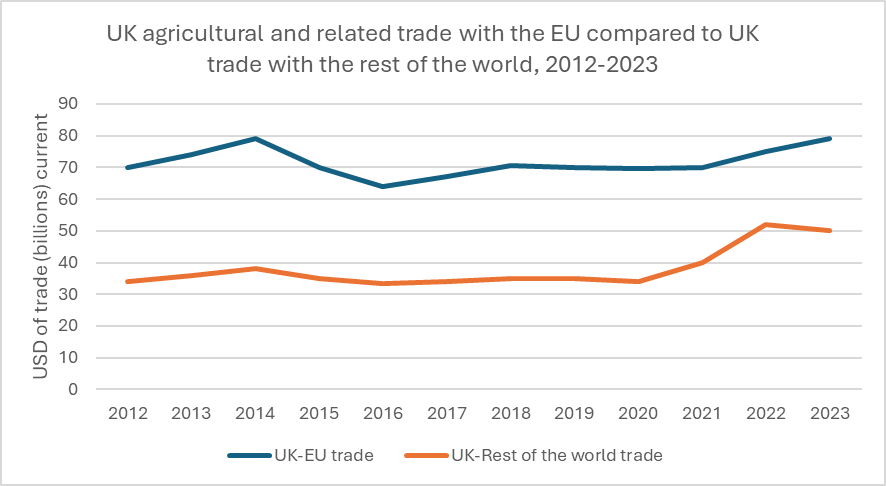
In sum, Brexit is likely to have had a net negative impact on UK agri-food exports and imports. Fewer imports now come from the EU and more from the rest of the world, indicating that the UK has not prioritised its agricultural sector when pursuing trade negotiations and new deals, removing some tariffs and quota barriers to imports from nations that compete directly with its distinctive agri-food products (e.g. in meat and dairy). Nevertheless, since similar patterns are seen in EU agri-food trade post-Brexit, the counterfactual might also have been more UK trade beyond the EU.
If the net impact of changes in external trading balance has been modest but negative for the post-Brexit UK agri-rural economy, what could be said of changes in the internal policy mix?
4. Brexit impacts on UK agri-rural policies – considering the context
Shortly after the 2016 referendum, the government confirmed that post-Brexit, UK agricultural policy would continue to be devolved, in line with the pattern that applied under the CAP since 2014, for both pillars of the policy (UK Parliament, 2017).
Across the nations of the UK, post-Brexit agricultural policy has diverged with each administration moving away from the previous CAP support model to different extents (OECD, 2025). England has gone the furthest in signalling major changes to policy objectives and instruments. Wales follows with more conservative policy objectives but a greater novelty in its policy approach. By contrast, Scotland and Northern Ireland have largely retained pre-Brexit policy goals and the instruments associated with the CAP, although both have introduced targeted innovations to better align with their respective national priorities.
These differing tactics and models reflect the relative importance of the Pillar 1 and Pillar 2 CAP agendas in each case, as well as the balance of Brexit sentiment and political ‘character’ of each country. England has traditionally had more liberal market-oriented goals and delivery approaches in agri-rural policy, compared to either Wales, or Scotland and Northern Ireland (Lenormand, 2023). These three nations have significantly higher shares of agriculture and rural business in their economies and total employment. They also have much larger shares of rural land and rural communities than England (DEFRA et al., 2022).
Policy change and impact should always be set in context. The UK’s rural areas exhibit a gradient across its four countries, from very accessible areas in the south and east, to its most remote territories particularly in the extreme west and far north, and on higher ground. The total rural population of the UK is relatively high, and growing or stable in many areas, but decline affects its remote uplands and other inaccessible rural locations, also rural former industrial areas (ex-mining, or adjacent to major ship-building or steel production industries, etc.), where the territory and community was dominated by part-time farming alongside employment in these sectors, which has now ended (Defra, 2022). Rural economic structure, as expressed in standard statistics, is similar to the urban economy in England, but more differentiated in Wales, Scotland, and Northern Ireland (Welsh Government, 2026). This gradient of rural characteristics and importance has clear consequences for policy priorities.
UK-wide, rural services are generally less well-supported than urban; so rural living is more costly when households with similar incomes are compared. Similar types of need and issues in rural areas are noted including: poor public transport; comparatively high land and property prices compared to urban; declining provision of key facilities (pubs, shops, doctors); labour shortages; and high reliance on non-UK workers for many typical rural jobs (tourism / leisure, social care, vets, farm work, food processing). Rural territories mostly have weaker than urban digital access and broadband speeds, but these are improving (e.g. see NICRE, 2021 and 2023). Finally, NGOs and devolved governments voice concerns about the ‘invisibility’ of rural issues and understanding in central UK government, where largely urban agendas dominate policy (e.g. RSN, 2024).
5. Implementation pathways for post-Brexit agri-rural policy
In brief, England chose to completely phase out support for farm incomes under the former Pillar 1 of CAP, reducing them gradually over seven years from 2020, aiming to achieve a smooth transition to new schemes, which were to be launched in parallel over the same period (Defra, 2019; AHDB, 2022). Other nations adopted a more cautious approach, retaining Pillar 1 funding in full whilst their new schemes were developed, tested and incrementally implemented. Figure 2 shows how the funding allocation pattern shifted, in England: in reality, this shift has been more dramatic than the original plans announced in 2022.
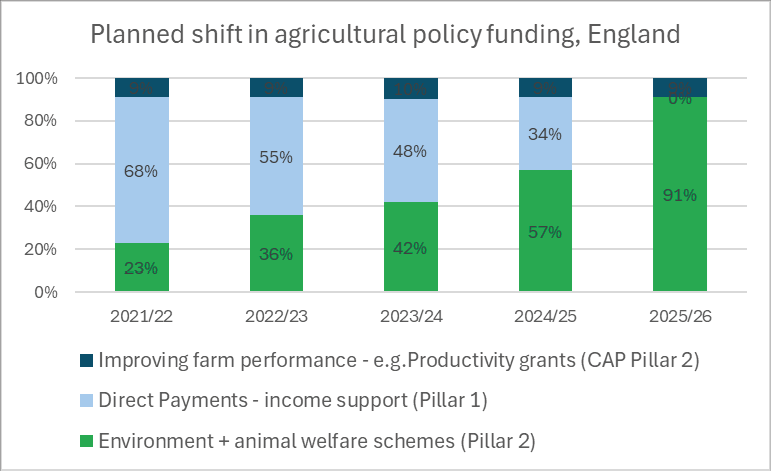
The total budget for UK agricultural support is relatively unchanged, but there have been some cuts in England and Wales which have arisen due to shifting domestic priorities since leaving the EU (Defra blog, 2025). Nevertheless, specific rural development policies have almost disappeared in England in favour of more general ‘recovery’ funds targeting growth and economic regeneration through undifferentiated competitive calls, while dedicated rural policies have stronger focus in Scotland, Wales and Northern Ireland (Welsh Parliament, 2025).
England has undertaken the most radical departure from the CAP model. Its Environmental Land Management Schemes (ELMs) replace direct payments with a tiered system of contracts for environmental delivery, reflecting the principle of “public money for public goods.” (Kam et al., 2023). The three tiers of: Sustainable Farming Incentive (SFI); Local Nature Recovery (LNR); and Landscape Recovery (LR) schemes; were designed to collectively shift policy entirely away from income stabilisation and into environmental outcomes, climate mitigation and ecosystem restoration. From 2020 to 2026 all funding previously allocated to Pillar 1 income support has been transferred to this ELMs ‘package’. The three new schemes as announced aimed to offer a hierarchy in environmental delivery ambitions, going from “simple actions (‘standards’) at farm level” for the SFI, to long term (20-year) landscape scale agreements in the LRs. But effectively, due to time constraints on the need to redirect and absorb the former pillar 1 funding, England’s pre-existing ‘Countryside Stewardship’ (CS) agri-environment-climate measure, based on management prescriptions, was amended so that it could replace the planned new LNR in the package, becoming its middle tier which is now denoted as ‘CS+’. This reduced the need for a new middle tier to be designed and launched. However, the new SFI ‘base tier’ also drew some elements from the CS approach, with some options overlapping with those in the middle tier. Most CS+ agreements offer 5-year contracts, as similar schemes previously did under the CAP, while SFI agreements are only for 3 years (Table 1).
| Scheme | Principal role | Content | Key Outcomes | ||||||||||||||||
|---|---|---|---|---|---|---|---|---|---|---|---|---|---|---|---|---|---|---|---|
| Sustainable Farming Incentive (SFI) | Broad, entry-level scheme for most farms – contracts for 3 years | Simple actions (‘standards’) at farm level for general environmental benefits. Relatively popular / flexibility. Actions that can be delivered across the whole farmed landscape. | Soil health, nutrient management, hedgerows, integrated pest management, water quality, carbon sequestration, biodiversity. (GOV.UK) | ||||||||||||||||
| Countryside Stewardship (CS) (a transition from the CAP legacy scheme) | More targeted agri-environment support – 5 years at least, depending on the options chosen | Locally targeted environmental benefits, particularly habitats, watercourses and species recovery. Different tiers reflecting different ambition. | Habitat creation, species recovery, water management, historic features, boundary management. (GOV.UK) | ||||||||||||||||
| Landscape Recovery (LR) schemes – bespoke for each location | Highest ambition / transformational tier – Long-term (typically 20 years) | Long-term and landscape-scale change – restoration of landscapes and ecosystems. Complex, binding agreements often requiring blended public/private finance. | Rewilding, woodland creation, peatland restoration, river catchments, saltmarsh, ecosystem recovery. (GOV.UK) | ||||||||||||||||
| Source: the authors, adapted from UK Government publications. | |||||||||||||||||||
Across the planned new schemes for England, delivery dates were gradually pushed back, highlighting design and administrative difficulties in launching a complex and ambitious new programme within so few years. In particular, the highest tier LR component is progressing very slowly as these territorially-based agreements are based around local partnerships but build on common national procedures, with plans for 20-year contracts and some desire to attract new funding from private finance, in a ‘Natural capital blended funding’ approach to delivery. Overall, this shift aligned with critiques of the CAP that highlighted the limited additionality of its decoupled payments and called for more targeted, outcome-oriented environmental schemes. However, England’s decision to rely on the WTO-prescribed ‘income foregone’ formula for payment calculations in its new schemes has the effect of under-rewarding less productive regions of high nature value, whilst paying higher rates on land of relatively low existing environmental value and thereby potentially exacerbating structural inequalities across the territory.
England also offers productivity-enhancing investment aids to farms and food processors (targeted to address a statistically identified trend of ‘flatlining’ in UK agricultural productivity, over the past 20 years). At the policy-NGO interface, a focus on ‘the Food System’ is gaining attention – embracing issues of diet / health / climate links, connecting the national obesity epidemic with interest in improving people’s access to fresh and more diverse, affordable and healthy food and discouraging consumption of high proportions of ultra-processed products of low nutritional value. However, to date these aims are not translated into concrete funding initiatives.
Wales has also moved decisively away from the CAP, but through a more integrated, socially-oriented model. The Sustainable Farming Scheme (SFS) adopts a whole-farm approach seeking to balance food production, climate action, and nature recovery. Wales has developed a “holistic Sustainable Farming Scheme… to integrate food production, nature recovery and climate action,” with a two-tier structure and a “social element” in the base payment reflecting the previous income support mechanisms of the CAP.
The goals (or desired ‘outcomes’) reflect this more holistic approach compared to that in England (Figure 3): and the tools (precise measures) differ also, although they remain based on a menu of options where a farmer opts-in for a 5-year contract.
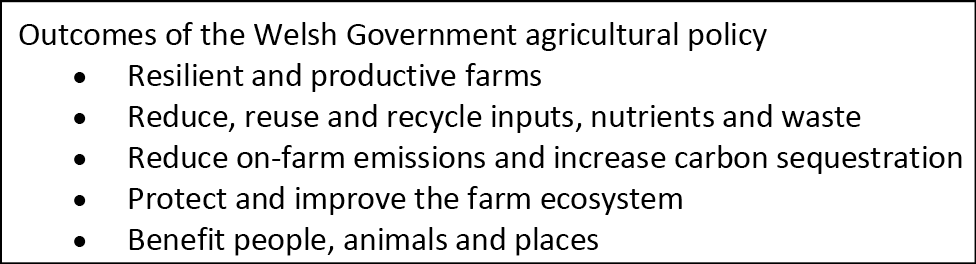
The Welsh scheme has a ‘universal’ base layer with minimal requirements to enter and some obligatory actions, including a self-assessment-led whole farm plan wherein the applicant must set out further actions, selecting from a mix of options to achieve the different goals of the scheme. Further, for each main option, different levels of ‘ambition’ are available to be chosen. In total, the scheme offers a base payment for achieving the actions in the “universal layer” of the scheme, plus specific top-up payments for each of the environmental actions that are chosen from among the various options, with generally higher payments if the applicant chooses higher levels of ‘ambition’ (Table 2).
| Tier | Principal role | Content | Typical Examples | ||||||||||||||||
|---|---|---|---|---|---|---|---|---|---|---|---|---|---|---|---|---|---|---|---|
| Universal Actions | Baseline actions expected from most farms | Mandatory / entry level actions to secure baseline payment | Soil testing, nutrient planning, habitat maintenance, hedgerow management, animal health planning | ||||||||||||||||
| Optional Actions | Additional actions for higher environmental delivery | Menu of actions with different levels of expectation – not everyone can do all actions | Tree planting, pond creation, precision nutrient use, habitat enhancement | ||||||||||||||||
| Collaborative Actions | Joined-up delivery across multiple farms or landscapes | Collective solutions for bigger challenges | River catchments, commons management, peatland restoration, flood management | ||||||||||||||||
| Advisory / Capacity Support | Help farmers transition and comply | Whole-farm approach with guidance and planning support | Business advice, carbon baselining, habitat mapping | ||||||||||||||||
| Source: the authors, based on information from the Welsh Government, 2025. | |||||||||||||||||||
Compared with England’s redesigned system, the Welsh model retains a stronger emphasis on farm viability, community well-being and multifunctionality, echoing strands of the literature that argue for agricultural policy to support broader rural socio-ecological systems and goals. It also includes integral advisory provision, in contrast to the English SFI scheme, and all elements launched simultaneously as one package (before any significant reductions in farm income support were made), again in contrast to England.
However, the transition has been politically contentious, particularly the SFS’ proposed land-use requirements which have undergone significant change during the development process. After a widely criticised first set of proposals were published in 2023, a participatory and deliberative process enabled a revised version of the scheme to be finalised and launched in 2025. This has been well-received by farmers and other stakeholders across Wales, offering 5-year contracts and attracting a good level of applications.
The policy transition has also been less drastic than in England: Wales planned only a 20 to 40% reduction in direct payments in 2026 (Welsh Government, 2025), whilst the SFS was designed, revised and finally launched before this date. Among farmers, fears remain about the potential administrative burden and negative impact on the industry of this broad policy shift (NFU Cymru, 2025).
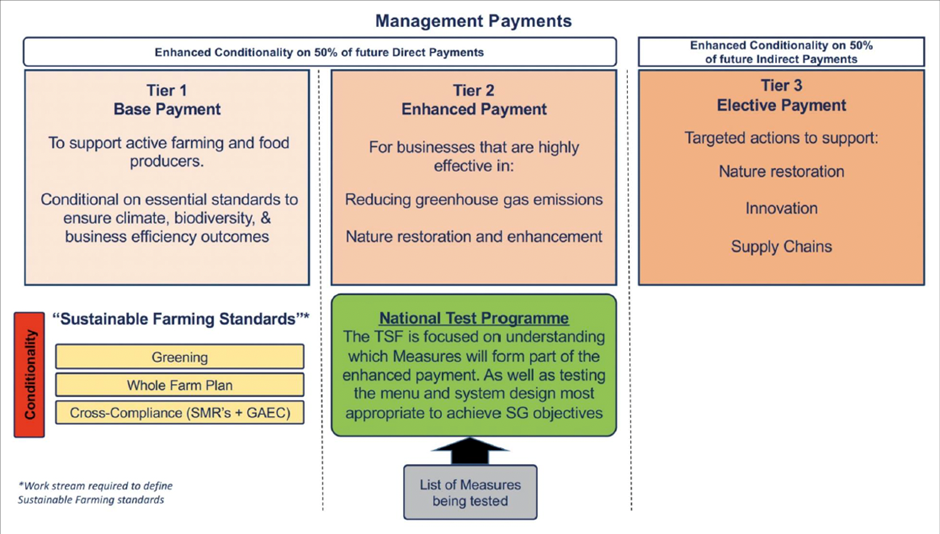
Scotland has chosen a more evolutionary path than England or Wales, retaining the core structure of the policy as it was under the CAP, while strengthening environmental conditionality. Direct payments remain central, including the continued use of coupled support for sectors such as suckler beef and upland sheep. Scotland is introducing a suite of Whole Farm Plans – including carbon audits, biodiversity assessments, soil analysis, and animal welfare plans – that significantly increase the environmental and managerial requirements attached to farm income support.
There is also a greater emphasis in Scotland’s post-Brexit approach, compared to other UK nations, on combined objectives of climate resilience, biodiversity protection and thriving rural communities. This approach mirrors the direction of travel of the post-2023 EU CAP reforms, which also emphasised enhanced conditionality and eco-schemes. Scottish agri-environment scheme coverage declined from 2020 to 2024, suggesting a period of consolidation rather than expansion. Scotland’s model thus represents a reformed CAP framework, rather than a complete replacement (Figure 4).
Northern Ireland’s agri-rural policy remains closest to the pre-2020 CAP architecture among the four nations of the UK, reflecting political preferences and a wish to retain policy alignment with the Republic of Ireland. Direct payments for farm income support continue with some increased environmental conditionality, and accompanying agri-environment schemes remain relatively modest in scale. However, Northern Ireland has introduced some innovative environmental tools within the conditionality element, including LiDAR-based land assessment, whole-farm soil testing and nutrient management planning. These sit alongside the “Farming for Nature” agri-environment package. The approach reflects a technocratic, data-driven enhancement of the CAP model to prioritise soil health, nutrient efficiency, and carbon reduction while maintaining basic income support. It aligns with literature from the administration emphasising the importance of precision management for agriculture, but it avoids the scale and complexity of structural re-designs that have been seen in England and Wales (Figure 5).
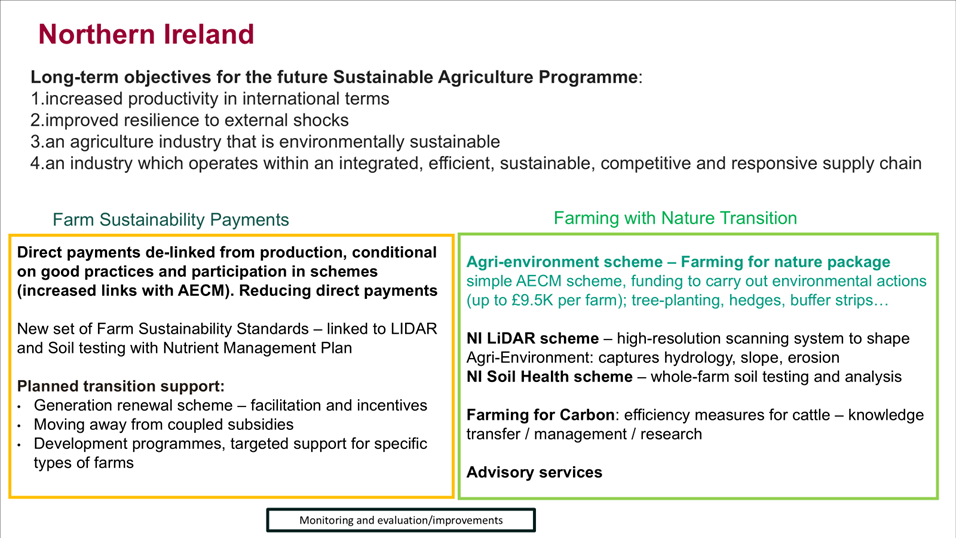
Taken together, across the four nations the post-Brexit landscape is characterised by divergent policy instruments and rationales for environmental ambition and the scale and relative role of farm income support, despite a broadly stable overall agri-budget. England and Wales have replaced the CAP with new systems grounded in environmental public goods delivery and whole-farm sustainability, respectively. Scotland and Northern Ireland have retained the CAP’s foundational architecture but strengthened environmental conditionality and measures, and associated planning requirements. This within-UK divergence reflects broader debates in the scientific literature about the future of agricultural policy in high-income countries: whether it should prioritise environmental public goods, multifunctional rural landscapes or stability and security in primary production. The UK now provides a real-time experiment that is testing these competing visions, through its variety of approaches.
Considering the counterfactual, we should note that even under the CAP, divergence between the four nations’ agri-rural policy approaches was to be expected and a modest decline in resources would also have likely occurred, as it has for the EU. However, all four nations would have been bound by the regulations to retain a significant element of income support and respond to a common set of priorities through a common preparation and justification process, in dialogue with the European Commission. One might anticipate therefore that direct and significant negative financial impacts on farms and rural communities in England, at least, would have been reduced.
6. Policy learnings: reflections on process management
The UK’s post-Brexit experience offers important learning on change management, in this contested policy domain.
Farmers and environmental NGOs have criticised an evolving ‘disaster’ in respect of the design and implementation of the new policies in England. Despite an initial assurance that funding levels to farmers would be maintained, Defra applied BPS reductions steadily but failed to roll out its new schemes at an equal pace; then made a more rapid phase-out of the farm income support payments than was previously indicated. This occurred alongside shrinking production in certain sectors – particularly beef - and triggered significant financial and production crises in both arable and marginal upland areas. The Defra Ministerial team changed more than once in 2025, as government reshuffled roles in response to other, wider political challenges.
Among farming communities, the inconsistent pathway of England’s agricultural transition has undermined farmers’ trust in government and its officials, on grounds that commitments have not been honoured, and with fears that the government is uninterested in domestic food production, increasing imports from other countries while land leaves agriculture for competing uses including energy, housing and large-scale ‘rewilding’ projects focused on nature recovery.
The land-based sector also reacted strongly to the Government’s decision in 2025 to remove a 20-year exemption for farmland from liability for inheritance taxes. Many farmers and landowners in the UK are classically asset-rich but income-poor, so an inheritance taxation crisis arose following a decision to increase the liability for taxation on farmland at the point of transfer between generations, on the death of the owner. This triggered rapid casting of the Labour government as ‘killing the family farm’, with protests and blockades staged in many cities, over a sustained period. The change has now been modified to reduce its scope of impact.
An averted disaster was seen in Wales in respect of the new Sustainable Farming Scheme’s initial design, which proposed significant requirements for new woodland and other controversial conditions. There were tensions between the Welsh government reassuring farmers about its commitment to ongoing support and yet aiming to generate concrete evidence of environmental or climate-positive rural change, compounded by poor communication (e.g. raising fears of large forestry plantations and solar panels replacing farms and displacing communities). Nevertheless, co-design and effective political pressure from agri-rural stakeholders appears to have paid off for Welsh farmers, and the new SFS is now attracting a strong level of applications and uptake.
The more gradual and strategic ‘upgrading’ of existing policies applied in Northern Ireland and Scotland appears to have caused fewer concerns for farming and rural communities, so far.
With hindsight, we can draw lessons from the negative experience in England. There was clearly a degree of inexperience among the civil servants tasked with designing and implementing the new schemes and overseeing the funding shift. As noted, it was planned to maintain a level budget, so BPS would decline steadily as the new schemes grew. But this plan ignored some key factors which would affect the feasibility of this plan.
Firstly, the classic ‘adoption curve’ for new initiatives and schemes among businesses is non-linear, with small numbers adopting initially and then slowly this builds until a critical mass is reached and the curve becomes much steeper as the majority of adopters join, after which additional adopters represent a more conservative or resistant group, entering the new scheme in much smaller numbers over a longer period of time. With this classic pattern, it is clear that the earliest adopters are different from those who join later – they will be those with more ability to move quickly to make changes and more confidence in their ability to benefit from the scheme. Often, these will be farms in a relatively strong business position, followed by those who can see ways to easily fit the scheme options alongside their existing systems (i.e. offering relatively low additionality).
Secondly, the external circumstances for producers were very unpredictable in the first years of the agricultural transition, with weather extremes and major global conflicts, destabilizing market prices on inputs and products and therefore returns to farms. This is likely to have made farm businesses more wary of making multi-annual commitments with a suite of new and relatively untested government schemes.
Furthermore, the new 3-tier approach to support, with the SFI as a basic scheme and then a middle-tier resembling previous schemes plus a top tier promising much more ambitious and long-term support, represented a significant design challenge for Defra. It was clearly future-focused; launched gradually over several years as the various elements were put together, but with no clear transition pathways and little explanation of what the future vision for farming in England was.
- –The SFI implemented a new philosophy of judging farm environmental performance against national ‘standards’, which was intended as more outcome-focused than previous schemes. However, this could also be seen as transferring more delivery risk to the farmer than previous schemes that had been focused on detailed management prescriptions. This might explain a degree of initial hesitation among farmers, in coming forward with applications.
- –An early design decision to require all the new schemes to use the WTO-compliant payment formula of ‘compensation for income forgone plus management costs’ was applied, but with a relative under-estimation of the relevant costs during a period of rapidly rising input prices. This offer failed to attract sufficient applications for the available budget in the first two years of the new schemes, leaving Defra with an underspend and many farms holding back and relying on BPS while it remained relatively intact. Thus the approach to payment had to be recalculated upwards in year three, to provide a greater incentive to adopt.
- –The uplift in payments coincided with more dramatic cuts to BPS in that year, which finally triggered a much more substantial wave of applications. The shift was so dramatic that it rapidly eradicated and overshot the scheme underspend, which then forced Defra to close the SFI scheme to new applicants, as there was no more money to spend.
In addition, it proved difficult for Defra to identify appropriate ‘national standards’ for more complex / variable types of agricultural land. Thus, the chosen pattern of SFI roll-out was to define and offer the easy standards first, before completing the more complex ones. This created a pattern of very uneven access to the SFI across different farm sectors, over time. Farms in the uplands waited five years for their SFI offer while those farming the best and most versatile crop land were given SFI standards from the first year. Particularly challenging has been to identify an element that is fully applicable on common land (much of which has high nature value), meaning that this is still unavailable, in 2026.
There was no targeting of the SFI budget, and contracts were agreed on a first-come-first-served basis, with a pattern of uptake characterised by delays and lagged adoption up to the end of 2022, followed by the payment revisions and a rush to commit the funding in the 2023-2024 period. After this, with no more funds for new agreements, the scheme was closed for a year while Defra considered, with hindsight the undesirable and unforeseen consequences of its first years: having been very critical of the BPS as paying the largest sums to big farms in the most productive parts of England, the SFI uptake actually shifted an even greater share of scheme funds to larger and more productive farm businesses, and away from the uplands and other marginal farming contexts. The scheme’s closure also created considerable negative reputational impact, among farmers and other stakeholders who had been working hard to promote the new approach across the country.
The novel process of ‘co-design’ that had been promoted and pursued in the early years of new scheme development was also reportedly hamstrung by a broader ‘defensive culture’ in Defra and its agencies, and apparent lack of farming expertise or relevant knowledge among new staff recruited to support the new policy framework. Stakeholders stated that they frequently felt manipulated in the schemes’ ‘co-design’ meetings, and trust between the various parties was arguably eroded, rather than strengthened as would normally be anticipated from co-design working, through this process.
With further hindsight, this record of poor implementation could have been predicted and avoided. Defra could have made more effort to capture, listen and learn from past experience and accumulated knowledge and expertise among the wider agri-environmental stakeholder community, which would have enabled them to plan for the anticipated adoption curve pattern and adapt budgetary management to shifting external conditions. But instead, the many new recruits to the Department appear to have been keen to ‘start from scratch’ in how they designed the schemes framework, thereby making many classic mistakes in policy design and delivery.
7. Overview of Brexit impacts and future prospects
The consequences of Brexit for UK farm sectors have been varied. In livestock products, global pressures have limited the scale of impacts: there has been continued increase in demand worldwide for meat and dairy products. A reduction in the EU dairy herd, and in the UK herd before Brexit, continues, fostering buoyant prices for farms across these key livestock commodities. A more challenging context has evolved for cereals, year on year (linked to market trends and harvest volatility) and thus smaller operators have been financially squeezed or shocked, in turn.
Brexit has seen a reduction in the total number of fulltime farm holdings across the UK and greater concentration of production into fewer, larger businesses (especially in England – Figure 6). There have also been some moves toward regulatory strengthening on specific topics of particular concern (e.g. water quality, which has been declining in recent years). This has contributed to some farmer protests, but these trends were also occurring prior to Brexit.
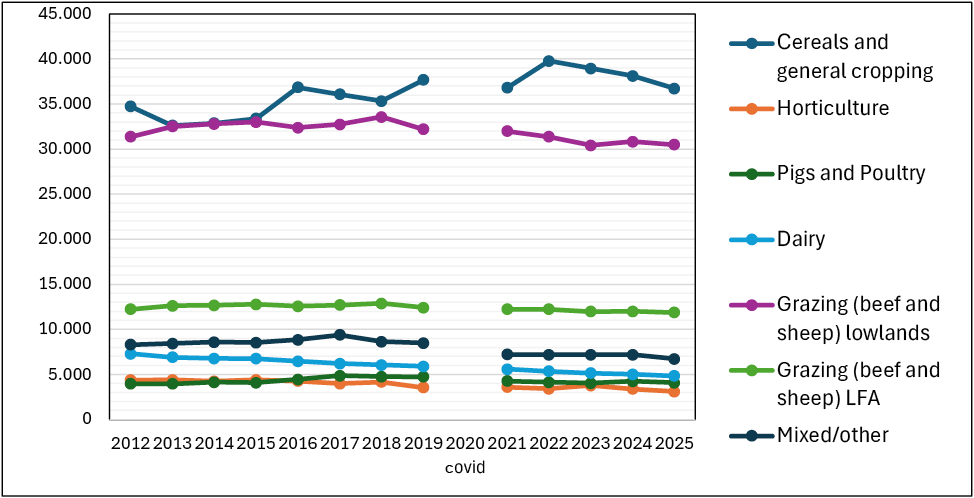
More broadly, the UK business environment is challenging for farmers. Currently, they are affected by subsidy cuts, high costs of production due to inflationary pressures, and significant workforce gaps and needs arising partly from an exodus of former farm workers from Europe, who have been replaced, where feasible, with workers from much further afield (e.g. dairy workers from the Indian Punjab and Pakistan). Challenges have persisted from a continuation of extreme weather events (e.g. floods in 2024, followed by an extremely long spring and summer drought in 2025), probably linked to wider anthropogenic climate change. Against this backdrop, it is the farms in those UK nations that have continued to receive CAP-style income support, that have been less negatively impacted by Brexit, as well as the early adopters of SFI in England for whom the new scheme offered the best financial returns – i.e. larger farms, in the most productive areas of the country.
Marginal farms in England face particular significant concerns. Many are ‘trapped’ in former (pre-Brexit) agri-environment scheme agreements for which they are negotiating short-term annual ‘rollover’ extensions, due to the much less feasible and/or less financially generous options available to them from the still-incomplete new schemes. The almost complete removal of Pillar 1-style support in 2026 has had severe income impacts on these farms, because their level of dependence on subsidy was historically high. However, a significant uplift in livestock prices since 2024, especially for beef cattle, has provided one element of positive impact to cushion the negative impacts of an inadequate policy transition package.
Across the UK, farm businesses are increasingly exposed to new demands for land related to other elements of post-Brexit transition, including the development of carbon markets and major investment in renewable energy infrastructure, as well as new housing and transport infrastructure keeping land values high and increasing the gap between farm wages / incomes and the cost of living in rural areas. These trends have been accompanied by reduced UK policy focus on the particular challenges and specificities of rural communities and quality of life, as London-based policy makers have chosen not to retain dedicated ‘rural development’ support within the agri-linked portfolio. But currently (May 2026), we understand that Wales, Scotland and Northern Ireland are each considering creating new rural development programmes, enabling the continued offer of measures and approaches previously available in CAP pillar 2 (e.g Community-Led Local Development, farm and rural diversification aids, etc.).
8. Future prospects – no agri-rural reprieve?
Following the most recent change of government in 2024, there is now much talk about negative Brexit impacts on the UK economy. Illegal immigration across the English Channel has continued in significant numbers; and polls suggest a reversal of the public’s view registered in 2016 – if held tomorrow, a referendum would apparently produce a majority vote in favour of rejoining the EU. Stimulated particularly by political change in the USA and global defence considerations, the UK government is now actively embarking on securing closer ties with the EU, beginning with discussions on achieving alignment in standards and processes.
Considering other contemporary factors, we suggest that farming will remain a low priority for the UK government, within its strong ‘growth’ focused agenda. However, food policies may have a strengthening profile linked to human health and social inclusion agendas, and the environment will stay (comparatively) strong, among UK policy priorities. Thus, key questions for agri-rural futures could include the following: will we move beyond simple enthusiasm for ‘rewilding’ which ignores cultural and historic farming-nature interdependence and co-evolution, in the environmental land management arena? What price are UK citizens willing to pay, and at what pace, for better water protection and carbon neutrality? Where does the UK’s appetite for food security currently stand, having been comparatively weak in recent decades? And will the UK’s obesity and dietary health concerns lead to a new focus on its horticultural production, as several influential NGOs are now proposing? All of these questions are under discussion, among core agri-rural stakeholder communities in the UK nations.
In agri-rural policy, we foresee more scheme-related and policy ‘churn’ linked to the various policy resets (most notable in Wales and England), plus further roll-out of new elements (perhaps more will now occur in Scotland and Northern Ireland), and a continuing struggle to achieve effective re-design in the face of multiple challenges (especially in England). Whilst the current picture is predominantly of ‘top-down’ post-Brexit designs, it is possible that in this process of ongoing adaptation, more bottom-up, locally-delivered policies could emerge, building on accumulating research findings in the UK (e.g. Defra, 2022) and across the EU (Bartkowski et al., 2023).
In respect of agricultural production impacts, two possible futures are in play. Should the UK anticipate more shrinkage of its land area in production, with a preference for ‘zoning’ (as in the ‘land sparing’ approach, e.g. Fischer et al., 2014)? Or would an alternative and preferable future trend be towards more diversification of enterprises and business models, along with a growth in short(er) food supply chains and more pluri-activity?
We certainly anticipate a growing rapprochement with the EU in this arena, as in others, which could imply a rebuilding of food trade between the UK and Europe, as well as continuing expansion in trade beyond this continent, on both sides of the partnership.
Finally, we see potential for rural futures to diverge further across the four nations of the UK. As this happens, we could see increasingly divergent rural politics, bearing in mind Government uncertainty and the rise of populist agendas.
At national level, even if defence and security concerns lead to close ongoing partnership with the EU, the prospects for greater UK agri-rural policy alignment with Europe look poor in England, contrasting with the ongoing situation in Scotland and Northern Ireland. In Wales, the election in May 2026 significantly affected its wider political orientation but agri-rural policy will likely continue on its current path, relatively aligned to EU trends. London’s UK policymakers may pursue a more globally-focused trade and open markets agenda, with difficult knock-on implications for farm business survival and adaptation. And while some new initiatives in rural and farm-related policy have now emerged in England (a review of farm productivity, an upland communities’ project, and proposals for a Land Use Framework to aid multifunctional planning), the level of resources and attention given to rural issues remains modest.
Considering the urgency of transition and transformation in society in response to the climate emergency, we suggest it would be short-sighted for the UK government to ignore the potential and value of rural assets and services to support and enable successful net-zero shift. Within this transition, farming and rural enterprise have important roles to play, in food, diet and health as well as landscape management and public access for resilience and wellbeing. If politicians fully recognise the interlinkages between rural and urban futures, choices and developments, we may see enhanced rural policies both within and beyond farming. However, if this cannot be achieved, we fear continued stagnation of rural economies and domestic food production, through which UK dependence on other nations increases as its population continues to grow. This suggests increased efforts by Scottish, Welsh and Northern Irish policy makers to push back against English dominance of the agenda, increasing inter-UK political friction and divergence.
Of course, we acknowledge the limitations of our brief and narrative approach to envisioning based upon observation and interpretation, which could prove to have missed important influencing factors beyond our sphere of knowledge. Nevertheless, we encourage the UK government to invest in a strengthened and more inclusive rural vision and future policy agenda.
References
AHDB (2022). Defra announce Agricultural Policy transition plans for England | AHDB. Agriculture and Horticulture Development Board. https://ahdb.org.uk/news/defra-announce-agricultural-policy-transition-plans-for-england (accessed September 2025).
Bartkowski B., Beckmann M., Bednář M., Biffi S., Domingo-Marimon C., Mesaroš M., Schüßler C., Šarapatka B., Tarčak S., Václavík T., Ziv G., Wittstock F. (2023). Adoption and potential of agri-environmental schemes in Europe: Cross-regional evidence from interviews with farmers. People and Nature, 5: 1610–1621. DOI: https://doi.org/10.1002/pan3.10526.
Berg A. (2024) Weighed down by gravity: UK trade policy after Brexit. Centre for European Reform. London.
DEFRA (2020). The Path to Sustainable Farming: An Agricultural Transition Plan 2021 to 2024. HMG, London. https://www.gov.uk/government/publications/agricultural-transition-plan-2021-to-2024#:~:text=show%20all%20updates-,19%20March%202024,30%20November%202020 (accessed 29 April 2026).
DEFRA (2022) Tests and Trials Evidence Report. Schemes for environmental land management. June 2022, Version: 1.0. DEFRA. Crown copyright 2023. https://assets.publishing.service.gov.uk/media/64cb763c47915a00142a91de/elm-tt-june22.pdf (accessed 1 May 2026).
DEFRA Welsh Government, Scottish Government, DAERA (2022). Agriculture In the UK evidence Pack (Agriculture in the UK). DEFRA.
Defra Blog (2025). https://defrafarming.blog.gov.uk/2025/06/16/spending-review-2025-a-commitment-to-farming/.
Du J., Beyza Satoglu E., Shepotylo O. (2023): How did Brexit affect UK trade?, Contemporary Social Science. DOI: https://doi.org/10.1080/21582041.2023.2192043.
Erkkilä T., Chou M.-H., Mölsä J. (2025). Global models and post-Brexit discourses: ‘Singapore on Thames’ or ‘Nordic Scotland’? The British Journal of Politics and International Relations, 0(0).
European Commission (2021). EU–UK Trade and Cooperation Agreement: Implementation and Border Procedures. European Commission, Brussels.
Feng S., Patton M., Binfield J., Davis J. (2017). ‘Deal’ or ‘No Deal’? Impacts of Alternative Post- Brexit Trade Agreements on UK Agriculture. Eurochoices 16(3): 27-32.
Fischer J., Abson D., Johnson-Chappell M.J., Ekroos J., Hanspach J., Kuemmerle T., Smith H., von Wehrden H. (2014). Land Sparing Versus Land Sharing: Moving Forward. Conservation Letters. DOI: https://doi.org/10.1111/conl.12084. Conservation Letters.
Food and Drink Federation (2025). Food exports to the EU drop by almost a quarter compared to pre-Brexit. FDF, London.
FRC Food Research Collaboration (2023). Food, Brexit and Northern Ireland: Critical Issues - Food Brexit Briefings. Food Research Collaboration. https://foodresearch.org.uk/publications/food-brexit-northern-ireland/ (accessed February 2026).
Freeman R., Manova K., Prayer T., Sampson T. (2022). “UK trade in the wake of Brexit”. Discussion Paper, No 1847, Centre for Economic Performance, April 2022.
Hix S., van der Linden C., Savoie J. (2022). Where is the EU–UK relationship heading? A conjoint survey experiment of Brexit trade-offs. European Union Politics, 24 (1).
HM Government (2021a). Wood packaging material for import and export [WWW Document]. GOV.UK. https://www.gov.uk/guidance/import-or-export-wood-packaging-material (accessed 3 August 2026).
HM Government (2021b). Border Operating Model: The Border with the European Union. Cabinet Office, London.
House of Commons (2021). Seafood and Meat Exports to the EU. House of Commons - Library.
Jelliffe D., Gerval A. (2025). European Agri-Food Trade and Brexit: The First 3 Years of the EU-UK Trade and Cooperation Agreement. USDA Economic Research Service, Washington, DC. Economic Brief Number 41 March 2025.
Jelliffe J., Gerval A., Husby M., Jarell P., Williams B. (2023). United Kingdom Agricultural Production and Trade Policy Post-Brexit (Bulletin No. 250). USDA, Economic Research Service.
Kam H., Smith H., Potter C. (2023) Public money for public goods: The role of ideas in driving agriculture policy in the EU and post-Brexit UK. Land Use Policy, 129, 106618. https://www.sciencedirect.com/science/article/pii/S0264837723000844?via%3Dihub.
Lenormand T. (2023). The Common Agricultural Policy: Towards a greener policy, a continuous evolution of a policy made of compromises. Further devolution and more possibilities. Countryside and Community Research Institute, Cheltenham, UK.
LSE Centre for Economic Performance (2024). Deep Integration and Trade: UK Firms in the Wake of Brexit. London School of Economics, London.
UK Parliament (2017). Lords EU Committee report. https://publications.parliament.uk/pa/ld201719/ldselect/ldeucom/9/909.htm
National Farmers Union (2025). UK-EU SPS negotiations: Influence and transition [WWW Document]. URL https://www.nfuonline.com/news/uk-eu-sps-negotiations/uk-eu-sps-negotiations-influence-and-transition/ (accessed March 2026).
NICRE National Innovation Centre for Rural Enterprise (2021). The effects of the Covid-19 pandemic on rural businesses: experiences and resilience. State of Rural Enterprise Report No 1, January 2022. www.nicre.co.uk.
NICRE (2023). The cost-of-doing-business crisis: rural impacts and adaptation. State of Rural Enterprise Report No 4, November 2023. www.nicre.co.uk.
OECD (2023). Agricultural Policy Monitoring and Evaluation 2023: Adapting Agriculture to Climate Change. OECD, Paris. DOI: https://doi.org/10.1787/b14de474-en.
OECD (2025). Agricultural Policy Monitoring and Evaluation 2025: Making the Most of the Trade and Environment Nexus in Agriculture. OECD, Paris. DOI: https://doi.org/10.1787/a80ac398-en.
Rte Ireland (2016). news release on the Irish government’s publication of its Brexit planning framework. https://www.rte.ie/documents/news/irish-government-brexit-contingency-plans-announced.pdf (accessed 28 April 2026).
UK Trade Policy Observatory (2022). The UK–EU Trade and Cooperation Agreement: Early Evidence on Trade and Border Effects. University of Sussex, Brighton.
Welsh Government (2025). announcement: https://www.gov.wales/basic-payment-scheme-tapering-payment-entitlements-and-closure-wales-regulations-2025-integrated-html.
Welsh Government (2026). Rural Economy statistics. WG, Cardiff.
Welsh Parliament (2025). Farming in Wales in 2025: Challenges and Opportunities. House of Commons Committee report. https://publications.parliament.uk/pa/cm5901/cmselect/cmwelaf/785/report.html#heading-4.
World Bank (2024). Ukraine Economic Update: Agriculture and Trade Impacts of the War. World Bank, Washington, DC.