Short communication
Policies for the Agricultural Knowledge and Innovation System in southern Italian areas: the state of the art
CREA – Research Centre for Agricultural Policies and Bioeconomy, Italy
*Corresponding author. E-mail: francesca.giare@crea.gov.it
Abstract. This paper analyses the state of innovation in Italian agriculture, with a particular focus on southern areas, and examines the evolution of European Agricultural Knowledge and Innovation System (AKIS) policies over the last 15 years. Using data from the Italian National Institute of Statistics (ISTAT) Agricultural Census and Farm Accountancy Data Network (FADN)-derived indicators, this study highlights a markedly low propensity for innovation among farms in southern Italy, linked to structural weaknesses; limited digitalisation; and suboptimal performance across economic, environmental, and social dimensions. Despite these challenges, regional policy strategies appear largely uniform throughout Italy, showing little adaptation to the specific needs of lagging areas. The review of rural development interventions illustrates persistent difficulties in implementing advisory services, contrasted with stronger uptake and better financial performance of innovation-oriented measures, particularly Operational Groups under the European Innovation Partnership for Agricultural Productivity and Sustainability. The Italian Common Agricultural Policy Strategic Plan for 2023-2027 introduces mechanisms to strengthen system coordination and enhance advisory and knowledge-exchange functions; however, budget allocations remain modest, especially in southern Italy. In conclusion, fragmentation within the Italian AKIS, coupled with cautious regional programming, risks perpetuating existing disparities and limiting the agricultural sector’s capacity to address structural, environmental, and competitiveness challenges.
Keywords: AKIS, agricultural policy, agricultural innovation, interactive approach.
JEL codes: Q16, Q18.
Index
2. Innovation in Italian agriculture: specificities and challenges
3. Evolution of AKIS policies in Italy
3.1. AKIS programming for 2023-2027
– Agriculture in southern Italy presents critical areas – from competitiveness to sustainability – but few farmers invest in innovation.
– The EU rural development policies have promoted a strategic process to support farms and agricultural areas to invest in innovation and knowledge.
– The European Commission proposed new methods and approaches highlighting the importance of networks, interactivity, co-innovation, and AKIS implementation.
– After 15-20 years, the time is right to analyse the process to assess how the funds have been invested and the effectiveness of interventions.
Innovation is studied from different perspectives and according to different disciplines, resulting in a multitude of definitions. We adopt the definition from the Organisation for Economic Co-ordination and Development (OECD): “an innovation is a new or improved product or process (or combination thereof) that differs significantly from the unit’s previous products or processes and that has been made available to potential users (product) or brought into use by the unit (process)” (OECD/Eurostat 2018). In recent years, much research has focused on identifying the factors that influence the development and adoption of local innovations. These include social and economic resour-ces, institutional characteristics, and the interactions between a territory and its environment (Capello, Lenzi, 2019), as well as geographical, economic, and technological proximity (Bruno et al., 2025).
Although our focus is on innovation in agriculture, it is crucial to consider the results of the regional approach to innovation. The agricultural sector faces complex challenges caused by climate change, economic difficulties, and geopolitical instability. Innovative solutions that farms can adopt, including sustainable practices and technological breakthroughs, can help address them, making farmers more resilient and territories more competitive. Indeed, innovation is viewed as one of the main factors that can effectively address the challenges facing the agricultural system (Oliveira et al., 2019), from climate change and biodiversity loss to geopolitical instability (FAO, 2024). Hence, it can accelerate the transition to sustainable agricultural models (Masi et al., 2022). This ability, when closely linked to information and knowledge dissemination processes, as well as learning and social interaction, is recognised at the European level (EU SCAR AKIS, 2019). Furthermore, the OECD (2019) focuses on the positive impact of innovation on productivity, competitiveness, profitability, and even sustainability of the sector.
This attention has manifested in various ways over the years. The European Union (EU) formally recognised the strategic role of knowledge and innovation in its development agenda with the adoption of the Europe 2020 strategy. This vision places human capital and research at the heart of efforts to transform Europe into the world’s leading knowledge-based economy. In the agricultural sector, this direction began to take shape during the EU policies formulated during the 2007-2013 programming period and was further consolidated through the 2014-2020 initiatives, notably Horizon 2020 and the Rural Development Programmes.
In the early phase (2007-2013), the focus was primarily on enhancing competitiveness through training, information, and advisory interventions. Innovative efforts were limited to small-scale trials with minimal stakeholder involvement. The subsequent programming period (2014-2022) marked a significant shift. Knowledge and innovation were recognised as cross-cutting priorities, and the European Innovation Partnership for Agricultural Productivity and Sustainability (EIP-AGRI) was introduced (European Commission, 2012). This initiative promoted a collaborative model in which farmers, researchers, and facilitators worked together to address real-world challenges. The Agricultural Knowledge and Innovation System (AKIS) emerged as the central framework for coordinating these efforts.
AKIS is a collaborative network of organisations, enterprises, and individuals, including institutions and policies that influence how different actors interact, share, access, exchange, and utilise knowledge (Kassem et al., 2022; Zahran et al., 2020). It has strong potential to enhance the economic performance of farming and contribute to agricultural sustainability because it may increase synergies and complementarity among actors. AKIS is both an analytic construction aimed at describing organisations and actors revolving around innovation and knowledge, including their functions and relationships, and a European strategy aimed at reinforcing the agricultural system through specific actions based on the interaction model. According to the constructivist paradigm, innovation is the product of social phenomena that occur through complex interactions between different actors. This approach implies that a heterogeneous group of actors cooperates to identify, develop, and introduce innovative solutions, as demonstrated by research and/or development activities about the knowledge and innovation process of recent decades. It focuses on the need to connect science and practice effectively and to boost knowledge exchange and innovation for the benefit of farmers (EU SCAR, 2012, 2015; EU SCAR AKIS, 2019). It especially emphasises the necessity to recognise the coexistence of innovation resulting from research and that from practice, having equal dignity in the innovation process (Ingram et al., 2017).
However, the AKIS situation at the European level is diverse and multi-faceted. Each country organised the previous systems differently (EU SCAR, 2012) and has unique institutional, legislative, and cultural contexts (Knierim et al., 2015). Consequently, implementation of Common Agricultural Policy (CAP) measures varies widely across EU Member States, only reaching around 10% of EU farms and 20% of CAP beneficiaries (European Commission, 2021).
Introduction of the EIP-AGRI was the main innovation in the 2014-2022 CAP programming period, aimed at overcoming the so-called linear model of innovation diffusion and introducing a new strategy based on the characteristics described above (Mikolič, Slavič, 2025). This instrument received positive feedback in Europe, mainly under the CAP interventions, with more than 3,800 Operational Groups (OGs) funded, compared with the 3,200 initially planned. A study commissioned by the Directorate-General of Agriculture and Rural Development (DG AGRI) highlighted, among other things, the ability of OGs to test and introduce innovative solutions on farms, to disseminate the adopted solutions beyond their partners, and the emergence of new forms of collaboration between partners (European Commission, 2024). Nevertheless, the growing importance of these strategies and tools has not been followed by increased expenditure, which remained marginal within the overall CAP budget for the 2014-2020 period (Labarthe, Beck, 2022).
Because AKIS relies on the active interaction of many different actors, initiatives that strengthen connections between organisations and policies can help close the gap between research- and practice-driven innovation, while directly involving farmers in shared knowledge and innovation processes. Indeed, the success of AKIS depends on the ability to effectively coordinate among various stakeholders, to disseminate agricultural knowledge, and to respond to farmers’ needs, as well as the availability of effective agricultural advisory services. Therefore, many factors can foster the introduction and effective adoption of innovations. The relationships among different actors involved in identifying problems and finding innovative solutions as well as the institutional and policy context are crucial. Many countries have a fragmented or ineffective AKIS (Kountios et al., 2024), depending on the choices made by regional or national administrations, as well as from the variety of actors and their relationships. According to Birke et al. (2025), “the effective functioning of AKIS relies not only on the presence of multiple actors, but also on mechanisms that allow their interaction at different levels and sectors”, with policy-based (top-down) coordination mechanisms and network-based mechanisms within national AKIS.
This article examines the level of innovation among farms using data from the Agricultural Census and the Farm Accountancy Data Network (FADN), as well as the implementation of related policies in Italy, particularly the southern regions. We aim to suggest possible lines of research to understand if there are specific approaches that are adequate to meet the needs and problems far-mers face. What weaknesses can still be found? In which areas? While we are aware of the difficulties of conducting a comprehensive study, due to the scarcity of data and the complexity of the issue, we provide some food for thought on the challenges facing the Italian agricultural system.
2. Innovation in Italian agriculture: specificities and challenges
According to the last Agricultural Census in Italy, around 125,000 farms introduced one or more innovations1 from 2018 to 2020. They represented 11% of the total number of farms surveyed, with great variabi-
lity among regions/autonomous provinces. The southern regions showing the lowest percentage (5.9%) (Figure 1).
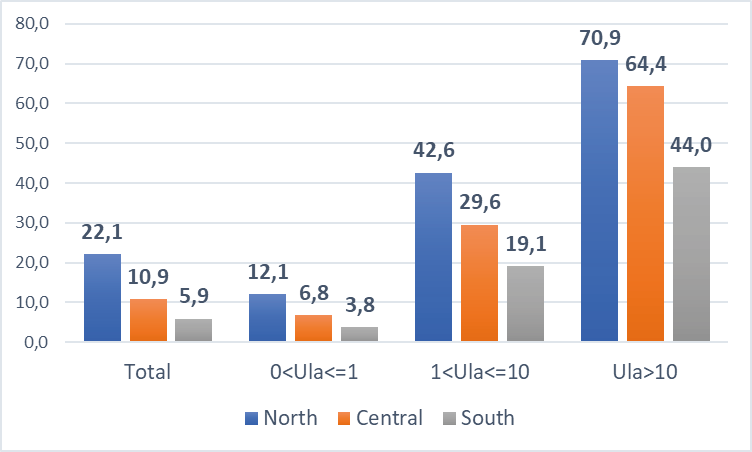
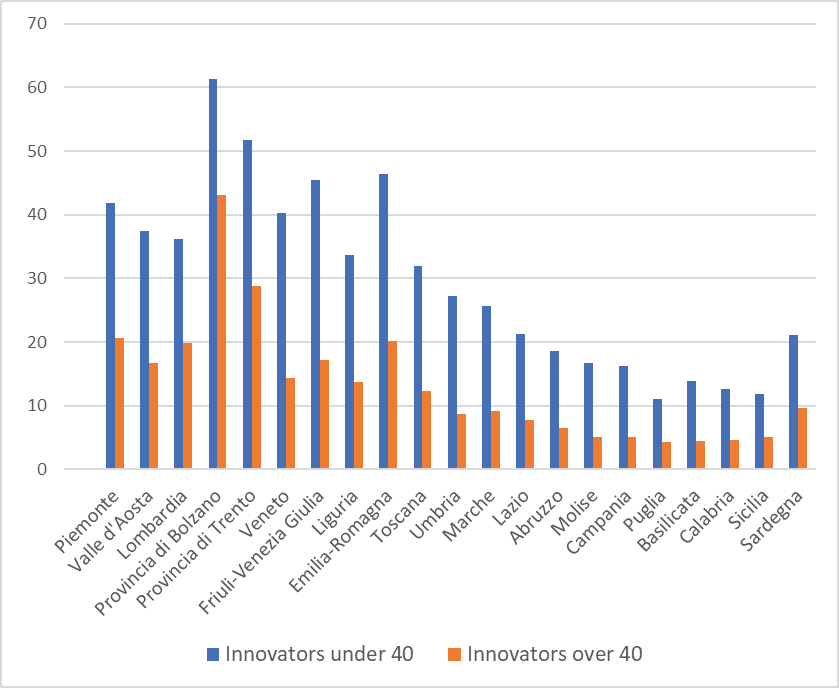
The data support common observations about innovative farms. Innovation is more common on larger farms, measured by the number of work units, and on farms managed by younger farmers (Figures 1 and 2). However, the presence of innovative farms is lower in southern Italy, even when considering farm size and farmer age.
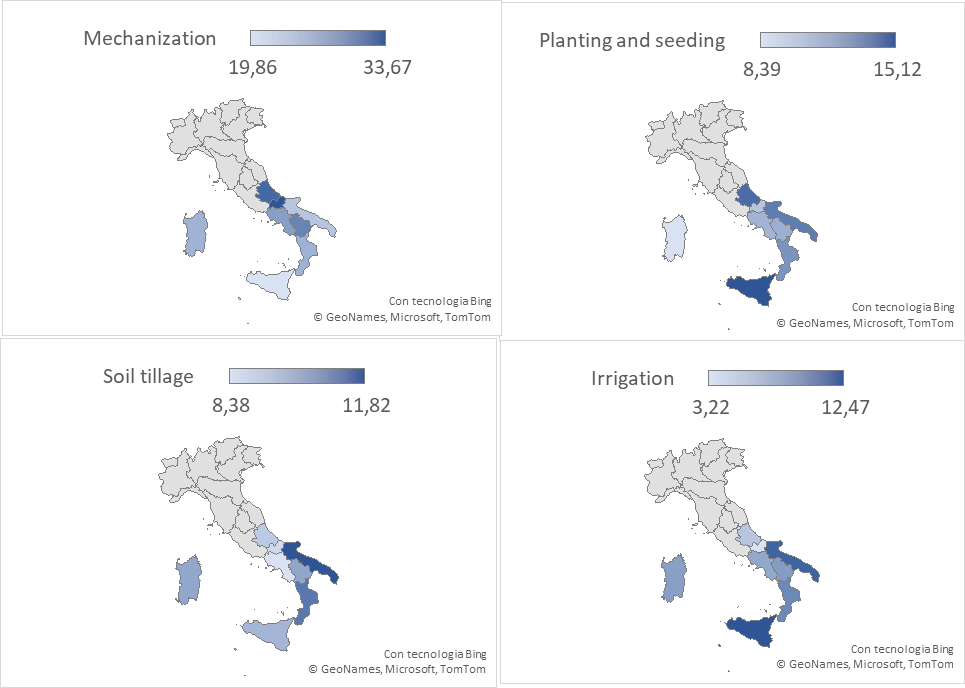
Mechanisation is the production process with the highest level of innovative investments, both nationally (28%) and by region (29% for northern, 31% for central, and 24% for southern). However, in the Southern Italy, this percentage is slightly lower, while innovation in planting and seeding (12%), soil tillage (10%), and irrigation (9%) is relatively more significant. The analysis of investment choices among southern regions shows a heterogenous situation (Figure 3).
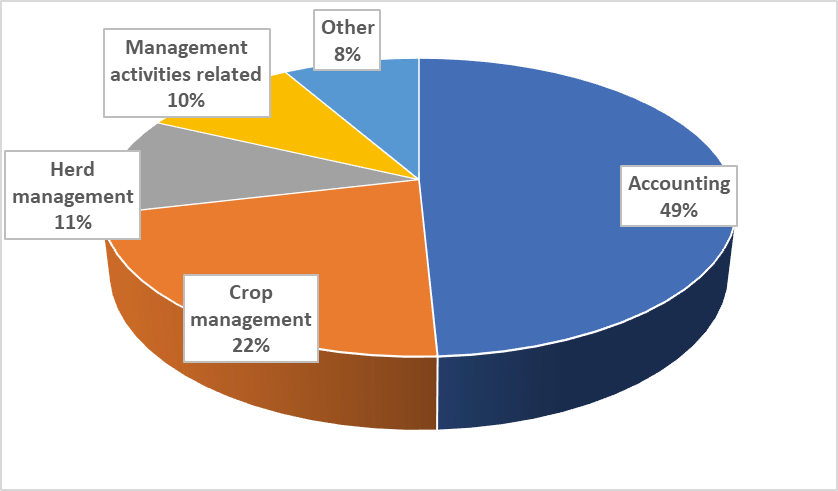
Finally, the digitisation of Italian farms has outperformed other innovative processes, as 16% of farms have adopted it. There is great variation between the regions, especially northern (33.1%) and southern (7.7%) Italy. Traditional applications, such as accounting, are still widely used in production processes, both in the field and in the stable (Figure 4).
The FADN survey does not collect specific data about the adoption of innovative practices by farms. However, a methodology was developed to derive the innovation needs of farms, albeit indirectly, from a set of socio-economic and technical indicators calculated based on FADN variables (Arzeni et al., 2021; Bonfiglio, 2024). The approach is based on the idea that some aspects of farm performance are influenced by whether specific innovations have been adopted. To apply this method, we grouped farms into homogeneous clusters within each Italian region. We compared the performance of these clusters (measured through the indicators) to the average performance of similar clusters in the Italian macro-regions (North-west, North-east, Centre, South, and Islands). If a region’s indicator was below the district average, then we interpreted this as a potential need for innovation in that region.
The results of this analysis should be interpreted as potential signs of a lack of innovation because it is an indirect survey and suboptimal performance may also be stem from other internal and external factors that affect the farm. Analysis of the FADN data from 2018 to 2023 shows major economic, environmental, and social difficulties for southern Italy. Economic indicators suggest that innovations could help reduce variable costs and increase productivity. Numerous innovative solutions can also be adopted to address environmental impacts, including a reduction in the use of pesticides and more efficient use of energy and water resources. However, innovations have less direct effects on the social impacts, although improved economic efficiency has a positive impact on job stability and perhaps also on farmers’ interest in increasing their knowledge base.
The above analysis of FADN data provides points for consideration, particularly when examined in greater depth by farm size and production sector, as Arzeni et al. (2021) and Bonfiglio (2024) showed. Here, the key takeaway is that rural areas in southern Italy show a low propensity for innovation, which may contribute to some of the sustainability issues faced by its farms. In this context, promotion policies play a crucial role.
3. Evolution of AKIS policies in Italy
Over the last 15 years, knowledge and innovation policies have been implemented relatively uniformly throughout Italy. There has been no difference in governance and management between northern, central, and southern Italy: all regions have established discussion and support networks to proceed in a relatively homogenous manner.
European policies aimed at promoting AKIS have focused on certain areas of action, especially training, coaching, information, knowledge transfer, study visits, advisory services, testing, and dissemination of innovation. As a rule, funding is distributed to those who provide these services, and the farms and rural areas uses these services. Across the various programming periods, the names of the action areas, their specific focus, and their implementation methods have changed. Thus, we compared AKIS policy interventions by grouping the actions into training/information, advisory services, and innovation. The first area concerns measures aimed at increasing the human capital of farms. The second area involves technical/economic and organisational support to manage production processes. Finally, the third area concerns the dissemination and adoption of innovations useful for solving business and territorial problems.
An analysis of the content of rural development interventions in Italy shows that training and information measures have consistently played a significant role, one that has rarely been questioned, and their financial implementation has been not very complex. Each region has financed them by targeting region-specific topics of interest to agriculture and rural areas. A critical element is the implementation methods, which are usually very conventional: traditional in-person training, characterised by unidirectional transfer of knowledge, or information disseminated in the press or via institutional web channels. Moreover, these measures are usually delivered in a very rigid manner, so they cannot respond to urgent needs that may arise. Furthermore, not all potential users can benefit from these measures due to educational pre-requisites and a lack of ability to use new communication tools (Rete Rurale Nazionale, 2020).
From a financial perspective (CREA, 2017; Rete Rurale Nazionale, 2023b), training and information measures present challenges typical of intangible intervention, particularly in ensuring stable and continuous spending throughout the implementation of European programmes. As a result, expenditure is concentrated towards the end of the programming periods and is often lower than what had been planned. Indeed, actual spending on training/information interventions was 24% lower in 2007-2013 and 11% lower in 2014-2022 compared with planned spending.
Advisory services, by contrast, have followed a much more difficult path. During the 2007-2013 programming period, they focused on only a few topics (mainly related to conditionality) and had a narrow objective (economic competitiveness), generating little interest among both users and advisory providers. In addition, implementation was constrained by low funding based on advisory activity, the need for accreditation, and binding administrative rules. During the 2014-2022 programming period, the scope of counselling was broadened to cover all needs while providing a minimum scope of intervention that each region had to cover. However, at an early stage, the implementation procedures for the disbursement of funds involved tenders that were complex and expensive due to the need to consider the additional expense of VAT. For the most part, the regional institutions refrained from initiating these procedures and worked together with the Ministry of Agriculture to get the European Commission to change them. This endeavour led to changes in administrative procedures, but the start of the intervention was delayed. As a result, advisory services saw a significant reduction in the initially allocated funds: 71% and 51% for the 2007-2013 and 2014-2022 programming periods, respectively.
The promotion of innovation had markedly different results (CREA, 2017; Rete Rurale Nazionale, 2023b). For the 2007-2013 programming period, this area received little initial funding, and it primarily aimed to test innovations that required territorial and/or climatic-pedological verification before wider dissemination. However, interest from research and development organisation led to a 17% increase in the budget originally allocated at the start of the programming period. During the 2014-2022 programming period, the promotion of innovation shifted towards the EIP-AGRI approach. Due to its methodological complexity, it required a strong commitment for its promotion and facilitation. This first occurred at the European level with a dedicated support network and then at the national and regional levels, supported by the National Rural Network and local agencies. In addition, the strong demand for innovative solutions to the technical, economic, management, environmental, and climatic problems faced attracted the interest of numerous research, service, and dissemination organisations. They often formed complex and effective partnerships with enterprises. Financial investment in this area also increased: it was 29% higher compared to what was budgeted for the 2007-2013 programming period.
In particular, Measures 16.1 and 16.2, relating to OGs, absorbed the majority of regional resources and interest. With 893 projects (compared to the 626 initially planned), Italy has the higher number of OGs among EU Member States. An analysis of the results of the EIP-AGRI in Italy, conducted in 2021-2022, highlighted how OGs experience enabled partners to establish professional relationships and collaborations, enhance their expertise, and involve a large number of businesses, contri-buting to the growth of not only individual partners but the entire system (Arzeni et al., 2023). The number of OGs varies significantly across regions. Emilia-Romagna funded 265 projects, spending almost 70 million, followed by Sicily with 74 projects and almost 36 million euros. The number of approved projects and financial resources are closely linked to the political strategies and implementation and procedural choices of the individual regional Managing Authorities.
Expenditure data of the Rural Development Programme measures directly linked to AKIS was nearly 541 million euros, roughly half of which was in northern Italy. There were notable regional differences in terms of the allocated resources and types of interventions funded. While Measure 16.1, which financed OGs, was generally successful, Measure 16.2, supporting advisory services, faced significant difficulties. Performance was stronger in northern Italy, mainly due to the excellent results for Veneto, with over 12 million euros, approximately half of the total expenditure in this region. In central Italy, Toscana performed very well, with over 11 million euros, also representing more than half of the expenditure. In southern Italy, there were minimal regional differences, with total expenditure representing just 0.16% of the total Rural Development Programme (Table 1). Overall, the share of AKIS-related measures in the Rural Development Programme is very low: only 2.7% of total spending is in this area, and in southern Italy it barely exceeds 1.5%.
| Italy (euros) | Italy (%) | North (%) | Centre (%) | South (%) | |||||||||||||||
|---|---|---|---|---|---|---|---|---|---|---|---|---|---|---|---|---|---|---|---|
| Measure 1 – Training and Information | 121,692,525 | 22.5 | 31.0 | 21.0 | 16.0 | ||||||||||||||
| Measure 2 – Advisory | 46,953,251 | 8.7 | 10.0 | 14.0 | 10.0 | ||||||||||||||
| Measure 16.1 – EIP-AGRI | 193,540,139 | 35.8 | 37.0 | 23.0 | 38.0 | ||||||||||||||
| Measure 16.2 – Cooperation for innovation | 179,072,550 | 33.1 | 22.0 | 42.0 | 36.0 | ||||||||||||||
| Total | 541,258,466 | 100 | 100 | 100 | 100 | ||||||||||||||
| AKIS measure over Rural Development Programme total expenditure (%) | 2.7 | 3.8 | 3.6 | 1.5 | |||||||||||||||
| Note: separate data are not available Measures 16.1 and 16.2 as the official monitoring reports the data for the entire Measure 16. Therefore, data relating to the allocated resources are used. | |||||||||||||||||||
| Source: NRN 2024 quarterly report. | |||||||||||||||||||
Evaluating the impact of these activities, both in terms of knowledge and innovations introduced as well as networks of relationships, is quite challenging. This difficulty is compounded by the lack of data on the number of farms reached by the initiatives and the lack of information on their structure, problems, and needs, and economic situation before and after the interventions. Given the complexity of these initiatives, there has been limited research on the results and impacts of EIP-AGRI (Giarè, Vagnozzi, 2021; Proietti, Cristiano, 2023).
Regarding OGs, it is important to remember that knowledge sharing and innovation processes do not always lead to the adoption of innovations. Innovation is best understood as an interactive process, characterised by dynamic exchanges among different actors, which can facilitate the adoption and dissemination of innovative practices (Knierim et al., 2015). OGs provide a setting where farmers play an important role in identifying problems and introducing innovations (Kok, Klerkx, 2023). However, based on an analysis of the qualitative information provided by innovarurale.it, southern Italy has received a significant share of funding under the CAP, but its innovation remains limited. Southern OGs show lower levels of innovation than north-eastern OGs, highlighting regional disparities (del Puente et al., 2024). There are also differences in the type of innovations introduced by OGs. For example, in Campania, activities focus more on diversification in terms of themes and dissemination of materials (66.7%). In Puglia, activities focus on service innovations (70.8%) and logistics systems (22.9%). Sicily had a strong propensity for new goods (72.1%) and design/packaging (13.1%) (del Puente et al., 2025).
3.1. AKIS programming for 2023-2027
Regulation (EU) 2021/2115 places knowledge and innovation at the service of all CAP objectives for the 2023-2027 period, identifying nine specific goals for the development of the agri-food and forestry sectors and assigning to a cross-cutting role the objective focused on modernisation. This includes promoting knowledge exchange, innovation, and digitalisation, and ensuring farmers have better access to research, training, and advisory services (Art. 6, par. 2). The European Commission has emphasised the importance on ensuring AKIS functions in a coordinated and interconnected manner, with advisory services playing a central role in disseminating knowledge and linking system components (Di Santo et al., 2025). Innovation and digitalisation are seen as key drivers for the modernisation of the agriculture and agri-food sectors, mainly when there are interactions among multiple actors. The more intense interactions within AKIS, the greater its capacity to promote development (European Commission, 2023). To operationalise their goals, CAP regulation provides two main instruments: Cooperation (Art. 77) and Knowledge Exchange and Information (Art. 78). The Italian CAP Strategic Plan for 2023-2027 represents a national commitment to fostering a more integrated, innovative, and knowledge-driven agricultural system (Table 2).
| Interventions | Number of regions | Total amount (euros) | % Italy | % North | % Centre | % South | |||||||||||||
|---|---|---|---|---|---|---|---|---|---|---|---|---|---|---|---|---|---|---|---|
| SRG01 – Support to PEI AGRI Operational Groups | 18 | 164,699,086 | 36.5 | 32 | 35.3 | 42.2 | |||||||||||||
| SRG08 – Support for pilot and innovation testing actions | 10 | 38,850,000 | 8.6 | 11 | 12.5 | 4.3 | |||||||||||||
| SRG09 – Cooperation for innovation support actions and services aimed at the agricultural, forestry, and agri-food sectors | 10 | 21,223,310 | 4.7 | 2.5 | 1.5 | 8.8 | |||||||||||||
| SRH01 – Provision of advisory services | 18 | 80,096,534 | 17.8 | 20.5 | 19.8 | 13.4 | |||||||||||||
| SRH02 – Advisory training | 12 | 7,222,074 | 1.6 | 2.0 | 1.1 | 1.4 | |||||||||||||
| SRH03 – Training of farmers, workers in agriculture, livestock, and food industries, and other private and public entities instrumental to the development of rural areas | 19 | 67,415,347 | 14.9 | 19.2 | 13.7 | 10.7 | |||||||||||||
| SRH04 – Information campaigns | 16 | 27,315,148 | 6.1 | 3.5 | 10.7 | 6.6 | |||||||||||||
| SRH05 – Demonstration campaigns for agriculture, forestry, and rural areas | 12 | 16,141,126 | 3.6 | 4.8 | 1.7 | 3.1 | |||||||||||||
| SRH06 – Back-office services for the AKIS | 12 | 28,179,247 | 6.2 | 4.5 | 3.7 | 9.5 | |||||||||||||
| Total amount | 451,141,872 | 100.0 | 100.0 | 100.0 | 100.0 | ||||||||||||||
| Percentage on total Rural Development Programme expenditure | 2.8 | 4.4 | 3.9 | 2.7 | |||||||||||||||
| Source: our elaboration based on CAP Network data. | |||||||||||||||||||
For the 2023-2027 programming period (Rete Rurale Nazionale 2023a), Italy has allocated over 451 million euros to AKIS-related interventions, approximately 2.8% of the total public budget for rural development. This represents a slightly higher share compared with the previous programming period. When broken down by thematic area, innovation (SRG01-08-09) has received the largest share of funding (49.8%), followed by training and information (22.6%) and advisory services (17.8%). These allocations reflect the cautious financial approach of the Italian regions, shaped by past implementation experiences.
Although Regulation (EU) 2021/2115 places particular emphasis on strengthening advisory services – given their underperformance in previous cycles – regional investment in this area remains limited. This cautious stance is also evident in the overall AKIS budget, suggesting a conservative interpretation of the regulation’s ambitions. Nonetheless, the Italian CAP Strategic Plan introduces several innovative elements, including support for innovation facilitation, demonstration activities, and the integration of specialised technical assistance for advisors (back office). However, these measures have not been adopted uniformly across all regions and, along with advisor training, received limited financial allocations. These differences reflect the varying ways in which each region organises and manages its AKIS, as well as by problems and challenges they face. Overall, AKIS interventions account for less than 3.5% of the total financial allocation ranging from 2.7% in southern Italy to 4.4% in northern Italy (Table 2). An analysis of regional choices within the regions reveals that this trend is similar to that of the previous programming: the share of interventions for innovation is the highest (45%, 49%, and 55% for northern, central, and southern Italy, respectively), followed by training/information (32%, 30%, and 30%, respectively), and advisory services (23%, 21%, and 15%, respectively). Note that the concentration of funds on innovation is greater in southern Italy, where just over a tenth of the total amount is invested in advisory services.
The programming data indicate a general continuity in policy implementation at the regional level, both in terms of the type of intervention and the budget allocated, except for minor differences. The share of funding allocated to training/information is more balanced among the three regions, perhaps because some interventions are managed by public bodies (departments or their agencies) that have long needed new roles and related financial resources. To address the fragmentation and limitations of the Italian AKIS, the Italian CAP Strategic Plan introduced the AKIS Coordination Body. It is designed to facilitate communication among the different actors and improve the system at the national and regional levels (Sutherland, Prager 2025).
Our descriptive analysis indicates that farms in southern Italy experience greater difficulties in adopting innovations compared with those in northern and central Italy. These difficulties span multiple dimensions, from competitiveness to sustainability. Despite these issues, regional policy choices appear rather uniform, with little differentiation in response to local criticalities. Such cautious regional approaches to innovation policy risks depriving farms of adequate and widespread support across the territory, potentially undermining the strong investment in innovation. This could limit the ability to address structural challenges of the agricultural sector such as human capital development and the adoption of new technologies. In addition, the overall effectiveness of rural development policy could be reduced, as knowledge transfer and advisory services are essential enablers of competitiveness, sustainability, and social inclusion. Uniform policies also risk perpetuating existing disparities, both between agriculture and other economic sectors, and within the agricultural sector itself, particularly between small- and medium-sized enterprises and more advanced actors.
AKIS presents an opportunity to support farmers and other actors in addressing challenges related to competitiveness and the transition towards a more environmentally and socially sustainable and equitable system. AKIS functions as an analytic framework to understand organisations and actors involved in innovation and a European strategy to strengthen the agricultural system through specific actions. Thus, it provides a useful lens to study dynamics at the local and regional levels. Our analysis of the Italian regions – albeit partial due to the lack of data – reveals fragmented innovation, information/training, and advisory interventions in the 2023-2027 CAP programming period, inconsistent with the logic of the AKIS. The creation of regional and national coordination bodies could help overcome this limitation. Additional measures (i.e., local innovation hubs, targeted training for trainers and advisors, and stronger integration of AKIS interventions with other policies) could enhance Italy’s AKIS, thereby improving the sector’s performance and supporting policy implementation.
Our study has some limitations, including the inability to answer all the questions posed in Section 1. Nevertheless, it provides a starting point for discussion and highlights the need for more comprehensive research on policy effects. In this context, it is desirable that the European Commission supports a series of funded research projects on these topics. Effective implementation of these studies will require robust datasets that can support continuous and detailed analysis of the situation. In particular, the ongoing redesign of the FADN could include variables more closely related to knowledge and innovation.
The work presented in this paper was carried out within the scope of the Italian National Rural Network (CAP 2014-2020).
A.V.: Conceptualization, Data curation, Writing, Reviewing, and Editing.
F.G.: Conceptualization, Data curation, Writing, Reviewing, and Editing
Arzeni A., Ascione E., Borsotto P., Carta V., Castellotti T., Vagnozzi A. (2021). Analysis of farms characteristics related to innovation needs: a proposal for supporting the public decision-making process. Land Use Policy, 100. DOI: https://doi.org/10.1016/j.landusepol.2020.104892.
Birke F.M., Knierim A., Bae S., Gerster-Bentaya M. (2025). How to comparatively analyse the AKIS across European countries – conceptual foundations and application. The Journal of Agricultural Education and Extension. DOI: https://doi.org/10.1080/1389224X.2025.2559583.
Bonfiglio A. (2024). Unveiling innovation imperatives in agriculture: a data-driven framework for identifying latent needs and regional priorities, Sustainable Futures, 8, 100273. DOI: https://doi.org/10.1016/j.sftr.2024.100273.
Bruno E., Castellano R., Punzo G. (2025). A longitudinal analysis of local innovation in Italy: How do proximity measures matter? Spatial Economic Analysis, 20(1): 33-52. DOI: https://doi.org/10.1080/17421772.2024.2378739.
Capello R., Lenzi C. (2019). Regional innovation evolution and economic performance. Regional Studies, 53(9): 1240-1251. DOI: https://doi.org/10.1080/00343404.2018.1502421.
CREA (2017). La produzione e la diffusione di conoscenza nell’agroalimentare italiano. Soggetti, risorse finanziarie, interventi di promozione. Monografie dell’Annuario dell’agricoltura. Edizioni CREA, Roma.
Del Puente F., Buonomo S., Sapio S. (2024). Promoting agricultural innovation through EIP-AGRI Operational Groups: insights from the Southern Italian projects. ECONOMIA MARCHE – Journal of Applied Economics, XLIII(2).
Del Puente F., Sapio A., Yanhong J., Carl P. (2025). Assessing the impact of a European Union’s policy on agricultural innovation in Italy. Agriculture and Human Values, 42: 193-212. DOI: https://doi.org/10.1007/s10460-024-10595-y.
Di Santo N, Sisto R., Dragone V., Fucilli V. (2025). Balancing objectivity and subjectivity in agricultural funding: the case of AKIS measures. Sustainability, 17(10), 4730. DOI: https://doi.org/10.3390/su17104730.
European Commission (2012). Communication from the Commission to the European Parliament and the Council on the European Innovation Partnership “Agricultural Policy and Sustainability”, COM (2012)79 final, Brussels.
European Commission: Directorate-General for Agriculture and Rural Development, ADE s.a, CCRI and ÖIR GmbH, Evaluation support study on the impact of the CAP on territorial development of rural areas – Socioeconomic aspects, Publications Office, 2021. https://data.europa.eu/doi/10.2762/483196.
EUROPEAN COMMISSION – Directorate-General for Agriculture and Rural Development – Unit A.3 (2023): Guidelines. Evaluating the AKIS Strategic Approach in CAP Strategic Plans.
European Commission (2024). Study on outcomes achieved by EIPAGRI Operational Group projects under the CAP, Directorate-General for Agriculture and Rural Development, Brussels.
EU SCAR (2012) Agricultural Knowledge and Innovation Systems in Transition – A Reflection Paper, European Commission, Brussels.
EU SCAR (2015). Agricultural Knowledge and Innovation Systems Towards the Future – A Foresight Paper, European Commission, Brussels.
EU SCAR AKIS (2019). Preparing for future AKIS in Europe, European Commission, Brussels.
FAO (2024). World Food and Agriculture Statistical Yearbook 2024, FAO, Rome. https://openknowledge.fao.org/handle/20.500.14283/cd2971en.
Giarè F., Vagnozzi A. (2022). Governance’s effects on innovation processes: the experience of EIP AGRI’s Operational Groups (OGs) in Italy. Italian Review of Agricultural Economics, 76(3): 41-52. DOI: https://doi.org/10.36253/rea-13206.
Ingram J., Dwyer J., Gaskell P., Mills J. (2018). Reconceptualising translation in agricultural innovation: a co-translation approach to bring research knowledge and practice closer together. Land Use Policy, 70: 38-51. DOI: https://doi.org/10.1016/j.landuse-pol.2017.10.013.
Knierim A., Boenning K., Caggiano M., Cristóvão A., Dirimanova V., Koehnen T., Labarthe P., Prager K. (2015). The AKIS concept and its relevance in selected EU member states. Outlook on Agriculture, 44(1): 29-36.
Kok K.P.W., Klerkx L. (2023). Addressing the politics of mission-oriented agricultural innovation systems. Agricultural Systems, 211, 103747. DOI: https://doi.org/10.1016/j.agsy.2023.103747.
Kountios G., Kanakaris S., Moulogianni C., Bournaris T. (2024). Strengthening AKIS for sustainable agricultural features: insights and innovations from the European Union: a literature review. Sustainability, 16, 7068. DOI: https://doi.org/10.3390/su16167068.
Labarthe P., Beck M. (2022). CAP e servizi di consulenza: dai sistemi di consulenza agricola al supporto all’innovazione. EuroChoices, 21: 5-14.
Masi M., De Rosa M., Vecchio Y., Bartoli L., Adinolfi F. (2022). The long way to innovation adoption: insights from precision agriculture. Agricultural and Food Economics, 10. DOI: https://doi.org/10.1186/s40100-022-00236-5.
Mikolič S., Slavič I.P. (2025). Exploring regional disparities and stakeholder engagement in Slovenian EIP-AGRI projects. Revija za Geografijo – Journal for Geography, 20(1): 89-104. DOI: https://doi.org/10.18690/rg.20.1.5041.
OECD/Eurostat (2018). Oslo Manual 2018: Guidelines for Collecting, Reporting and Using Data on Innovation, 4th Edition, OECD Publishing, Paris. DOI: https://doi.org/10.1787/9789264304604-en.
OECD (2019), Innovation, Productivity and Sustainability in Food and Agriculture: Main Findings from Country Reviews and Policy Lessons, OECD Food and Agricultural Reviews, OECD Publishing, Paris. DOI: https://doi.org/10.1787/c9c4ec1d-en.
Oliveira M.d.F., Gomes da Silva F., Ferreira S., Teixeira M., Damásio H., Dinis Ferreira A., Gonçalves J.M. (2019). Innovations in Sustainable Agriculture: Case Study of Lis Valley Irrigation District, Portugal. Sustainability, 11(2), 331. DOI: https://doi.org/10.3390/su11020331.
Proietti P., Cristiano S. (2023). Innovation support services: an evidence-based exploration of their strategic roles in the Italian AKIS. The Journal of Agricultural Education and Extension, 29(3): 351-371. DOI: https://doi.org/10.1080/1389224X.2022.2069828.
Rete Rurale Nazionale (2020). L’Italia e la Pac post 2020 - Policy Brief, OS: Promuovere e condividere conoscenze, innovazione e processi di digitalizzazione nell’agricoltura e nelle aree rurali incoraggiandone l’utilizzo, Rete Rurale Nazionale, Rome.
Rete Rurale Nazionale (2023a). Interventi AKIS nel Piano Strategico della PAC 2023-2027, PSRhub, Rome.
Rete Rurale Nazionale (2023b). Le azioni per il trasferimento della conoscenza e dell’innovazione Lo stato di avanzamento delle Misure 1, 2, 16.1 e 16.2 a dicembre 2022, Rete Rurale Nazionale, Rome.
Sutherland L.-A., Prager K. (2025). Including AKIS in the 2023 CAP Strategic Plans: what difference has it made? EuroChoices. DOI: https://doi.org/10.1111/1746-692x.70011.
Zahran Y., Kassem H.S., Naba S.M., Alotaibi B.A. (2020). Shifting from Fragmentation to Integration: A Proposed Framework for Strengthening Agricultural Knowledge and Innovation System in Egypt. Sustainability, 12(12), 5131. DOI: https://doi.org/10.3390/su12125131.
1 According to the explanatory notes of the Agricultural Census, the question on innovation asks whether, in the three-year period of 2018-2020, the holding made investments aimed at innovating production techniques or management (e.g., precision agriculture, research and development, etc.). If the answer is yes, then the respondents are asked to specify the stages or areas concerned, such as varieties, breeds, clones, etc.