Research article
A spatial analysis of geographical indication: the case of the relevant geographical market centred on the production zone
Dipartimento Territorio e sistemi agroforestali, Università di Padova, Italy
E-mail: luigi.galletto@unipd.it
Abstract. This study proposes a methodology for defining the relevant geographical market (RGM) for a geographical indication (GI) centred on its production zone. The model is inspired by von Thünen’s spatial model of land rent and assumes that various consumer-related variables decline as the distance from the production area increases. The model is applied to an Italian GI product, Prosciutto Veneto Berico-Euganeo, using data from a survey of 563 consumers located at varying distances from its production zone. Eight hypotheses are formulated and tested using the Cochran-Mantel-Haenszel test for categorical variables and linear regression for continuous variables. The results substantiate the model’s validity, demonstrating a gradient for the tested variables (product familiarity, first consumption experience, purchasing frequency, relative consumption, willingness to pay, and price premium) in relation to the distance from the GI production zone. This study provides evidence of non-homogeneous spatial trends for these variables, suggesting that the shape of the RGM deviates from a circular pattern. The main contribution of this research is its novel approach to define the RGM for a GI with a market centred on the production zone. It provides valuable insights for producers and operators to develop effective marketing strategies tailored to different distances and directions from the production zone.
Keywords: geographical indication, distance, relevant geographical market, willingness to pay.
JEL codes: Q10, Q13, M31.
Index
2. The GI under study: Prosciutto Veneto Berico-Euganeo
3. Reference model and hypotheses
5.2. Familiarity and first consumption experience
5.3. Purchase frequency and locations
5.4. Relative consumption, willingness to pay, and price premium
– A new methodology for defining the relevant geographical market of a geographical indication centred on production zone is presented.
– A type of geographical indication distinguished from other geographical indications is proposed.
– The background relies on von Thünen’s spatial model of land rent.
– This study is the first comprehensive examination of how consumer-related variables correlate with the distance from a geographical indication origin.
Geographical indications (GIs) are widely adopted in the European Union (EU) and are gradually proliferating in other countries. Italy leads the EU with the highest number (888) of agri-food products linked to specific origins and geographical areas (Qualivita, 2023). Production and turnover vary significantly among these GIs. While some, such as Grana Padano cheese or Prosecco sparkling wine, exhibit high values for these variables, a large proportion demonstrates relatively small values. Because these differences may largely depend on the geographical size and features of their markets, a spatial analysis of these markets presents an intriguing research opportunity.
This study deals with a specific type of GI whose relevant geographical market (RGM) is centred in the area of origin. According to the EU Commission (1997), an RGM ‘comprises the area in which the undertakings concerned are involved in the supply and demand of products or services, in which the conditions of competition are sufficiently homogeneous and which can be distinguished from neighbouring areas because the conditions of competition are appreciably different in those areas’. Although this concept, originally defined for antitrust purposes, is not easily operationalised (Nevo-Ilan, 2007), it appears to be useful for understanding the territorial dimension of a market and providing GI producers with a sound basis for developing effective marketing strategies. More specifically, attention is focused on a group of GIs that only appear competitive when their supply meets demand within or near the production area. As the distance from this area increases, more powerful GIs gradually diminish and ultimately eliminate their competitiveness.
The literature on the economic and social value of GIs is extensive. Numerous researchers have elucidated the characteristics and benefits of GIs for producers and consumers. Livat (2019) emphasises the function of GIs as quality signals for food products linked to specific territories, capable of increasing consumer utility and serving as vehicles for the collective reputation of producer groups associated with specific regions. Josling (2006) underlines that GIs are also associated with natural and human factors such as climate, soil quality, or specific skills developed through tradition. Choi et al. (1995) posit that GIs can generate attachment and loyalty, similarly to other brands. Charters, Spielmann (2014) demonstrate that GIs should be managed as brands for products with a natural connection to a place, resulting in goods that cannot be produced elsewhere. Other authors have highlighted the importance of product origin in consumer evaluations as a guarantee of safety. In this regard, Stasi et al. (2008) show that GIs tend to decrease consumer price sensitivity and reduce the risk of substitution in the market of a GI product with another. Additional studies have focused on the crucial role of GI labelling in influencing purchasing decisions, demonstrating that the origin and safety of food products are considered the most relevant (Baker, Mazzocco, 2005; Banterle et al., 2012; Bruwer, Johnson, 2010; Veale, Quester, 2009). Cardinale et al. (2016) argue that the production of a good in a geographical area creates a competitive advantage for that product, as the origin area is inimitable by competitors. Several studies indicate that consumers show a willingness to pay a price premium for products with GIs compared with those without this designation (Cappelli et al., 2014; Menapace et al., 2011). This is a consequence of a monopolistic market effect that can relate to some GIs, primarily due to quality regulations and production scarcity (Thiedig, Sylvander, 2000).
However, few studies have focused on distance from a product’s origin as a factor influencing market features. Some of these studies do not refer to GIs but simply to products being purchased locally. Scarpa et al. (2005) argue that the value of a GI depends on both the product and the market segment, suggesting an exploration of the effect of geographic size on consumer attitudes towards a GI. GIs facilitate information transmission, replacing traditional quality assurance methods, which weaken as the distance between producers and consumers increases (Bardají et al., 2009). An examination of Spanish consumers’ preferences for beef revealed a higher utility and preference for locally produced beef compared with products from other regions (Mesias et al., 2005). According to Hempel, Hamm (2016), German consumers show a notable preference for local conventional products over organic options from different regions or countries.
Other research has focused on the correlation between willingness to pay and distance, showing a higher willingness to pay for local or GI products. Resano-Ezcaray et al. (2010) discuss the geographic location of consumers in terms of variations in willingness to pay for GI products. An investigation of food origins in the United States illustrates that local strawberries command a significantly higher willingness to pay than those from other sources (Darby et al., 2008). In Arizona, consumers demonstrate a willingness to pay a premium for locally branded spinach compared with non-branded options (Nganje et al., 2011). Similarly, Carpio, Isengildina-Massa (2009) find that South Carolina consumers are willing to pay a price premium for both plant and animal products from local farms. Moulard et al. (2015) demonstrate that origin impacts consumers’ perceptions of wine authenticity and their willingness to pay, especially for Old World wines. Giraud (2016) emphasises that quality regulations and production scarcity significantly contribute to a monopolistic market effect for a GI cheese, whereby local consumers and connoisseurs are willing to pay a price premium due to their familiarity or expertise. However, that beyond the production area, the monopolistic effect diminishes due to lower knowledge and familiarity.
Conversely, some studies suggest that distance from the production area can positively influence willingness to pay. For example, Garavaglia, Marcoz (2014) note that consumers’ price expectations for Fontina Valdostana cheese differs based on their residence, with residents of Valle d’Aosta displaying a lower willingness to pay compared with consumers in Milan. Garavaglia, Mariani (2017) report that willingness to pay for Prosciutto di Parma is lower in Parma than in Monza, which is approximately 100 km away from the production site. Similarly, Rabadán et al. (2021) report a higher willingness to pay outside the area of influence of a GI for cherry consumers.
The aforementioned studies indicate divergent trends for willingness to pay in relation to distance from the production site. This suggests a dichotomy between two types of GIs: those whose competitiveness is only effective within their production area, and those that establish a strong presence in distant markets without showing increased competitiveness in their local production area. Our primary objective is to highlight and examine the former type. Garavaglia, Mariani (2017) conclude their article by stating that ‘it would be interesting to develop a relationship between consumers’ willingness to pay for a Protected Designation of Origin (PDO) label of a certified product and their distance from the place of production’. We adopt this suggestion and extends it beyond merely demonstrating significant territorial differences in willingness to pay based on consumers’ place of residence. We go beyond simply comparing consumer behaviour in the production zone with that in distant locations; instead, we treat distance as the key variable.
In pursuing our research objective, we draw upon von Thünen’s (1966) spatial model of land rent, applying the fundamental concept of a progressive decline in key variables, particularly consumption levels and willingness to pay, as distance from the production site increases. Our two specific aims are to propose a methodology for verifying the RGM for a GI centred on its production zone based on consumer characteristics and to provide producers and market operators with an informational framework to enhance their marketing strategies starting from the production zone.
We apply our model an Italian PDO product, Prosciutto Veneto Berico-Euganeo (PVBE), a type of raw ham. We selected this GI from a group of PDOs that primarily enjoy local recognition. Based on a sample of 563 interviews, we formulated eight hypotheses to validate our model. This endeavour involves the development of an innovative methodology that combines linear trend tests and regression analyses, with the choice between them depending on the nature of the variable that is being examined.
This study is pioneering in its explicit focus on the role of distance in determining willingness to pay as well as other significant market indicators. It proposes a conceptual framework applicable to other GIs whose relevant market is centred on their production zone, thus defining a typology or a sub-group within the GI range. To our knowledge, no previous research has explicitly investigated this GI typology or examined how various consumer-related variables correlate with the distance from the origin of an agri-food product. Our results substantiate the model’s validity, demonstrating a gradient for the tested variables in relation to the distance from the PVBE production zone. Despite certain limitations, our work appears to open new avenues for investigating the RGM of a GI similar to our case study, while simultaneously providing operators with valuable information for business improvement.
The remainder of this paper is organised as follows: Section 2 provides a brief overview of PVBE. Then, we detail the reference model and hypotheses in Section 3, describe the methodology and data in Section 4, and present the results and discuss them in Section 5. Finally, in Section 6 we describe the research limitations, highlight the key findings, and provide practical implications for operators and suggestions for further areas of investigation.
2. The GI under study: Prosciutto Veneto Berico-Euganeo
In Italy, the mean annual production of raw ham from 2018 to 2022 was approximately 282,000 tonnes, constituting 25% of the country’s total cured meat production (ISMEA Mercati, 2023). Currently, 10 raw hams with PDO labels are available on the national market. Among these, Prosciutto di Parma and Prosciutto di San Daniele are the most significant in terms of revenue and national distribution. Among raw ham with a GI, Prosciutto di Parma shows the highest production, approximately 8 million hams annually, while Prosciutto di San Daniele follows with around 2 million hams (Assica, 2021). These two products represent the primary competitors for PVBE from the perspective of product substitutability in an RGM (EU Commission, 1997), assuming no other GI ham is produced in the neighbouring area. Although small quantities of PVBE are marketed in various regions of Italy and abroad, the majority of its sales remain closely linked to its production area, which consequently represents the focal point of its RGM.
PVBE has a designated processing and ageing area spanning 356 km², encompassing 16 municipalities situated near the border between the provinces of Padua, Vicenza, and Verona in the foothills of the Berici and Euganean Hills. This area is approximately equidistant from the production zones of Prosciutto di San Daniele and Prosciutto di Parma, located about 20 km from the Venetian Prealps, 40 km from Lake Garda, and 50 km from the Adriatic Sea. The topography of the two hilly regions influences the sub-Mediterranean climate, particularly the wind pattern dynamics. Fresh thighs are sourced from specific Italian regions known for robust pig farming, including Veneto, Lombardy, Emilia-Romagna, Umbria, and Lazio. This sourcing area is nearly identical to that of Prosciutto di Parma.
PVBE is a small-scale PDO that has been recognised since 1981. From 2017 to 2022, the mean annual certified production totalled 844 tonnes (about 100,000 hams), with a net company value of approximately 9 million euros. Exports comprise only 1% of total production and are limited to a few European countries. While the presence of PVBE is sporadic across the national territory, consumption remains predominantly concentrated in the Veneto region, particularly in areas adjacent to the production zone. The primary distribution channel in the national market is large-scale retail, accounting for 70% of production in 2022. The remainder is distributed through specialised retail (12%), wholesalers (8%), on-trade (8%), and direct sales (2%). The Protection Consortium includes ten producers, four of whom are located in the municipality of Montagnana, establishing it as the hub of the designation.
3. Reference model and hypotheses
The EU Commission (1997) suggests that the analysis of demand characteristics is a valuable tool to ascertain and delineate an RGM thereby distinguishing the RGM area ‘from neighbouring areas because the conditions of competition are appreciably different in those areas’ based on the values of specific market indicators. Consequently, to define a GI’s RGM centred in the production zone, it is necessary to delineate a territorial area where key market demand variables are significant. In 1875, von Thünen proposed a framework derived from economic geography (based on the dynamics of land rent) that can be useful for this purpose. This model identifies distance from a settlement as the primary factor in determining land rent value (von Thünen, 1966). While this model has primarily been utilised to understand GIs from the supply side (Aveni, 2020), in this study we apply it from the demand perspective.
Wiegant, Parey Sinclair (1967) provide a useful discussion on the variants and limitations of this model. Our focus is on the central concept of von Thünen’s model, and we relate it to market demand characteristics. The fundamental premise is that as the distance from the production zone increases, there is a gradual reduction in consumer contact with the production site, which in turn results in lower involvement and motivation to purchase the GI product.
Both involvement and motivation towards GIs in the zone of origin or in proximity can be attributed to several factors, including the product’s organoleptic quality, freshness, health benefits, tradition, consumer ethnocentrism (Fernández-Ferrín et al., 2019); support for the local economy and personal interaction with producers (Hand, Martinez, 2010); and environmental sustainability (Dwi, Nyoman, 2020). These factors can also be related to other local non-GI products, although the GI label can provide additional assurance regarding these attributes. The key proposition of our model is that most variables representing these factors and defining consumer behaviour decrease with distance from the production zone, a trend that is similar to that which land rent exhibits with increasing distance from a settlement, although the rationale of von Thünen’s model is fundamentally different. Rejection of this proposition would indicate that the RGM is not centred in the production zone and can be defined differently.
The proposed model assumes that the total utility (the benefit derived from per capita total consumption) as well as the differential utility (the benefit derived from consuming the GI product relative to substitutes) peaks near the production area and progressively declines with increasing distance, approaching zero consumption at some point. Considering various directions, the market for the GI can be spatially represented through ‘iso-utility’ or ‘differential iso-utility’ curves, with the outermost curve potentially outlining the boundary of the catchment area.
As with other goods, a GI product’s brand value relates to quality perception and aspects such as awareness, image, and loyalty (Calderon et al., 1997). If the RGM is centred in the production zone, one can expect that at least some of these aspects will decline as the distance from the production area increases. Thus, analogously to what can be defined for land rent in von Thünen’s model, we can conceptualise ‘iso-value’ curves for specific marketing variables. These curves may deviate from a circular shape based on the geomorphological and anthropogenic features of the territory (e.g., mountains, lakes, and roads) as well as the presence of competing GIs for similar products, situated in different directions and at varying distances from the area of origin. The area defined by the outermost curve can be assimilated to the notion of ‘chorotype’ applied in biology, where it is defined as a type of geographic distribution that characterises a group of species with similar features (Fattorini, 2015), paralleling the concept of competition among similar products in the RGM. The forms displayed by the iso-value curves can provide information on the topology of the relevant market in the space focused on the production zone, which can aid in calibrating ad hoc marketing actions for specific target areas.
Excluding willingness to pay, the literature on GIs and distance does not suggest market variables for the purpose of our model. Therefore, we selected a set of variables related to consumer behaviour, which can be useful for defining the RGM and/or developing appropriate marketing strategies. For these variables, with reference to PVBE, we formulated the following partially interconnected hypotheses.
H1: Knowledge (i.e., familiarity with PVBE) decreases with distance from the area of origin.
Brand familiarity and knowledge play a crucial role in influencing consumer behaviour (perception and attitude) and purchase decisions, impacting perceived value (Aaker, 2010). This aspect is fundamental to the potential market, driving repeated purchases and enabling effective communication (Ateke, Nwulu, 2017). Support for H1 is necessary to define the RGM for a GI primarily sold in proximity to the production zone. Knowledge and information are expected to decrease as distance increases (Bardají et al., 2009), reducing product search probability and decreasing purchase likelihood.
H2: The incidence of having tasted PVBE at least once decreases with distance from the area of origin.
Initial consumption experience significantly influences subsequent consumer behaviour towards the product based on both cognitive processes and affective reactions (Chaney et al., 2018). This hypothesis is strongly related to H1, as the first consumption experience of a food product typically depends on knowledge. Additionally, this variable is affected by the diminishing number of retail outlets offering the product as distance from the origin increases.
H3: Frequent purchasing of PVBE decreases with distance from the area of origin.
Frequent purchasing of a branded product is a key indicator of market penetration and consumer loyalty (Jindal, 2022). This trend is supported by a decline in purchase opportunities, general product familiarity, and consumer engagement with traditions and events surrounding the GI. Such engagement, including knowledge of recipes and pairings, enhances the product’s gastronomic value and highlights its cultural heritage (Duncan et al., 2020). This can potentially lead to strong consumer-product identification, with the GI serving as a symbolic ‘flag’ of the territory and a source of pride for local residents.
H4: The share of consumers purchasing PVBE at different points of sale is affected by distance from the area of origin.
When examining local GI product purchases across various points of sale, a general decrease with distance cannot be assumed. As distance increases, reliance on certain points of sale may diminish while others become more relevant. This hypothesis comprises four sub-hypotheses based on the type of point of sale.
H4a: Purchases at company stores decrease with distance, reducing accessibility and increasing travel costs for consumers (Fox et al., 2004).
H4b: Purchases at small, specialised shops decrease with distance, as they offer limited assortment depth and stock only the most in-demand brands, reducing GI availability. These shops can attract consumers living close to the production zone who show a higher willingness to pay (Toporowsky, Lademan, 2004) and usually imply proximate interactions between producers and retailers (Enthoven, Van den Broeck, 2021).
H4c: Purchases at supermarkets remain constant even at considerable distances from the production zone. Several large-scale retailers have shown interest in regional and local food (Martinez et al., 2010). By displaying a broad selection of similar and substitute products, they can sustain GI purchases even in more distant areas, making supermarkets a preferred location.
H4d: Purchases at restaurants are expected to remain constant or even increase with distance, due to the decreasing availability of the GI product in other retail outlets, which limits purchase opportunities. These operators see opportunities in selling regional products as a way to differentiate themselves (Dannek et al., 2020).
H5: PVBE consumption relative to total raw ham consumption decreases with distance from the area of origin.
This hypothesis is supported by the expected shrinkage of all GI market segments (potential, available, served, and penetrated) as distance from the production area increases. GI spatial availability and consumer preference compared with substitute products are important aspects in determining this trend. Distance from the production area likely negatively impacts both the product’s presence in retail venues and the value consumers assign to it in comparison to substitutes. This hypothesis, along with H7, is important to define the boundaries of an RGM centred in a GI production zone. Relative consumption can be assumed as a proxy of GI market share, providing a useful indication of collective brand potential (EU Commission, 1997). Consequently, the geographical border of the RGM could be set where this variable falls below a pre-defined percentage.
H6: Willingness to pay for PVBE decreases with distance from the area of origin.
This hypothesis suggests that the perceived value of the collective brand diminishes as distance from the production area increases. The factors that contribute to willingness to pay (identity, image, reputation, and loyalty) are expected to decrease with distance (Mesias et al., 2005). This hypothesis is critical for testing H7. As previously noted (Garavaglia, Marcoz, 2014; Garavaglia, Mariani, 2017), this hypothesis may not hold true for some GIs. Rejection of H6 would indicate that the RGM is likely not centred in the GI production zone.
H7: A willingness to pay a price premium for PVBE compared with Prosciutto di Parma decreases with distance from the area of origin.
Support for this hypothesis would reflect the dominance of the GI product over similar products from other origins, contributing to defining the RGM centred in the production zone from the perspective of possible market monopolization (Nevo-Ilan, 2007). However, the outcome may not be clear cut, as local consumers might prefer GI products but hesitate to pay a higher price for them compared with substitutes, seeking better value for their money due to their familiarity with the product.
H8: The effects of distance are not spatially homogeneous for all variables examined in H1-H7.
This hypothesis posits that the variables may exhibit different intensities in their trends depending on the direction from the GI production zone and reveals other phenomena that are not reducible to distance. It implies that the areas defined by iso-value curves for these variables are not circular.
To test the aforementioned hypotheses, we employed contingency analysis and the Cochran-Mantel-Haenszel test to identify linear trends for categorical variables (Rayner, Livingston, 2023), while utilising linear regression for continuous variables. The analysis was conducted at both a multidirectional level, encompassing the entire sample, and in relation to specified directions. To our knowledge, no other studies have proposed alternative techniques to estimate a gradient of dependent variables in relation to spatial distance while simultaneously accounting for both numerical and categorical variables.
For categorical variables, where only the frequencies of respondents were available, linear regression analysis was not feasible. Consequently, we tested the null hypotheses of independence and non-linearity against the alternative hypotheses of dependence (contingency analysis) and linearity (Cochran-Mantel-Haenszel test) concerning distance, both based on the χ2 statistic. We categorised distance into 10-km intervals (bands) radiating from the centre of the PDO production area. To effectively illustrate the outcome of the linearity test, we calculated the percentage effect per kilometre by dividing the difference between the percentages of the first and last bands by the total number of kilometres separating them.
For continuous dependent variables, the analysis proceeded in two phases.
1. Simple regression analysis: This phase evaluated the value and significance of the coefficient associated with distance. We used dichotomous variables for directions to test H8.
2. Multiple regression analysis: This phase aimed to obtain a more precise estimate of the distance (Dist) coefficient by introducing additional independent variables, such as consumers’ sociodemographic characteristics (SDi) and merit evaluations (EVi), which could potentially influence the dependent variables (DHi) as described by H5-H7.
The regression model can be formally defined by Equation 1 for each of the three dependent variables:
DHi = a + b(Dist) + ∑ci(SD)i + ∑di(EV)i + e,(1)
where a is the intercept; b, ci, and di, are the coefficients; and e is the error term.
It is important to note that these multiple regressions should not be interpreted as exhaustive models for the dependent variables examined in H5-H7; rather, they aim to provide a refined estimate of the distance coefficient while controlling for the effects of other independent variables.
Calculating the distance from the production area is a critical component of this study. According to the GI’s features, various methods may be adopted (e.g., from the perimeter of the zone or from the producers’ barycentre). For our analysis, we calculated the distance from the centre of Montagnana, considering that most producers are located within Montagnana or its immediate vicinity and this town has historically engaged in extensive promotional efforts for PVBE, and is recognised primarily for this product. We opted not to pursue alternative distance calculations from the boundary of the production area or the municipality of Montagnana, as these could introduce measurement inaccuracies.
Data were collected through a questionnaire administered directly to consumers, following a multi-phase process:
1. The area surrounding Montagnana was divided into concentric bands, each spaced 10 km apart.
2. Four directional paths were chosen for questionnaire collection.
3. Within each band, a data collection point was identified along each direction, consisting of a supermarket.
4. At each data collection point, approximately 30 questionnaires were gathered to ensure equal sample sizes within each band.
5. Data collection in each direction concluded when fewer than 10% of the respondents in the band reported having consumed PVBE.
The selected directions employed to test H8 do not strictly follow the four cardinal points; instead, they align with significant pathways related to demographic distribution and the prevalence of competing products with a GI status. The south-east direction includes Rovigo, which has a notable influence from the cured meats from Emilia-Romagna. The eastward direction primarily leads towards the Euganean Hills and the Adriatic coast, as well as the Prosciutto di San Daniele production area. The north-west direction targets Verona and an area likely more influenced by Prosciutto di Parma. Finally, the northward direction points towards the Berici Hills and the city of Vicenza (Figure 1).
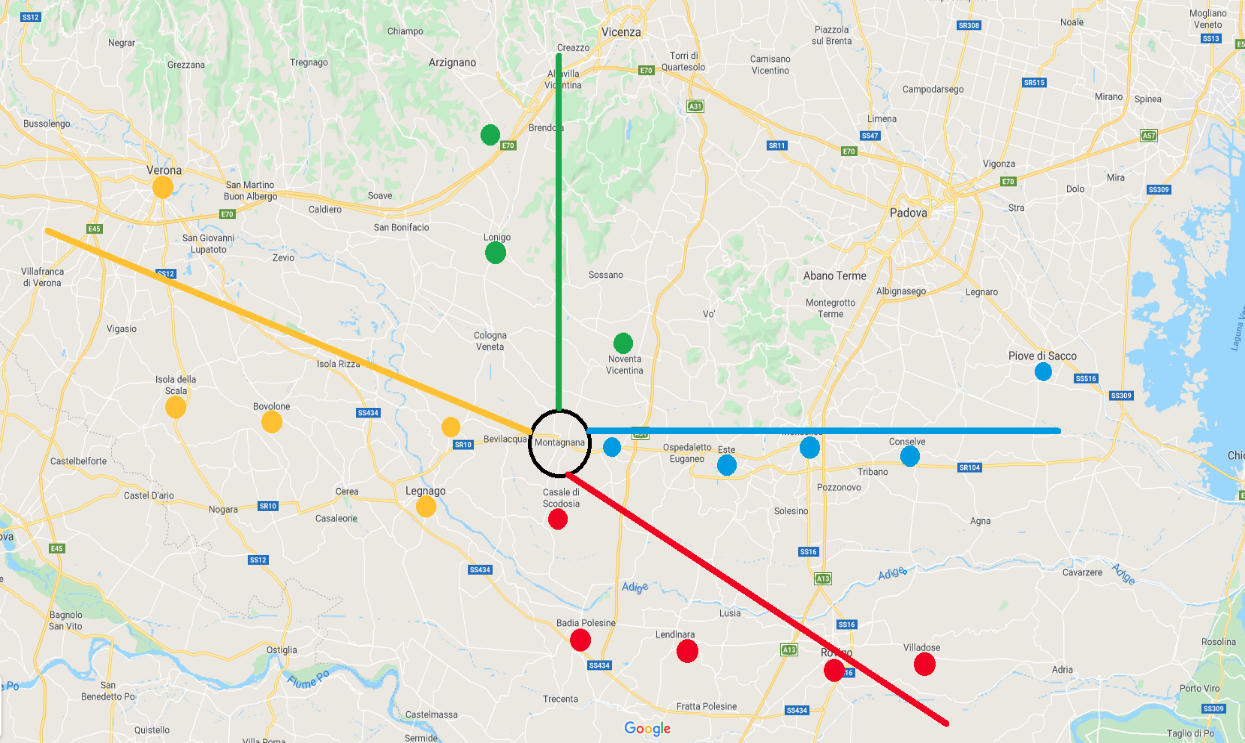
The administered questionnaire comprised two sections: the first focused on familiarity and consumption of PVBE, while the second collected common sociodemographic data, summarised in Table 1. The initial questions assessed the respondent’s general acquaintance with raw hams, specifically PVBE. We did not use specific constructs to investigate familiarity and first consumption experience with the GI; instead, the respondent was asked two simple dichotomous questions: (1) ‘Do you know PVBE ham?’ and (2) ‘Have you tasted it at least once?’ If the respondent indicated no knowledge of PVBE, then the interviewer proceeded directly to the final section. Otherwise, the inquiry continued with questions about PVBE consumer behaviour, including purchasing locations, purchase frequency, and the proportion of PVBE in overall raw ham consumption (see Table 3).
| Value | |
|---|---|
| Age in years (mean) | 52.5 |
| Men | 29.0% |
| Women | 71.0% |
| Low to medium educational level | 39.9% |
| Medium to high educational level | 61.1% |
| Employed worker | 42.8% |
| Self-employed worker | 17.9% |
| Retired | 22.9% |
| Housewife | 14.7% |
| Other occupation | 1.7% |
| Monthly household income ≤ 2000€ | 68.4% |
| Monthly household income > 2000€ | 31.6% |
Assessing the percentage consumption of PVBE in relation to other types of raw ham, rather than individual consumption, is more feasible when conducting a survey at retail points. It also allows for an assessment of the importance of PVBE in the diet, irrespective of individual preferences for raw ham. Additionally, we evaluated subjective perceptions of PVBE, such as hedonic liking (‘How do like PVBE?’) and overall satisfaction from the purchase (‘How satisfied were you with buying PVBE?’), both rated on a 5-point Likert scale. The former ranges from 1 (no taste) to 5 (very good), while the latter ranges from 1 (not satisfied) to 5 (extremely satisfied).
Finally, the respondents were asked about their willingness to pay for both PVBE and Prosciutto di Parma, which can be considered the most likely alternative for PVBE among high-quality raw hams in the surrounding area and is the best-selling ham in Italy. We deemed it appropriate to evaluate the difference in willingness to pay for generic non-GI raw ham, as such products represent a secondary option for consumers seeking medium-to-high quality goods. Moreover, producers of generic raw ham are not present in the PVBE production zone or its proximity. However, in certain cases, non-GI products may be important to consider, particularly those with strong reputational potential. Because we were interested only in a rough indication of the willingness to pay trend with distance, we did not employ a particular estimation scheme; we simply asked for the maximum amount that the respondent would be willing to pay for a hectogram of the two hams.
A single interviewer collected data in 2019. Each respondent provided informed consent after the interviewer explained the research objectives. A total of 563 responses were collected. We calculated both linear and road distances between each respondent’s municipality of residence and the centre of Montagnana. For the definition of road distance, we used the shortest route in terms of time, as calculated by Google Maps.
This section presents the results in accordance with the hypotheses outlined earlier, beginning with descriptive statistics of the main variables. We present the findings regarding H8 after dealing with H1-H7. Given the novelty of this study, the discussion focuses primarily on the interpretation of results rather than comparisons with previous outcomes reported in the literature.
The survey did not extend beyond the 40-50 km band in three directions because the proportion of PVBE consumers within that band dropped to < 10%. In the northern direction, the survey was terminated at the 20-30 km band for the same reason (see Table 2). This outcome is somewhat unexpected and warrants further investigation, particularly considering that the Berici Hills, whose name is partially included in the PDO, lies directly to the north. This may be attributed to the production of the Soppressa Vicentina PDO in Vicenza province, where the Berici Hills are located. This cured meat product (similar to a thicker and more seasoned salami) may have local brand recognition and reputation, potentially substituting PVBE in high-quality cured meat consumption. The necessity to terminate the survey in one direction provides strong evidence that the RGM ‘chorotype’ for PVBE deviates from a circular shape.
| Percentage | |
|---|---|
| Up to 10 km | 22.2 |
| From 10 to 20 km | 23.4 |
| From 20 to 30 km | 21.7 |
| From 30 to 40 km | 16.2 |
| From 40 to 50 km | 16.5 |
| North | 16.4 |
| East | 27.5 |
| South-east | 29.1 |
| North-west | 27.0 |
Based on the survey, 91% of the respondents consume raw ham, albeit some only occasionally. Knowledge of the most renowned Italian PDO hams – Prosciutto di Parma and Prosciutto di San Daniele – is nearly universal, with 96% and 92% of the respondents recognising them, respectively. This suggests that their reputation is not affected by distance from Montagnana; it is relatively evenly distributed throughout the Veneto region. PVBE is recognised by 83% of the respondents (i.e., 470 respondents); however, only 66% of this group have actually consumed it at least once. These data reduce the number of cases available for testing H3-H7 to 308, representing 55% of the sample. Furthermore, the relatively low market penetration across the entire sample raises concerns about the effectiveness regarding the communication strategies for PVBE beyond its production zone.
Supermarkets are the primary point of purchase, followed by restaurants and other retail outlets (Table 3). While the supermarket share may be somewhat overestimated because the interviews were conducted outside supermarkets, it aligns with a global trend of supermarkets offering local and regional food (Caraballo-Cueto, 2021). This indicates that PVBE retains the characteristics of a convenience good in proximity to its production zone. Its absence from shelves could potentially create customer loyalty challenges for large-scale retailers. More than 60% of the respondents reported purchasing PVBE at least once a month. On average, PVBE accounts for nearly 50% of total raw ham consumption, highlighting its significance to local consumers compared with nationally distributed GIs and other hams (either lacking a GI or holding a less recognised one). This is supported by high satisfaction levels from purchases (4.66) and strong hedonic liking (4.62) revealed in our sample. We noted an average premium of 7% for PVBE over Prosciutto di Parma. Similarities in thigh procurement sources and production methods between the two hams, both considered high-quality cured pork meat, may contribute to explaining such a limited gap and confirm Prosciutto di Parma as the closest substitute for PVBE. Although PVBE tends to have a more intense flavour and a softer texture, while Prosciutto di Parma is known for its sweetness and more compact structure, the difference in willingness to pay appears to be more attributable to a gap in intangible features embedded in the perception of the value of the two PDOs (Gusman, Sundry, 2022). These features may include consumers’ willingness to support local production and their sense of pride in consuming regional specialties.
| Value | |||||||||||||||||||
|---|---|---|---|---|---|---|---|---|---|---|---|---|---|---|---|---|---|---|---|
| Place of purchase and frequency (percentage of respondents) | |||||||||||||||||||
| Purchase at restaurant | 19.2% | ||||||||||||||||||
| Purchase at supermarket | 61.0% | ||||||||||||||||||
| Purchase at a specialised shop | 15.6% | ||||||||||||||||||
| Direct purchase from company store | 14.9% | ||||||||||||||||||
| Purchase once or more a month | 63.1% | ||||||||||||||||||
| Purchase less than once a month | 36.9% | ||||||||||||||||||
| Raw ham consumption (percentage of respondents) | |||||||||||||||||||
| Prosciutto Veneto Berico-Euganeo | 49.2% | ||||||||||||||||||
| Prosciutto di Parma | 21.4% | ||||||||||||||||||
| Prosciutto di San Daniele | 10.0% | ||||||||||||||||||
| Other raw hams | 19.4% | ||||||||||||||||||
| Hedonic liking based on the 5-point Likert scale (mean) | |||||||||||||||||||
| Prosciutto Veneto Berico-Euganeo | 4.62 | ||||||||||||||||||
| Prosciutto di Parma | 4.21 | ||||||||||||||||||
| Satisfaction from the purchase of Prosciutto Veneto Berico-Euganeo based on the 5-point Likert scale (mean) | 4.66 | ||||||||||||||||||
| Willingness to pay for Prosciutto Veneto Berico-Euganeo, €/hg (mean) | 3.08 | ||||||||||||||||||
| Willingness to pay for Prosciutto di Parma, €/hg (mean) | 2.87 | ||||||||||||||||||
| Difference in willingness to pay, €/hg (mean) | 0.21 | ||||||||||||||||||
| Note: The number of cases is 308 except for willingness to pay for Prosciutto Veneto Berico-Euganeo (n = 294) and willingness to pay for Prosciutto di Parma and difference in willingness to pay (n = 289) due to missing data. | |||||||||||||||||||
5.2. Familiarity and first consumption experience
Table 4 presents the results of hypothesis testing for categorical variables, covering the entire sample. Appendix A provides separate results for each direction (sub-sample) to highlight differences from the overall findings.
The data strongly support H1 and H2. At a distance of approximately 40-50 km from Montagnana, nearly 60% of the respondents declared familiarity with PVBE, and this variable decreases by over 1% for each kilometre away from the centre, confirming the decline noted by Giraud (2016) for a GI cheese. The impact of distance is even more pronounced for the first consumption experience: the percentage of the respondents who have consumed PVBE at least once decreases by more than 2% per kilometre. In the 20-30 km distance band, this percentage drops to 50%. Consequently, the gap between familiarity and first consumption experience widens as distance from the production area increases. A range of initiatives, such as tastings, promotional gifts at the point of sale, and participation in local fairs, may enhance the PVBE experience and significantly contribute to reducing this gap.
| N | χ2 conting. | p | χ2 linear | p | Initial % | Final % | % difference/km | ||||||||||||
|---|---|---|---|---|---|---|---|---|---|---|---|---|---|---|---|---|---|---|---|
| Familiarity | 563 | 75.07 | <0.001 | 71.89 | <0.001 | 100.0 | 61.3 | -1.11 | |||||||||||
| Consumption (at least one time) | 470 | 98.61 | <0.001 | 88.70 | <0.001 | 88.0 | 15.8 | -2.06 | |||||||||||
| Place of purchase | |||||||||||||||||||
| Restaurant | 308 | 50.15 | <0.001 | 22.34 | <0.001 | 15.50 | 77.8 | 1.78 | |||||||||||
| Supermarket | 308 | 6.80 | 0.147 | 0.72 | 0.395 | 52.70 | 55.60 | - | |||||||||||
| Specialised shop | 308 | 11.71 | 0.020 | 9.37 | 0.002 | 24.50 | 11.1 | -0.38 | |||||||||||
| Company store | 308 | 19.18 | <0.001 | 17.59 | <0.001 | 25.50 | 0.00 | -0.73 | |||||||||||
| Frequency of purchase | |||||||||||||||||||
| Once or more a month | 309 | 34.85 | <0.001 | 31.41 | <0.001 | 80.00 | 44.40 | -1.02 | |||||||||||
| Note: Initial % is the percentage in the first band (the closest to Montagnana), Final % is the percentage in the last band (the furthest to Montagnana), and % difference/km is the percentage difference between the first and last band per kilometre. | |||||||||||||||||||
Tests conducted on the directional sub-samples confirm the general trends, although some differences in the percentage reductions per kilometre and the final percentages emerge, supporting H8 for these variables. For example, familiarity falls to just 47% in the last kilometre band heading north-west, likely due to urban consumers in Verona paying less attention to GI food produced far from the city. The most significant reductions in both familiarity and first consumption experience occur in the northern direction, particularly within 30 km of Montagnana. Given the 3.88% decline per kilometre among those who have consumed PVBE at least once, we hypothesise that the Berici Hills not only represent a geographical barrier but also influence consumer approach to PVBE. The largest discrepancy between familiarity and consumption occurs when traveling east: at distances greater than 40 km from Montagnana, 70% of the respondents recognise PVBE, while only 9% have actually consumed it. By contrast, we noted the smallest gap in the north-west (familiarity 47%, consumption 21%), suggesting a potential communication deficit in this direction.
5.3. Purchase frequency and locations
The data also support H3, which posits that the percentage of individuals purchasing PVBE at least once a month decreases with distance, implying a decline in loyalty to the GI. This percentage nearly halves from the first to the last distance band, indicating a decline of approximately 1% per kilometre. There are variations across the four directions, likely due to differences in product accessibility and consumer preferences for PVBE. Notably, in the north-west, purchasing frequency remains stable, with two-thirds of the respondents continuing to buy PVBE at least once a month even more than 40 km from Montagnana (the Verona urban area). A hypothesis that requires further investigation is that some Verona consumers who appreciate PVBE exhibit notable loyalty to the product, effectively ‘adopting’ PVBE as their typical ham, despite the fact that it is produced in the south-eastern boundary of their province.
Regarding purchase locations, the percentage of individuals who consume PVBE in restaurants significantly increases with distance, confirming H4d. Restaurants appear to become the preferred purchasing channel for distant consumers; they tend to buy PVBE when dining out, while those closer to Montagnana may reserve PVBE purchases at restaurants for special occasions. Detailed analysis shows that within 30 km of the town, the percentage of PVBE purchases at restaurants remains nearly constant (around 15%) but sharply increases beyond this distance. Although this trend applies to all directions, the linearity test is not significant for some of them, possibly due to sub-sample limitations and/or uneven distribution of PVBE in certain restaurant locations. A direct survey of restaurant operators would be needed to clarify this issue. We hypothesise that, in the absence of other hams with strong regional characteristics, restaurants – especially those located 40-50 km from Montagnana – offer PVBE as an appetizer, allowing consumers from more distant areas to experience it. Similarly to how Italian restaurants abroad often serve as ‘trailblazers’ for various Italian GI products, regional cuisine restaurants act as ‘ambassadors’ for local small-scale GI products, particularly if they represent a symbol of cultural identity or accumulated regional history (Pieniak et al., 2009).
The lack of significant findings regarding supermarket purchases seems to support the hypothesis that the use of these outlets remains relatively stable, both near the production zone and in more remote areas, reinforcing the notion that supermarkets offer a broad assortment of local products with good reputation (Martinez et al., 2010). This finding should be considered in light of H4a and H4b: while supermarkets operate alongside other retail points near Montagnana, they tend to become the primary source of PVBE for domestic consumption as distance from the production area increases. This is partially confirmed by the significant rise in the purchasing percentage at supermarkets in the north and south-east directions. We did not examine PVBE purchases across different types of organised retail outlets by size, but it is likely that as distance from the production site increases, contrasting trends emerge – such as a decrease in purchases at smaller outlets and an increase at larger ones, particularly concerning PVBE availability in their assortments.
Stability or growth of the PVBE purchase percentage at supermarkets and restaurants as distance from Montagnana increases does not contradict the concept of an RGM centred on the production area. Rather, these findings indicate that producers should primarily rely on these points of sale if they aim to expand their business outside the current RGM boundaries.
H4a and H4b, which address declines in purchases at the other two retail points, are strongly supported by the data. Consumers in the farthest distance band report no purchases at the company store, with zero occurrences as early as 20-30 km from Montagnana in all directions, likely due to rising travel costs (Fox et al., 2004). There are similar patterns for purchases at specialised shops, where the limited selection means that only the most popular products are supplied. Differentiated distribution strategies and the size of sub-samples may explain the non-significant results from the linearity test in some directions. Purchases at specialised shops in the north are limited to within 10 km of Montagnana, while in the east and south-east, they do not extend beyond the third distance band. However, purchases at these outlets continue beyond 40 km in the north-west direction. We hypothesise that demand for typical Veneto products from moderately affluent consumers in Verona may explain the persistence of PVBE purchases at these retail outlets. The information on points of sale can be highly valuable to producers for two purposes: they can use it to restructure their marketing channels and to promote PVBE more effectively. This endeavour allows for more precise targeting of specific geographical areas.
5.4. Relative consumption, willingness to pay, and price premium
We initially tested H5, H6, and H7 by using simple regressions, as summarised in Table 5. We considered the road distance between Montagnana and the buyer’s residence as the independent variable; it proved more explanatory than the straight-line distance calculated on a map. This finding aligns with the notion that consumers perceive the market in terms of accessibility and travel time (Toporowsky, Lademan, 2004), rather than just physical distance. Alternative non-linear trends were also examined but consistently proved less explanatory.
| Relative Consumption of Prosciutto Veneto Berico-Euganeo | Willingness to pay for Prosciutto Veneto Berico-Euganeo | Difference in willingness to pay | ||||
|---|---|---|---|---|---|---|
| Costant | Road distance | Costant | Road distance | Costant | Road distance | |
| Coefficient | 72.115 | -1.119 | 3.263 | -0.009 | 0.334 | -0.006 |
| Standard error | 3.46 | 0.145 | 0.052 | 0.002 | 0.042 | 0.002 |
| t | 20.845 | -7.708 | 62.192 | -4.026 | 7.865 | -3.576 |
| p | <0.001 | <0.001 | <0.001 | <0.001 | <0.001 | <0.001 |
| F | 59.41 | 16.207 | 12.787 | |||
| R2 | 0.160 | 0.049 | 0.039 | |||
| Number | 308 | 294 | 289 | |||
H5, H6, and H7 are largely supported by the significance of the coefficients. Starting with a PVBE consumption share of 72% in Montagnana, this proportion decreases to 27% after 40 km. Similarly, willingness to pay decreases from €3.26 per hectogram to €2.90, and the price premium over Prosciutto di Parma drops from €0.33 to just under €0.10, becoming zero at 55 km from Montagnana. The spatial trend of this last variable is attributable solely to the dynamics of willingness to pay for PVBE, not due to an increase in willingness to pay for Prosciutto di Parma. In fact, regression analysis of Prosciutto di Parma willingness to pay demonstrates complete distance invariance for this indicator because the perceived value is uniformly widespread at the territorial level for this PDO ham.
These outcomes confirm for PVBE both a GI value trend according to that suggested by the von Thünen model and the existence of an RGM centred on the production zone, where competition with other GI raw hams is evident. The consideration of Prosciutto di Parma as the main competitor for PVBE is based on its relative consumption data from our survey (Table 3) and its highly comparable quality to PVBE. However, we cannot exclude that further investigation might identify Prosciutto di San Daniele and generic raw ham as important substitutes. While for the former we can hypothesise a PVBE price premium similar to that of Prosciutto di Parma, for the latter it is likely to be considerably higher.
The hypothesis that consumers living farther from the product’s origin would value the GI product more, resulting in higher willingness to pay – as suggested by Garavaglia, Marcoz (2014) – is not supported in this case. In the case of Fontina Valdostana PDO cheese, the RGM is not the production area and its proximities; rather, it may be that of large cities, where the GI value is ‘exported’ by a specific tourist typology. In Val d’Aosta, urban tourists coming for residential vacations have the opportunity to experience the local GI directly, being deeply involved in both its tangible and intangible features. This results in a higher GI value in areas far from its origin, implying a higher willingness to pay compared with that shown by local residents. Additionally, in highly touristic areas, GIs can provide a guarantee of authenticity in a local product offer that may include many imitations and usurpations of local names, for which GIs would provide a reassuring benchmark. Conversely, in the Montagnana area, tourism is not residential but rather mostly short term, focused on a small historical town, which scarcely allows visitors to establish a sound involvement with the local GI food, creating the premise of a relevant market outside the production zone. Therefore, our results do not contradict Garavaglia, Mariani’s (2017) findings regarding willingness to pay, as the markets examined are fundamentally different: the dimension of the relevant market for Prosciutto di Parma is markedly national and international, while that of PVBE is primarily local and regional.
If producers aim to expand sales beyond the production zone, a practical implication can be drawn from the previous considerations. Specifically, both producers and stakeholders should plan a series of interventions that enable tourists visiting historical monuments to also engage with PVBE. These could include organizing tasting events near monuments and offering tours of ham production facilities.
The regressions used to determine whether there is significant homogeneity among the explored directions reveal moderate effects for certain directions (Appendix B). Notably, there are no significant coefficients beyond the baseline (south-east) for willingness to pay, indicating directional homogeneity for this indicator. Conversely, the relative consumption of PVBE declines more slowly in the north-west direction compared with the south-east direction (0.93% per km vs 1.23% per km). In the north-west direction, there is also a less pronounced reduction in the price premium, aligning with previous findings for purchase frequency and purchases at specialised stores. This is likely linked to higher appreciation for PVBE or higher purchasing power in the urban area of Verona.
Although the sample size and the incompleteness of directional data prevent a conclusive assessment of the spatial dynamics across the continuous variables, it seems likely that the iso-value curves may also deviate from a circular pattern for relative consumption and price premium. This suggests that it may be beneficial to consider direction-specific sub-strategies, particularly when communicating about PVBE.
The simultaneous inclusion of all other independent variables considered in our survey resulted in numerous non-significant coefficients and a considerable degree of collinearity. Consequently, we employed a stepwise variable selection method, yielding the findings reported in Table 6. The coefficients of determination are either improved or remain comparable to those of simple regression, and the degree of collinearity among the independent variables is reduced.
| Coefficient | Standard error | t | p | |
|---|---|---|---|---|
| Relative Consumption of Prosciutto Veneto Berico-Euganeo | ||||
| Constant | -78.803 | 14.405 | -5.47 | <0.001 |
| Road distance | -0.952 | 0.126 | -7.534 | <0.001 |
| Satisfaction from the purchase of Prosciutto Veneto Berico-Euganeo | 22.807 | 4.682 | 4.871 | <0.001 |
| Monthly household income > €2000 | 8.641 | 3.191 | 2.708 | 0.007 |
| Hedonic liking for Prosciutto Veneto Berico-Euganeo | 8.324 | 4.604 | 1.808 | 0.072 |
| R2 = 0.385; F = 48.666; n = 308 | ||||
| Willingness to pay for Prosciutto Veneto Berico-Euganeo | ||||
| Constant | 1.341 | 0.228 | 5.869 | <0.001 |
| Satisfaction from the purchase of Prosciutto Veneto Berico-Euganeo | 0.261 | 0.074 | 3.53 | <0.001 |
| Road distance | -0.007 | 0.002 | -3.379 | <0.001 |
| Occupation: housewife | 0.14 | 0.066 | 2.119 | 0.035 |
| Hedonic liking for Prosciutto Veneto Berico-Euganeo | 0.138 | 0.072 | 1.908 | 0.057 |
| R2 = 0.240; F = 24.138; number = 294 | ||||
| Difference in willingness to pay | ||||
| Constant | -1.327 | 0.165 | -8.036 | <0.001 |
| Hedonic liking for Prosciutto Veneto Berico-Euganeo | 0.353 | 0.034 | 10.31 | <0.001 |
| Road distance | -0.005 | 0.002 | -3.304 | 0.001 |
| R2 = 0.297; F = 61.89; number = 289 | ||||
Distance remains a more influential factor than sociodemographic variables, which contribute modest or negligible explanatory power to the three dependent variables. In contrast, the subjective assessments (hedonic liking and purchase satisfaction) have a significant impact. For example, having a medium-to-high income increases PVBE’s consumption share by over 8%. However, income seems unrelated to willingness to pay, as reported by Martinez et al. (2010). Consistent with other studies showing a higher willingness to pay among women (Enthoven, van den Broeck, 2021), the status of being a housewife is associated with a higher willingness to pay compared with other occupational categories, likely due to heightened sensitivity to gastronomic characteristics among those who spend more time preparing meals (Zepeda, Li, 2006). Purchase satisfaction, presumably incorporating elements of sensory appreciation, affecting both willingness to pay and relative consumption, whereas hedonic liking primarily influences the difference in willingness to pay between PVBE and Prosciutto di Parma. While the coefficients of distance in Table 6 are somewhat lower than those in the corresponding simple regressions, their significance remains unchanged, further validating H5-H7.
These findings highlight key aspects for pricing and promoting PVBE, which need to be balanced with distance considerations. Specifically, they suggest that particular attention should be given to emphasizing PVBE’s organoleptic characteristics while providing consumers with an excellent purchasing experience.
This study is the first to comprehensively investigate the spatial diffusion of specific marketing variables for a GI whose RGM is centred on the area of production and thus inevitably presents certain limitations. The impact of competing GIs was not sufficiently analysed. While Soppressa Vicentina might pose some market competition to PVBE in the north, it can only be considered a partial substitute given that it lacks the specific traits of raw ham. Similarly, internationally recognised hams such as Prosciutto di Parma and Prosciutto di San Daniele do not appear to significantly disrupt PVBE’s local market.
Some methodological weaknesses can be identified in the survey management. The decision to cease the investigation where PVBE consumers constitute less than 10% of the sample, due to budget constraints, hindered the precise delineation of the ‘chorotype’ for this PDO. Additionally, the exploration of only four directions made it impossible to create comprehensive iso-value maps for the analysed variables. Expanding the analysis could have better captured consumer familiarity dynamics, which, as demonstrated, do not drop below 60% in our sample. An ad hoc web survey covering a broader area surrounding the production zone could help address these limitations.
The survey did not explicitly consider some important marketing variables, such as brand image, identity, loyalty, and the reputation of the collective brand, which can inform communication strategies or strengthen market penetration. Likewise, the definition of other variables (e.g., familiarity and difference in willingness to pay) could have been enhanced. Moreover, while consumer preferences for points of sale were taken into account, the spatial distribution of PVBE sales remains unknown, necessitating further investigation on the supply side.
Our paper concludes with an unanswered question about the PVBE market situation, particularly whether its RGM is a deliberate choice by the GI operators or a situation forced upon them by major competitors. This inquiry extends beyond our primary objective, which was to offer a new framework for understanding ‘dominated’ GIs in sectors where competition with ‘dominant’ GIs is only possible and successful in the production area and its vicinity, by taking advantage in terms of local reputation and consumer attachment. In fact, our approach provides a concrete criterion for identifying GIs that fit this model. Despite the aforementioned shortcomings, this research significantly highlights the relationship between distance from a GI production zone and a set of important market variables, as well as contributes to better identifying a particular type of GI, with an RGM is centred on its production area where the role of the gastronomic dimension of tourism is relatively limited.
The findings provide broad support for the proposed interpretative model inspired by von Thünen’s spatial trend for land rent. Our findings support H1-H7, and there is also evidence that iso-value curves for most variables deviate from a circular pattern (H8). Consequently, we posit that this model can be applicable to other GIs when the RGM is centred in the production area. This is an important conceptual advance that needs to be confirmed in contrasting cases.
The model appears not applicable to GIs whose RGM is national or international (e.g., Asiago cheese, Prosciutto di Parma, or Prosecco) or for those where tourism ‘export’ reputation far from the production zone (e.g., Fontina Valdostana or Südtiroler Speck). While the latter must address the challenge of retaining their local significance, facing the risk of losing their cultural basis shared with local society, the former may need to consolidate their RGM within current boundaries or expand beyond them by finding new opportunities.
The validity of an RGM centred in the production zone for PVBE, coupled with the increasing number of GIs in the EU and other countries, suggests that this model could be confirmed for numerous GIs. Once this typology has been well investigated and its properties determined, it could become a tool to discriminate between GIs that fit the model and those that do not, potentially contributing to the political debate on GIs and specifically on their role in supporting food producers. Institutions may decide to recognise new GIs or to subsidise existing ones according to the features of their RGM.
From an operational perspective, our innovative approach can aid in formulating effective marketing strategies to improve the performance of producers. Strategies can be adapted to different distances from the production area, aiming to defend market share against competitors, to penetrate new markets, and to cultivate consumer loyalty. Moreover, they can be concentrated in subzones or targeted directions with greater profit potential, taking advantage of the space-varying values of key marketing variables.
Our research has implications not only for producers and Protection Consortia of GIs showing an RGM similar to that of PVBE, but also for other stakeholders such as local administrations and institutions. Their engagement in impactful information and promotional campaigns to raise consumer awareness and reputation of GIs can be crucial. For PVBE, a targeted strategy could be developed to enhance opportunities to bridge the gap between familiarity and first consumption experience, such as through supermarket tastings, participation in regional fairs and events, on-trade promotions, and expanding distribution to specialized food shops. As examples of considering differences in specific directions, these actions may initially focus on the north, where familiarity and consumption are lower despite the presence of three ham producers, while in the north-west, producers’ profitability may be increased by promoting purchases from specialised stores, capitalising on the higher willingness to pay in this side of the market ‘chorotype’.
GIs that show an RGM centred in the production area are likely to be well represented both in Italy and the EU, providing an ample base to examine the applicability of our model. Moreover, our results appear to be quite satisfactory. Nevertheless, we must advise caution regarding the adoption of our model for other GIs due to the specific characteristics of PVBE. Further investigation is required to extend the validity of out model. Specifically, it should be validated with other GIs, which may differ in terms of economic size, export share, reputation, competition with other GIs or non-GI products, and the impact of tourism. In particular, it would be interesting to apply our model to some wine GIs for which the possibility of product differentiation is higher than in the case of the ham industry. Moreover, research could determine whether our model can be extended to producer’s brands when their RGM is centred in the production site, as can happen for some small-scale agri-food industries.
Another research issue could be the relationship between the proposed model and product life cycle, by combining spatial and temporal models. An intriguing hypothesis is that GI sales are in a maturity or near-saturation phase within or very close to the production zone, in a growth phase in surrounding areas, and in an introductory phase in areas farther away. However, undertaking such an investigation may prove quite challenging because testing this hypothesis would require temporal data at least from the time the GI was first recognised or even longer, as well as sound historical information.
Finally, because we utilised a consumer survey to collect data, it would be interesting to apply the model from the supply side by directly surveying points of sale such as restaurants and supermarkets, with the aim of investigating how much and how far the GI is sold. Furthermore, we should consider other stakeholders such as tourist offices, local decision-makers, and media outlets. Their contributions in terms of communication, territorial image construction, and reputation building will interact with and influence the actions of GI producers. This research would not only add information to that obtained from consumers, but could also confirm or refute some interpretations based on the demand-side survey.
Aaker D.A. (2010). Building Strong Brands. Free Press, London.
Assica (2021). Rapporto annuale analisi del settore e dati economici 2020. https:// www. assica.it/ news/#rapporto-annuale.
Ateke B.W., Nwulu C.S. (2017). The brand communication-brand awareness nexus. Business Master, 5(1): 210-221.
Aveni A. (2020). Geographical indications economics and spatial marketing research: spatial statistic and locational analysis. Revista Processus de Estudos de Gestao, Iuridicos e Financeros, 11(4): 394-406. DOI: https://doi.org/10.5281/zenodo.4740979.
Baker G., Mazzocco M. (2005). Who should certify the safety of genetically modified foods? International Food & Agribusiness Management Review, 8(2): 1-20. DOI: https://doi.org/10.22004/ag.econ.8157.
Banterle A., Cavaliere A., Ricci E.C. (2012). Food labelled information: an empirical analysis of consumer preferences. International Journal on Food System Dynamics, 3(2): 156-170. DOI: https://doi.org/10.18461/ijfsd.v3i2.325.
Bardají I., Iráizoz B., Rapún M. (2009). Protected geographical indications and integration into the agribusiness system. Agribusiness: An International Journal, 25(2): 198-214. DOI: https://doi.org/10.1002/agr.20198.
Bruwer J., Johnson R. (2010). Place-based marketing and regional branding strategy perspectives in the California wine industry. Journal of Consumer Marketing, 27(1): 5-16. DOI: https://doi.org/10.1108/07363761011012903.
Calderon H., Cervera A., Molla A. (1997). Brand assessment: a key element of marketing strategy. Journal of Product & Brand Management, 6(5): 293-304. DOI: https://doi.org/10.1108/10610429710179462.
Capelli M.G., Menozzi D., Arfini F. (2014). Consumer willingness to pay for food quality labels: evaluating the Prosciutto di Parma PDO quality differentiation strategy. International Congress, August 26-29, 2014, Ljubljana, Slovenia.
Caraballo-Cueto J. (2021). Local food in supermarkets: multinational vis-à-vis domestic chains. Revista de Administración Pública, 52: 63-80.
Cardinale S., Nguyen B., Melewar T.C. (2016). Place-based brand experience, place attachment and loyalty. Marketing Intelligence & Planning, 34(3): 302-317. DOI: https://doi.org/10.1108/MIP-04-2014-0071.
Carpio C.E., Isengildina-Massa O. (2009). Consumer willingness to pay for locally grown products: the case of South Carolina. Agribusiness, 25(3): 412-426. DOI: https://doi.org/10.1002/agr.20210.
Chaney D., Lunardo R., Mencarelli R. (2018). Consumption experience: past, present and future. Qualitative Market Research, 21(4): 402-420. DOI: http://dx.doi.org/10.1108/QMR-04-2018-0042.
Charters S., Spielman N. (2014). Characteristics of strong territorial brands: the case of champagne. Journal of Business Research, 67(7): 1461-1467. DOI: https://doi.org/10.1016/j.jbusres.2013.07.020.
Choi C.J., Lee S.H., Oh D. (1995). The strategy of grouping and reputation linkage in clubs and multi-product firms. European Journal of Political Economy, 11(3): 521-533. DOI: https://doi.org/10.1016/0176-2680(95)00005-i.
Danneck J., Wiese E., Abele S. (2020). Demand and supply determinants of regional agri-food products–a comparison of case studies with findings from current literature.
Darby K., Batte M.T., Ernst S., Roe B. (2008). Decomposing local: a conjoint analysis of locally produced foods. American Journal of Agricultural Economics, 90(2): 476-486. DOI: https://doi.org/10.1111/j.1467-8276.2007.01111.x.
Duncan J., Medina F.X., Parasecoli F. (2012). Geographic indications; Socio-cultural, political and economic considerations, Universitat Oberta de Catalunya. https://openaccess.uoc.edu/server/api/core/bitstreams/c0c6c399-9339-468d-bf70-69bf02672103/content.
Dwi P.I., Nyoman Y.N. (2020). Factors affecting the purchase of local agricultural commodities. Russian Journal of Agricultural and Socio-Economic Sciences, 101(5): 47-57. DOI: https://doi.org/10.18551/rjoas.2020-05.05.
Enthoven L., Van den Broeck G. (2021). Local food systems: reviewing two decades of research. Agricultural Systems, 193, 103226. DOI: https://doi.org/10.1016/j.agsy. 2021.103226.
EU Commission: Commission Notice on the definition of relevant market for the purposes of Community competition law¸ 9. 12. 97 Official Journal of the European Communities, 372/13.
Fattorini S. (2015). On the concept of chorotype. Journal of Biogeography, 42(11): 2246-2251. DOI: https://doi.org/10.1111/jbi.12589.
Fernández-Ferrín P., Calvo-Turrientes A., Bande B., Artaraz-Miñón M., Galán-Ladero M. M. (2018). The valuation and purchase of food products that combine local, regional and traditional features: the influence of consumer ethnocentrism. Food Quality and Preference, 64: 138-147. DOI: https://doi.org/10.1016/j.foodqual.2017.09.015.
Fox E.J., Montgomery A.L., Lodish L.M. (2004). Consumer shopping and spending across retail formats. Journal of Business, 77(2): 25-60. DOI: https://doi.org/10.1086/381518.
Garavaglia C., Marcoz E.M. (2014). Willingness to pay for PDO certification: an empirical investigation. International Journal on Food System Dynamics, 5(1): 11-22. DOI: https://doi.org/10.18461/ijfsd.v5i1.512.
Garavaglia C., Mariani P. (2017). How much do consumers value Protected Designation of Origin certifications? Estimates of willingness to Pay for PDO dry-cured ham in Italy. Agribusiness, 33(3): 403-423. DOI: https://doi.org/10.1002/agr.21494.
Giraud G. (2016). Economics of goat and ewe milk cheeses with Protected Designation of Origin in Europe, International European Forum, February 15-19, 2016, Innsbruck-Igls, 381-383. DOI: https://doi.org/pfsd.2016.1641.
Gusman I., Sandry A. (2022). The economies of identities: recognising the economic value of the characteristics of territories. Sustainability, 14(14), 8429. DOI: https://doi.org/10.3390/su14148429.
Hand M.S., Martinez S. (2010). Just what does local mean? Choices, 25(1): 1-5. https://www.jstor.org/stable/choices.25.1.02.
Hempel C., Hamm U. (2016). How important is local food to organic-minded consumers? Appetite, 96: 309-318. DOI: https://doi.org/10.1016/j.appet.2015.09.036.
ISMEA Mercati (2023). Carne suina e salumi. https://www.ismeamercati.it/carni/carne-suina-salumi
Jindal L. (2022). The Relation Between Brand Awareness and Repeat Purchases. Rivista Italiana di Filosofia Analitica Junior, 13(2): 55-64. https://rifanalitica.it/index.php/-journal/article/view/467.
Josling T. (2006). The war on terroir: geographical indications as a transatlantic trade conflict. Journal of Agricultural Economics, 57(3): 337-363. DOI: https://doi.org/10.1111/j.1477-9552.2006.00075.x.
Livat F. (2019). Individual and collective reputations in the wine industry. In Ugaglia A., Cardebat J.M., Corsi A. (eds) The Palgrave Handbook of Wine Industry Economics (pp. 463-485). Palgrave Macmillan, Cham. DOI: https://doi.org/10.1007/978-3-319-98633-3_25.
Martinez S., Hand M.S., Da Pra M., Pollack S., Ralston K., Smith T., Vogel S., Suttles S., Lohr L. Low S.A., Newman C. (2010). Local food systems: concepts, impacts, and issues, Economic Research Report Number 97, United States Department of Agriculture, Washington, D.C., USA. https://www.ers.usda.gov/publications/pub-details?pubid=46395.
Menapace L., Colson G., Grebitus C., Facendola M. (2011). Consumers’ preferences for geographical origin labels: evidence from the Canadian olive oil market. European Review of Agricultural Economics, 38: 193-212. DOI: https://doi.org/10.1093/erae/jbq051.
Mesias F.J., Escribano M., Rodriguez de Ledesma A., Pulido F. (2005). Consumers’ preferences for beef in the Spanish region of Extremadura: a study using conjoint analysis. Journal of the Science of Food and Agriculture, 85: 2487-2494. DOI: https://doi.org/10.1002/jsfa.2283.
Moulard J., Babin B.J., Griffin M. (2015). How aspects of a wine’s place affect consumers’ authenticity perceptions and purchase intentions: the role of country of origin and technical terroir. International Journal of Wine Business Research, 27(1): 61-78. DOI: https://doi.org/10.1108/IJWBR-01-2014-0002.
Nevo-Ilan H. (2007). Definition of the relevant market: (lack of) harmony between industrial economics and competition law, Ph.D. dissertation, Erasmus University, Rotterdam, the Netherlands. https://repub.eur.nl/pub/10552/proefschrift_h_nevo.pdf.
Nganje W.E., Hughner R.S., Lee N.E. (2011). State-branded programs and consumer preference for locally grown produce. Agricultural and Resource Economics Review, 40(1): 20-32. DOI: https://doi.org/10.1017/S1068280500004494.
Pieniak Z., Verbeke W., Vanhonacker F., Guerrero L., Hersleth M. (2009). Association between traditional food consumption and motives for food choice in six European countries. Appetite, 53(1): 101-108. DOI: https://doi.org/10.1016/j.appet.2009.05.019.
Qualivita (2023). Osservatorio Italia. https://www.qualivita.it/osservatorio/osservatorio-ita.
Rabadán A, Martínez-Carrasco L., Brugarolas M., Bernabéu R. (2021). Perceptions of geographical indication labels as quality indicators inside and outside the labels’ area of influence: the case of spring fruits. Renewable Agriculture and Food Systems, 36(6): 622. DOI: https://doi.org/10.1017/S1742170521000247.
Rayner J.C., Livingston Jr G.C. (2023). An Introduction to Cochran-Mantel-Haenszel Testing and Nonparametric ANOVA. John Wiley & Sons, Hoboken, NJ, USA. DOI: https://doi.org/10.1002/9781119832027.
Resano-Ezcaray H., Sanjuan-Lopez A.I., Albisu-Aguado L.M. (2010). Combining stated and revealed preferences on typical food products: the case of dry-cured ham in Spain. Journal of Agricultural Economics, 61: 480-498. DOI: https://doi.org/10.1111/j.1477-9552.2010.00250.x.
Scarpa R., Philippidis G., Spalataro F. (2005). Product-country images and preference heterogeneity for Mediterranean food products: a discrete choice framework. Agribusiness, 21: 329-349. DOI: https://doi.org/10.1002/agr.20050.
Stasi A., Carlucci D., Seccia A. (2008). Informazione asimmetrica e regolamentazione per l’etichettatura del vino. Rivista di Economia Agraria, 63(2). DOI: https://doi.org/10.15358/0344-1369_2014_2_131.
Thiedig F., Sylvander B. (2000). Welcome to the club? – An economical approach to geographical indications in the European Union. German Journal of Agricultural Economics/Agrarwirtschaft, 49(12): 428-437. DOI: https://doi.org/10.22004/ag.econ.302568.
Toporowski W., Lademann R. (2014). The importance of assortment, pricing, and retail site location for competition in food retailing–results from marketing research. Marketing: ZFP–Journal of Research and Management, 36(2): 131-140. DOI: https://doi.org/10.15358/0344-1369_2014_2_131.
Veale R., Quester P. (2009). Do consumer expectations match experience? Predicting the influence of price and country of origin on perceptions of product quality. International Business Review, 18(2): 134-144. DOI: https://doi.org/10.1016/j.ibusrev.2009. 01.004.
Von Thünen J.H. (1966). The Isolated State. Wartenberg C.M. (trans). Pergamon, Oxford.
Wiegant H., Parey Sinclair R. (1967). Von Thünen and urban sprawl. Annals of the Association of American Geographers, 57(1): 72-87. DOI: https://doi.org/10.1111/j.1467-8306.1967.tb00591.x.
Zepeda L., Li J. (2006). Who buys local food? Journal of Food Distribution Research, 37(3): 1-11. DOI: https://doi.org/10.22004/ag.econ.7064.
| North | No. | χ2 conting. | p | χ2 linear | p | Initial % | Final % | % difference/ km |
|||||||||||
|---|---|---|---|---|---|---|---|---|---|---|---|---|---|---|---|---|---|---|---|
| Familiarity | 92 | 12.74 | 0.002 | 12.23 | <0.001 | 100.00 | 70.00 | -1.77 | |||||||||||
| Consumption | 80 | 25.45 | <0.001 | 21.98 | <0.001 | 84.80 | 19.00 | -3.88 | |||||||||||
| Place of purchase | |||||||||||||||||||
| Restaurant | 50 | 2.11 | 0.349 | 1.45 | 0.229 | 17.90 | 50.00 | - | |||||||||||
| Supermarket | 50 | 5.51 | 0.064 | 3.95 | 0.047 | 50.00 | 75.00 | 1.47 | |||||||||||
| Specialised shop | 50 | 5.36 | 0.069 | 4.41 | 0.036 | 21.40 | 0.00 | -1.26 | |||||||||||
| Company store | 50 | 3.91 | 0.142 | 3.56 | 0.059 | 25.00 | 0.00 | - | |||||||||||
| Frequency of purchase | |||||||||||||||||||
| Once or more a month | 50 | 8.43 | 0.015 | 4.89 | 0.027 | 71.40 | 50.00 | 1.47 | |||||||||||
| East | |||||||||||||||||||
| Familiarity | 155 | 17.32 | 0.002 | 13.44 | <0.001 | 100.00 | 70.00 | -0.74 | |||||||||||
| Consumption | 139 | 33.35 | <0.001 | 21.49 | <0.001 | 81.30 | 9.50 | -1.78 | |||||||||||
| Place of purchase | |||||||||||||||||||
| Restaurant | 88 | 38.23 | <0.001 | 15.45 | <0.001 | 11.50 | 50.00 | 0.95 | |||||||||||
| Supermarket | 88 | 5.94 | 0.204 | 1.93 | 0.164 | 69.20 | 50.00 | - | |||||||||||
| Specialised shop | 88 | 8.08 | 0.089 | 6.51 | 0.011 | 26.90 | 0.00 | -0.67 | |||||||||||
| Company store | 88 | 6.36 | 0.174 | 1.51 | 0.218 | 19.20 | 0.00 | - | |||||||||||
| Frequency of purchase: | |||||||||||||||||||
| Once or more a month | 88 | 39.90 | <0.001 | 31.13 | <0.001 | 92.30 | 50.00 | -1.05 | |||||||||||
| South-east | |||||||||||||||||||
| Familiarity | 164 | 20.83 | <0.001 | 19.05 | <0.001 | 100.00 | 66.70 | -1.02 | |||||||||||
| Consumption | 143 | 58.99 | <0.001 | 52.76 | <0.001 | 96.60 | 18.20 | -2.40 | |||||||||||
| Place of purchase | |||||||||||||||||||
| Restaurant | 101 | 34.36 | <0.001 | 6.12 | 0.013 | 17.90 | 100.00 | 2.51 | |||||||||||
| Supermarket | 101 | 12.18 | 0.016 | 4.13 | 0.042 | 32.10 | 50.00 | 0.55 | |||||||||||
| Specialised shop | 101 | 7.35 | 0.119 | 6.61 | 0.010 | 25.00 | 0.00 | -0.77 | |||||||||||
| Company store | 101 | 9.09 | 0.059 | 8.03 | 0.005 | 28.60 | 0.00 | -0.88 | |||||||||||
| Frequency of purchase | |||||||||||||||||||
| Once or more a month | 101 | 9.80 | 0.044 | 8.26 | 0.004 | 75.00 | 25.00 | -1.53 | |||||||||||
| North-west | |||||||||||||||||||
| Familiarity | 152 | 34.56 | <0.001 | 31.58 | <0.001 | 100.00 | 46.70 | -1.59 | |||||||||||
| Consumption | 108 | 21.34 | <0.001 | 13.78 | <0.001 | 90.30 | 21.40 | -2.06 | |||||||||||
| Place of purchase | |||||||||||||||||||
| Restaurant | 69 | 8.75 | 0.068 | 4.91 | 0.027 | 14.30 | 66.70 | 1.56 | |||||||||||
| Supermarket | 69 | 5.90 | 0.207 | 0.10 | 0.922 | 60.70 | 66.70 | - | |||||||||||
| Specialised shop | 69 | 0.66 | 0.956 | 0.00 | 0.955 | 25.00 | 33.30 | - | |||||||||||
| Company store | 69 | 8.34 | 0.080 | 6.97 | 0.008 | 28.60 | 0.00 | -0.85 | |||||||||||
| Frequency of purchase | |||||||||||||||||||
| Once or more a month | 69 | 4.61 | 0.330 | 2.41 | 0.121 | 82.10 | 66.70 | - | |||||||||||
| Note: Initial % is the percentage in the first band (the closest to Montagnana), Final % is the percentage in the last band (the furthest to Montagnana), and % difference/km is the percentage difference between the first and last band per kilometre. | |||||||||||||||||||
| Coefficient | Standard error | t | p | |
|---|---|---|---|---|
| Dependent variable: relative consumption of Prosciutto Veneto Berico-Euganeo | ||||
| Constant | 74.042 | 3.529 | 20.98 | <0.001 |
| Road distance | -1.229 | 0.154 | -7.964 | <0.001 |
| North-west | 0.297 | 0.167 | 1.777 | 0.077 |
| North | -0.451 | 0.266 | -1.696 | 0.091 |
| R2 = 0.174; F = 17.04; n = 308 | ||||
| Dependent variable: difference in willingness to pay | ||||
| Constant | 0.342 | 0.043 | 8.039 | <0.001 |
| Road distance | -0.008 | 0.002 | -3.999 | <0.001 |
| North-west | 0.004 | 0.002 | 1.776 | 0.077 |
| R2 = 0.046; F = 8.039; n = 289 | ||||