https://doi.org/10.36253/phyto-15951
Accepted: April 29, 2025; Published: May 15, 2025
Research Papers
First reports of Xiphinema rivesi and Xiphinema incertum (Nematoda: Longidoridae) in Bosnia-Herzegovina
1 Institute for Sustainable Plant Protection-CNR, Via Amendola 122/D, 70126 Bari, Italy
2 University of Banja Luka, Faculty of Agriculture, Bulevar vojvode Petra Bojovica 1A, 78000 Banja Luka, Bosnia-Herzegovina
a authors contributed equally.
*Corresponding author. E-mail: francesca.deluca@cnr.it
Summary. A nematode survey was carried out (in 2020) in apple and poplar orchards in Banja Luka, Bosnia-Herzegovina detected two nematode species belonging to the Xiphinema americanum-group. Polyphasic identification, combining morphological, molecular and phylogenetic analyses identified the nematodes as X. rivesi in apple orchards and X. incertum in poplar trees. Sequence and phylogenetic analyses used two rRNA genes (D2-D3 expansion segments of 28S rRNA, and ITS regions), and partial mitochondrial COI region detected high intra- and inter-specific variability within X. rivesi. These are the first reports of X. rivesi and X. incertum in Bosnia-Herzegovina, which extend the geographical distribution of these species in Europe.
Keywords. Integrative taxonomy, Longidorids, Malus domestica, mitochondrial COI, Populus sp., rRNA genes.
Contents
Nematode samples and their morphologies
Multivariate morphometric analyses
DNA extractions, PCR and sequencing
Evolutionary divergence between sequences
Survey for occurrence of Xiphinema species in Bosnia-Herzegovina
Bosnia-Herzegovina (BH) populations of Xiphinema rivesi and X. incertum
Multivariate morphometric analyses
Introduction
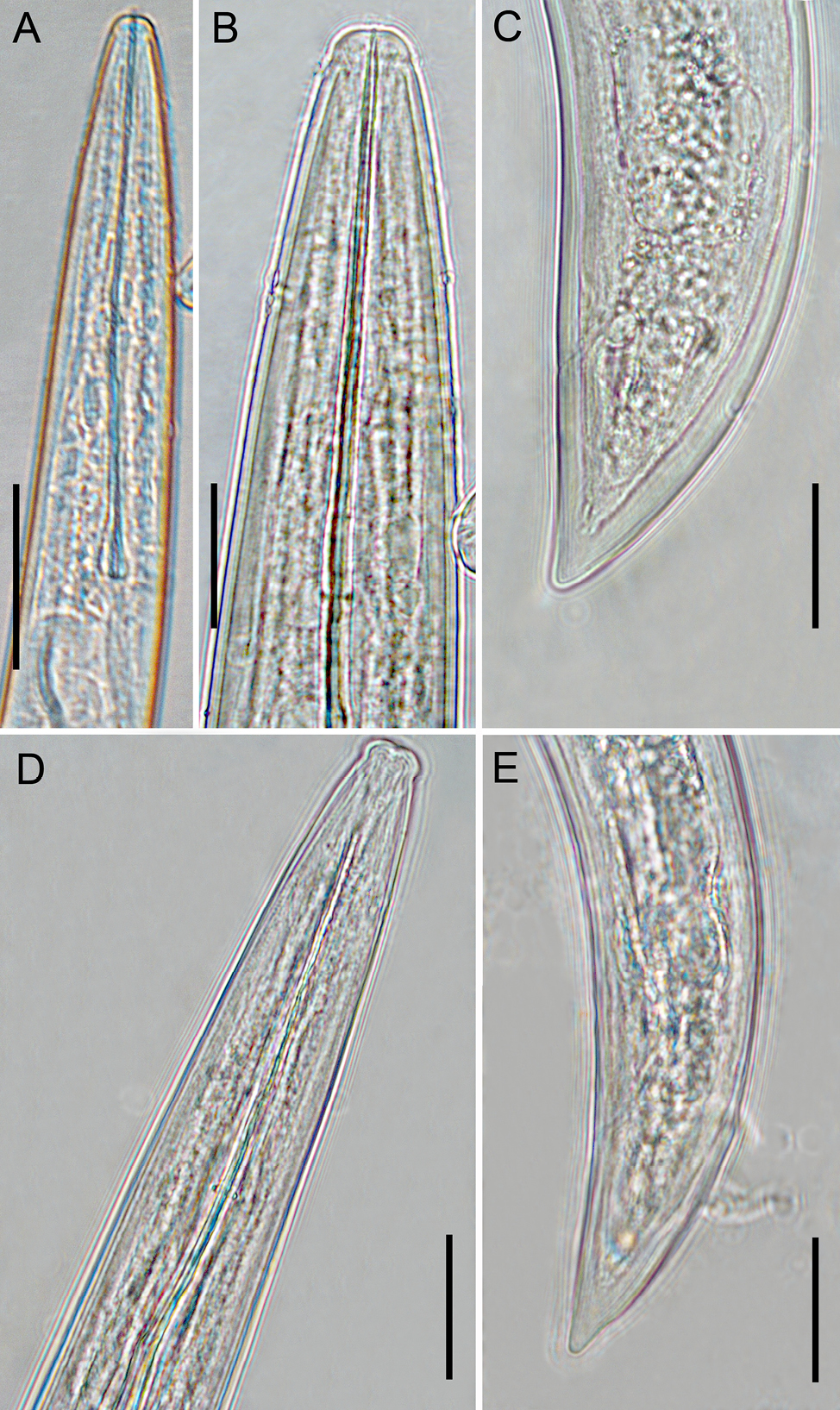
Xiphinema is a cosmopolitan nematode genus within the Longidoridae, which includes more than 290 described species (Archidona-Yuste et al., 2020; Ali et al., 2024; Kornobis et al., 2025). Nematodes in the X. americanum group (more than 60 species) are studied because they have well-conserved and overlapping morphometrics, and some species transmit by economically important nepoviruses (genus Nepovirus, family Comoviridae) (Taylor and Brown, 1997; Decraemer and Robbins, 2007) (Figure 1).
Polyphasic identification of members of the X. americanum group provides the most efficient discrimination between virus vector or quarantine species, and to develop effective control strategies (Širca et al., 2007; Archidona-Yuste et al., 2016; Troccoli et al., 2024).
A survey carried out in Bosnia-Herzegovina, in 2020, of Malus domestica Borkh., 1803 (apple) and Populus sp. (poplar) plantations revealed the presence of two Xiphinema populations belonging to the X. americanum group. Initial hypotheses based on morphological observations showed that the two matched with X. rivesi and X. pachtaicum subgroup within the X. americanum group.
Xiphinema rivesi Dalmasso 1969 is widespread in Europe, and has been recorded in France, Germany (Sturhan, 2014), Italy (De Luca and Agostinelli, 2011; Troccoli et al., 2024), Moldova (Poiras, 2012), Portugal (Gutiérrez-Gutiérrez et al., 2016), Slovenia (Urek et al., 2003), and Spain (Bello et al., 2005; Gutiérrez-Gutiérrez et al., 2011). The X. pachtaicum subgroup includes eight species (X. fortuitum Roca, Lamberti & Agostinelli, 1988, X. incertum Lamberti, Choleva & Agostinelli, 1983, X. madeirense Brown, Faria, Lamberti, Halbrendt, Agostinelli & Jones, 1993, X. opisthohysterum Siddiqi, 1961, X. pachtaicum (Tulaganov, 1938) Kirjanova, 1951, X. pachydermum Sturhan, 1984, X. simile Lamberti, Choleva & Agostinelli, 1983, and X. utahense Lamberti & Bleve-Zacheo, 1979), which have similar morphologies but different molecular and phylogenetic characteristics (Archidona-Yuste et al., 2016; Lazarova et al., 2016; Troccoli et al., 2024). Lazarova et al., 2016 suggested the occurrence of the X. simile-subgroup including X. simile, X. parasimile, X. browni and X. vallense. Xiphinema incertum can be misidentified as X. pachtaicum due to conserved gross morphology. Xiphinema incertum has been reported from Bulgaria (Lamberti et al., 1983), Croatia (Barsi, 1989), Slovenia (Barsi, 1994), Serbia (Barsi and Lamberti, 2002), Spain (Gutiérrez-Gutiérrez et al., 2012; Archidona-Yuste et al., 2016) and Italy (Troccoli et al., 2024), and X. simile, X. densispinatum Barsi, Lamberti & Agostinelli, 1998 and X. pachtaicum have been recorded in Bosnia-Herzegovina (Barsi et al., 1998; Barsi and Lamberti, 2004; Milašin et al., 2024).
The objectives of the present study were to provide accurate identification of the two nematodes found in the Bosnia-Herzegovina survey, using an integrative approach, combining morphological, molecular, phylogenetic, and multivariate analyses. Phylogenetic relationships of the nematodes were inferred by their D2-D3 expansion segments of the 28S rRNA gene, the ITS, and the partial mitochondrial COI.
Materials and methods
Nematode samples and their morphologies
Soil samples were obtained from rhizospheres of apple and poplar trees in the Botanical Garden of the University of Banja Luka, Bosnia-Herzegovina. The samples were taken with an auger from 30 cm depth. Nematodes were extracted from 500 cm3 of soil from each sample using the Flegg and Cobb technique (Flegg, 1967). Xiphinema specimens were killed by gentle heat, then fixed in a solution of 4% formaldehyde + 1% propionic acid, and then processed in pure glycerine using Seinhorst’s (1962) method. Light micrographs were captured, and measurements were made using a Leica compound microscope equipped with a Leica DFC7000 T digital camera, and with Leica Las® version 2.6 software. All abbreviations used are as defined by Jairajpuri and Ahmad (1992).
Multivariate morphometric analyses
Principal Component Analysis (PCA) of the morphological traits within the X. americanum group and the X. pachtaicum subgroup, according to the subgroups indicated by Lamberti and Ciancio, 1993, were assessed with particular attention to X. rivesi, X. incertum, and X. penevi Lazarova, Peneva & Kumari, 2016. Two distinct PCA analyses were conducted for X. rivesi and for X. pacthtaicum-subgroup in XLSTAT (Addinsoft, 2007). Statistical analyses were carried out using PAST v. 4.03 (Hammer and Harper, 2001). Measurements obtained from literature used the mean value for each population (Supplementary Table 1). Measurements were normalized through PAST software before analyses. PCA for the X. americanum group was carried out using 13 diagnostic characters, including: body length (L), ‘de Man’s indices’ (a, b, c, cʹ), percentage distance from anterior end to vulva/body length (V), odontostyle (ODS) and odontophore (ODP) lengths, oral aperture to guided ring distance (OA/gr), tail length (T), body diameters at lip region (LRD) and mid-body (MDB), and J tail length (JTA). PCA for the X. pachtaicum-subgroup analysed fourteen features, adding body diameter (ABD). Scores for the first three components (PC1, PC2 and PC3) were determined to form a two-dimensional plot for each nematode population, based on default parameters of the software.
DNA extractions, PCR and sequencing
For molecular analyses, and to exclude the cases of mixed populations in the same sample, total DNA was extracted from individual juvenile specimens, as described by De Luca et al. (2004). The ITS1-5.8S-ITS2 regions were amplified using the forward primer 18S (5ʹ-GTTTCCGTAGGTGAACCTGC-3ʹ) and the reverse primer 26S (5ʹ-ATATGCTTAAGTTCAGCGGGT-3ʹ) (Vrain et al., 1992). The D2-D3 expansion segments of the 28S rRNA gene were amplified using the primers D2A (5ʹ-ACAAGTACCGTGGGGAAAGTTG-3ʹ) and D3B (5ʹ-TCGGAAGGAACCAGCTACTA-3ʹ) (Nunn, 1992). The portion of the mitochondrial cytochrome oxidase c subunit 1 (mtCOI) gene was amplified with this primer set COI-F1 (5ʹ-CCTACTATGATTGGTGGTTTTGGTAATTG-3ʹ) and COI-R2 (5ʹ-GTAGCAGCAGTAAAATAAGCACG-3ʹ) (Kanzaki and Futai, 2002). The PCR cycling conditions used for amplifications were an initial denaturation at 94°C for 5 min, followed by 35 cycles of denaturation each at 94°C for 50 s, annealing at 55°C for 50 s and extension at 72°C for 1 min, and a final step at 72°C for 7 min. PCR products of the ITS, D2-D3 expansion domains of 28S rRNA gene regions, and the partial mitochondrial COI from three individual nematodes were purified using the protocol suggested by the manufacturer (Nucleospin Gel and PCR Clean-up, Macherey-Nagel). Purified D2-D3 amplicons were directly sequenced using specific primers, while ITS and COI purified DNA fragments were cloned in pGEM-T Vector System II kit (Promega). Positive clones were sent for sequencing, in both directions, to MWG-Eurofins (Germany). The obtained sequences were submitted to GenBank database under the accession numbers: PV397451, PV397455-PV397458, PV461875-PV461878.
Evolutionary divergence between sequences
The pairwise distances within the D2-D3 expansion domains and mitochondrial COI sequences of X. rivesi populations were determined using the MEGA-X software package (Kumar et al., 2018). All positions with gaps and missing data were excluded. The D2-D3 expansion domains involved 32 nucleotide sequences, and the COI analyses involved 21 sequences.
Phylogenetic analyses
To assess the genetic variability within the X. americanum group and X. pachtaicum-subgroup nematodes, sequences from different geographical populations were included in a phylogenetic analysis. The newly obtained sequences of X. rivesi and X. incertum were aligned with the corresponding sequences present in GenBank, using MAFFT software 7 with default parameters (Katoh and Standley, 2013). Sequence alignments were manually edited using BioEdit 7.2.5 (Hall et al., 1999). Phylogenetic analyses of the sequence datasets were carried out with Bayesian inference (BI) using MrBayes 3.1.2 (Ronquist and Huelsenbeck, 2003). The best-fit model of DNA evolution was obtained using JModelTest V.2.1.7 (Darriba et al., 2012) with the Akaike information criterion (AIC). The best-fit model, the base frequency, the proportion of invariable sites, and the gamma distribution shape parameters and substitution rates in the AIC were then used in MrBayes for the phylogenetic analyses. The Markov chains were sampled at intervals of 100 generations and two runs were conducted for each analysis. After discarding burn-in samples of 25% and evaluating convergence, the remaining samples were retained for in-depth analyses. The topologies were used to generate a 50% majority rule consensus tree. Posterior probabilities (PP) were given on appropriate clades. Trees from all analyses were visualized using FigTree software version v.1.42 (Rambaut et al., 2014). D2-D3 alignment of sequences belonging to X. americanum group included 101 sequences, and Tylencholaimus mirabilis (Bütschli, 1873) De Man, 1876 was included as the outgroup. COI alignment of corresponding sequences belonging to the X. americanum group included 45 sequences and X. chambersi, and X. browni Lazarova, Peneva & Kumari, 2016 were used as the outgroups.
Results
Survey for occurrence of Xiphinema species in Bosnia-Herzegovina
In 2020, apple and poplar trees in the Botanical Garden of the University of Banja Luka, Banja Luka, Bosnia-Herzegovina, were sampled to ascertain the occurrence of dagger nematodes. Xiphinema rivesi was associated with apple trees, and X. incertum with poplar trees. These are the first reports of the two nematodes for Bosnia-Herzegovina, extending the geographical distribution of these species in Europe.
Bosnia-Herzegovina (BH) populations of Xiphinema rivesi and X. incertum
Morphometrics of X. rivesi (Table 1) and X. incertum (Table 2) from Bosnia-Herzegovina were compared with the closest reported populations for both species. Morphometrics of BH X. rivesi aligned with the descriptions of Italian and Slovenian populations, showed small variations in comparisons with other populations of X. rivesi. The BH and Slovenian populations had similar V ratio (respectively, 53.9 vs 53.5%) (Urek et al., 2005), while the BH population had more posterior vulva compared to X. rivesi from Italy (respectively, 53.9 vs 52.6%) (Troccoli et al., 2024) or from Portugal (respectively 53.9 vs 52.0%) (Lamberti et al., 1994). The BH population of X. rivesi had longer odontostyle (95.7 µm) and tail (36.7 µm) compared to all other previously described populations (Fadaei et al., 2003; Urek et al., 2005; De Luca and Agostinelli, 2011; Gutiérrez-Gutiérrez et al., 2012; Handoo et al., 2015; Troccoli et al., 2024). Furthermore, Table 1 clearly showed that X. rivesi from Egypt is the most different population compared to the others reported in this study.
| Character | X. rivesi | X. rivesi | X. rivesi | X. rivesi | X. rivesi | X. rivesi | X. rivesi | X. rivesi |
|---|---|---|---|---|---|---|---|---|
| Bosnia-Herzegovina | Italy | Italy | Spain | Slovenia | Egypt | Iran | Portugal | |
| Troccoli et al., 2024 | De Luca and Agostinelli, 2011 |
Gutiérrez-Gutiérrez et al., 2012 | Urek et al., 2005 |
Handoo et al., 2015 |
Fadaei et al., 2003 |
Lamberti et al., 1994 | ||
| n | 11 | 18 | 10 | 10 | 11 | 10 | 13 | 5 |
| L | 1874.4 ± 50.7 (1808.1-1967.7) |
1892.8 ± 133.4 (1607-2166.7) |
2000 ± 0.12 (1900-2200) |
1886 ± 127 (1583-2055) |
1960 (1780-1070) |
1600.6 ± 75.5 (1480-1660) |
1700 ± 0.08 (1500-1800) |
2000 (1900-2000) |
| a | 52.2 ± 2.5 (47.0-55.7) |
49.4 ± 2.1 (45.3-53.5) |
55 ± 2.39 (50-58) |
45.7 ± 3.3 (37.2-48.4) |
45.39 (36.44-53.34) |
35.1 ± 1.3 (32.7-37) |
44.7 ± 2.9 (38.5-50) |
53 (50-55) |
| b | - | 8.4 ± 0.7 (7.2-9.7) |
6.4 ± 0.61 (5.5-7.5) |
7.4 ± 0.9 (6.4-8.4) |
6.00 (5.08-7.05) |
6.6 ± 0.7 (5.5-7.4) |
6.4 ± 0.5 (5.5-7) |
7.0 (5.5-7.0) |
| c | 51.2 ± 4.0 (43.6-56.5) |
58.8 ± 5.5 (50.2-67.7) |
63.3 ± 4.99 (56.9-69.8) |
53.4 ± 3.3 (49.1-58.5) |
57.95 (51.12-66.82) |
56.0 ± 3.4 (50.2-59.5) |
55.2 ± 3.0 (49.5-60) |
61 (59-63) |
| c’ | 1.6 ± 0.1 (1.5-1.8) |
1.4 ± 0.1 (1.2-1.7) |
1.4 ± 0.09 (1.2-1.5) |
1.4 ± 0.1 (1.2-1.5) |
1.44 (1.27-1.59) |
1.0 ± 0.1 (1.0-1.1) |
1.3 ± 0.07 (1.2-1.4) |
1.5 (1.4-1.6) |
| V (%) |
53.9 ± 0.8 (53.1-55.1) |
52.6 ± 0.9 (50.9-54.2) |
52 ± 0.85 (50-53) |
53.0 ± 1.0 (52-55) |
53.5 (52.6-54.4) |
52.1 ± 1.4 (50.4-54) |
52.2 ± 0.7 (51-53.5) |
52 (50-55) |
| Odontostyle length | 95.8 ± 0.9 (94.5-96.9) |
90.8 ± 2.3 (86.4-94.1) |
93.6 ± 1.60 (90.8-94.8) |
92.1 ± 5.9 (79.0-98.5) |
91.9 (84.9-96.3) |
87.5 ± 2.0 (85-90) |
81.5 ± 2.8 (73.5-86) |
91 (88-95) |
| Odontophore length | 46.4 ± 1.0 (44.0-47.2) |
51.2 ± 2.3 (48.4-56.1) |
53.3 ± 1.80 (50.6-55.7) |
51.7 ± 3.8 (43.5-56.5) |
51.8 (48.1-55.4) |
52.8 ± 2.9 (50-57) |
46.2 ± 1.8 (42-48.5) |
50 (47-53) |
| Oral aperture – guide ring | 73.2 ± 1.2 (70.6-74.6) |
76.8 ± 2.6 (72.2-84.5) |
75.4 ± 1.14 (73.6-77.6) |
79.3 ± 6.1 (65.5-87.0) |
78.6 (74.4-84.2) |
72.2 ± 4.0 (65-75) |
66.2 ± 2.0 (63-70) |
73 (72-73.5) |
| Tail length | 36.7 ± 2.9 (32.8-42.9) |
32.4 ± 2.8 (28.4-38.9) |
32.2 ± 1.25 (30.5-35.0) |
35.4 ± 2.5 (31.5-39.0) |
34.0 (30.4-37.9) |
28.6 ± 1.9 (25-30) |
30.8 ± 1.9 (28-33.5) |
33 (31-34) |
| J tail | - | 8.3 ± 1.2 (5.8-11.6) |
7.4 ± 0.83 (6.3-8.6) |
8.6 ± 0.7 (7.5-8.5) |
- | 9.1 ± 1.5 (8-12) |
9.4 ± 0.8 (8-11) |
9 (8-10) |
| Body diam. at lip region | - | 8.9 ± 0.5 (8-9.9) |
10.3 ± 0.00 (10-10) |
9.9 ± 0.9 (8.5-12.0) |
- | - | 11.1 ± 0.4 (10.5-12) |
9 (9-9) |
| Body diam. at guide ring | - | 27.5 ± 1.3 (25.6-30.5) |
- | - | - | - | 25.6 ± 0.9 (25-27) |
|
| Body diam. at mid-body | 22.9 ± 1.0 (21.4-24.4) |
38.3 ± 3.1 (33.8-43.5) |
36.9 ± 1.58 (34.5-38.5) |
- | 43.8 (34.4-52.7) |
45.7 ± 3.3 (40-50) |
38.2 ± 3.3 (33.5-46.5) |
|
| Body diam. at anus | - | 23.8 ± 1.9 (21.1-28.4) |
23.6 ± 0.81 (22.4-25.3) |
- | - | - | 23.2 ± 1.1 (21.5-25) |
|
| Body diam. at beginning of J | - | 10.4 ± 1.0 (8.8-11.8) |
10.2 ± 0.47 (9.2-10.9) |
- | - | 12.6 ± 1.2 (11.5-15) |
10.9 ± 0.8 (10-12.5) |
| Character | X. incertum | X. incertum | X. incertum | X. incertum | X. incertum | X. penevi | X. parasimile | X. pachtaicum | X. pachtaicum |
|---|---|---|---|---|---|---|---|---|---|
| Bosnia – Herzegovina | Spain | Bulgaria | Croatia | Serbia | Morocco | Serbia | Serbia | Italy | |
| Gutiérrez-Gutiérrez et al., 2012 | Lamberti et al., 1983 | Barsi, 1994 | Barsi and Lamberti, 2002 | Lazarova et al., 2016 | Barsi and Lamberti, 2004 | Barsi and Lamberti, 2002 | Troccoli et al., 2024 | ||
| n | 8 | 6 | 4 | 2 | 2 | 6 | 53 | 30 | 10 |
| L | 1952.2 ± 89.3 (1858–2126.4) |
1844 ± 52 (1788–1922) |
1900 (1800–2000) |
1910–1960 | 1920–2050 | 1687 ± 100 (1532–1846) |
1990 ± 130 (1750-2260) |
1990 ± 100 (1810-2190) |
1926.9 ± 113.5 (1789 - 2091) |
| a | 54.3 ± 1.7 (52.5–58.3) |
49.7 ± 3.0 (44.6–52.5) |
57 (54–64) |
65.3–60.6 | 63.8–65.6 | 61.0 ± 2.6 (57.2–65.0) |
70.5 ± 3.81 (61.0–76.1) |
66.7 ± 3.70 (60.7-75.1) |
61.9 ± 2.8 (57.8 - 66.3) |
| b | – | 9.0 ± 1.4 (7.7–11.0) |
6.4 (5.9–6.8) |
6.2–6.4 | 6.0–5.9 | 6.1 ± 1.1 (5.0–7.0) |
7.0 ± 0.49 (6.1–8.1) |
5.8 ± 0.43 (4.8-7.0) |
6.4 ± 0.5 (5.8 - 7.2) |
| c | 57.6 ± 1.9 (55.5–61.2) |
64.5 ± 2.7 (61.8–68.6) |
69 (62–78) |
67.6–78.2 | 72.5–81.3 | 57.7 ± 3.9 (50.8–61.5) |
59.9 ± 4.51 (50.9–69.8) |
61.5 ± 5.50 (51.6-71.8) |
61.6 ± 5.1 (54.0 - 70.2) |
| c’ | 1.7 ± 0.1 (1.6–1.9) |
1.2 ± 0.1 (0.9–1.3) |
1.5 (1.4–1.7) |
1.61–1.42 | 1.51–1.33 | 1.8 ± 0.1 (1.6–1.9) |
2.02 ± 0.12 (1.79–2.28) |
1.77 ± 0.14 (1.58-2.00) |
1.7 ± 0.1 (1.6 - 1.9) |
| V | 55.4 ± 2.1 (51.4–58.8) |
52.4 ± 1.1 (51–54) |
57 (56–58) |
58.8–58.6 | 58.0–58.1 | 57.1 ± 0.6 (55.9–58.1) |
55.5 ± 1.38 (52.2–58.7) |
57.0 ± 1.33 (54.8-59.2) |
56.8 ± 1.2 (55.1 - 59.4) |
| Odontostyle lenght | 75.2 ± 2.5 (71.6–79.2) |
92.2 ± 3.4 (88.0–97.0) |
92 (87–97) |
90.5–90.5 | 88.7–90.0 | 76.7 ± 2.1 (72–79) |
69.7 ± 2.22 (64.4–73.7) |
88.3 ± 2.58 (83.7 -93.7) |
87.3 ± 2.7 (83.5 - 90.9) |
| Odontophore lenght | 53.4 ± 4.1 (45.0–57.9) |
49.7 ± 3.0 (46.0–53.5) |
51 (50–54) |
50.3–49 | 46.3–47.5 | 47.7 ± 1.8 (44–50) |
41.6 ± 1.21 (38.8–43.8) |
48.9 ± 1.34 (46.3-51.3) |
51.2 ± 1.5 (48.4 - 53.3) |
| Oral aperture–guiding ring | 70.0 ± 1.2 (68.8–72.4) |
76.4 ± 4.8 (70.0–82.0) |
71 (64–82) |
81.7 –84.2 | 80.6–82.5 | 68.0 ± 0.6 (66–71) |
62.6 ± 1.72 (59.4–66.3) |
80.5 ± 2.39 (77.3-85.6) |
80.1 ± 3.0 (75.8 - 83.8) |
| Tail lenght | 33.9 ± 1.9 (31.2–36.5) |
28.6 ± 1.2 (27.0–30.5) |
28 (26–32) |
28.3–25.1 | 26.4–25.0 | 29.3 ± 1.9 (26–32) |
33.3 ± 1.62 (30.3 -37.1) |
32.6 ± 2.60 (28.6-38.2) |
31.4 ± 1.5 (29.8 - 33.7) |
| J (hyaline portion of tail) | – | 6.5 ± 1.0 (5.5–8.5) |
7 (6–9) |
7.5–8.2 | 8.8–6.3 | 8.4 ± 0.7 (8–10) |
8.2 ± 0.88 (6.3 -10.0) |
10.1 ± 0.94 (8.1-12.5) |
9.3 ± 0.4 (8.4 - 9.8) |
| Body diam. at lip region | – | 9.5 ± 0.5 (8.5–10.0) |
9 (8–9) |
8.8–8.8 | 8.8–8.8 | 8.3 ± 0.3 (8–9) |
9.0 ± 0.24 (8.4–9.7) |
9.1 ± 030 (8.4-9.7) |
8.7 ± 0.5 (8.3 - 9.7) |
| Body diam. at mid–body | 35.9 ± 1.2 (34.8–38.7) |
– | 34 (29–37) |
29.3–32.4 | 30–31.3 | 27.6 ± 1.4 (25–31) |
28.3 ± 1.26 (24.7–30.6) |
29.9 ± 1.45 (27.5-33.8) |
31.2 ± 2.0 (28.0 - 34.8) |
| Body diam. at anus | 19.7 ± 1.1 (18.4–22.2) |
– | 19 (18–19) |
17.6–17.6 | 17.5–18.8 | 16.2 ± 0.7 (15–17) |
16.5 ± 0.65 (15.0 -17.7) |
18.4 ± 0.71 (16.9-20.0) |
18.0 ± 0.5 (17.2 - 18.7) |
| Body diam. at be beginning of J | – | – | 10 (9–10) |
10–9.7 | 11.7–10.0 | 7.1 ± 0.4 (7–8) |
7.1 ± 0.51 (6.3 -8.1) |
8.5 ± 0.79 (6.9-103) |
– |
Morphology and morphometrics of the BH X. incertum population agreed with the type population described by Lamberti et al. (1983) (Table 2). The lip regions were slightly expanded and set off by constrictions and separated from the bodies by depressions. Female tails were conoid, each with a narrowly rounded terminus, as has been previously described for European populations (Barsi, 1994; Barsi and Lamberti, 2002; Gutiérrez-Gutiérrez et al., 2012). The main differences between the BH population and the type population of X. incertum from Bulgaria were: slightly longer body length (1952 vs 1900 µm), slightly lower V ratio (respectively, 55.4 vs 57.0%), and moderately lower c value (57 vs 69.0%). There was a lower a and c ratio for the BH nematodes when compared with X. incertum from Croatia and Serbia (Table 2). BH X. incertum had more anterior vulva (55.4%) compared to other populations, except for that from Spain (52.4%). The BH population had shorter odontostyles (mean = 75.2 µm ) compared with specimens from Spain (92.2 µm) and the type population from Bulgaria (92.0 µm). The BH X. incertum also had similarities with X. penevi, X. parasimile, and X. pachtaicum, but can be distinguished from X. penevi (Lazarova et al., 2016) by body length (L = 1952.2 µm cf. 1687 µm), a (54.3 cf. 55.4%), V values (61 cf. 57.1%), and tail shape (rounded cf. pointed termini). The BH X. incertum can be distinguished from X. parasimile (Barsi and Lamberti, 2004) by smaller a and c’ values (54.3 and 57.6 vs 70.5 and 59.9), and longer odontostyles (means = 75.2 vs 69.7 µm). When compared to X. pachtaicum, several characters showed overlapping ranges, with stylet lengths being the most significant differentiating feature for X. pachtaicum from Serbia (75.2 vs 88.3 µm) and for X. pachtaicum from Italy (75.2 vs 87.3 µm).
Multivariate morphometric analyses
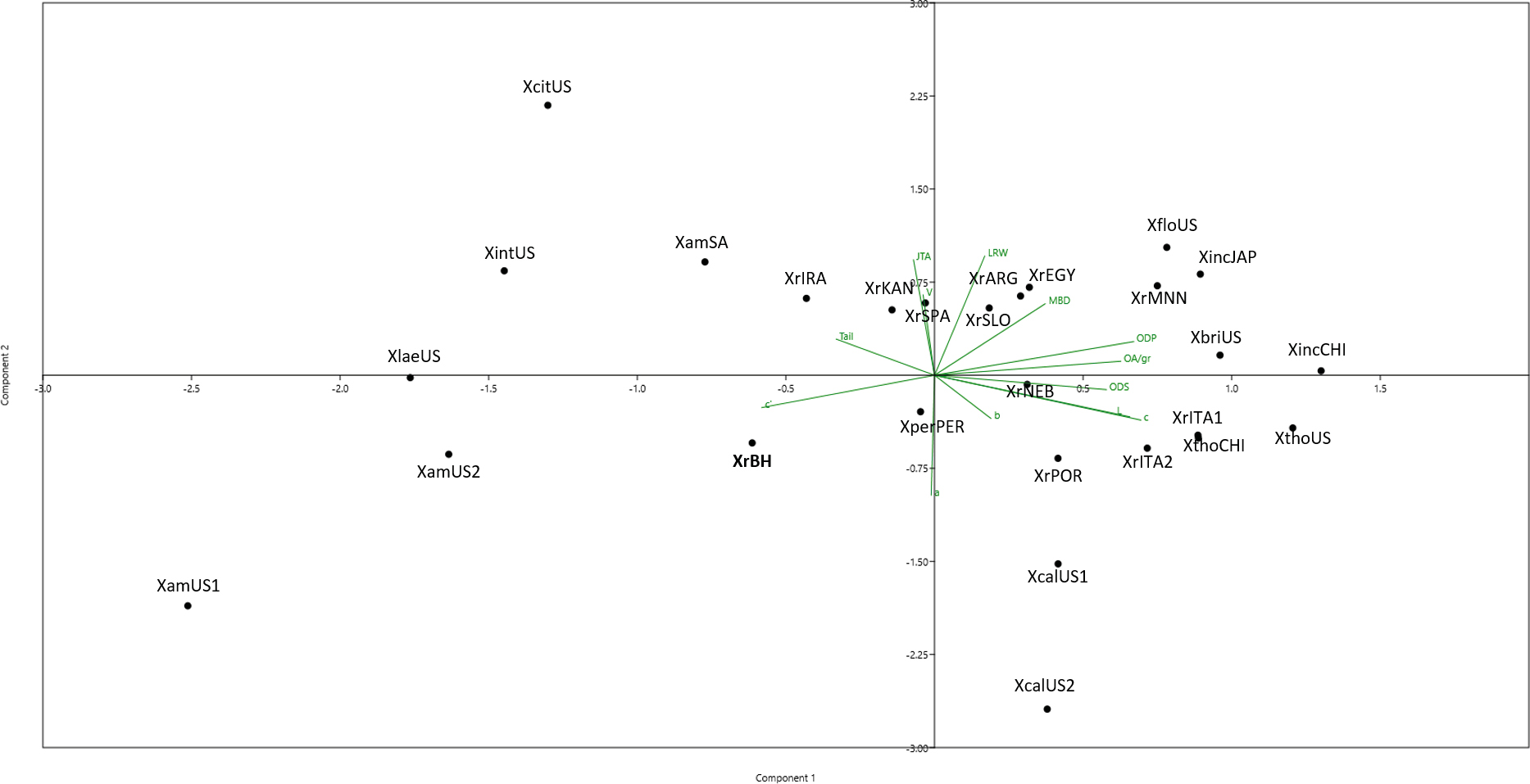
In the PCA analyses built with species of the X. americanum group belonging to clade I, an accumulated variability of 68.34% of the total variance was measured for X. rivesi compared with other populations of this species (Figure 2). The contributions of PC1 were 32.47%, for PC2 was 21.84% and for PC3 was 14.02%. Kaiser Meyer Olkin’s (KMO) measure of sampling indicated a KMO value of 0.608. The loading factors for each character were used to interpret biological meaning of the factors. The c ratio (r = 0.418), odontophore length (r = 0.40), body (r = 0.396) and oral aperture to guided ring length (r = 0.378), had greatest coefficients of correlation, and were responsible for the significant variability of the F1. For the F2, almost all characters showed positive correlations except for body and odontostyle lengths, and all the de Man indices. This component is associated with the general nematode size. F2 was also dominated by the greatest coefficient of correlation for lip region diameter (r = 0.474) and J tail length (r = 0.459), as well as a high negative correlation for a ratio (r = -0.478). F3 was mainly dominated by a high positive correlation for tail length ratio (r = 0.493) and V ratio (r = 0.489). Specimens of species were not casually situated, and a widespread spatial separation was observed among the Xiphinema populations. Xiphinema rivesi populations clustered together in the middle of the diagram confirming the morphological similarity among populations. The values of vulva position, oral aperture to guided ring distance and the a ratio increased along y-axis (PC2) contributing to the variability among X. rivesi populations.
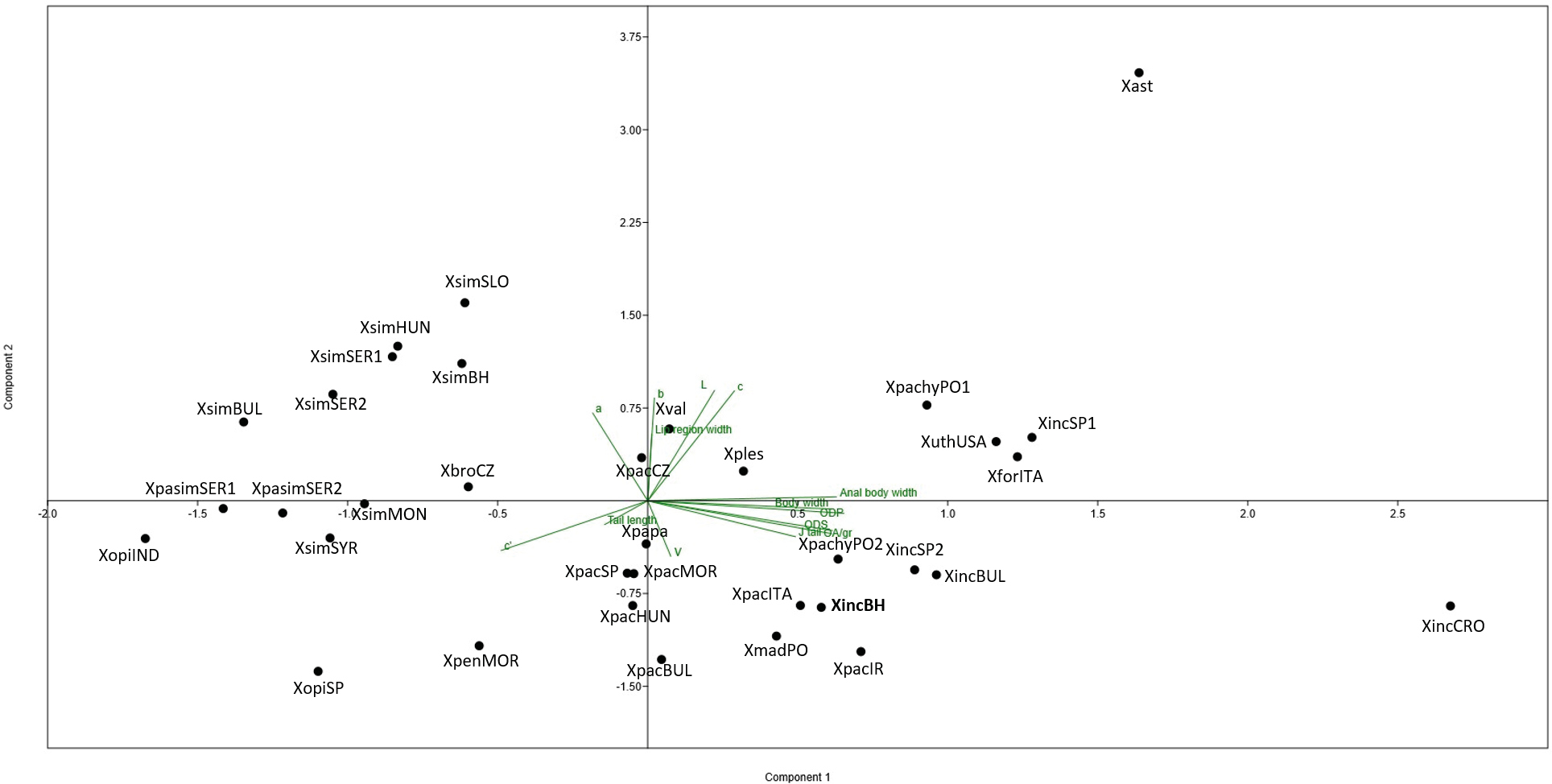
The PCA, built on the X. pachtaicum-subgroup species, showed an accumulated variability of 68.50% for total variance, with the contribution of PC1 of 31.21%, for PC2 of 22.18% and for PC3 of 15.11%. The KMO value was 0.583, indicating that the sample size was suitable for the analysis. The loading factors for each character were used to interpret their biological validities. For PC1, almost all the characters had positive correlations, except for tail length (r = - 0.008), a (r = - 0.113) and cʹ ratio (r = - 0.301). PC2 was positively correlated with body length L (r = 0.464), c (r = 0.462) and b ratio (r = 0.431), with a gradual increase in values associated with body dimensions and general nematode size. For PC3, a strong positive correlation was found for tail length (r = 0.613) and cʹ ratio (r = 0.389), but negative correlations to V (r = -0.432). Xiphinema pachtaicum and X. incertum grouped on the right side of the diagram, forming a closely related morphocluster, while X. simile and X. parasimile clustered together on the left side of the diagram clearly separated from the X. pachtaicum-subgroup. This spatial separation was mainly dominated by the PC1, grouping the species according to body width, distance of oral aperture to guided ring, odontostyle, and odontophore length.
Molecular characterization
The length of the amplified products of the D2-D3 expansion segments, ITS region and of the partial mtCOI gene are reported in Table 3.
| Species | Location | Host | Sample code | Genbank accession number | Source | ||
|---|---|---|---|---|---|---|---|
| D2D3 | ITS | COI | |||||
| X. rivesi | Banja Luka, Bosnia and Herzegovina | Malus domestica | N 6_10 | - | PV397451 | - | B. Nježić |
| X. rivesi | Banja Luka, Bosnia and Herzegovina | Malus domestica | 10_11BH | PV397456 | - | - | B. Nježić |
| X. rivesi | Banja Luka, Bosnia and Herzegovina | Malus domestica | 17_D2 | PV397457 | - | - | B. Nježić |
| X. rivesi | Banja Luka, Bosnia and Herzegovina | Malus domestica | 21_BH | PV397458 | - | - | B. Nježić |
| X. rivesi | Banja Luka, Bosnia and Herzegovina | Malus domestica | 47_COIF | - | - | PV461875 | B. Nježić |
| X. rivesi | Banja Luka, Bosnia and Herzegovina | Malus domestica | 51_COIF | - | - | PV461876 | B. Nježić |
| X. rivesi | Banja Luka, Bosnia and Herzegovina | Malus domestica | 52_COIF | - | - | PV461877 | B. Nježić |
| X. rivesi | Banja Luka, Bosnia and Herzegovina | Malus domestica | 53_COIF | - | - | PV461878 | B. Nježić |
| X. incertum | Banja Luka, Bosnia and Herzegovina | Populus sp. | XI_2_BH | PV397455 | - | - | B. Nježić |
Low intra-population variability of D2-D3 region of X. rivesi sequences included in the present study was observed (2 to 12 nt). Blast NCBI searches using D2-D3 domains of BH X. rivesi showed 100% similarity with X. rivesi isolates from Italy, Chile (JX912150, OR683648) and the USA (KU680972), and 99% similarity with the remaining sequences of X. rivesi present in the Genbank database. Pairwise distances among D2-D3 sequences of X. rivesi ranged from 0 to 32 nucleotides, only X. inaequale (HM163210) differed between 3 to 40 bp (Supplementary Table S3). Blast search revealed that ITS sequences of X. rivesi from BH apple samples had 100% similarity with X. rivesi from Chile (OR698922) and X. inaequale Khan & Ahmad, 1975 (GQ231530), 99% similarity with X. rivesi from Italy (OR698913-OR698921; FR878063-66; 8-16 nt differences; 2-11 gaps), 98% similarity with X. thornei Lamberti & Morgan Golden, 1986 (27 nt differences; 21 gaps) and X. rivesi from USA (MT524488), and 94 to 96% similarity with all the remaining Genbank sequences for X. rivesi. The three individuals of the BH X. rivesi population that were amplified produced 435 bp COI fragments. Amplified products were cloned and two clones for each specimen were sequenced. Sequence analyses showed greatest similarity with Italian X. rivesi, differing by 1 to 5 bp (99 to 100% similarity). Pairwise distances of all Xiphinema COI present in the subgroup A ranged from 0 to 21% (from 0 to 70 nucleotides) (Supplementary Table S4).
D2-D3 sequences of the BH population of X. incertum showed 100% similarity with X. penevi from Morocco (KU250157), and X. incertum from Spain (KX244908) ; 99% similarity with Italian and other Spanish X. incertum (1-7 nt differences), and 96 to 98% similarity with corresponding sequences of X. pachtaicum and other species belonging to the X. americanum-group, confirming the considerable sequence similarity within the Xiphinema americanum-group.
Phylogenetic analyses
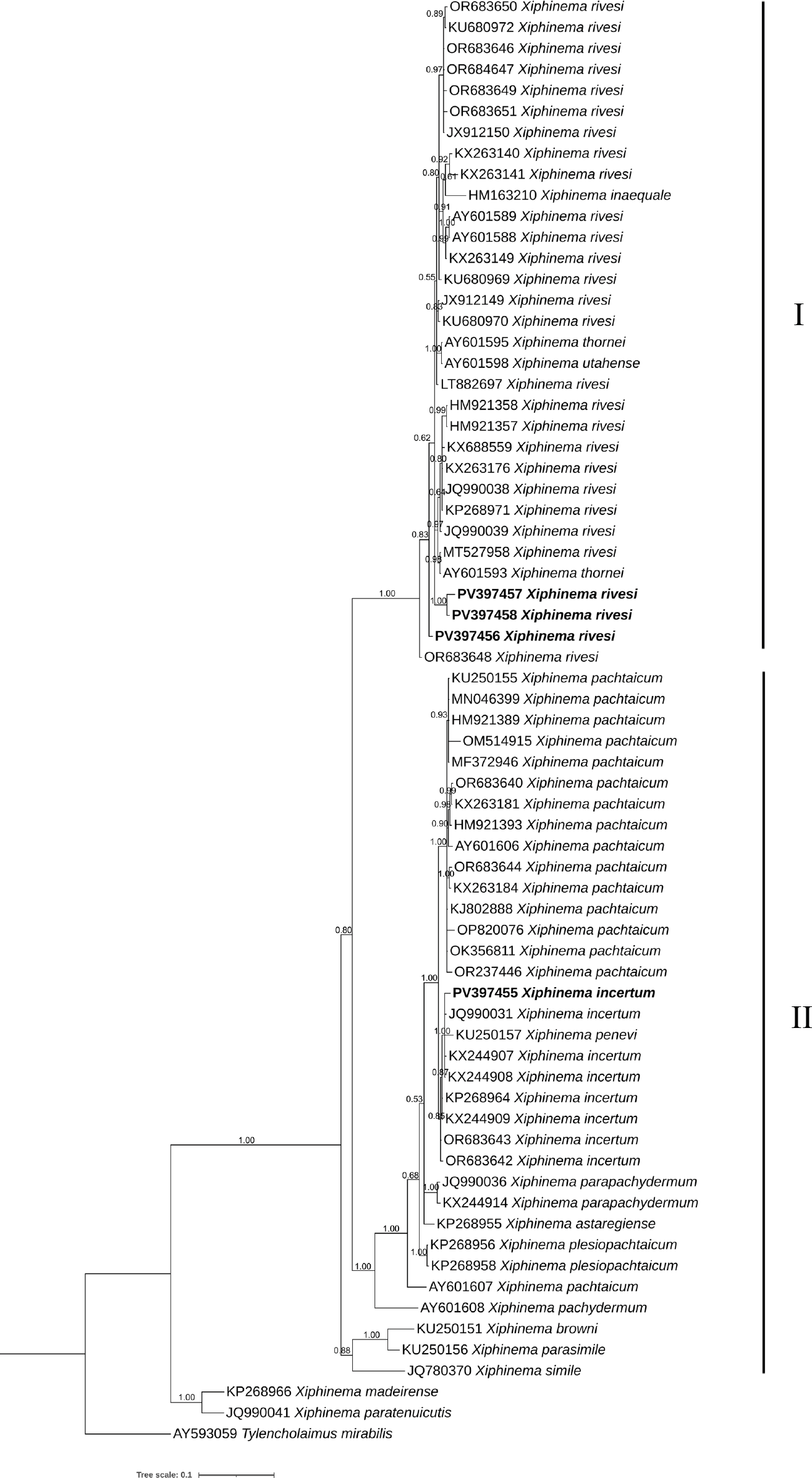
The D2-D3 phylogenetic tree produced two main clades: clade I containing all X. rivesi sequences and the closest species of the X. americanum group; and clade II containing all sequences of the X. pachtaicum-subgroup including X. incertum sequences (Figure 3). Clade I, as previously reported by Troccoli et al. (2024), showed different subgrouping for X. rivesi. Sequences of X. rivesi from Spain and the USA grouped together and separated from other subgroupings. The BH sequences formed a separated subgrouping due to nucleotide variability within X. rivesi populations. Clade II contained all sequences belonging to the X. pachtaicum-subgroup including X. incertum sequences. The subgrouping of X. incertum sequences also included X. penevi from Morocco, with high support. This indicates that X. incertum and X. penevi requires further investigation to clarify whether they are distinct or the same species.
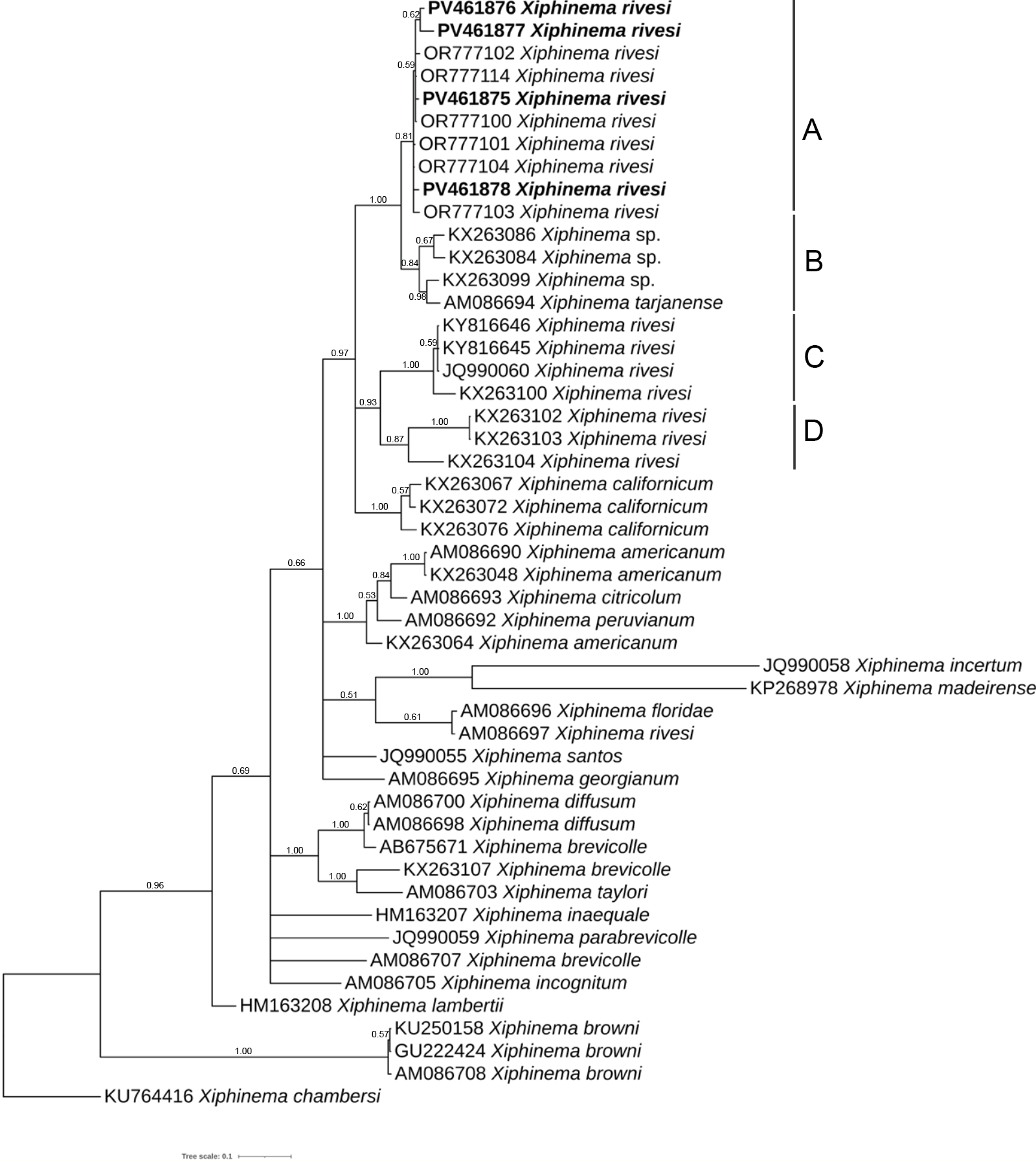
The COI phylogenetic tree showed different subgroupings within the X. americanum group and within X. rivesi populations, separating according to geographical origins (Figure 4; A-D subgroupings). COI sequences of X. rivesi formed a well-supported subgroup (97% similarity), in which Italian and BH X. rivesi subgrouped together (Figure 4 A).
Discussion
The present study reports previously unrecorded occurrences of X. rivesi and X. incertum nematodes in Bosnia-Herzegovina (BH), extending incidences of these nematodes in Europe. Morphometric comparisons of the two nematodes from this country with the type and other descriptions of these species confirmed the high intraspecific variability in both species (Tables 1 and 2). Multivariate analyses of X. rivesi populations, including the BH population, shared some overlapping characters along with morphometric differences, which may be due to their geographical origins and phenotypic plasticity (Figure 2). PCA of X. incertum showed that BH X. incertum shared overlapping characters with X. incertum populations from Bulgaria and Spain, and several species of the X. pachtaicum subgroup for size and body length. The Croatian population of X. incertum was closely related but separated from the BH and Bulgarian populations for posterior vulva position and having longer hyaline tails. Xiphinema penevi from Morocco was distant from BH X. incertum (Figure 3). These results have confirmed the existence of the X. pachtaicum-subgroup (Gutiérrez-Gutiérrez et al., 2012; Palomares-Rius et al., 2014; 2017), and the difficulty to correctly identify these nematode species. Sequence analyses of the BH X. rivesi markers confirmed the high interspecific variability within the species (Troccoli et al., 2024). For BH X. incertum, the D2-D3 sequence had low intra- and inter-specific variability among X. incertum, X. penevi (0-7 nt differences) and X. pachtaicum populations.
The phylogenetic trees based on D2-D3 showed two main clades, in agreement with previous reports (Archidona-Yuste et al., 2016; 2020; Orlando et al., 2016; Mobasseri et al., 2019; Troccoli et al., 2024).
Clade I consisted of several subgroupings of X. rivesi, in particular the BH X. rivesi had high variability. Clade II grouped all sequences belonging to the X. pachtaicum-subgroup (Figure 4). Xiphinema incertum populations, including the BH population, and X. penevi formed a well-supported subgrouping, despite the PCA results placing X. penevi distant from X. incertum populations. This result confirms existence of different evolutionary rates of molecular and morphological mechanisms and indicates that X. penevi may represent a recent speciation event, as the D2-D3 sequences showed 100% similarity with those of X. incertum.
In the phylogenetic tree of COI sequences, different subgroupings of X. rivesi populations occurred (Figure 5). BH and Italian X. rivesi subgrouped together (Figure 5A), while Xiphinema sp. 1 and X. tarjanense were in a separate subgroup (Figure 5B) showing sister relationships with subgroup A. Xiphinema rivesi from Spain and United States of America were in separate subgroupings (Figure 5, C and D). These results demonstrate the occurrence of different haplotypes within X. rivesi, probably resulting from different mutation rates in the mitochondrial genomes among the different geographical populations. Therefore, the COI marker was useful for population and intraspecific genetic variation studies among X. americanum group populations.
In conclusion, the present study shows new occurrence of X. rivesi and X. incertum in Bosnia-Herzegovina, extending their distribution in Europe. Particular attention is required when identifying X. pachtaicum, because of the existence of species complexes. Regarding to X. incertum and X. penevi, more molecular data are required to verify the occurrence of cryptic species or variability within X. incertum, as X penevi has only been described from Morocco. Knowledge of intra- and inter-specific molecular variability is important to detect misidentification or cryptic speciation within the X. americanum group. Use of COI for integrative nematode taxonomy can delimit species within Nematoda, but the high nucleotide variability of mitochondrial COI within the X. americanum group suggests high mutation rates, that can represent potential for development of cryptic species or the ability of these species to adapt to climate and environmental changes.
Author contributions
EF and AV equally contributed to molecular and phylogenetic analyses; AT and BN carried out morphological measurements; AV and RD contributed to sampling and nematode recovery; AV, AT, EF and BN reviewed and edited the paper manuscript; FDL contributed to the study design, writing of the original draft, and review and editing; FDL contributed to fund acquisition. The first draft of the manuscript was commented on by all authors, and they all approved the final manuscript.
Data availability
All sequences described in this paper are freely available from the GenBank database.
Literature cited
Addinsoft, 2007. XLSTAT 2007 Data analysis and statistics software for Microsoft Excel. Paris, France.
Ali N., Vicente C.S., Mota M., Gutiérrez-Gutiérrez C., 2024. First report of four dagger nematode species of the genus Xiphinema (Nematoda: Longidoridae) from banana in Syria using an integrative approach. European Journal of Plant Pathology 169(4): 727–753. https://doi.org/10.1007/s10658-024-02868-3
Archidona-Yuste A., Navas-Cortés J.A., Cantalapiedra-Navarrete C., Palomares-Rius J.E., Castillo P., 2016. Cryptic diversity and species delimitation in the Xiphinema americanum-group complex (Nematoda: Longidoridae) as inferred from morphometrics and molecular markers. Zoological Journal of the Linnean Society 176(2): 231–265. https://doi.org/10.1111/zoj.12316
Archidona-Yuste A., Cai R., Cantalapiedra-Navarrete C., Carreira J.A., Rey A., … Castillo P., 2020. Morphostatic speciation within the dagger nematode Xiphinema hispanum-complex species (Nematoda: Longidoridae). Plants 9, 1649. https://doi.org/10.3390/plants9121649
Barsi L., 1989. The Longidoridae (Nematoda: Dorylaimida) in Yugoslavia. I. Nematologia Mediterranea 17: 97–108.
Barsi L., 1994. Specimens of the Xiphinema americanum-group (Nematoda: Dorylaimida) on the territory of the former Yugoslavia. Nematologia mediterranea 22: 25–34.
Barsi L., Lamberti F., Agostinelli A., 1998. Xiphinema densispinatum sp. n. from Bosnia and Herzegovina and X. montenegrinum sp. n. from Montenegro, Yugoslavia (Nematoda: Dorylaimida) Nematologia Mediterranea 26: 67–77.
Barsi L., Lamberti F., 2002. Morphometrics of three putative species of the Xiphinema americanum group (Nematoda: Dorylaimida) from the territory of the former Yugoslavia. Nematologia Mediterranea 30: 59–72.
Barsi L., Lamberti F., 2004. Xiphinema parasimile sp. n. from Serbia and X. simile, first record from Bosnia and Herzegovina (Nematoda, Dorylaimida). Nematologia Mediterranea 32: 101–109.
Barsi L., De Luca F., 2008. Morphological and molecular characterisation of two putative Xiphinema americanum-group species, X. parasimile and X. simile (Nematoda: Dorylaimida) from Serbia. Nematology 10(1): 15–25.
Bello A., Robertson L., Díez-Rojo M.A., Arias M., 2005. A re-evaluation of the geographical distribution of quarantine nematodes reported in Spain. Nematologia Mediterranea 33: 209–213.
Cai R., Archidona-Yuste A., Cantalapiedra-Navarrete C., Palomares-Rius J.E., Castillo, P., 2020. New evidence of cryptic speciation in the family Longidoridae (Nematoda: Dorylaimida). Journal of Zoological Systematics and Evolutionary Research 58 (4): 869–899. https://doi.org/10.1111/jzs.12393
Chaves E.J., Mondino, E. A., 2013. Description of some Xiphinema species populations (Nematoda) from Argentina. Nematropica 43: 68–77.
Cobb N.A., 1913. New nematode genera found inhabiting fresh water and non-brackish soils. Journal of the Washington Academy of Sciences 3(16): 432–444.
Dalmasso A., 1969. Etude anatomique et taxonomique des genres Xiphinema, Longidorus et Paralongidorus (Nematoda: Longidoridae). Mémoires du Muséum National d’Histoire Naturelle, Paris, Nouvelle Série A., Zoologie 61: 33–82.
Darriba D., Taboada G., Doallo R., Posada D., 2012. jModelTest 2: more models, new heuristics and parallel computing. Nature Methods 9: 772. https://doi.org/10.1038/nmeth.2109
Decraemer W., Robbins R.T., 2007. The who, what and where of Longidoridae and Trichodoridae. Jounal Nematology 39(4):295–297.
De Luca F., Agostinelli A., 2011. Molecular and morphometry identification of plant parasitic nematodes. Redia 94: 143–148.
De Luca F., Fanelli E., Di Vito M., Reyes A., De Giorgi C., 2004. Comparisons of the sequences of the D3 expansion of the 26S ribosomal genes reveals different degrees of heterogeneity in different populations and species of Pratylenchus from the Mediterranean region. European Journal of Plant Pathology 110: 949–957. https://doi.org/10.1007/s10658-004-0813-4.
Ebsary B.A., Vrain T.C., Graham M.B., 1989. Two new species of Xiphinema (Nematoda: Longidoridae) from British Columbia vineyards. Canadian Journal of Zoology 67(4): 801–804.
Fadaei A.A., Coomans A., Kheiri A., 2003. Three species of the Xiphinema americanum lineage (Nematoda: Longidoridae) from Iran. Nematology 5(3): 453–461. https://doi.org/10.1163/156854103769224430
Flegg J.J.M., 1967. Extraction of Xiphinema and Longidorus species from soil by a modification of Cobb’s decanting and sieving technique. Annals of Applied Biology 60: 429–437.
Guttiérrez-Guttiérrez C., Palomares Rius J.E., Cantalapiedra-Navarrete C., Landa B.B., Castillo P., 2011. Prevalence, polyphasic identification, and molecular phylogeny of dagger and needle nematodes infesting vineyards in southern Spain. European Journal of Plant Pathology 129 (3): 427–453.
Gutiérrez-Gutiérrez C., Cantalapiedra-Navarrete C., Decraemer W., Vovlas N., Prior T., … Castillo P., 2012. Phylogeny, diversity, and species delimitation in some species of the Xiphinema americanum-group complex (Nematoda: Longidoridae), as inferred from nuclear and mitochondrial DNA sequences and morphology. European Journal of Plant Pathology 134: 561–597. https://doi.org/10.1007/s10658-012-0039-9
Gutiérrez-Gutiérrez C., Bravo M.A., Santos M.T., Vieira P., Mota M., 2016. An update on the genus Longidorus, Paralongidorus and Xiphinema (family Longidoridae) in Portugal. Zootaxa 4189 (1): 99–114.
Hall, T.M., Waugh, D.W., Boering, K.A. and Plumb, R.A., 1999. Evaluation of transport in stratospheric models. Journal of Geophysical Research 104: 18815–18839. https://doi.org/10.1029/1999JD900226
Hammer, Ø., Harper, D.A., 2001. Past: paleontological statistics software package for education and data anlysis. Palaeontologia electronica 4(1): 1.
Handoo Z.A., Ibrahim I.K.A., Chitwood D.J., Mokbel A.A., 2015. First report of Xiphinema rivesi Dalmasso, 1969 on citrus in northern Egypt. Pakistan Journal of Nematology 33(2): 161–165.
Jairajpuri M.S., Ahmad W., 1992. Dorylaimida: free-living, predaceous and plant-parasitic nematodes. Brill.
Kanzaki N, Futai K., 2002. A PCR primer set for determination of phylogenetic relationships of Bursaphelenchus species within the xylophilus-group. Nematology 4: 35–41. https://doi.org/10.1163/156854102760082186
Katoh K., Standley D.M., 2013. MAFFT multiple sequence alignment software version 7: Improvements in performance and usability. Molecular Biology and Evolution 30: 772–780. https://doi.org/10.1093/molbev/mst010
Khan S. H., Ahmad S., 1977. Xiphinema inaequale non. nov. (syn. X. neoamericanum Khan et Ahmad, 1975). Nematologia Mediterranea 5: 93.
Kirjanova E.S., 1951. Soil nematodes in cotton fields and in virgin soil of Golodnaya steppe (Uzbekistan). Trudy Zoologicheskogo Instituta Akademiya Nauk SSSR 9: 625–657.
Kornobis F., Osten-Sacken N., Winiszewska G., Castillo P., 2025. Cryptic speciation in the nematode family Longidoridae from South America: description of Xiphinema cryptocostaricense sp. nov. from Colombia and notes on X. seinhorsti. European Journal Plant Pathology 171: 375–389. https://doi.org/10.1007/s10658-024-02947-5
Kumar, S., Stecher, G., Li, M., Knyaz, C., Tamura, K., 2018. MEGA X: Molecular Evolutionary Genetics Analysis across Computing Platforms. Molecular Biology Evolution 35(6): 1547–1549. https://doi.org/10.1093/molbev/msy096
Lamberti F., Bleve-Zacheo T., 1979. Studies on Xiphinema americanum sensu lato with descriptions of fifteen new species (Nematoda, Longidoridae). Nematologia Mediterranea 7: 51–106.
Lamberti F., Choleva B., Agostinelli A., 1983. Longidoridae from Bulgaria (Nematoda, Dorylaimida) with description of three new species of Longidorus and two new species of Xiphinema. Nematologia Mediterranea 11: 49–72.
Lamberti F., Golden A.M., 1984. Redescription of Xiphinema americanum Cobb, 1913 with comments on its morphometric variations. Journal of Nematology 16(2): 204.
Lamberti F., Golden A. M., 1986. On the identity of Xiphinema americanum sensu lato in the nematode collection of Gerald Thorne with description of X. thornei sp. n. Nematologia Mediterranea 14: 163-171.
Lamberti F., Ciancio, A., 1993. Diversity of Xiphinema americanum-group species and hierarchical cluster analysis of morphometrics. Journal of Nematology 25(3): 332.
Lamberti F., Lemos R.M., Agostinelli A., D’Addabbo T., 1993. The Xiphinema americanum-group in the vineyards of the Dao and Douro regions (Portugal) with description of two new species (Nematoda, Dorylaimida). Nematologia Mediterranea 21(2): 215–225.
Lamberti F., Bravo M.A., Agostinelli A., Lemos R.M., 1994. The Xiphinema americanum-group in Portugal with descriptions of four new species (Nematoda, Dorylaimida). Nematologia Mediterranea 22: 189–218
Lazarova S., Peneva V., Kumari S., 2016. Morphological and molecular characterisation, and phylogenetic position of X. browni sp. n., X. penevi sp. n. and two known species of Xiphinema americanum-group (Nematoda, Longidoridae). Zookeys 574: 1–42. https://doi.org/10.3897/zookeys.574.8037
Loots G.C., Heyns J., 1984. A study of Xiphinema americanum sensu Heyns, 1974 (Nematoda). Phytophylactica 16(4): 313–320.
Luc M., Coomans A., Loof P.A.A., Baujard P., 1998. The Xiphinema americanum group (Nematoda: Longidoridae). 2. Observations on Xiphinema brevicollum Lordello & da Costa, 1961 and comments on the group. Fundamental and Applied Nematology 21: 475–490
Milašin R., Voruna M., Matić S., Njezic B., Artimová R., Medo J., Delić D., 2024. Characterisation of Pythium capillosum – A new pathogen of Xiphinema pachtaicum (Nematoda: Longidoridae). European Journal Plant Pathology 168: 497–500. https://doi.org/10.1007/s10658-023-02778-w
Mobasseri M., Hutchinson M.C., Afshar F.J., Pedram M., 2019. New evidence of nematode endosymbiont bacteria coevolution based on one new and one known dagger nematode species of Xiphinema americanum-group (Nematoda, Longidoridae). PLoS ONE 14(6): e0217506. https://doi.org/10.1371/journal.pone.0217506
Mokrini F., Dababat A., 2019. First report of the dagger nematode Xiphinema pachtaicum on onion in Morocco. Journal of Nematology 51: e2019-28. https://doi.org/10.21307/jofnem-2019-028
Nunn G.B., 1992. Nematode Molecular Evolution: An Investigation Of Evolutionary Patterns Among Nematodes Based Upon DNA Sequences. Ph.D. Thesis, University of Nottingham, Nottingham.
Orlando V., Chitambar J.J., Dong K., Chizhov V. N., Mollov D., Bert W., Subbotin S.A., 2016. Molecular and morphological characterisation of Xiphinema americanum-group species (Nematoda: Dorylaimida) from California, USA, and other regions, and co-evolution of bacteria from the genus Candidatus xiphinematobacter with nematodes. Nematology 18 (9): 1015–1043. https://doi.org/10.1163/15685411-00003012
Palomares-Rius J.E., Cantalapiedra-Navarrete C., Castillo P., 2014. Cryptic species in plant-parasitic nematodes. Nematology 16 (10): 1105–1118. https://doi.org/10.1163/15685411-00002831
Palomares-Rius J.E., Cantalapiedra-Navarrete C., Archidona-Yuste A., Subbotin S.A., Castillo P., 2017. The utility of mtDNA and rDNA for barcoding and phylogeny of plant-parasitic nematodes from Longidoridae (Nematoda, Enoplea). Science Reports 7(1): 10905. https://doi.org/10.1038/s41598-017-11085-4
Poiras L., 2012. Species diversity and distribution of free-living and plant parasitic nematodes from order Dorylaimida (Nematoda) in different habitats of the Republic of Moldova. Muzeul Olteniei Craiova. Oltenia. Studii şi comunicări. Ştiintele Naturii 28(2): 35–42.
Rambaut A., Suchard M., Xie D., Drummond A., 2014 Tracer v1.6. Computer Program and Documentation Distributed by the Author. https://beast.bio.ed.ac.uk/Tracer
Repasi V., Agostinelli A., Nagy P., Coiro M.I., Hecker K., Lamberti F., 2008. Distribution and morphometrical characterization of Xiphinema pachtaicum, X. simile and X. brevicollum from Hungary. Helminthologia 45: 96–102.
Roca F., Lamberti F., Agostinelli A., 1987. Xiphinema fortuitum, a new longidorid nematode from Italy. Nematologia Mediterranea 15: 219–223.
Ronquist F., Huelsenbeck J.P., 2003. MrBayes 3: Bayesian phylogenetic inference under mixed models. Bioinformatics 19(12): 1572–1574.
Seinhorst J.W., 1962. On the killing, fixation and transferring to glycerin of nematodes. Nematologica 8: 29–32. https://doi.org/10.1163/187529262X00981
Siddiqi M.R., 1961. On Xiphinema opisthohysterum n. sp., and X. pratense Loos, 1949, two dorylaimid nematodes attacking fruit trees in India. Zeitschrift für Parasitenkunde 20: 457–465.
Širca S., Stare B.G., Pleško I.M., Marn M.V., Urek G., Javornik B., 2007. Xiphinema rivesi from Slovenia transmit tobacco ringspot virus and tomato ringspot virus to cucumber bait plants. Plant Diseases 91(6): 770. https://doi.org/10.1094/PDIS-91-6-0770B. PMID: 30780499.
Sturhan D., 2014. Plant-parasitic nematodes in Germany - an annotated checklist. Soil Organisms 86(3): 177–198.
Taylor C.A., Brown D.J.F., 1997. Nematode vectors of plant viruses. CAB International: Wallingford, UK.
Troccoli A., Vovlas A., Fanelli E. et al., 2024. Integrative characterization and phylogenetic relationships of Xiphinema rivesi and X. pachtaicum (Nematoda, Longidoridae) associated to vineyards in North Italy. European Journal Plant Pathology 169: 137–157. https://doi.org/10.1007/s10658-024-02815-2
Urek G., Širca S., Kox L., Karssen, G., 2003. First report of the dagger nematode Xiphinema rivesi, a member of the X. americanum group, from Slovenia. Plant Diseases 87(1): 100. https://doi.org/10.1094/PDIS.2003.87.1.100A
Urek G., Širca,S., Karssen G., 2005. Morphometrics of Xiphinema rivesi Dalmasso, 1969 (Nematoda: Dorylaimida) from Slovenia. Russian Journal of Nematology 13: 1–13.
Vrain T.C., Wakarchuk D.A., Lévesque A.C., Hamilton R.I., 1992. Intraspecific rDNA Restriction Fragment Length Polymorphism in the Xiphinema americanum group. Fundamental Applied Nematology 15(6): 563–573.
Wang S., Chiu W. F., Yu C., Li C., Robbins R.T., 1996. The occurrence and geographical distribution of longidorid and trichodorid nematodes associated with vineyards and orchards in China. Russian Journal of Nematology 4: 145–154.