https://doi.org/10.36253/phyto-15829
Accepted: February 18, 2025; Published: May 15, 2025
Research Papers
Aphelenchoididae nematodes in a centennial Pinus pinea tree, and a review of Bursaphelenchus species from this host
1 Centre for Functional Ecology-CFE, Associate Laboratory for Sustainable Land Use and Ecosystem Services-TERRA, Department of Life Sciences, University of Coimbra, Coimbra, Portugal
2 FITOLAB – Laboratory for Phytopathology, Instituto Pedro Nunes (IPN), Coimbra, Portugal
3 Molecular Physical-Chemistry R&D Unit, Department of Chemistry, LAQV-REQUIMTE, University of Coimbra, Coimbra, Portugal
4 COLAB ForestWISE, Collaborative Laboratory for Integrated Forest and Fire Management, Vila Real, Portugal
*Corresponding author. E-mail: luis.fonseca@uc.pt
Summary. A “monumental” centennial Pinus pinea L. tree of public interest with severe wilting symptoms was felled in Coimbra, Portugal. A survey was carried out to detect Aphelenchoididae nematodes (including Bursaphelenchus spp.) in the tree tissues. Nematode isolates were characterised/identified based on species-specific morphological characteristics, and on molecular data. Bursaphelenchus xylophilus was not detected. Three other Bursaphelenchus species (B. arthuri, B. fungivorus and B. sexdentati Type II) were found co-occurring in the tree. Other Aphelenchoididae nematodes, Potensaphelenchus stammeri and Cryptaphelenchus sp., were also identified. An annotated checklist of Bursaphelenchus spp. on P. pinea is also presented, demonstrating the wide variability of Bursaphelenchus species in this host. These results have shown that centennial wilted pine trees can be reservoirs of nematode diversity impacting forest health.
Keywords. Nematode diversity, stone pine, urban tree.
Contents
Dendrochronological characterisation of the Pinus pinea tree
Nematode extraction and nematode isolate establishment
Morphological characterisation
Molecular characterisation/identification
DNA extraction and amplification of ITS rDNA regions
Restriction fragment length polymorphism analysis
Sequencing and phylogenetic analyses
Morphological characterisation
Molecular characterisation/identification
Introduction
Centennial trees play important ecological roles contributing to climate change mitigation by sequestering large amounts of carbon (Stephenson et al., 2014). Their unique dendrometric characteristics, such as cavities, dry and hollow branches, intricate crowns, and complex branching, also create biodiversity hotspots that support a wide variety of organisms, including fungi, insects, plants, bacteria, and nematodes (Lindenmayer, 2017; Paillet et al., 2017; Azuma et al., 2022). Beyond their ecological significance, these trees can hold historical, cultural, and religious values (Dafni, 2006; Lopes et al., 2019; Rivers et al., 2022). In recent years, however, many of these trees in Europe have been lost due to natural and human-induced factors such as fires, invasive plant species, abandonment, improper pruning, a lack of protective legislation, or pathogens (San-Miguel-Ayanz et al., 2012; Stara and Tsiakiris, 2019).
In 1938, Portugal introduced the “Trees of Public Interest Law,” establishing one of the earliest tree protection laws in Europe. Over the course of the 20th century, this law evolved, leading to the creation of a National Registry, which catalogues and classifies 100-year-old trees of public interest as “monumental trees” and “living monuments” (Lopes et al., 2019). Due to their age and size, upon their senescence and eventual death, these may become reservoirs for invasive pathogens, such as bacteria, fungi, insects, and nematodes (Stara and Tsiakiris, 2019). To prevent the spread of these pathogens to adjacent areas, dead and affected trees are removed from the field.
The present study examined a classified “monumental” centennial stone pine (Pinus pinea L.) with severe wilting symptoms, felled at the Health Sciences Campus of the University of Coimbra, Portugal. Pinus pinea is a medium-sized coniferous tree widely distributed across the Mediterranean basin, from Portugal to Syria. It is most abundant in southwestern Europe, particularly in the Iberian Peninsula, southern France, and Italy (Viñas et al., 2016).
The primary economic value of P. pinea are its nutritious and edible seeds (pine nuts), with secondary uses in furniture and rosin production. Additionally, stone pine trees stabilise sand dunes, and are commonly used as ornamental trees in warm European regions. As for other Mediterranean pines, stone pine is vulnerable to forest fires but is considerably less fire-sensitive than other Mediterranean pines due to its thick bark and high crown without low branches. Moreover, P. pinea is a slow-growing species with some resistance to pests and diseases (Viñas et al., 2016). Nevertheless, it is susceptible to several fungal diseases, including blister rust (Cronartium flaccidum), twisting rust (Melampsora populnea), needle rust (Coleosporium tussilaginis), diplodia tip blight (Diplodia sapinea), and Pestalotiopsis disease (Pestalotiopsis pini) (Fady et al., 2004; Viñas et al., 2016; Silva et al., 2020). Severe damage can also be caused by insects such as boring beetles (Ernobius spp.), snout moths (Dioryctria spp.), pine tortoise scale (Toumeyella parvicornis) and western conifer seed bug (Leptoglossus occidentalis) (Bracalini et al., 2013; Özçankaya et al., 2013; EPPO, 2015; Viñas et al., 2016; Sousa et al., 2017; Farinha et al., 2018).
Regarding the species Monochamus galloprovincialis, the European insect vector of the quarantine pinewood nematode (PWN), Bursaphelenchus xylophilus, the European pine species P. pinaster Aiton (maritime pine), P. nigra J. F. Arnold (black pine), P. sylvestris L. (Scots pine), and P. halepensis Mill. (Aleppo pine) are also hosts of this insect (EPPO, 2024). For P. pinea, laboratory tests have shown that adult M. galloprovincialis feed on fresh shoots, but this host was the least preferred species among other European pines tested, with few eggs laid, and few or no young adults emerging (Sanchez-Husillos et al., 2013; Naves et al., 2006). Furthermore, P. pinea volatile compounds are not attractive for M. galloprovincialis that is particularly attracted to alpha-pinene. Compared to other European pines, P. pinea has a greater proportion of limonene and consequently lower levels of alpha- and beta-pinene, which may explain its reduced attractiveness to insects (Pajares et al., 2004; Ibeas et al., 2007; Rodrigues et al., 2017; Gaspar et al., 2020; van Halder et al., 2022).
Pines susceptibility to PWN infection varies among species, with P. pinea being one of the less susceptible species (EPPO, 2024). Artificial PWN inoculation assays on P. pinea seedlings have consistently demonstrated its low susceptibility (Nunes da Silva et al., 2015; Menéndez-Gutiérrez et al., 2017; Pimentel et al., 2017; Estorninho et al., 2022). Contrasting to other European pine species, P. pinea showed almost no wilting symptoms and maintained physiological performance under stressful conditions such as high temperatures and low water availability (Estorninho et al., 2022). Resistance to PWN infection could be linked to drought-resistance of P. pinea, which is associated with slow growth rates, constitutive defences and high production of phenolics and tannins (Awada et al., 2003; Tapias et al., 2004; Pimentel et al., 2017).
Santos et al. (2012), using high-throughput sequencing, analysed the responses of P. pinaster and P. pinea to PWN infection, and showed that there was upregulation of genes involved in activating plant defence mechanisms, including general stress response genes such as ricin B-related lectin, phytoalexins like chalcone synthase, antioxidant enzymes (e.g. malic oxidoreductase), and disease resistance proteins that protect against a variety of plant pathogens. Resistant pine species demonstrate defence mechanisms including reactive oxygen species (ROS) detoxification, increased cell wall lignification related genes, and the production of secondary metabolites (polyphenols, terpenes flavonoids, stilbenoids, tannins), which hinder PWN mobility and survival (Modesto et al., 2022; Rodrigues et al., 2024).
Although Portugal has extensive stone pine forests, no cases of PWN infection or significant attacks of M. galloprovincialis have been reported on P. pinea in the field. However, other Bursaphelenchus species, which are mycetophagous and insect-dispersed, have been previously recorded to be associated with P. pinea, including B. hylobianum, B. leoni, B. minutus, B. pinasteri, B. sexdentati, B. teratospicularis and B. tusciae (Ryss et al., 2005; Errico et al., 2015).
In the present study, a dendrochronological analysis of the classified “monumental” centennial P. pinea tree, which had severe wilting symptoms, was carried out by determining the tree age and the Aphelenchoididae diversity within the tree. Five nematode isolates were obtained from this tree and characterised using morphological and molecular characterisation. An updated checklist of Bursaphelenchus spp. reported on P. pinea is also presented in this paper.
Materials and methods
Dendrochronological characterisation of the Pinus pinea tree
The “monumental” P. pinea displaying severe wilting symptoms (Figure 1 A) was felled at the Health Sciences Campus (40°13’07”N, 8°25’02”W) of the University of Coimbra, Portugal.
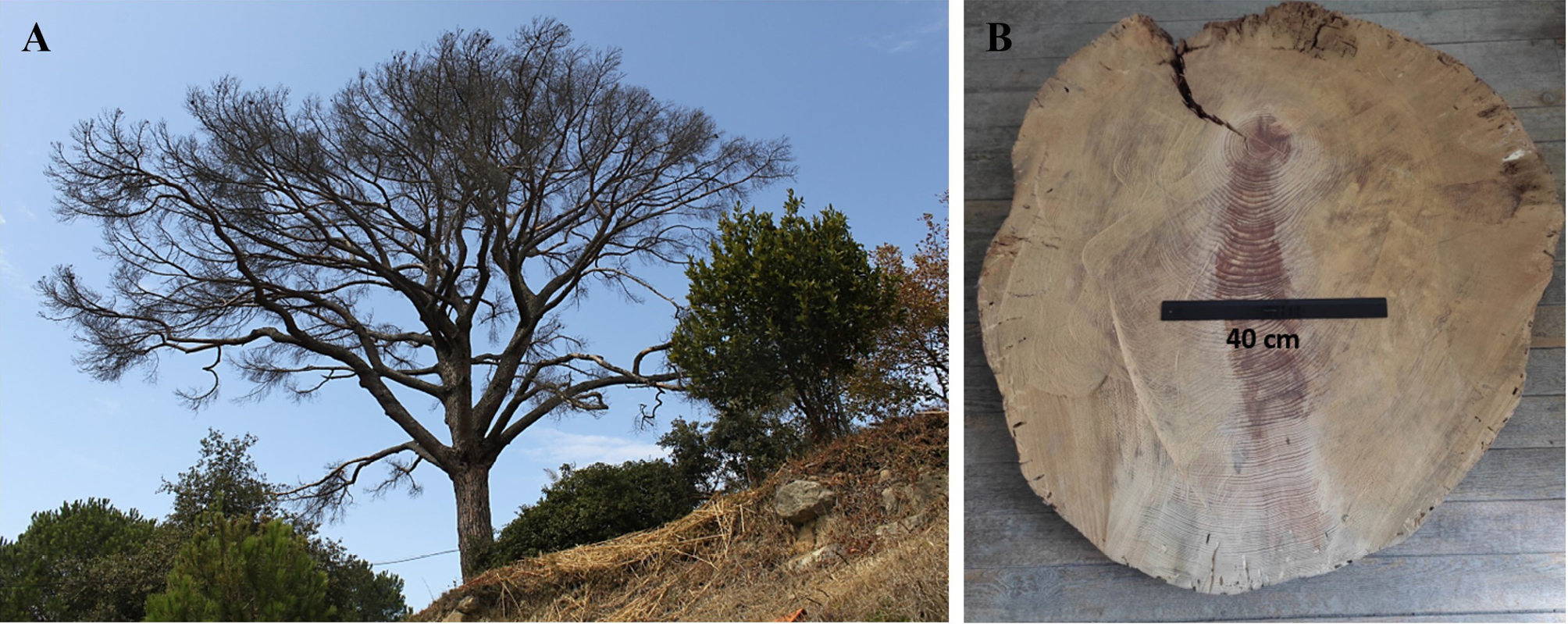
A circular cross-section from the base of the main trunk (Figure 1 B) was cut from the felled tree with a chainsaw for dendrochronological examination. A mechanical hand-held circular sander was used to prepare the wood surface along the longest section radius (Figure 1 B) until the tree-ring limits were clearly visible. Tree rings were visually identified using standard dendrochronology methods (Stokes and Smiley, 1996), and the age of the tree was determined.
Wood sampling
Wood samples (100 g each) were collected from four different zones of the trunk, using an electric drill with a 20 mm diam. bit, and several branches were cut into small pieces (≈ 1 cm) using pruning scissors (EPPO, 2023). The samples, from the trunk and branches, were combined for nematode extraction.
Nematode extraction and nematode isolate establishment
Nematodes were extracted from the wood samples using the tray method (Whitehead and Hemming, 1965; EPPO, 2023) and were observed under an Olympus CKX41SF inverted stereomicroscope (Olympus). Ten nematodes (males and females), exhibiting the same morphological characteristics, were selected, individually picked, and transferred to malt extract agar (MEA) plates colonised with Botrytis cinerea. The plates were then incubated at 25°C, and five nematode isolates were established. These were maintained by transferring small culture plugs containing nematodes to new MEA plates colonised with B. cinerea at 3-week intervals (Fonseca et al., 2008). Nematodes from the five isolates were collected by washing the B. cinerea plates with sterilised distilled water, for subsequent morphological and molecular characterisation.
Morphological characterisation
Female and male nematodes from each isolate were individually selected and placed on glass microscope slides in drops of water. The slides were heated (to kill the nematodes), and the nematodes were immediately photographed with a microscope DM 2500; Leica, using a digital camera (DFC 450; Leica). Nematode genus identification was based on the morphological characters of females and males.
Molecular characterisation/identification
DNA extraction and amplification of ITS rDNA regions
Nematode DNA was extracted from mixed developmental nematode stages collected from MEA culture plates using the DNeasy Blood and Tissue Mini Kit (Qiagen), following the manufacturer’s instructions, and were quantified using Nanodrop 2000C (ThermoScientific). The Internal Transcribed Spacer (ITS) rDNA regions containing partial 18S and 28S and complete ITS1, 5.8S and ITS2 sequences were amplified using 50 ng of extracted DNA and 1 U of Dream Taq DNA polymerase (Fermentas) in 1× Dream Taq buffer, 0.2 mM each dNTP, and 1 µM primers 18SF 5′-CGTAACAAGGTAGCTGTAG-3′ (Ferris et al. 1993) and 28SR 5′-TTTCACTCGCCGTTACTAAGG-3′ (Vrain, 1993). PCR reactions were carried out in a Thermal Cycler (Bio-Rad), with an initial denaturation step of 95°C for 2.5 min, followed by 40 reaction cycles each of 95°C for 30 s, annealing at 55°C for 30 s, extension at 72°C for 1 min, and final extension at 72°C for 5 min.
Restriction fragment length polymorphism analysis
The resulting amplification products were purified using the NucleoSpin Gel and PCR Clean-up Kit (Macherey-Nagel), according to manufacturer’s instructions, and were used for restriction fragment length polymorphism (RFLP) analysis for Bursaphelenchus species characterisation/identification, according to Burgermeister et al. (2009) and EPPO (2023). The RFLP analysis of amplified ITS rDNA PCR products was carried out for isolates BfungPt2 and BsexPt2, using a combination of eight restriction endonucleases: AfaI, AluI, HaeIII, HinfI, MspI, MfeI, BsrBI and Hpy188I (Amersham Biosciences), with restriction reactions performed according to the manufacturer’s instructions. Restriction products were separated by electrophoresis on 2% agarose gel, fragment sizes were estimated via Hyper Ladder II (Bioline), and these were compared to previously described RFLP patterns. When the species identification was not possible from analysis of the RFLP patterns, the ITS rDNA PCR product was sequenced.
Sequencing and phylogenetic analyses
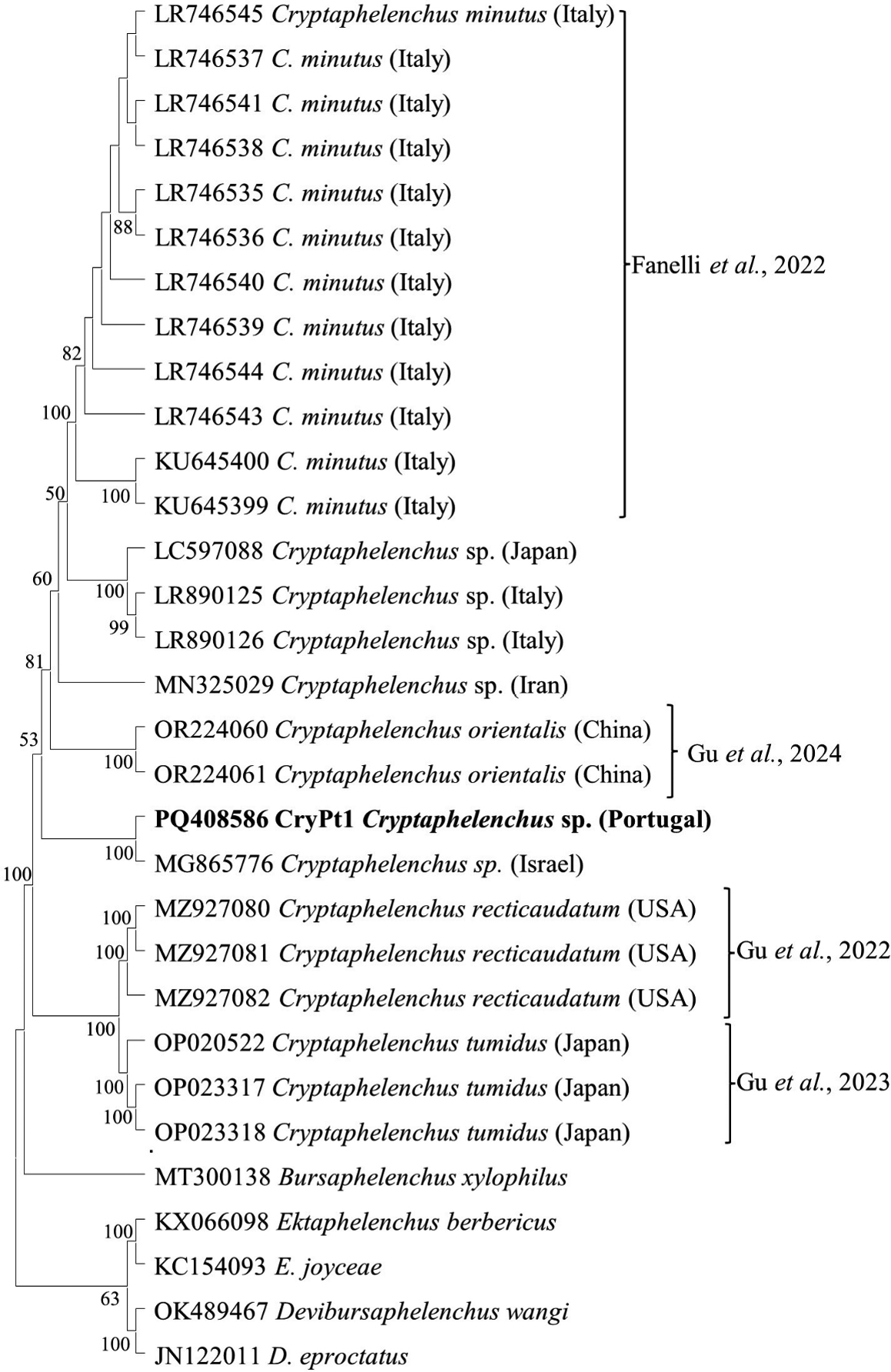
For the isolate CryPt1, which was morphologically characterised as Cryptaphelenchus sp., the ITS rDNA PCR product was sequenced in both strands in an Automatic Sequencer 3730xl under BigDyeTM terminator cycling conditions at Macrogen Company (Seoul, Korea), using the same primers as used in the PCR. Sequence analyses were carried out using BioEdit (Hall, 1999). Homologous sequences in the databases were searched by BLAST (Altschul et al., 1997), and selected sequences were used for sequence alignment. Phylogenetic analyses were carried out in MEGA 11 (Tamura et al., 2021) by the Neighbor-Joining method (Saitou and Nei, 1987) with 1000 replications of bootstrap (Felsenstein, 1985) and Jukes-Cantor as substitution model (Jukes and Cantor, 1969), with all ambiguous positions removed for each sequence pair (pairwise deletion option), using the ITS rDNA sequence alignments.
Results
Pinus pinea dendrochronology
The identification and quantification of the tree rings in the circular wood section from the base of the main trunk of the diseased tree indicated that the tree was of approx. 160 years old.
Nematode isolates
Five nematode isolates, corresponding to five different species, were designated as BaPt1 (B. arthuri); BfungPt2 (B. fungivorus); BsexPt2 (B. sexdentati); PsPt1 (Potensaphelenchus stammeri) and CryPt1 (Cryptaphelenchus sp.). These isolates have been maintained at the Laboratory of Nematology (NEMATO-lab), Department of Life Sciences, University of Coimbra, Portugal.
Morphological, morphometrical and molecular characterisation of PsPt1 were described by Silva et al. (2023), and of BaPt1 by Silva et al. (2024). Morphological and molecular characterisation/identifications of the other three isolates (BfungPt2, BsexPt2 and CryPt1) are presented below.
Morphological characterisation
Nematodes from the five isolates had main characteristic of Aphelenchoididae as described by Nickle (1970), including: i) body slender with variable length; ii) lips often slightly offset; iii) stylet with knobs ranging from absent, to slightly thickened, to well-developed; iv) oesophagus with overlapping glands; and v) spicules characteristically rosethorn-shaped with caudal papillae.
Nematodes of the isolates BfungPt2 and BsexPt2 had main morphological characters of the Bursaphelenchus genus (Ryss et al., 2015; EPPO, 2023), including: i) vermiform; ii) cephalic region offset by a constriction; iii) stylet length with weak basal knobs; iv) strong median bulb oval to quadrangular; v) oesophageal glands overlapping the intestine; vi) female with vulva posterior, with or without an anterior vulval flap, rounded tail or with a smooth or mucronate terminus; and vii) male with hook-like spicules with a prominent rostrum, and a capitulum, sometimes with a cucullus in the distal end, and a ventrally arched tail terminus.
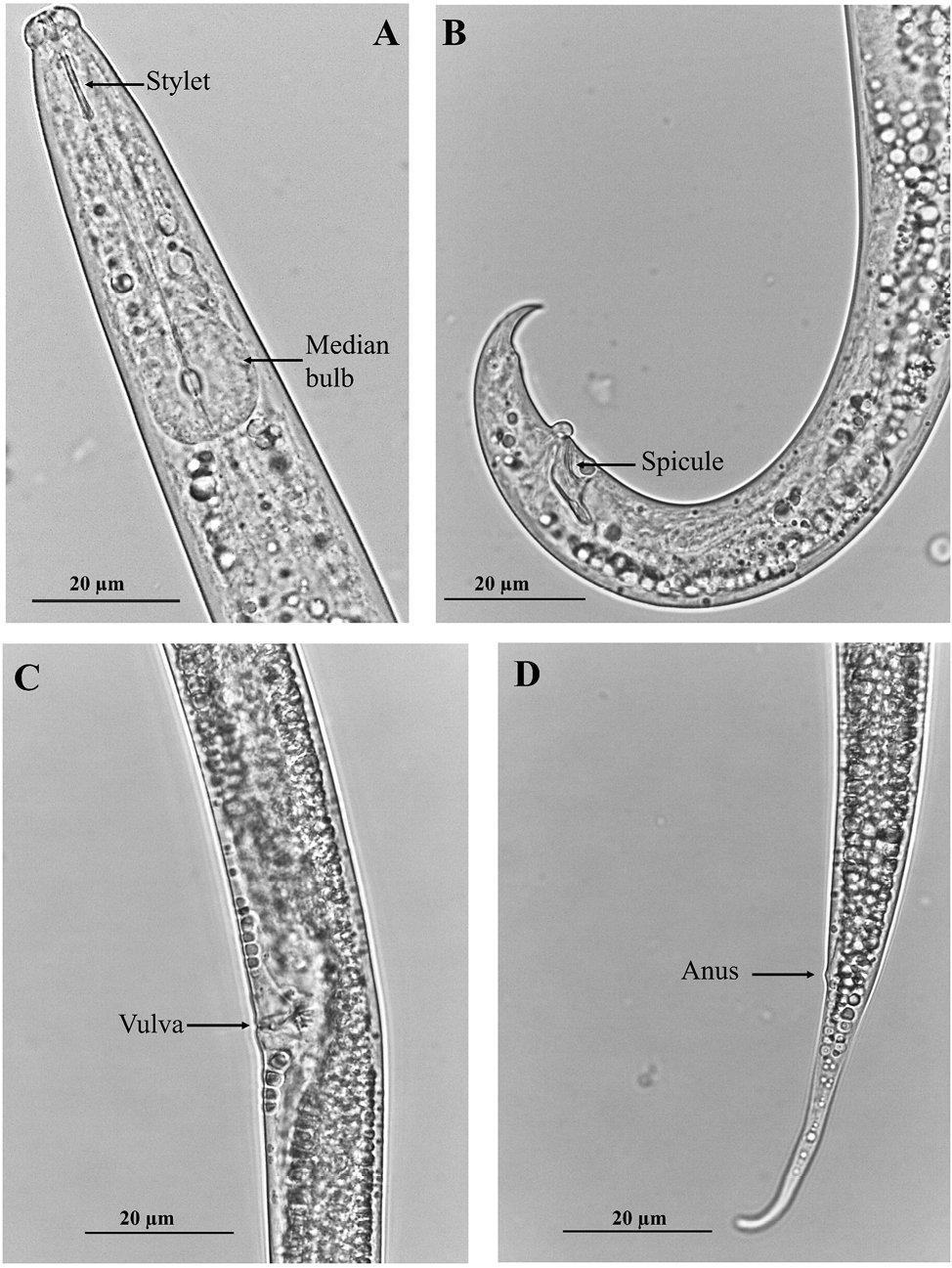
The main morphological diagnostic characters of the nematodes of the isolate BfungPt2 were: i) cephalic region offset by a constriction with six lips; ii) stylet with weak basal knobs; iii) median bulb well developed (Figure 2 A); iv) males with ventrally curved tails with compact spicules without cucullus (Figure 2 B); v) females with vulvae without flaps and long ventrally bent tails (Figure 2, C and D). These characteristics are in accordance with those described for B. fungivorus (Franklin and Hooper, 1962; Ambrogioni et al., 2003; Arias et al., 2005; Oliveira et al., 2011; Fonseca et al., 2014; Torrini et al., 2020b).
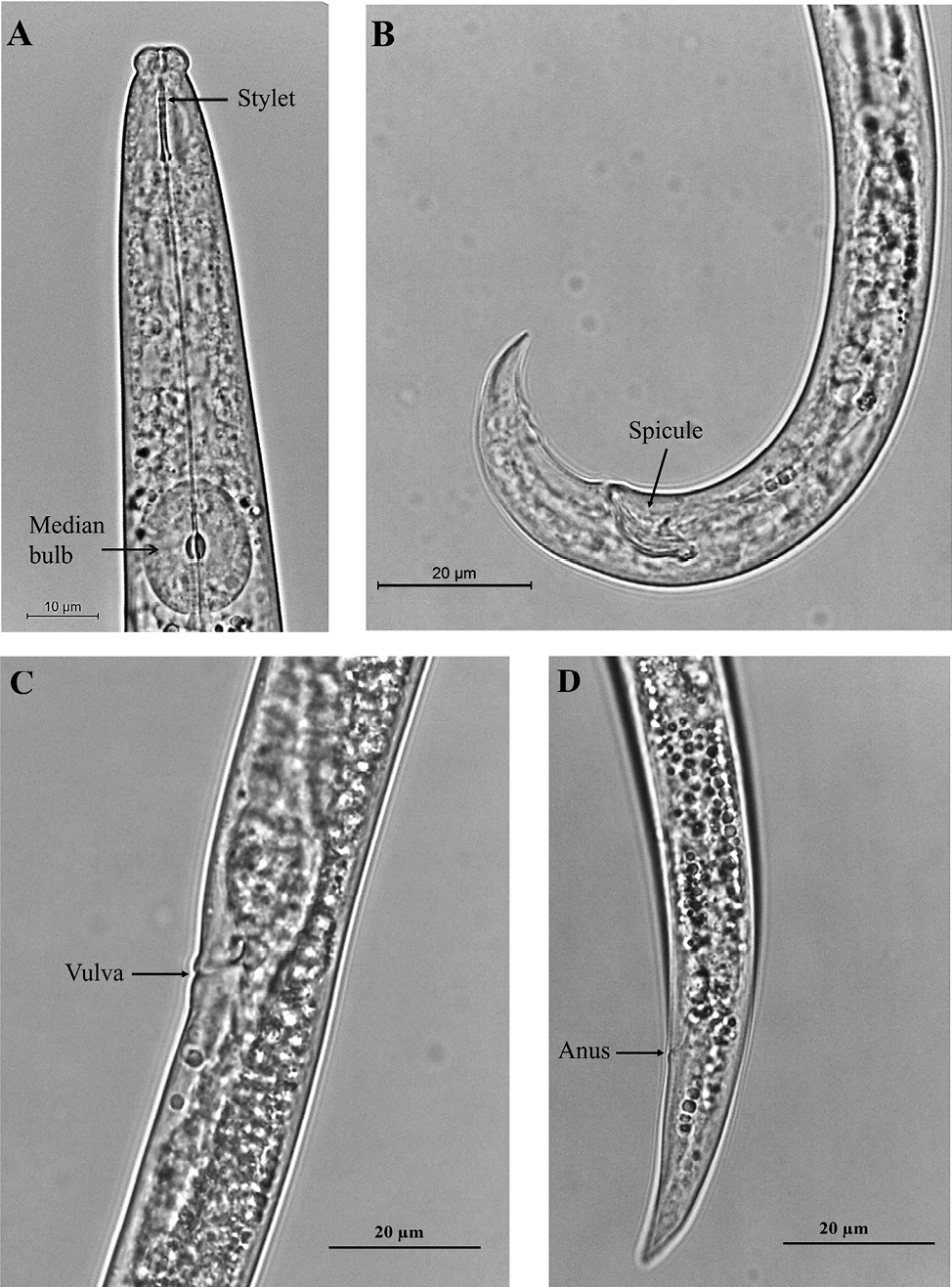
The main morphological diagnostic characters for isolate BsexPt2 nematodes were: i) cephalic region offset by a constriction with six lips; ii) stylet with weak basal knobs, median bulb well developed (Figure 3 A); iii) male spicules each with a sharply pointed rostrum, and well-developed broadly truncate condylus with a small cucullus (Figure 3 B); and iv) females each with a small vulval flap and with a gradually tapering tail (Figure 3, C and D). These characteristics are in accordance with those previously described for B. sexdentati (Lange et al., 2006; 2008; Penas et al., 2008; Slonin et al., 2018). According to Lange et al. (2006) and considering the condylus and female tail shapes, isolate BsexPt2 belongs to B. sexdentati Type II (South European isolates).
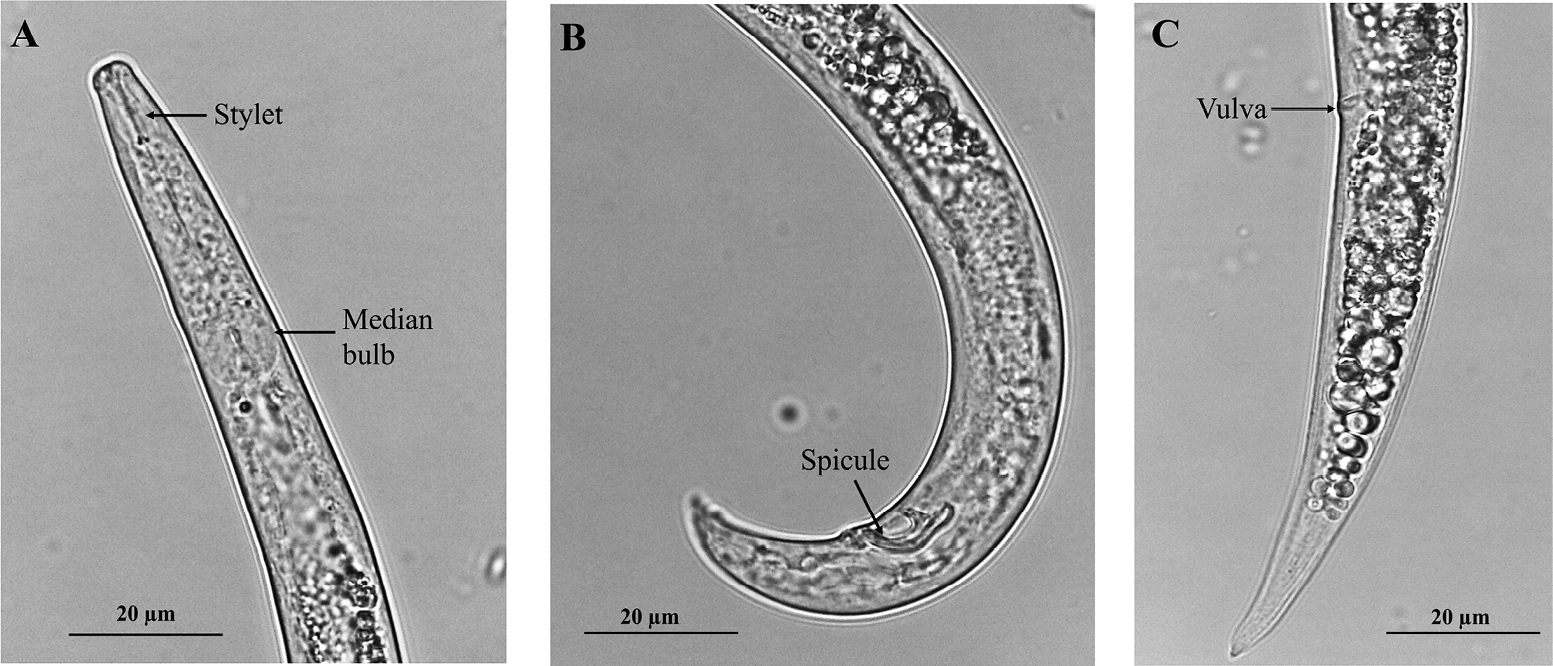
Nematodes of isolate CryPt1 had main morphological diagnostic characters of Cryptaphelenchus (Figure 4) (Pedram, 2017; Gu et al., 2024), including: i) short body length (≤ 500 µm), C-shaped, not slender; ii) lips rounded forming a cap, slightly offset; iii) stylet delicate (≤ 10 µm), with small rounded basal knobs (Figure 4 A); iv) males with arcuate spicules, and prominent and narrow rostrum; condylus well developed; v) bursa absent and tail gradually attenuated to point (Figure 4 B); and vi) females with vulva posterior (V ≥ 75%) without vulvar flap, tail short and conical (Figure 4 C).
Molecular characterisation/identification
Amplification of ITS rDNA region amplifications from isolate BfungPt2 yielded a single product of approx. 1050 bp. The restriction endonuclease patterns with five enzymes (AfaI, AluI, HaeIII, HinfI and MspI) (Figure 5 A) agree with patterns previously reported for B. fungivorus (Arias et al., 2005; Burgermeister et al., 2009; Oliveira et al., 2011; Fonseca et al., 2014), confirming the identifications of isolate BfungPt2 as B. fungivorus.
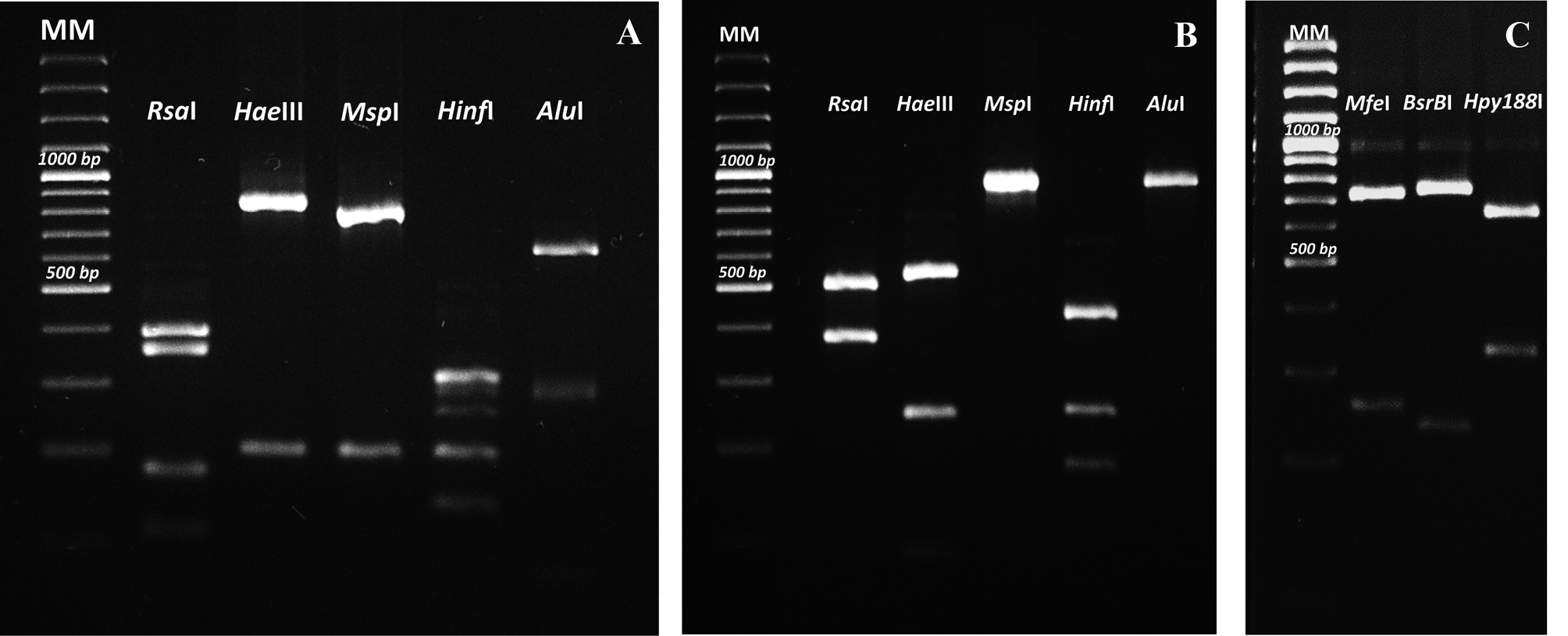
Isolate BsexPt2 ITS rDNA region amplification yielded a single product of approx. 960 bp. ITS-RFLP analysis with the five enzymes (AfaI, AluI, HaeIII, HinfI and MspI) produced a restriction pattern similar to B. sexdentati isolates (Figure 5 B) (Penas et al., 2006; Burgermeister et al., 2009; Dayi et al., 2014). Bursaphelenchus sexdentati Type I isolates could not be distinguished from Type II isolates using these five restriction enzymes. Three additional restriction enzymes, MfeI (isochizomer of MunI), BsrBI (isochizomer of MbiI) and Hpy188I were selected according to Lange et al. (2006, 2008). Isolate BsexPt2 had a restriction pattern correspondent to the southern European isolates (Type II) (Figure 5 C).
After sequencing, an 813 bp sequence corresponding to the CryPt1 rDNA region, containing partial 18S and 28S and complete ITS1, 5.8S and ITS2 sequences, was submitted to the NCBI database under accession number PQ408586. The phylogenetic analysis, from multiple sequence alignment of sequences available in GenBank of Cryptaphelenchus species, showed that isolate CryPt1 was included in a large phylogenetic group corresponding to Cryptaphelenchus species. This group included C. minutus, C. orientalis, C. recticaudatum and C. tumidus, and other unidentified Cryptaphelenchus species from Israel, forming a separate phylogenetic group from the other isolates analysed (Figure 6).
Discussion
After the detection of B. xylophilus (EPPO A2 quarantine list) associated with P. pinaster in the Setúbal peninsula, Portugal, in 1999 (Mota et al., 1999), official surveys have been conducted to evaluate nematode diversity associated with Pinus spp. In Portugal, B. xylophilus was also reported in P. nigra (Inácio et al., 2015) and P. sylvestris (Fonseca et al., 2024), and in Spain, in P. pinaster (Abelleira et al., 2011) and P. radiata D. Don (Zamora et al., 2015).
In Portugal, from 1999 to the present, several other Bursaphelenchus species have been reported in P. pinaster, including B. hellenicus, B. hylobianum; B. leoni, B. mucronatus, B. pinasteri, B. pinophilus, B. sexdentati, B. teratospicularis, B. tusciae (Penas et al., 2004, 2006), B. fungivorus (Fonseca et al., 2014) and B. luxurosiae (Inácio et al., 2017). From P. pinea, nine Bursaphelenchus species have been reported in the Mediterranean region (Table 1).
| Bursaphelencaahus species | Country | Reference |
|---|---|---|
| B. arthuri | Portugal | Silva et al. (2024) |
| B. fungivorus | Portugal | The present study |
| B. hylobianum | Spain | Escuer et al. (2004) |
| B. leoni | Cyprus | Philis (1996); Philis and Braasch (1996) |
| Italy | Ambrogioni et al. (1994); Palmisano and Ambrogioni (1994); Ambrogioni and Caroppo (1998); Caroppo et al. (1998); Carletti (2008); Torrini et al. (2020a) | |
| Spain | Arias et al. (2004); Escuer et al. (2004) | |
| B. minutus | Italy | Carletti (2008); Torrini et al. (2017 |
| B. pinasteri | Spain | Escuer et al. (2004) |
| B. sexdentati | Italy | Ambrogioni and Caroppo (1998); Caroppo et al. (1998); Carletti (2008); Torrini et al. (2020a) |
| Portugal | The present study | |
| Spain | Arias et al. (2004); Escuer et al. (2004) | |
| B. teratospicularis | Italy | Ambrogioni and Caroppo (1998); Caroppo et al. (1998) |
| Spain | Arias et al. (2004) | |
| B. tusciae | Italy | Ambrogioni and Palmisano (1998); Carletti (2008); Torrini et al. (2020a) |
Species of Bursaphelenchus are primarily mycetophagous and include nematodes that are associated with insects and dead or dying coniferous trees (Ryss et al., 2005). In forestry areas, the most significant vectors of Bursaphelenchus spp. belong to Cerambycidae, Curculionidae, Scolytidae, and Buprestidae (Linit et al., 1983; Linit, 1988).
In Portugal, three Bursaphelenchus species have now been identified in association with P. pinea: i) B. arthuri (Silva et al., 2024); ii) B. fungivorus isolate BfungPt2; and iii) B. sexdentati isolate BsexPt2 (this study) (Table 1). These species, as mycetophagous, can be maintained in the laboratory in fungus cultures.
Bursaphelenchus arthuri was first detected in Portugal and Europe associated with P. pinea, in 2024 (Silva et al., 2024). This nematode was previously reported in coniferous packaging wood imported from Taiwan, South Korea, United States of America, China, and Japan (Burgermeister et al., 2005; Gu et al., 2006, 2008).
Bursaphelenchus fungivorus was first reported in the United Kingdom, in rotting gardenia buds (Gardenia sp.) infected by Botrytis cinerea (Franklin and Hooper, 1962). It was later found in: i) a bark-based growing medium in Germany (Braasch et al., 1999); ii) coniferous bark imported from the Czech Republic and Russia (Braasch et al., 2002); iii) Chinese Callitris columellaris F. Muell. packaging wood imported to Italy (Ambrogioni et al., 2003); iv) Pinus species, in Spain, associated with the bark beetle Orthotomicus erosus (Arias et al., 2004; 2005); v) wood chips and sawdust in Germany (Schonfeld et al., 2008); vi) fibrous husk of Cocos nucifera L. in Brazil (Oliveira et al., 2011); vi) P. pinaster bark in Portugal (Fonseca et al., 2014); and vii) associated with Crocus sativus L. in Italy (Torrini et al., 2020b). The present report is the first for presence of B. fungivorus on P. pinea.
Bursaphelenchus sexdentati is a cosmopolitan species with broad geographic range across European pine forests. This nematode has been divided into two distinct Types based on morphological characteristics, molecular features, and geographical distribution: Type I has been mainly found in Central Europe (Germany, Switzerland); and Type II is mostly distributed in Southern Europe (Cyprus, Greece, Portugal, Spain) (Lange et al., 2006, 2008). The isolate BsexPt2 is of the Type II (Lange et al., 2006; 2008; Penas et al., 2006; Burgermeister et al., 2009; Dayi et al., 2014). In the Mediterranean region, B. sexdentati has been associated with several pine species, including P. brutia Ten., P. halepensis, P. nigra, P. pinea, P. pinaster, P. radiata, and P. sylvestris, which are typically colonised by bark beetles (Errico et al., 2015). Bursaphelenchus sexdentati has also been described as vectored by insects such as Ips sexdentatus, Tomicus piniperda, and O. erosus. Furthermore, O. erosus has been reported as a vector for other Bursaphelenchus species, including B. erosus, B. fuchsi, B. minutus and B. fungivorus (Slonim et al., 2018).
Three Bursaphelenchus species were found co-existing within the P. pinea tree assessed in the present study. The co-existence of multiple Bursaphelenchus species within a single tree has also been reported by Caroppo et al. (1998), Braasch (2001) and Karmezi et al. (2022). Despite the Bursaphelenchus species reported, other nematode isolates of Cryptaphelenchus (this study) and of Potensaphelenchus stammeri (Silva et al., 2023) were characterised and identified.
Cryptaphelenchus genus is known for its fungal-feeding species and has received little attention due to its small body size, resulting in fewer species being described. However, in the past decade, interest in Cryptaphelenchus species has grown, leading to the identification of more than 20 nominal species in countries including Germany, Italy, Iran, the United States of America, Japan, and China (Pedram, 2017; Fanelli et al., 2022; Gu et al., 2022; 2023; 2024). Cryptaphelenchus species have been isolated directly from bark or wood packaging materials and have been extracted from insect bodies (Kanzaki et al., 2021; Gu et al., 2022, 2023, 2024). Isolate CryPt1 showed the main morphological characters of this genus, belongs to the phylogenetic group of Cryptaphelenchus species, and clustered with an unidentified species from Israel (Fanelli et al., 2022; Gu et al., 2022, 2023, 2024). Further morphological, morphometrical and molecular characterisation is required to identify the CryPt1 isolate.
Potensaphelenchus stammeri was also found associated with the P. pinea tree. This is the first report of this nematode in Portugal and in P. pinea (Silva et al., 2023). This nematode was first isolated from the insect Spondylis buprestoides and was described as Aphelenchoides stammeri (Körner, 1954). Later, it was found widely distributed in German coniferous forests in S. buprestoides breeding sites and in trunks of declining Pinus and Picea trees (Braasch, 1998), in China from PWN infected P. massoniana Lamb. (Huang and Ye, 2006), in Slovenia from P. sylvestris (Urek et al., 2007), and in Turkey and China from P. massoniana (Dayi et al., 2019; Gu et al., 2021).
Conclusions
The present study has assessed the diversity of Aphelenchoididae nematodes within a classified “monumental” centennial P. pinea tree and has reported three Bursaphelenchus species co-existing simultaneously with two other Aphelenchoididae nematodes. This knowledge emphasises the role of large, catalogued trees as biodiversity hotspots for nematodes from different trophic groups, including plant parasites. The enduring stability of these habitats supports nematofauna, insect galleries, as well as bacteria and fungi. Diseased and dead trees should be removed from plant communities to prevent pathogen spread to nearby healthy areas. These “monumental” trees impact forest health, nutrient cycling, and microbial communities in forest areas.
Authors contributions
Luís Fonseca (conceptualisation, methodology, writing, review, and editing of the manuscript, research supervision, project administration, funding acquisition), Hugo Silva (methodology, writing, review, and editing of the manuscript), Joana M. S. Cardoso (methodology, writing, review, and editing of the manuscript), Ricardo M. C. da Costa (methodology, writing, review, and editing of the manuscript, funding acquisition), Filipe Campelo (methodology, writing, review, and editing of the manuscript), Joana Vieira (methodology, writing, review, and editing of the manuscript), and Isabel Abrantes (conceptualisation, writing, review, and editing of the manuscript, supervision, funding acquisition).
Funding
This research was supported by the Portuguese Foundation for Science and Technology (“Fundação para a Ciência e Tecnologia – FCT”) through national funds, and co-funding by FEDER, PT2020 and COMPETE 2020 under the following projects: POINTERS- PTDC/ASP-SIL/31999/2017 (POCI-01-145-FEDER-031999); PineWALL, PTDC/ASP-SIL/3142/2020 (https://doi.org/10.54499/PTDC/ASP-SIL/3142/2025), UIDB/04004/2025 (https://doi.org/10.54499/UIDB/04004/2025), UIDB/00070/2020 (https:/doi.org/10.54499/UIDB/00070/2025); Project ReNATURE – Valorization of the Natural Endogenous Resources of the Centro Region (Centro 2020, Centro-01-0145-FEDER-000007) and “Instituto do Ambiente, Tecnologia e Vida”. Hugo Silva (Grant—2023. 03527.BD) is funded by FCT, the European Social Fund (ESF), under the “Programa Demografia, Qualificações e Inclusão” (PDQI)—Portugal2030.
Data Availability
Genomic data presented in this study related to the Cryptaphelenchus sp. isolate can be found in NCBI database under the accession number PQ408586.
Literature cited
Abelleira A., Picoaga A., Mansilla J.P., Aguin O., 2011. Detection of Bursaphelenchus xylophilus, causal agent of pine wilt disease on Pinus pinaster in Northwestern Spain. Plant Disease 95: 776. https://doi.org/10.1094/PDIS-12-10-0902
Altschul S.F., Madden T.L.., Schaffer AA., Zhang J., Zhang Z., Miller W., Lipman D.J., 1997. Gapped BLAST and PSI-BLAST: a new generation of protein database search programs. Nucleic Acids Research 25: 3389–3402. https://doi.org/10.1093/nar/25.17.3389
Ambrogioni L., Caroppo S., 1998. Morphology and morphometrics of Italian populations of Bursaphelenchus species. Nematologia Mediterranea 26: 97–116.
Ambrogioni L., Cerchiarini G., Irdani T., Tossani N., 1994. Indagine preliminare sulla diffusione di Bursaphelenchus spp. (Nematoda) in pinete italiane. Redia 77: 273–278.
Ambrogioni L., Irdani T., Caroppo S., 2003. Records of Bursaphelenchus species on coniferous wood imported from Asian Russia and China to Italy. Redia 86: 139–146.
Ambrogioni L., Palmisano M.A., 1998. Description of Bursaphelenchus tusciae sp. n. from Pinus pinea in Italy. Nematologia Mediterranea 26: 243–254.
Arias M., Escuer M., Bello A., 2004. Nematodos asociados a madera y árboles de coníferas en pinares españoles. Boletín de Sanidad Vegetal – Plagas 30: 581–593.
Arias M., Robertson L., Garcia-Alvarez A., Arcos S.C., Escuer M., Sanz R., Mansilla J.P., 2005. Bursaphelenchus fungivorus (Nematoda: Aphelenchida) associated with Orthotomicus erosus (Coleoptera: Scolitydae) in Spain. Forest Pathology 35: 375–383. https://doi.org/10.1111/j.1439-0329.2005.00422.x
Awada T., Radoglou K., Fotelli M.N., Constantinidou H.I.A., 2003. Ecophysiology of seedlings of three Mediterranean pine species in contrasting light regimes Tree Physiology 23: 33–41. https://doi.org/10.1093/treephys/23.1.33
Azuma W.A., Komada N., Ogawa Y., Ishii H., Nakanishi A., Noguchi Y., Kanzaki M., 2022. One large tree crown can be defined as a local hotspot for plant species diversity in a forest ecosystem: a case study in temperate old-growth forest. Plant Ecology 223: 99–112. https://doi.org/10.1007/s11258-021-01192-8
Braasch H., 1998. Aphelenchoides stammeri Körner, 1954–ein in Deutschland weit verbreiteter. Nachrichtenblatt für den Deutschen Pflanzenschutzdienst 50: 317–319.
Braasch H., 2001. Bursaphelenchus species in conifers in Europe: Distribution and morphological relationships. Bulletin OEPP/EPPO Bulletin 31: 127–142. https://doi.org/10.1111/j.1365-2338.2001.tb00982.x
Braasch H., Bennewitz A., Hantusch W., 2002. Bursaphelenchus fungivorus – a nematode of the wood nematode group in growing substrate of a greenhouse and in imported wood on bark. Nachrichtenblatt für den Deutschen Pflanzenschutzdienst 54: 1–4.
Braasch H., Metge K., Burgermeister W., 1999. Bursaphelenchus species (Nematoda: Parasitaphelenchidae) found in coniferous trees in Germany and their ITS-RFLP patterns. Nachrichtenblatt für den Deutschen Pflanzenschutzdienst 51: 312–320.
Bracalini M., Benedettelli S., Croci F., Terreni P., Tiberi R., Panzavolta T., 2013. Cone and seed pests of Pinus pinea: Assessment and characterization of damage. Journal of Economic Entomology 106: 229-234. https://doi.org/10.1603/EC12293
Burgermeister W., Gu J., Braasch H., 2005. Bursaphelenchus arthuri sp. n. (Nematoda: Parasitaphelenchidae) in packaging wood from Taiwan and South Korea-a new species belonging to the fungivorus group. Journal of Nematode Morphology and Systematics 8: 7–17.
Burgermeister W., Braasch H., Metge K., Gu J., Schröder T., Woldt E., 2009. ITS-RFLP analysis, an efficient tool for differentiation of Bursaphelenchus species Nematology 11: 649–668. https://doi.org/10.1163/156854108/399182
Carletti B., 2008. Bursaphelenchus species with their natural vectors in Italy: Distribution and essential diagnostic features. Redia 91: 111–117.
Caroppo S., Ambrogioni L., Cavalli M., Coniglio D., 1998. Occurrence of pinewood nematodes Bursaphelenchus and their possible vectors in Italy Nematologia Mediterranea 26: 87–92.
Dafni A., 2006. On the typology and the worship status of sacred trees with a special reference to the Middle East. Journal of Ethnobiology and Ethnomedicine 2: 26. https://doi.org/10.1186/1746-4269-2-26
Dayi M., Calin M., Akbulut S., Gu J., Schröder T., Vieira P., Braasch H., 2014. Morphological and molecular characterisation of Bursaphelenchus andrassyi sp. n. (Nematoda: Aphelenchoididae) from Romania and Turkey. Nematology 16: 207-218. https://doi.org/10.1163/15685411-00002759
Dayi M., Uludamar E.B.K., Akbulut S., Elekcioğlu I.L., 2019. First record of Aphelenchoides stammeri (Nematoda: Aphelenchoididae) from Turkey. Journal of Nematology 51: 1-6. https://doi.org/10.21307/jofnem-2019-070
EPPO, 2015. EPPO Global Database. Retrieved from: https://gd.eppo.int (September 9, 2024).
EPPO, 2023. PM 7/4 (4) Bursaphelenchus xylophilus. Bulletin OEPP/EPPO Bulletin 53: 156–183. https://doi.org/10.1111/epp.12915
EPPO, 2024. Bursaphelenchus xylophilus. EPPO datasheets on pests recommended for regulation. Retrieved from: https://gd.eppo.int/taxon/BURSXY (September 9, 2024).
Errico G., Carletti B., Schröder T., Mota M., Vieira P., Roversi P.F., 2015. An update on the occurrence of nematodes belonging to the genus Bursaphelenchus in the Mediterranean area. Forestry 88: 509–520. https://doi.org/10.1093/forestry/cpv028
Escuer M., Arias M., Bello, A., 2004. Occurrence of the genus Bursaphelenchus Fuchs, 1937 (Nematoda: Aphelenchida) in Spanish conifer forests. Nematology 6: 155–156. https://doi.org/10.1163/156854104323073035
Estorninho M., Chozas S., Mendes A., Colwell F., Abrantes I., … Antunes C., 2022. Differential impact of the pinewood nematode on Pinus species under drought conditions. Frontiers in Plant Science 13: 841707. https://doi.org/10.3389/fpls.2022.841707
Fady B., Fineschi S., Vendramin G.G., 2004. EUFORGEN Technical guidelines for genetic conservation and use for Italian stone pine (Pinus pinea) International Plant Genetic Resources Institute, Rome, Italy.
Fanelli E., Troccoli A., Sacchi S., Castillo P., Gaffuri F., Cavagna B., De Luca F., 2022. Occurrence of Cryptaphelenchus minutus and other nematode species associated with the bark of unidentified coniferous tree in Italy. European Journal of Plant Pathology 163: 155-165. https://doi.org/10.1007/s10658-022-02465-2
Farinha A.O., Durpoix C., Valente S., Sousa E., Roques A., Branco M., 2018. The stone pine, Pinus pinea L., a new highly rewarding host for the invasive Leptoglossus occidentalis. NeoBiota 41: 1–18. https://doi.org/10.3897/neobiota.41.30041
Felsenstein J., 1985. Confidence limits on phylogenies: An approach using the bootstrap Evolution 39: 783-791. https://doi.org/10.2307/2408678
Ferris V.R., Ferris J.M., Faghihi J., 1993. Variation in spacer ribosomal DNA in some cyst-forming species of plant parasitic nematodes. Fundamental and Applied Nematology 16: 177–184.
Fonseca L., Cardoso J.M.S., Moron-Lopez J., Abrantes., 2014. Bursaphelenchus fungivorus from Pinus pinaster bark in Portugal. Forest Pathology 44: 131–136. https://doi.org/10.1111/efp.12077
Fonseca L., Santos M.C.V., Santos M.S., Curtis R.H.C., Abrantes I., 2008. Morpho-biometrical characterisation of Portuguese Bursaphelenchus xylophilus isolates with mucronate, digitate or round tailed females Phytopathologia Mediterranea 47: 223–233. https://doi.org/10.14601/Phytopathol_Mediterr-2726
Fonseca L., Silva H., Cardoso J.M.S., Esteves I., Maleira C., Lopes S., Abrantes I., 2024. Bursaphelenchus xylophilus in Pinus sylvestris—The first report in Europe. Forests 15: 1556. https://doi.org/10.3390/f15091556
Franklin M.T., Hooper D.J., 1962. Bursaphelenchus fungivorus n. sp. (Nematoda: Aphelenchoidea) from rotting gardenia buds infected with Botrytis cinerea. Nematologica 8: 136-142.
Gaspar M.C., Agostinho B., Fonseca L., Abrantes I., de Sousa H.C., Braga M.E.M., 2020. Impact of the pinewood nematode on naturally emitted volatiles and scCO2 extracts from Pinus pinaster branches: a comparison with P. pinea. Journal of Supercritical Fluids 159: 104784. https://doi.org/10.1016/j.supflu.2020.104784
Gu J., Liu L., Abolafia J. Pedram M., 2021. A revision of the taxonomy of Aphelenchoides stammeri Körner, 1954 (Rhabditida: Aphelenchoididae) and proposal for a new genus. Nematology 23: 215–228. https://doi.org/10.1163/15685411-bja10039
Gu J., Braasch H, Burgermeister W., Zhang J., 2006. Records of Bursaphelenchus spp. intercepted in imported packaging wood at Ningbo, China Forest Pathology 36: 323–333. https://doi.org/10.1111/j.1439-0329.2006.00462.x
Gu J., Castillo P., Ma X., Munawar M., 2024. Unveiling novel and know Cryptaphelenchus species from China and USA. Nematology 26: 731-752. https://doi.org/10.1163/15685411-bja10335
Gu J., Fang E., Ma X., 2022. Description of Cryptaphelenchus recticaudatus n. sp. (Aphelenchoidea: Ektaphelenchinae) in Pinus elliottii from the USA. Nematology 24: 465-473. https://doi.org/10.1163/15685411-bja10142
Gu J., Ma X., Castillo P., Munawar M., 2023. Description of two new Cryptaphelenchus species from China and Japan. Nematology 25: 479-493. https://doi.org/10.1163/15685411-bja10234
Gu J., Zhang J, Chen X. Braasch H., Burgermeister W., 2008. Bursaphelenchus spp. in wood packaging intercepted in China. In: Pine Wilt Disease: A Worldwide Threat to Forest Ecosystems (M. Mota, P. Vieira, eds), Springer. pp. 83–88.
Hall T.A., 1999. BioEdit: a user-friendly biological sequence alignment editor and analysis program for Windows 95/98/NT. Nucleic Acids Symposium Series 41: 95–98.
Huang R.E., Ye J.R., 2006. Seinura lii n. sp. and S. wuae n. sp. (Nematoda: Seinuridae) from pine wood in China. Nematology 8: 749–759. https://doi.org/10.1163/156854106778877848
Ibeas F., Gallego D., Diez J.J., Pajares A., 2007. An operative kairomonal lure for managing pine sawyer beetle Monochamus galloprovincialis (Coleoptera: Cerymbycidae). Journal of Applied Entomology 131: 13–20. https://doi.org/10.1111/j.1439-0418.2006.01087.x
Inácio M.L., Nóbrega F., Mota M., Vieira P., 2017. First detection of Bursaphelenchus luxuriosae associated with Pinus pinaster in Portugal and in Europe. Forest Pathology 45: 1-4. https://doi.org/10.1111/efp.12296
Inácio M.L., Nóbrega F., Vieira P., Bonifácio L., Naves P., Sousa E., Mota M., 2015. First detection of Bursaphelenchus xylophilus associated with Pinus nigra in Portugal and in Europe. Forest Pathology 45: 235–238. https://doi.org/10.1111/efp.12162
Jukes T.H., Cantor C.R., 1969. Evolution of protein molecules. In: Mammalian protein metabolism (H.N. Munro, ed),. New York Academic Press. pp. 21-132.
Karmezi M., Bataka A., Papachristos D., Avtzis D.N., 2022. Nematodes in the pine forests of Northern and Central Greece. Insects 13: 194. https://doi.org/10.3390/insects13020194
Kanzaki N., Ekino T., Daegawa Y., 2021. Cryptaphelenchus abietis n. sp. (Tylenchomorpha: Aphelenchoididae) isolated from Cryphalus piceae (Ratzeburg) (Coleoptera: Scolytinae) emerged from Abies veitchii Lindl. (Pinaceae) from Nagano, Japan. Nematology 24: 65–84. https://doi.org/10.1163/15685411-bja10112
Körner H., 1954. Die Nematoden fauna des vergehenden Holzes und ihre Beziehungen zu den Insekten. Zoologische Jahrbücher Abteilung für Systematik, Geographie und Biologie der Tiere 82: 245–353.
Lange C., Burgermeister W., Metge K., Braasch H., 2006. Phylogenetic analysis of isolates of the Bursaphelenchus sexdentati group using intergenic transcribed spacer DNA sequences. Journal of Nematode Morphology and Systematics 9: 95–109.
Lange C, Burgermeister W, Metge K., Braasch H., 2008. Molecular characterization of isolates of the Bursaphelenchus sexdentati group using ribosomal DNA sequences and ITS-RFLP. In: Pine Wilt Disease: A Worldwide Threat to Forest Ecosystems (M. Mota, P. Vieira, ed), Springer. pp. 165–174.
Lindenmayer D.B., 2017. Conserving large old trees as small natural features. Biological Conservation 211: 51-57. https://doi.org/10.1016/j.biocon.2016.11.012
Linit M.J., 1988. Nematode-vector relationships in the pine wilt disease system. Journal of Nematology 20: 227–235.
Linit M.J., Kondo E., Smith M.T., 1983. Insect associated with the pine wood nematode, Bursaphelenchus xylophilus, in Missouri. Environmental Entomology 12: 467–470. https://doi.org/10.1093/ee/12.2.467
Lopes R.P., Reis C.S., Trincão P.R., 2019. Portugal’s trees of public interest: their role in botany awareness. Finisterra 110: 19-36. https://doi.org/10.18055/Finis14564
Menéndez-Gutiérrez M., Alonso M., Toval G., Diaz R., 2017. Variation in pinewood nematode susceptibility among Pinus pinaster Ait. provenances from the Iberian Peninsula and France. Annals of Forest Science 74: 1–15. https://doi.org/10.1007/s13595-017-0677-3
Modesto I., Mendes A., Carrasquinho I., Miguel C.M., 2022. Molecular defense response of pine trees (Pinus spp.) to the parasitic nematode Bursaphelenchus xylophilus. Cells 11: 3208. https://doi.org/10.3390/cells11203208
Mota M.M., Braasch H., Bravo M.A., Penas A.C., Burgermeister W., Sousa E., 1999. First report of Bursaphelenchus xylophilus in Portugal and in Europe Nematology 1: 727–734. https://doi.org/10.1163/156854199508757
Nickle W.R., 1970. A taxonomic review of the genera of the Aphelenchoidea (Fuchs 1937) Thorne 1949 (Nematoda: Tylenchida). Journal of Nematology 2: 375-392.
Nunes da Silva M., Solla A., Sampedro L., Zas R., Vasconcelos M.W., 2015. Susceptibility to the pinewood nematode (PWN) of four pine species involved in potential range expansion across Europe Tree Physiology 35: 987–999. https://doi.org/10.1093/treephys/tpv046
Oliveira C.M.G., Eulálio J., Bessi R., Harakava R., 2011. Caracterizações morfológica e molecular de Bursaphelenchus fungivorus (Nematoda: Aphelenchida), detectado pela primeira vez no Brasil. Nematologia Brasileira 35: 63–70.
Özçankaya I.M., Balay S.N., Bucak C., 2013. Effects of pests and diseases on stone pine (Pinus pinea L.) conelet losses in Kozak catchment area. In: Mediterranean Stone Pine for Agroforestry (S. Mutke, M. Piqué, R. Calama, ed), CIHEAM. pp. 29-33.
Paillet Y., Archaux F., Boulanger V., Debaive N., Fuhr N., Gilg O., Gosselin F., Guilbert E., 2017. Snags and large trees drive higher tree microhabitat densities in strict forest reserves. Forest Ecology and Management 389: 176-186. https://doi.org/10.1016/j.foreco.2016.12.014
Pajares J.A., Ibea F., Diez J.J., gallego D., 2004. Attractive responses by Monochamus galloprovincialis (Col Cerambycidae) to host and bark beetle semiochemicals. Journal of Applied Entomology 128: 633–638. https://doi.org/10.1111/j.1439-0418.2004.00899.x
Palmisano A.M., Ambrogioni L., 1994. Aphelenchoidoidea nematodes associated with Pinus spp. Redia 77: 225-240.
Pedram M., 2017. Cryptaphelenchus varicaudatus n. sp. (Rhabditida: Ektaphelenchinae) from Tehran Province, Iran. Journal of Nematology 49: 223-230. https://doi.org/10.21307/jofnem-2017-066
Penas A.C., Bravo M.A., Naves P., Bonifácio L., Sousa E., Mota M., 2006. Species of Bursaphelenchus Fuchs, 1937 (Nematoda: Parasitaphelenchidae) and other nematode genera associated with insects from Pinus pinaster in Portugal. Annals of Applied Biology 148: 121-131. https://doi.org/10.1111/j.1744-7348.2006.00042.x
Penas A.C., Bravo M.A., Valadas V., Mota M., 2008. Detailed morphobiometric studies of Bursaphelenchus xylophilus and characterisation of other Bursaphelenchus species (Nematoda: Parasitaphelenchidae) associated with Pinus pinaster in Portugal. Journal of Nematode Morphology and Systematics 10: 137–163.
Penas A., Correia P., Bravo M.A., Mota M., Tenreiro R., 2004. Species of Bursaphelenchus Fuchs, 1937 (Nematoda: Parasitaphelenchidae) associated with maritime pine in Portugal. Nematology 6: 437–453. https://doi.org/10.1163/1568541042360573
Philis J., 1996. An outlook on the association of Bursaphelenchus leoni with wilting pines in Cyprus. Nematologia Mediterranea 24: 221–225.
Philis J., Braasch H., 1996. Occurrence of Bursaphelenchus leoni (Nematoda, Aphelenchoididae) in Cyprus and its extraction from pine wood. Nematologia Mediterranea 24: 119–123.
Pimentel C., Gonçalves E., Firmino P., Calvão T., Fonseca L., … Máguas C., 2017. Differences in constitutive and inducible defences in pine species determining susceptibility to pinewood nematode Plant Pathology 66: 131–139. https://doi.org/10.1111/ppa.12548
Rivers M., Newton A.C., Oldfield S., 2022. Global tree assessment contributors. Scientists’ warning to humanity on tree extinctions. Plants People Planet 5: 466–482. https://doi.org/10.1002/ppp3.10314
Rodrigues A.M., Mendes M.D., Lima A.S., Barbosa P.M., Ascensão L., … Figueiredo A.C., 2017. Pinus halepensis, Pinus pinaster, Pinus pinea and Pinus sylvestris essential oils chemotypes and monoterpene hydrocarbon enantiomers before and after inoculation with the pinewood nematode, Bursaphelenchus xylophilus. Chemistry and Biodiversity 14: e1600153. https://doi.org/10.1002/cbdv.201600153
Rodrigues A.M., Silva M.N.D., Vasconcelos M., António C., 2024. Metabolomics of Pinus spp. in response to pinewood nematode infection. In: Monitoring Forest Damage With Metabolomics Methods (C. António, ed.), John Wiley and Sons Inc. pp. 389-419. https://doi.org/10.1002/9781119868750.ch13
Ryss A, Vieira P., Mota M., Kulinich O., 2005. A synopsis of the genus Bursaphelenchus Fuchs, 1937 (Aphelenchida: Parasitaphelenchidae) with keys to species. Nematology 7: 393–458. https://doi.org/10.1163/156854105774355581
Saitou N., Nei M., 1987. The Neighbor-Joining method – a new method for reconstructing phylogenetic trees. Molecular Biology and Evolution 4: 406–425. https://doi.org/10.1093/oxfordjournals.molbev.a040454
Sanchez-Husillos E., Alvarez-Baz G., Etxebeste I.A., Pajares A., 2013 Shoot feeding oviposition and development of Monochamus galloprovincialis on Pinus pinea relative to other pine species. Entomologia Experimentalis et Applicata 149: 1–10. https://doi.org/10.1111/eea.12105
San-Miguel-Ayanz J., Rodrigues M., de Oliveira S.S., Pacheco C.J.K., 2012. Land cover change and fire regime in the European Mediterranean region. In: Post-fire Management and Restoration of Southern European Forests (F. Moreira, M. Arianoutsou, P. Corona, J. De las Heras, ed), Springer. pp. 83–88.
Santos C.S., Pinheiro M., Silva A.I., Egas C., Vasconcelos M.W., 2012. Searching for resistance genes to Bursaphelenchus xylophilus using high throughput screening BMC Genomics 13: 599. https://doi.org/10.1186/1471-2164-13-599
Schonfeld U., Braasch H.W., Burgermeister W., 2008. Investigations on wood–inhabiting nematodes of the genus Bursaphelenchus in pine forests in the Brandenburg Province, Germany. In: Pine Wilt Disease: A Worldwide Threat to Forest Ecosystems (M. Mota, P. Vieira ed), Springer. pp. 69–73.
Silva A.C., Diogo E., Henriques J., Ramos A.P., Sandoval-Denis M., Crous P.W., Bragança H., 2020. Pestalotiopsis pini sp. nov., an emerging pathogen on stone pine (Pinus pinea L.). Forests 11: 805. https://doi.org/10.3390/f11080805
Silva H., Cardoso J.M.S., da Costa R.M.F., Abrantes I., Fonseca L., 2023. Potensaphelenchus stammeri (Körner, 1954) Gu, Liu, Abolafia & Pedram, 2021 (Nematoda: Aphelenchoididae) from Pinus pinea Linnaeus, 1753 in Portugal. Forests 14: 962. https://doi.org/10.3390/f14050962
Silva H., Cardoso J.M.S., da Costa R.M.F., Abrantes I., Fonseca L., 2024. Bursaphelenchus arthuri from Pinus pinea: first record in Europe and a new host. Phytopathologia Mediterranea 63: 385-391.
Slonim O., Bucki P., Mendel Z., Protasov A., Golan O., Vieira P., Braun-Miyara S., 2018. First report on Bursaphelenchus sexdentati (Nematoda: Aphelenchoididae) in Israel. Forest Pathology 48: e12431. https://doi.org/10.1111/efp.12431
Sousa E., Pimpão M., Valdiviesso T., 2017. Cone pests of s tone pine in the Mediterranean Basin. In: Mediterranean Pine Nuts From Forests and Plantations (I. Carrasquinho, A.C. Correia, S. Mutke ed), CIHEAM. pp. 91-107.
Stokes M.A., Smiley T.L., 1996. An Introduction to Tree-ring Dating. Tucson: University of Arizona Press.
Stara K., Tsiakiris R., 2019. Oriental planes Platanus orientalis L. and other monumental trees in central squares and churchyards in NW Greece: Sacred, emblematic, and threatened. Acta Horticulturae et Regiotecturae 22: 14–18. https://doi.org/10.2478/ahr-2019-0003
Stephenson N.L., Das A.J., Condit R., 2014. Rate of tree carbon accumulation increases continuously with tree size Nature. 507: 90-93. https://doi.org/10.1038/nature12914
Tamura K., Stecher G., Kumar S., 2021. MEGA 11: Molecular evolutionary genetics analysis version 11. Molecular Biology and Evolution 38: 3022–3027. https://doi.org/10.1093/molbev/msab120
Tapias R., Climent J., Pardo J., Gil L., 2004. Life histories of Mediterranean pines. Plant Ecology 171: 53–68. https://doi.org/10.1023/B:VEGE.0000029383.72609.f0
Torrini G., Strangi A., Paoli F., Binazzi F., Camerota M., Pennacchio F., Roversi P.F., 2017. A new phoretic association: Bursaphelenchus minutus (Nematoda: Parasitaphelenchidae) and Orthotomicus erosus (Coleoptera: Scolytidae) recorded on Pinus pinea (L.). Scandinavian Journal of Forest Research 32: 455–458. https://doi.org/10.1080/02827 581.2016.1254278
Torrini G., Paoli F., Mazza G., 2020a. First detection of Bursaphelenchus abietinus and B. andrassyi in Italy. Forest Pathology 50: e12627. https://doi.org/10.1111/efp.12627
Torrini G, Strangi A, Simoncini S., Luppino M., Roversi P.F., Marianelli L., 2020b. First report of Bursaphelenchus fungivorus (Nematoda: Aphelenchida) in Italy and an overview of nematodes associated with Crocus sativus L. Journal of Nematology 52: 1-11. https://doi.org/10.21307/jofnem-2020-023
Urek G., Širca S., Geri B., 2007. Morphometrical and molecular characterization of Bursaphelenchus species from Slovenia. Helminthologia 44: 37–42. https://doi.org/10.2478/s11687-007-0001-0
Van Halder I., Sacristan A., Martín-García J., 2022. Pinus pinea: a natural barrier for the insect vector of the pine wood nematode? Annals of Forest Science 79: 43. https://doi.org/10.1186/s13595-022-01159-3
Viñas A., Caudullo R., Oliveira G., de Rigo D., 2016. Pinus pinea in Europe: distribution, habitat, usage and threats. In: European Atlas of Forest Tree Species (S.M. Ayanz, D. Rigo, G. Caudullo, ed) Publications Officials of European Union. e01b4fc+.
Vrain T.C., 1993. Restriction Fragment Length Polymorphism separates species of the Xiphinema americanum group. Journal of Nematology 25: 361–364.
Whitehead A.G., Hemming R., 1965. A comparison of some quantitative methods of extracting small vermiform nematodes from soil. Annals of Applied Biology 55: 25–38. https://doi.org/10.1111/j.1744-7348.1965.tb07864.x
Zamora P., Rodríguez V., Renedo F., Sanz A.V., Domínguez J.C., … Martín A.B., 2015. First report of Bursaphelenchus xylophilus causing pine wilt disease on Pinus radiata in Spain. Plant Disease 99: 1449. https://doi.org/10.1094/PDIS-03-15-0252-PDN