https://doi.org/10.36253/phyto-15811
Accepted: April 24, 2025; Published: May 15, 2025
Research Papers
Molecular detection and characterization of viruses infecting greenhouse-grown tomatoes in Albania
1 Agriculture University of Tirana, Rruga Paisi Vodica 1025, Tirana, Albania
2 Nanobalkan, Academy of Sciences of Albania, Murat Toptani Avenue, 1000 Tirana, Albania
3 International Centre for Advanced Mediterranean Agronomic Studies (CIHEAM of Bari), Valenzano, Italy
4 Institute for Sustainable Plant Protection (IPSP), National Research Council of Italy (CNR), Portici, Italy
*Corresponding author. E-mail: elbeaino@iamb.it
Summary. During the 2023–2024 growing season, a total of 45 tomato greenhouses were visited across five major production regions of Albania (Berat, Lushnje, Fier, Tirana, and Shkodra). A total of 196 greenhouse-grown tomato leaf samples, representing 31 varieties, were collected from plants showing virus-like symptoms. All samples were tested by RT-PCR and qPCR assays for the possible presence of significant tomato-infecting viruses and viroids, including alfalfa mosaic virus (AMV), cucumber mosaic virus (CMV), tomato brown rugose fruit virus (ToBRFV), tomato yellow leaf curl virus (TYLCV), tomato chlorosis virus (ToCV), tomato infectious chlorosis virus (TICV), tomato mottle mosaic virus (ToMMV), tomato spotted wilt virus (TSWV), tomato mild mottle virus (ToMMoV), tobacco mosaic virus (TMV), pepino mosaic virus (PepMV), potato viruses X and Y (PVX, PVY), potato leafroll virus (PLRV), tomato apical stunt viroid (TASVd), and potato spindle tuber viroid (PSTVd). In addition, Next-generation sequencing (NGS) using Illumina and MinION nanopore technologies were performed to characterize the complete genome of two Albanian ToBRFV isolates. RT-PCR and qPCR showed that ToCV, ToBRFV, AMV, and CMV were present in 25, 9.1, 4.1, and 4.1% of the samples, respectively, whereas all remaining viruses and viroids were absent. Illumina and MinION sequencing unveiled the complete genome sequences of ToBRFV (6,381 nucleotides) and of two additional viruses, i.e., Southern tomato virus, STV (3,437 nts) and tobacco vein clearing virus, TVCV (7,596 nts), both of which were not included in our initial screening. The two latter viruses were afterward diagnosed by PCR and found to be present in 2 and 3% of the tested samples, respectively. ToCV was most prevalent in Lushnje and Fier regions, while ToBRFV in Berat and Fier. The phylogenetic analyses predominantly clustered together the different Albanian viruses isolate, suggesting a local or regional origin. This study reports for the first time the presence of STV and TVCV in Albania and highlights the emergence of ToCV and ToBRFV in the country.
Keywords. RT-PCR, qPCR, next-generation sequencing, phylogenetic analysis, emerging viruses.
Contents
Source and location of plant material
Extraction of total nucleic acids (DNA and RNA)
Complementary DNA synthesis (cDNA), PCR and qPCR assays
Cloning, sequencing and computer-assisted analysis
Next-generation sequencing using Illumina and MinION nanopore technologies
PCR and qPCR detection of tomato viruses and viroids
Illumina and MinION nanopore sequencing
Sequence and phylogenetic analyses
Introduction
Tomato production in Albania has shown significant growth in recent years, with a total cultivated area reaching 6,663 hectares (FAO, 2022). Albania harbored ancient local tomato varieties, known for their potential to enhance agricultural diversity and emphasize rural economic prospects. Thanks to the dedicated efforts of Albanian farmers, the Plant Genetic Resources Institute (Agriculture University of Tirana) now houses 67 autochthon cultivated and inherited tomato varieties, reflecting the Albanian wealth agricultural heritage. In Albania, vegetable cultivation spans a total of 42,994 hectares (Dhuli, 2022), with 6,693 hectares dedicated to tomato farming, including 2,100 hectares for greenhouse-grown tomatoes. The country’s annual vegetable production amounts to 1.3 million tons, of which tomatoes account for approximately 300,000 tons. In 2022, Albania exported an average of 29,760 tons of tomatoes, valued at approximately 26.2 million USD. The country’s tomato cultivation is concentrated in five main regions, with Fier being the most productive. It accounts for 24.8% of the total cultivated area and 37.3% of total production, followed by Berat, which represents 14.7% of the cultivation area and 17.7% of production. Shkodra ranks third, with around 5.5% of both the cultivated area and total production (Dhuli, 2022).
In Albania, several viruses have been reported to infect tomatoes, causing various symptoms that impact both production and quality. Notably, tomato brown rugose fruit virus (ToBRFV), first detected in 2022, has emerged as a major concern due to its severe symptoms, including fruit deformation and plant stunting on different cultivars (Orfanidou et al., 2022a). The alfalfa mosaic virus (AMV), cucumber mosaic virus (CMV), tomato spotted wilt virus (TSWV) and potato virus Y (PVY), all identified for the first time in 2005 (Finetti‐Sialer et al., 2005), together with tomato chlorosis virus (ToCV) in 2022 (Orfanidou et al., 2022b), were associated with different symptoms, i.e., yellowing, leaf curl, and yield reduction in the country. These viruses, together with many others uninvestigated previously in the country are of a significant concern for tomato farmers, particularly in greenhouse systems where conditions may favor the spread of viral diseases.
This study extensively investigates for the first time the presence and prevalence of some important tomato viruses and viroids, possibly infecting greenhouses-grown tomato plants in the country, i.e., ToCV, alfalfa mosaic virus (AMV), cucumber mosaic virus (CMV), tomato brown rugose fruit virus (ToBRFV), tomato yellow leaf curl virus (TYLCV), tomato infectious chlorosis virus (TICV), tomato mottle mosaic virus (ToMMV), tomato spotted wilt virus (TSWV), tomato mild mottle virus (TMMoV), tobacco mosaic virus (TMV), pepino mosaic virus (PepMV), potato viruses X and Y (PVX, PVY), potato leafroll virus (PLRV), tomato apical stunt viroid (TASVd), and potato spindle tuber viroid (PSTVd); for which the results are hereafter reported.
Materials and methods
Source and location of plant material
During the 2023-2024 growing season, a total of 45 tomato greenhouses across five regions, i.e., Berat (5), Lushnje (25), Fier (13), Tirana (1), and Shkodra (1), were visited. These regions are known for their significant tomato production, accounting for 70% of the national output. A total of 196 tomato leaf samples, representing 31 varieties (11 of which were local; Supplementary Table 1), were collected from plants exhibiting virus-like symptoms, such as yellowing, stunting, mottling, chlorosis, necrosis, deformed and brown fruits. The samples were placed in labeled plastic bags with wet filter paper and were transported in a cool box for laboratory processing.
Extraction of total nucleic acids (DNA and RNA)
Two protocols were adopted for extracting the total nucleic acids (TNA). The total RNAs were extracted from 0.1 g of leaf veins, homogenized in 1 mL grinding buffer (4.0 M guanidine thiocyanate, 0.2 M NaOAc pH 5.2, 25 mM EDTA, 1.0 M KOAc pH 5.0 and 2.5% w/v PVP-40), and purified using Silica particles, according to Foissac et al. (2001). The total DNAs were extracted from 1 g of leaf tissues, following the CTAB protocol (Doyle, 1991). The TNA quality was evaluated by NanoDrop™ One/OneC Microvolume UV–Vis Spectrophotometer (ThermoFisher Scientific, Waltham, MA, United States) and electrophoresis in 1.2% agarose gel of 1X TBE buffer (Tris-Borate-EDTA). The purified TNAs were then stored at -20°C until processing.
Complementary DNA synthesis (cDNA), PCR and qPCR assays
Total RNA (0.5 µg) was reverse-transcribed into cDNA using 1 µL of random hexamer primers (0.5 mg/mL) and the M-MLV reverse transcriptase enzyme, following the manufacturer’s instructions (Thermo Fisher). All samples were initially screened using qPCR assay, only positive samples were further tested by RT-PCR and confirmed via Sanger sequencing. Both PCR and qPCR were performed on the cDNA using a comprehensive set of sense and antisense primers designed to target all tomato-infecting viruses and viroids examined in this study (Table 1). PCR and qPCR primers, conditions, and cycles were applied according to each virus and viroid and relative reference (Table 1). PCR reactions, conducted for further sequencing, were carried out in a final volume of 25 µL, of which 2.5 µL of cDNA or total DNA were used as a template. Cycling conditions included 30 sec of denaturation at 95°C, followed by 40 cycles of PCR amplification at 95°C for 50 sec, annealing at 50–58°C (according to each virus and viroid primer pair) for 30 sec and an elongation at 72°C for 40 sec. qPCR based on iTaq Universal SYBR Green Supermix [2x concentrated, ready-to-use master reaction mix, optimized for dye-based quantitative PCR (qPCR)] was carried out for viruses and viroids detection (Table 1), using Rotor- Gene Q and CFX96 BioRad thermocyclers (Milan, Italy). Specific primer sets were designed based on NGS generated sequences for ToBRFV as well as Southern tomato virus (STV) and tobacco vein clearing virus (TVCV), both initially not included in our investigation (Table 1).
| Virus | Primer sequence (5´ - 3´) |
PCR amplicon (bp) |
qPCR amplicon (bp) |
Reference |
|---|---|---|---|---|
| Tomato brown rugose fruit virus (ToBRFV) | F-GTAAGGCTTGCAAAATTTCGTTCG R-CTTTGGTTTTTGTCTGGTTTCGG |
79 | (Panno et al., 2019) | |
| F-GAAGTCCCGATGTCTGTAAGG R-GTGCCTACGGATGTGTATGA |
842 | (Ling et al., 2019) | ||
| Pepino mosaic virus (PepMV) |
F-ACTCCTAGAGCTGACCTCAC R-TCTCCAGCAACAGGTTGGTA |
107 | (Ling, 2007) | |
| Tomato yellow leaf curl virus (TYLCV) |
F-TGTTGTAAGGGCCCGTGACT R-GACGGGCGTGGAAATGATTA |
62 | (Papayiannis et al., 2010) | |
| Tomato spotted wilt virus (TSWV) |
F-GCTTGTTGAGGAAACTGGGAATT R-AGCCTCACAGACTTTGCATCATC |
150 | (Roberts et al., 2000) | |
| Tomato chlorosis virus (ToCV) |
F-TCTCGAACCTGCTTATGAAAAGAAA R-ATGCAAGTTGGTTAACGTTGTACAGT |
80 | (Lozano et al., 2006) | |
| F-AAGAGGGTGTCAGCAACAGG R-TGGGTTCTGAGGTTGAGAGT |
760 | (Hirota et al., 2010) | ||
| Tomato infectious chlorosis virus (TICV) |
F-AAAGCGGGACATTTTTTATCATATG R-TGTTTCCAGACTAGATCGCATGAAT |
89 | (Vaira et al., 2002) | |
| Tomato mosaic virus (ToMV) |
F-TTGCCGTGGTGGTGTGAGT R-GACCCCAGTGTGGCTTCGT |
72 | (Boben et al., 2007) | |
| Alfalfa mosaic virus (AMV) |
F-TCGTCACGTCATCAGTGAGAC R-CCATCATGAGTTCTTCACAAAAG |
351 | (Xu and Nie, 2006) | |
| F-GTTGATGCTGCTGCTGCTG R-GCTGCTGCTGCTGCTGCTG |
100 | (Trucco et al., 2022) | ||
| Cucumber mosaic virus (CMV) |
F-CTTTCGCGACTTAATAAGACGTT R-CACAGTAGAATCAAATTTCGGCA |
230 | (Srivastava et al., 2019) | |
| F-ATCCGGAGTTTTCGATTA R-GCATCATCATATATTCCAATTC |
96 | (Xinying et al., 2022) | ||
| Tomato mottle mosaic virus (ToMMV) |
F-CTGGAGAAGACTGGGTCTAG R-TTCGGTAAGTTCAATGGGACCT |
50 | (Fowkes et al., 2022) | |
| Tomato apical stunt viroid (ToASVd) |
F-GGG ATC CCC GGG GAA AC R-AGCTTCAGTTGTATCCACCGGGT |
196 | (Verhoeven et al., 2012) | |
| Tomato mild mottle virus (ToMMoV) |
F-CGACCCTGTAGAATTAATAAATATT R-CACTCTGCGAGTGGCATCCAAT |
289 | (Sui et al., 2017) | |
| Potato virus Y (PVY) |
F-CCA ATC GTT GAGAATGCAAAAC R-ATA TACGCTTCTGCAACATCTGAC A |
74 | (Cárdenas et al., 2017) | |
| Potato virus X (PVX) |
F-AAGCCTGAGCACAAATTCGC R-GCTTCAGACGGTGCCG |
101 | (Agindotan et al., 2007) | |
| Tobacco mosaic virus (TMV) |
F-ATTAGACCCGCTAGTCACAGCAC R-GTGGGGT TCGCCTGATTTT |
83 | (Yang et al., 2012) | |
| Tomato brown rugose fruit virus (ToBRFV) | 1F-CAACTACAATACTTAACAAC 1R- CTCCTTCATGTAGACCTCTC |
956 | This study | |
| 2F- AATACGTGTGCAAAACTTAC 2R- CATGGATGGTTCTTCAACAT |
1097 | |||
| 3F- AGGGTGCACTAGTGGTTACT 3R- TGTACACATGACATGTCCTT |
1079 | |||
| 4F- AGCCGACATTACCCACTATC 4R- GCTTTAATCATATGCCTGTA |
1005 | |||
| 5F- GCTTGCAGATTTTGATTTTG 5R- ACACTCTTAACAGGTGTGAA |
1081 | |||
| 6F- GGTAAAGTCAATATTAATGA 6R- AAATTGCCGTTGAACGGTTG |
935 | |||
| 7F- TGGGCCGACCCTATAGAATT 7R- CGCCCCTACCGGGGGTTCCG |
628 | |||
| Tobacco vein clearing virus (TVCV) |
1F-ATATGTATGATTTATATGAT 1R-CATTTCCGTCTATTTCATTT |
1009 | This study | |
| 2F-GATAAAGAGCTAGAATTAAC 2R-GTTGTACATCCAAATTGTGG |
1061 | |||
| 3F-ATGGCACCACAATTTGGATG 3R-GCTTCCTGGTGCTAGTTCTA |
989 | |||
| 4F-CTATAGAAAAAAGCGTAATT 4R-GGCATTCCTAATAACATATC |
1120 | |||
| 5F-TGGTAGTAACAGGATTTAAT 5R-GTATTCCTAGAAATTCTATC |
1080 | |||
| 6F-ATTCAGGTATAAGTTTAAGT 6R-TAGATTGTCCTGCTGTAGAT |
1000 | |||
| 7F-GCATGACTATAAACATGCGG 7R-AGTCTATTCCAGTTGTACTC |
1093 | |||
| 8F-GACTTGATGACCAGATACTG 8R-CATAATAAAGtTCATCTTGT |
1005 | |||
| Southern tomato virus (STV) |
1F- GATAAATTTAGTAAGCTACC 1R- CTGGAGCTCATCCTTCACAT |
935 | This study | |
| 2F- AGCCTACTAGGAAGCAAGTC 2R- CCCACCCTTGCAGCAAAATA |
905 | |||
| 3F- CTGATGGAGGATATCTACTG 3R- TTCTCCAAGTTCTCGTGAGA |
1010 | |||
| 4F- CATAGGTGGGAGTACAGGTT 4R- GAAGACGCGCTACTCTAATA |
878 |
Cloning, sequencing and computer-assisted analysis
All the PCR amplicons obtained from different viruses were ligated into the StrataCloneTM PCR cloning vector pSC-A, subsequently cloned into Escherichia coli DH5 cells, and automatically sequenced (Eurofins Genomics, Koln, Germany). Nucleotide (nt) and amino acid (aa) sequences were analyzed with the assistance of Geneious Prime 2024.0.5 (San Diego, CA, USA). Search for nt and aa identities in the GenBank was carried out using BLASTX and BLASTP tools (http://www.ncbi.nlm.nih.gov/) (Altschul et al., 1990). Sequence alignment and tentative phylogenetic trees were performed using “Clustal Omega” and “Maximum Likelihood” packages included in Geneious Prime 2024.0.5.
Next-generation sequencing using Illumina and MinION nanopore technologies
Next-generation sequencing (NGS) was performed on two ToBRFV-infected samples using both Illumina and MinION nanopore technologies. This analysis aimed to determine the complete genome sequences of two Albanian isolates from the highly affected regions of Fier and Lushnje and to assess their phylogenetic relationships with homologous sequences reported in the GenBank. Accordingly, the total RNA was ribo-depleted, fragmented, and double-stranded (ds) cDNA was synthesized using random hexamers and used as input in the end-prep step in the direct cDNA sequencing kit (SQK-DCS109). The prepared library was loaded onto a MinION flow cell (FLO-MIN114), and sequencing was conducted using ONT MinION sequencing device with Flongle flow cells, generating real-time data. Raw reads were base-called, quality-controlled, and aligned to a reference genome. Illumina sequencing was conducted on the reverse-transcribed templates that were sequenced in a run of 2 × 150 bp paired-end mode (Eurofins Genomics, Germany). The reads were trimmed, error corrected and normalized using BBDuck package in Geneious Prime 2024.0. The Tadpole tool with different k-mers was used for de novo assembly of all the previously filtered reads into larger contigs. BLASTX (e-value with cut-off from 10-6 to 10-2) and BLASTP were used for sequence homology screening of the assembled contigs.
Results
PCR and qPCR detection of tomato viruses and viroids
PCR and qPCR assays conducted on 196 tomato samples identified the presence of only four viruses, i.e., ToCV, ToBRFV, AMV, and CMV, among those tested, while no viroids were detected. A total of 87 tomato plants were found to be infected, representing an overall infection rate of 44.4% (Table 2). The Fier region showed the highest infection rate at 47.2%, with 26 PCR-positive samples out of 55 tested, followed by Lushnje with a rate of 43.5%, based on 44 infected samples out of 101 collected. The analysis revealed that ToCV and ToBRFV were the most prevalent viruses, with ToCV being dominant in the Lushnje and Fier regions and ToBRFV more prevalent in Berat and Fier (Table 2). Among the infected samples, six plants exhibited double infections, while 81 had single infections.
| Region | Tomato samples |
Infected samples | Infection rate % | ToCV | ToBRFV | AMV | CMV | STV | TVCV |
|---|---|---|---|---|---|---|---|---|---|
| Berat | 32 | 12 | 37.5 | 3 | 6 | 1 | 0 | 2 | 1 |
| Lushnje | 101 | 44 | 43.5 | 26 | 4 | 3 | 8 | 2 | 4 |
| Fier | 55 | 26 | 47.2 | 18 | 6 | 3 | 0 | 0 | 1 |
| Tirana | 5 | 2 | 40 | 0 | 2 | 0 | 0 | 0 | 0 |
| Shkodra | 3 | 3 | 100 | 2 | 0 | 1 | 0 | 0 | 0 |
| Total | 196 | 87 | 44.4 | 49 (25%) |
18 (9.1%) |
8 (4.1%) |
8 (4.1%) |
4 (2%) |
6 (3.1%) |
Symptoms in greenhouses
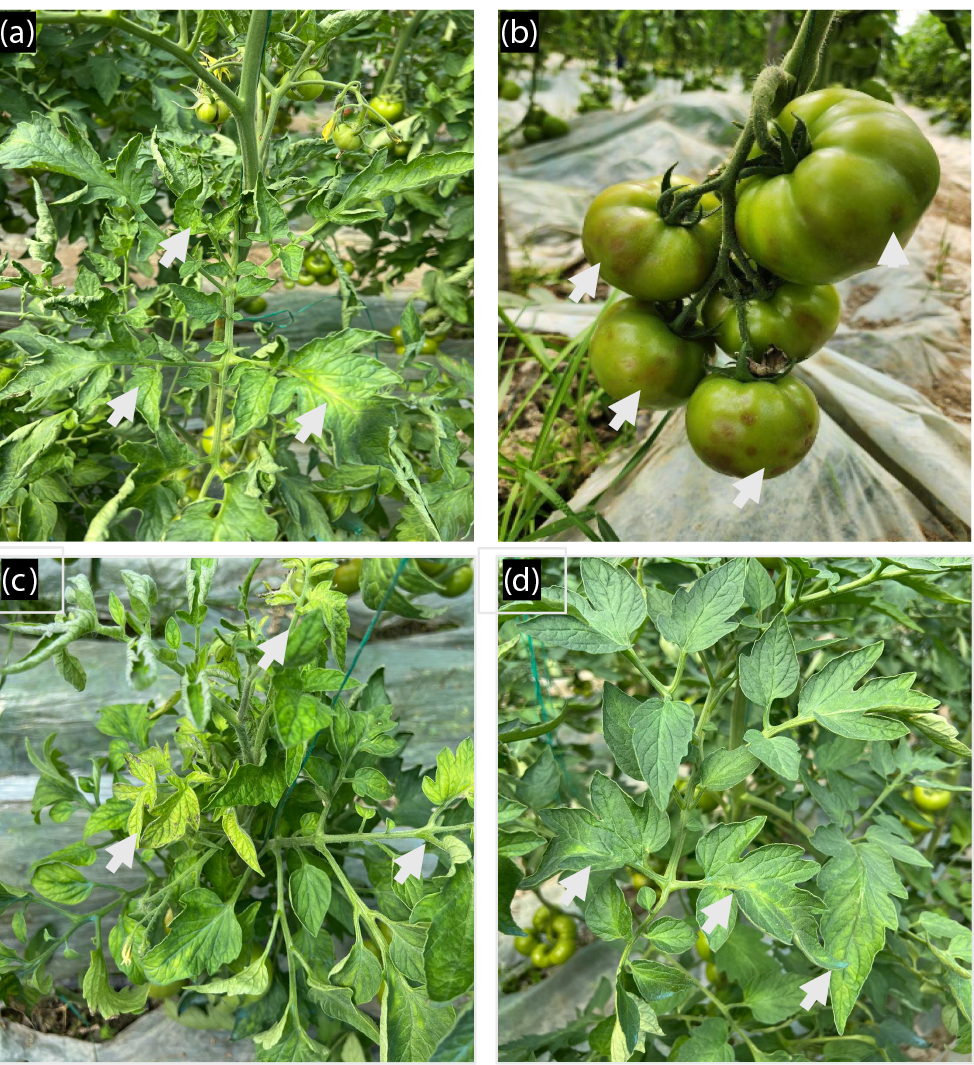
The symptoms found associated with ToBRFV in greenhouses-tomato infected plants were varied and ranged from light to severe. Affected leaves exhibited moderate to severe mosaic patterns, accompanied by dark green wrinkling, blistering, narrowing, deformation, and necrotic spots (Figure 1a). On the fruit, irregular brown necrotic lesions, deformities, and yellowing spots were commonly observed, making the tomatoes unsuitable for market (Figure 1b). Plants infected with ToCV had the same type of symptoms, characterized by vein clearing, yellowing, crinkle and deformed leaves (Figure 1c). Light mottling and vein clearing symptoms were observed on TVCV-infected tomato plants (Figure 1d). Symptoms of both viruses were prevalent across numerous tomato plants in various locations. However, no symptoms suggestive of viral infection were observed and associated with AMV-, CMV-, and STV-infected plants.
Illumina and MinION nanopore sequencing
The NGS runs using Illumina and MinION platforms were performed on total RNA extracted from two ToBRFV-infected samples (Alb-L1 and Alb-F5). The Illumina runs yielded approximately 6.2 million paired-end reads per sample, while MinION produced approximately 0.71 million reads per sample. After quality filtering, these numbers were reduced to approximately 3.7 and 3.6 million high-quality reads for Illumina and 0.49 and 0.47 million high-quality reads for MinION. All high-quality reads were used for de novo assembly, generating around 12,334 and 11,259 contigs from Illumina and 3,108 and 3,548 contigs from MinION, with contig lengths ranging from 150 to 4,720 nucleotides. The alignment of high-quality Illumina and MinION reads to reference ToBRFV sequences from GenBank (Table 4) revealed that Illumina sequencing provided higher resolution for genome assembly, which is critical for accurate virus characterization. It successfully uncovered the complete genome sequences of ToBRFV in both samples, as well as the full genome sequences of STV and TVCV, which were not initially included in our screening (Table 3). The complete genome sequences of both ToBRFV isolates obtained in this study were identical, spanning 6,381 nts. They shared 99.8% identity with the Israeli isolate “6166394_2” (GenBank accession number OM515237). One representative sequence for ToBRFV (Alb-L1 isolate) has been deposited in GenBank under the accession number PQ643185.
| Virus | Method | Sample | Reads | Coverage % | Genome sequence length (nts) | GenBank Accession number |
|---|---|---|---|---|---|---|
| ToBRFV | Illumina | Alb-L1 | 298,175 | 100 | 6,381 | PQ643185 |
| Alb-F5 | 287,741 | |||||
| MinION | Alb-L1 | 110,112 | 98.9 | 6,310 | ||
| Alb-F5 | 109,187 | 99.3 | 6,336 | |||
| TVCV | Illumina | Alb-L1 | 250,149 | 100 | 7,596 | PQ643187 |
| MinION | Alb-L1 | 95,545 | 97.2 | 7,383 | ||
| STV | Illumina | Alb-F5 | 210,580 | 100 | 3,437 | PQ643186 |
| MinION | Alb-F5 | 80,633 | 97.7 | 3,357 |
| Virus | Accession No. deposited in GenBank | Intraspecies identity of Albanian isolates (%) | Reference isolate (Accession No.) |
Origin | Highest identity with homologue in GenBank (%) |
|---|---|---|---|---|---|
| AMV | PQ613741- PQ613746 | 95–98 | Tec1 (FR715042) | Spain | 98.7 |
| CMV | PQ643215- PQ643218 | 96–99 | SKO20ST1 (OL472046) | Slovenia | 99.5 |
| ToBRFV | PQ643188- PQ643197 | 98–100 | Gr2 (OQ190155) | Greece | 100 |
| ToCV | PQ643201-PQ6432013 | 96–99 | DSMZ PV-1242 (ON398513) | Greece | 99.3 |
| TVCV | PQ643187 | 100 | Iraq-1 (NO684329) | Iraq | 95.3 |
| STV | PQ643186 | 100 | Mexico-1 (NC_011591) | Mexico | 98.7 |
Similarly, Illumina outperformed MinION in generating and fully covering the nucleotide sequences of the STV and TVCV genomes, each uniquely identified in two distinct samples using these platforms (Table 3). The complete genome sequences of TVCV and STV were 7,596 and 3,437 nts in length, respectively, sharing 95.3% identity with the Iraqi isolate Iraq-1 (accession number ON684329) and 99.8% identity with the German isolate JKI ID1904214/15 (accession number MK948545). The accuracy of the full genome sequences of ToBRFV, TVCV, and STV was verified by Sanger-sequencing of PCR-amplified amplicons using specific primers designed from the NGS-generated sequences (Table 1).
Sequence and phylogenetic analyses
The sequencing analysis of PCR amplicons generated distinct sequence types across different virus isolates from tested samples. Sequence types were obtained from 6 out of 8 samples for AMV, 4 out of 8 for CMV, 10 out of 18 for ToBRFV, 13 out of 49 for ToCV, 1 out of 6 for TVCV and 1 out of 4 for STV. The resulting clones exhibited varying degrees of sequence identity both among themselves and with reported isolates in the GenBank (Table 4).
The phylogenetic analyses of ToCV and ToBRFV, identified as the two most significant viruses in our study and among the most prevalent in Albania, revealed notable genetic similarities with isolates from various countries. Notably, ToCV isolates from Albania formed a distinct clade, indicating a high level of sequence conservation among strains within the country. These isolates were closely related to those from Greece (Gr-535, Acc. No. EU284744; DSMZ-PV-1242, Acc. No. ON398513) but more distantly related to isolates from China and Korea (Figure 2).
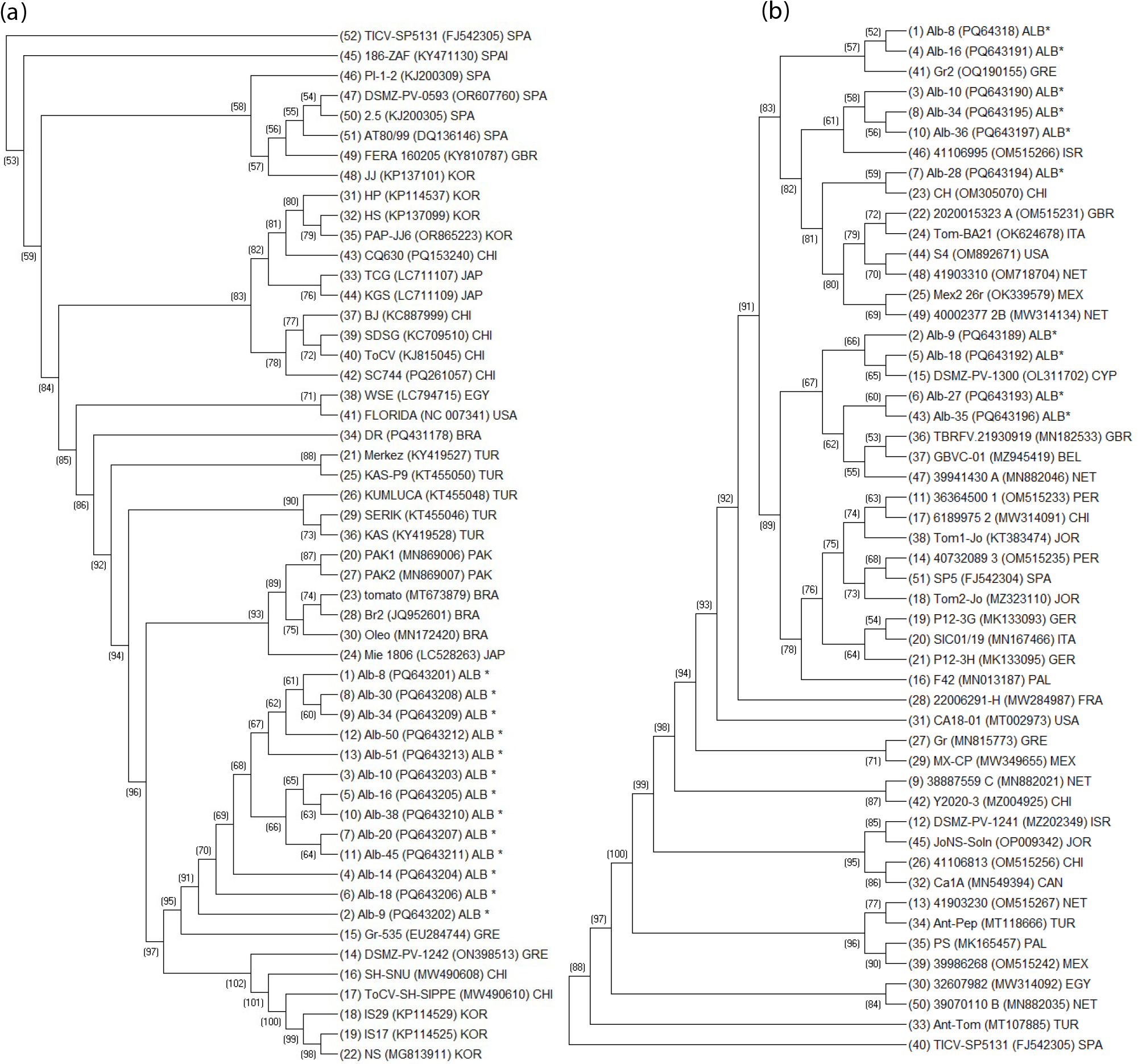
The phylogenetic allocation of ToBRFV isolates from Albania showed a pattern somewhat analogous to that of ToCV. The Albanian isolates displayed genetic proximity to one another but were distributed across two main clades. One clade included some of the Albanian isolates alongside isolates from Greece (Gr2, Acc. No. OQ190155) and Israel (41106995, Acc. No. OM515266), forming two closely related clusters. The second clade grouped other Albanian isolates into two clusters, along with isolates from Cyprus (DSMZ-PV-1300, Acc. No. OL311702), the United Kingdom (ToBRFV.21930919, Acc. No. MN182533), Belgium (GBVC-01, Acc. No. MZ945 419), and the Netherlands (39941430A, Acc. No. MN882046) (Fig. 2). Overall, the Albanian ToCV and ToBRFV isolates showed genetic clustering with isolates from geographically neighboring regions and countries such as Greece and Israel, suggesting the potential circulation of closely related and genetically homogeneous strains across these areas.
Discussion and conclusion
This study provides an in-depth analysis of viruses affecting greenhouse-grown tomatoes in Albania, highlighting several significant findings. RT-PCR and qPCR assays performed on greenhouse-grown tomato plants from five Albanian tomato growing regions detected six viruses, i.e., AMV, CMV, STV, TVCV, ToCV, and ToBRFV. Both methods provided consistent results, with PCR amplicons enabling molecular analyses. Among the viruses tested, ToCV and ToBRFV emerged as the most prevalent, accounting for 25 and 9.1% of the infected samples, respectively. ToCV showed higher prevalence in Lushnje and Fier regions, whereas ToBRFV was dominant in Berat and Fier. Notably, STV and TVCV were identified in Albanian greenhouses for the first time, using Illumina and MinION sequencing. This study reports for the first time the complete genome sequences of ToBRFV (6,381 nts), STV (3,437 nts), and TVCV (7,596 nts) Albanian isolates. The prevalence of the two latter, although low, indicates the need for further monitoring and study of their epidemiological impact in the country. Notably, ToBRFV earlier reported in a few samples from the Fier and Berat regions (Orfanidou et al., 2022a), has now been detected in two additional regions, Lushnje and Tirana, suggesting its potential spread. Similarly, ToCV, which was detected in 10 out of 15 tested tomato plants from the Fier and Berat regions (Orfanidou et al., 2022b), was found in 49 out of 196 samples in our survey, indicating a higher infection rate of 25%.
Illumina provided 100% genome coverage for ToBRFV, STV, and TVCV, while MinION achieved slightly lower coverage (97.2-99.3%) and shorter sequences for STV and TVCV. Therefore, Illumina’s higher accuracy makes it preferable for detailed viral characterization, whereas MinION ’s could be more valuable for diagnostics when it deals with accuracy/speed efficiency ratio.
The phylogenetic analyses showed that the Albanian isolates of ToCV and ToBRFV are closely related to those from neighboring regions, such as Greece, suggesting regional movement of these pathogens. An analogous phylogenetic profile for AMV and CMV isolates had also emerged (data not shown).
This study can be considered as a step toward sustainable tomato production in Albania, addressing emerging viral challenges while emphasizing the value of modern diagnostic technologies in agricultural research, such as NGS. Effective control measures, including managing insect vectors, using resistant varieties, ensuring virus-free seeds, and implementing strict sanitation practices, are essential to limit the spread of these viruses. Overall, the growing prevalence of viruses such as ToBRFV and ToCV, and the finding of new viruses never reported before in the country, underscores the need for improved disease management strategies in Albanian tomato production.
Funding
The study on ToBRFV was funded by the National Agency for Scientific Research of Albania as part of the project titled “Study of the Incidence of Tomato Brown Rugose Fruit Virus in Albania Using MinION Nanotechnology.”
Literature cited
Agindotan B.O., Shiel P.J., Berger P.H., 2007. Simultaneous detection of potato viruses, PLRV, PVA, PVX and PVY from dormant potato tubers by TaqMan® real-time RT-PCR. Journal of Virological Methods 142: 1–9.
Altschul S.F., Gish W., Miller W., Myers E.W., Lipman D.J., 1990. Basic local alignment search tool. Journal of Molecular Biology 215: 403–410.
Boben J., Kramberger P., Petrovič N., Cankar K., Peterka M., Štrancar A., Ravnikar M., 2007. Detection and quantification of Tomato mosaic virus in irrigation waters. European Journal of Plant Pathology 118: 59–71.
Cárdenas H.M., Sánchez P.G., Montoya M.M., 2017. Detection and sequencing of Potato virus Y (PVY) and Potato leafroll virus (PLRV) in a volunteer plant of Solanum tuberosum L. cv. Diacol-Capiro. Acta Agronómica 66: 625–632.
Dhuli E., 2022. Vjetari Rajonal Statistikor 2022. INSTAT.
Doyle J., 1991. DNA protocols for plants. In: Molecular Techniques in Taxonomy. Springer, Berlin Heidelberg, D., 283-293.
FAO, 2022. Statistical Yearbook. Food and Agriculture Organization of the United Nations. Rome, Italy.
Finetti‐Sialer M., Mërkuri J., Tauro G., Myrta A., Gallitelli D., 2005. Viruses of vegetable crops in Albania. EPPO Bulletin 35: 491–495.
Fowkes A., Botermans M., Frew L., de Koning P., Buxton‐Kirk A., Westenberg M., Ward R., Schenk M., Webster G., Alraiss K., 2022. First report of Tomato mottle mosaic virus in Solanum lycopersicum seeds in The Netherlands and intercepted in seed imported from Asia. New Disease Reports 45.
Hirota T., Natsuaki T., Murai T., Nishigawa H., Niibori K., Goto K., Hartono S., Suastika G., Okuda S., 2010. Yellowing disease of tomato caused by Tomato chlorosis virus newly recognized in Japan. Journal of General Plant Pathology 76: 168–171.
Ling K.-S., 2007. Molecular characterization of two Pepino mosaic virus variants from imported tomato seed reveals high levels of sequence identity between Chilean and US isolates. Virus Genes 34: 1–8.
Ling K.-S., Tian T., Gurung S., Salati R., Gilliard A., 2019. First report of tomato brown rugose fruit virus infecting greenhouse tomato in the United States. Plant Disease 103: 1439.
Lozano G., Moriones E., Navas-Castillo J., 2006. Complete nucleotide sequence of the RNA2 of the crinivirus Tomato chlorosis virus. Archives of Virology 151: 581–587.
Orfanidou C.G., Cara M., Merkuri J., Papadimitriou K., Katis N.I., Maliogka V.I., 2022a. First report of tomato brown rugose fruit virus in tomato in Albania. Journal of Plant Pathology 104: 855–855.
Orfanidou C.G., Cara M., Merkuri J., Katis N.I., Maliogka V.I., 2022b. First report of tomato chlorosis virus in tomato in Albania. Journal of Plant Pathology 104, 1177.
Panno S., Caruso A., Davino S., 2019. First report of tomato brown rugose fruit virus on tomato crops in Italy. Plant Disease 103: 1443–1443.
Papayiannis L.C., Iacovides T.A., Katis N., Brown J., 2010. Differentiation of Tomato yellow leaf curl virus and Tomato yellow leaf curl Sardinia virus using real-time TaqMan® PCR. Journal of Virological Methods 165: 238–245.
Roberts C.A., Dietzgen R.G., Heelan L.A., Maclean D.J., 2000. Real-time RT-PCR fluorescent detection of tomato spotted wilt virus. Journal of Virological Methods 88: 1–8.
Srivastava N., Kapoor R., Kumar R., Kumar S., Saritha R., Kumar S., Baranwal V.K., 2019. Rapid diagnosis of Cucumber mosaic virus in banana plants using a fluorescence-based real-time isothermal reverse transcription-recombinase polymerase amplification assay. Journal of Virological Methods 270: 52–58.
Sui X., Zheng Y., Li R., Padmanabhan C., Tian T., Groth-Helms D., Keinath A.P., Fei Z., Wu Z., Ling K.-S., 2017. Molecular and biological characterization of tomato mottle mosaic virus and development of RT-PCR detection. Plant Disease 101: 704–711.
Foissac X., Svanella-Dumas L., Dulucq M., Candresse T., Gentit P., 2000. Polyvalent detection of fruit tree tricho, capillo and foveaviruses by nested RT-PCR using degenerated and inosine containing primers (PDO RT-PCR). XVIII International Symposium on Virus and Virus-like Diseases of Temperate Fruit Crops-Top Fruit Diseases 550: 37–44.
Trucco V., Castellanos Collazo O., Vaghi Medina C.G., Cabrera Mederos D., Lenardon S., Giolitti F., 2022. Alfalfa mosaic virus (AMV): Genetic diversity and a new natural host. Journal of Plant Pathology 104: 349–356.
Vaira A., Accotto G., Vecchiati M., Bragaloni M., 2002. Tomato infectious chlorosis virus causes leaf yellowing and reddening of tomato in Italy. Phytoparasitica 30: 290–294.
Verhoeven J.T.J., Botermans M., Meekes E., Roenhorst J., 2012. Tomato apical stunt viroid in the Netherlands: most prevalent pospiviroid in ornamentals and first outbreak in tomatoes. European Journal of Plant Pathology 133: 803–810.
Xinying Y., Xin L., Lili Y., Qiuyue Z., Yongzhe P., Jijuan C., 2022. Detection of Cucumber green mottle mosaic virus in low-concentration virus-infected seeds by improved one-step pre-amplification RT-qPCR. Plant Methods 18: 70.
Xu H., Nie J., 2006. Identification, characterization, and molecular detection of Alfalfa mosaic virus in potato. Phytopathology 96: 1237–1242.
Yang J.-G., Wang F.-L., Chen D.-X., Shen L.-L., Qian Y.-M., Liang Z.-Y., Zhou W.-C., Yan T.-H., 2012. Development of a one-step immunocapture real-time RT-PCR assay for detection of Tobacco mosaic virus in soil. Sensors 12: 16685–16694.