https://doi.org/10.36253/phyto-15613
Accepted: March 7, 2025; Published: May 15, 2025
Research Papers
Orange oil postharvest dips for control of grey mould (Botrytis cinerea) of plums and strawberries, and green mould (Penicillium digitatum) of citrus
1 Department of Plant Pathology, Stellenbosch University, Stellenbosch, South Africa
2 Oro Agri SA (Pty) Ltd, 1 Henry Vos Close, Asla Park, Strand, South Africa
3 ORO AGRI EUROPE S.A.Estrada Municipal 533, Zona de Biscaia, Estr. Do Lau, 2950-401, Palmela, Portugal
*Corresponding author. E-mail: juliam@sun.ac.za
Summary. Orange oil has antibacterial properties for uses in food and pharmaceutical industries. This study evaluated the efficacy of orange oil dip applications and treatment periods for protective and curative effects against Botrytis cinerea, (which causes grey mould on plums and strawberries), and Penicillium digitatum, responsible for green mould of citrus. Pure orange oil and two orange oil-based formulations (OR007B and OR79) were tested on inoculated fruit, at oil concentrations from 0.05% to 1.00%, and were compared to the fungicides fludioxonil at 300 mg. L-1 for B. cinerea, or imazalil at 500 µg mL-1 for P. digitatum, the respective South African registered doses for these fungicides. Orange oil treatments failed to control green mould on lemons and oranges, with disease incidence exceeding 90% even after 120 sec of exposure. Two plum cultivars had different susceptibilities to grey mould, and orange oil reduced the disease incidence (24 to 14%) as the oil concentration increased in the curative treatments of cv. African Delight, outperforming 1% fludioxonil (24%). The OR007B and OR79 formulations both gave low incidence of grey mould, with 0.5% of orange oil in these formulations resulting in up to 12% incidence (from OR007B) and 17% (from OR79). Cv. Laetitia, in contrast, had >60% incidence of grey mould across all treatments, including fludioxonil. Protective treatments showed similar trends in both cultivars. On strawberries stored at 4°C for 14 d, grey mould incidence was reduced from 82% (control treatment) to 55% (for orange oil), 21% (for OR007B), and 44% (for OR79), with the orange oil treatments having efficacy comparable to fludioxonil. These results demonstrate the potential of orange oil treatments as alternatives for grey mould management in plums and strawberries.
Keywords. Fungicide sensitivity, natural antimicrobial products, plant extracts, soft chemicals.
Contents
Inoculation and treatment application
Curative and protective efficacy of orange oil and orange oil-based dip applications
Influence of incubation period for plums and lemon fruit
Influence of exposure time (lemons and sweet oranges)
Introduction
Occurrence of fruit losses due to decay, long distances to markets, and cold chain interruptions are major drawbacks for fruit industries (Nelson, 2010; Stander and Dyk, 2017; Cherono and Workneh, 2018), and use of synthetic fungicides is the most effective management strategy for control of postharvest decay-causing fungal pathogens. Penicillium digitatum (Pers.) Sacc., a causal agent of green mould, is responsible for citrus production losses of up to 90% (Macarisin et al., 2007; Costa et al., 2019). This disease is managed using the fungicide imazalil (Smilanick et al., 1997, Smilanick et al., 2005; Erasmus et al., 2011). Botrytis cinerea Pers. (which causes grey mould) is responsible for postharvest fungal decay of up to 73% on stone fruit (Fourie and Holz, 1985). The fungicide fludioxonil is registered for postharvest application on stone fruit and is used to control grey mould infections (Förster et al., 2007).
Safety concerns over human health and environmental pollution threaten the use of synthetic chemicals for plant disease management. Synthetic fungicides, including some of those used postharvest (e.g. imazalil), are regarded as unsafe for human health and environmental toxic to the environment (e.g. fludioxonil), and consumers have become more aware of the impacts of these substances on their health (Sişman and Türkez, 2010; Tao et al., 2020; European chemical agency-ECHA, 2024). These increasing concerns have necessitated international and national regulatory authorities to formulate policies for phasing out and prohibiting the use of these products (Commission delegated regulation (EU) 2023/1656, 2023; Department of Agriculture, Forestry, and Fisheries DAFF, 2010). Recent consumer demands in important fruit export markets (including Europe) have caused some supermarkets to introduce lower fungicide residue limits than those set by government regulatory authorities. New systems such as the Globally Harmonized System (GHS) for safety classification of chemicals have identified highly hazardous substances at categories 1A and 1B, subsequently leading to their phasing out (Mudzunga, 2022). These pressures have resulted in a pesticide market shift from development of novel synthetic substances to investments in biopesticide development (Lucintel, 2024). Authorities have also instituted regulatory pathways specifically focused on biopesticides, ensuring fast-tracked processes with minimum delays (DALRRD, 2023).
Biopesticides are defined as products that are of natural origin, either from plants or microorganisms, that are applied to crops to control, repel or prevent occurrence of specific pests and diseases (Hezakiel et al., 2023). They are “generally regarded as safe” (GRAS). Interest in these substances is largely due to their natural origins, and that they have been described as GRAS by the Food and Drug Administration (FDA, 2006). These products should have known or minimal toxicological effects on the environment and mammals and not be regulated for chemical residues on fresh produce (Palou et al., 2016). Essential oils are GRAS, and are liquid products extracted from plants through several methods, including, for oils from citrus, hydro distillation, steam distillation, and cold expression (Tao et al., 2009; Pejin et al., 2011; Botrel et al., 2015).
The complex composition of essential oils is an advantage for their use as antifungal products, since synergism of compounds has been shown against specific targets and pathogens (Sharifi-Rad et al.; 2017; Zareiyan and Khajehsharifi, 2021). Although limonene has been found as the largest proportion (76%), of the essential oil compounds from Citrus sinensis, other compounds including monoterpenes (geranial, neral), that are lesser components, also have antimicrobial activity and effectively inhibit fungal pathogen growth (Tsao and Zhou, 2000; Hanafy et al., 2021; Hamdan et al., 2024). This synergism would be advantageous in postharvest disease management, reducing the likelihood of target pathogens developing resistance to combined components (Tripathi and Dubey, 2004). Rammanee and Hongpattarakere (2011) showed that the individual components of essential oils were less effective than the natural essential oils, demonstrating synergism between different compounds.
It would be advantageous to incorporate essential oils into postharvest disease management, due to their high biodegradability, and to their likely lack of residue issues (Talibi et al., 2014). Therefore, the Environmental Protection Agency (EPA) and European Union have eliminated the need to establish permissible residue levels for sweet orange oil, when used during pre- and post-harvest at less than 10% (Federal Register, 2014).
Citrus peel is produced as waste in large amounts during processing, so presents an opportunity for essential oil extraction (Zareiyan and Khajehsharifi, 2021). Orange oil is obtained from fruit rind via cold pressing and steam distillation of mature sweet orange fruit (Citrus sinensis Linnaeus) (Botrel et al., 2015). As is typical for all essential oils, orange oil is analysed using gas chromatography or mass spectrometry, and approx. 27 compounds have been identified. Monoterpene D-limonene is the principal component (> 70%) and with other monoterpene hydrocarbons they make up 90% of the total essential oil content (Droby et al., 2008; Tao et al., 2009; Regnier et al., 2014). As the main component, D-limonene has been classified as an insect repellent and a natural pesticide by the EPA (John et al., 2017). Although orange oil use is well documented for pharmaceutical and food industries for its antibacterial and food preservation benefits (Guo et al., 2018; Jantrawut et al., 2018; De Andrade et al., 2022), little information is available on its efficacy against postharvest fruit pathogens, although several studies have previously tested its efficacy on other products including potato slices and cucumber, and one study evaluated its use on fresh-cut oranges (Radi et al., 2018; Shi et al., 2018; Ziedan et al., 2022).
The objective of the present study was to investigate post-harvest applications of orange oil as an alternative for the management of B. cinerea on plums and strawberries and P. digitatum on citrus. These applications were evaluated for curative and protective activities, and incubation times, and treatment bath exposure periods were also assessed.
Materials and methods
Treatments
Two orange oil-based products were obtained from ORO AGRI SA (Pty) Ltd, Strand, South Africa. One formulation (OR007B) contained 5% orange oil, and the second (OR-79) contained 10% orange oil. These products were compared as fruit dip applications. Pure essential orange oil, containing 97% d-limonene, was also obtained from Puris Natural Aroma Chemicals, Paarl, South Africa. Prior to treatments, fruit treated with the orange oil extracts was sent to HORTEC (Pty) Ltd, Somerset West, South Africa, for imazalil residue analyses, to validate the purity of the oil. Thyme oil (from Thymus vulgaris L.) containing > 40% of thymol and obtained from Clive Teubes Africa (Pty) Ltd, Johannesburg, South Africa, was used in these trials to compare with orange oil. Dip treatments in tap water were included in experiments as negative control treatments. The fruit industry standards for postharvest fungicide applications, fludioxonil (Teacher 230 SC) for plums, or imazalil sulfate (Imazacure; 750 g kg−1 SP) for citrus, were used as positive control treatments. These fungicide products were obtained from ICA International Chemicals (Pty) Ltd, Plankenburg, Stellenbosch, South Africa. Fludioxonil was applied as a dip at the recommended concentration of 300 mg L-1 for B. cinerea in plums, and imazalil (IMZ) at 500 mg L−1 for P. digitatum on citrus. Since no postharvest treatments are used commercially for strawberries, no commercial product was included in the experiments. All fruit used in the experiments was collected from local packhouses (near Stellenbosch, South Africa), and was used within a week after harvest.
Inoculation and treatment application
Citrus experiments
During the 2020 and 2021 fruit packing seasons, high quality export citrus fruit of ‘Eureka’ lemon [Citrus x limon (L.) Osbeck], and ‘Midnight Valencia’ orange [Citrus × sinensis (L.) Osbeck], were obtained from packhouses in the Citrusdal and Stellenbosch regions, Western Cape, South Africa. Fruit was washed upon arrival from packhouses, using a custom-built packline designed to mimic a commercial system to apply wash solution containing 200 mg L-1 of calcium hypochlorite. After washing, the fruit was dried in a drying tunnel.
To commence the experiments, inoculations were conducted as previously described in Njombolwana et al. (2022), using P. digitatum isolates previously classified as sensitive (isolate STE-U 6560) or resistant (isolate STE-U 6590) to IMZ (Erasmus et al,. 2011). The IMZ-resistant isolate was obtained from Citrus Research International (CRI), Nelspruit, South Africa, and the IMZ-sensitive isolate was obtained from a satsuma orchard at the Stellenbosch University experimental farm, Welgevallen, Stellenbosch, South Africa. These isolates were used to prepare conidium suspensions, following 2-week incubation on potato dextrose agar (Merck) containing streptomycin sulfate at 0.04 mg L-1 (PDA+). The conidium suspension was prepared in autoclaved deionized water amended with 0.01 mL L-1 Tween 20 (Sigma-Aldrich) and was filtered through two layers of sterile cheesecloth. A Neubauer improved haemocytometer was used to adjust the conidium suspension to 1 × 10⁶ conidia mL -1, according to Plaza et al. (2004). Ten unblemished fruits of similar size and colour per replicate were inoculated using a metallic rod wounding tool to create four wounds (0.5 mm deep and 2 mm wide) around each fruit stem end. Treatments were applied either 1 h before (protective) or 12 h after (curative).
The water bath solutions containing different treatments were prepared along with a negative control treatment (a bath containing water). In all the experiments, IMZ at 500 µg mL−1 was included as a standard disease control treatment (as conventionally used by industry). For orange oil only and thyme oil only treatments, the required concentrations of essential orange oil were premixed with 0.50% v/v Tween 80 to obtain suspensions of the oils in water. The essential oils were applied at 0.05, 0.1 0.5 or 1% concentrations. The OR-007B and OR-79 formulated products were adjusted to these concentrations. Treated fruit was submerged for 30 s in the aqueous solutions and allowed to dry for packing or inoculations depending on the treatment schedules.
In addition, ‘Eureka’ lemons and ‘Midnight Valencia’ oranges were used to evaluate effects of exposure times in the treatment bath. The fruit was submerged in the bath for 60, 90, or 120 s following a 12 h incubation period at 25°C. The preparation of the treatments and the procedures were as described above.
In all the experiments, the laboratory temperature was maintained. Fruit was stored in plastic crates on count SFT15 nectarine trays (AgriMark, Paarl, South Africa). Each crate was covered with a transparent polyethylene bag, which was sealed, and then incubated at 25°C for 4 d, after which the infected fruit wounds were evaluated. This was done using a light source (UV-A at 365 nm, Labino Mid-light; www.labino.com), with each wound visible as yellow fluorescence on the fruit surface. Six to 8 d later, incidence of conidium production was assessed, using the sporulation index described by Erasmus et al. (2011), which includes scores of 0 = absence of conidia, to 6 = conidia covering the whole fruit.
Plum experiments
Commercially harvested plums [Prunus salicina Lindley (‘Angelino,’ ‘African Delight’, ‘Laetitia’) were collected from packhouses in Wellington region, Western Cape, South Africa. The fruit was brought to the laboratory without receiving prior treatments at the packhouses. The plums were surface sterilized before the experiment, by submerging the fruit for 1 min in a waterbath containing 0.48 mg L-1 of sodium hypochlorite (Chlorguard sanitiser bleach), combined with 0.005% Tween 20 as a surfactant. The fruit was then allowed to dry on net stainless steel trays.
Inoculations for the experiments were carried out using a B. cinerea isolate STE-U 9254, obtained from the Stellenbosch University Plant Pathology culture collection. 1-week-old mycelium PDA+ cultures were grown for 4 d at 25oC then for 3 d exposed to ultraviolet (UV) light to induce conidium production. Conidium suspensions were prepared as described above but were adjusted to concentration of 1 × 10⁵ conidia mL-1 (Lopez-Reyes et al., 2013). Ten individual fruit per replication were wound inoculated using a metallic rod wounding tool (2 mm depth, and 2 mm wide). The wounded sections were carefully marked using an Artline 70 black permanent marker.
To evaluate the curative and protective effects of the treatments against B. cinerea on fruit of ‘African Delight’ and ‘Laetitia’, fludioxonil bath solution at the recommended commercial concentration for plums of 300 mg -1 was used. All other treatments and applied concentrations were kept the as described above for the citrus experiments. Applications of thyme oil at all concentrations and 1% adjusted concentration of orange oil in the OR007B and OR79 treatments was discontinued due to the observed phytotoxicity in a pilot trial (data not shown). The fruit was submerged for 30 s in the aqueous solutions and allowed to dry for packing.
To evaluate the effect of incubation time on ‘Angelino’, a similar treatment procedure as described above was followed, but the fruit was treated after 8, 16, or 24 h. The fruit were allowed to dry, and were then packed on to SFT13 nectarine trays. For the duration of the trials, plums were kept in moisture chambers with temperature maintained at 25°C, and evaluations were carried out on day 7 and day 12 after the treatments were applied.
Form both application methods (preventative or curative), evaluations were made for disease incidence (total number of infected fruits per treatment replicate) and severity (lesion diameters, length and width at the inoculation site). Lesion size was measured using a digital calliper (Miyumoto, MTMA). A repeat of two trials per cultivar was conducted using ‘African Delight’ and ‘Laetitia’ cultivars.
Strawberry experiments
During the 2021 fruit packing season, strawberries Fragaria x ananassa (Duchesne ex Weston) Duchesne ex Rozier; ‘Albion’), were collected from packhouses in Stellenbosch, Western Cape, South Africa. The fruit were surface sterilized using a 25 mg L-1 sodium hypochlorite solution for 3 mins, followed by a 5 min dip in sterile distilled water, and allowed to dry for 1 h in a laminar flow hood.
Fruit inoculations were carried out to evaluate curative effects of the treatments, after 3 h incubation. The fruit was treated by submerging in a bath containing orange oil, orange oil-based formulated products (using concentrations at 0.05, 0.1, 0.5 and 1% as described above for plums and citrus), and an untreated experimental control, with an exposure period of 30 s in the bath. No standard fungicide treatment was included, since this is not currently practiced by industry. Following treatments, the fruit was allowed to dry, and was then packed into plastic crates lined with black polystyrene pear trays (AgriMark). The fruit was stored at 4°C for 14 d, with monitoring for disease development in the untreated controls. On day 14, evaluations were carried out for appearance of superficial mycelia resembling grey mould, in the untreated fruit. The fruit was then transferred to 25°C and further development of the disease was evaluated on day 17 (i.e. after 3 d storage).
Statistical analyses of data
For disease incidence, severity, fungus sporulation, and control of P. digitatum or B. cinerea decay, data were analysed using appropriate analyses of variance (ANOVA) and generalized estimated models, using Statistica (v.13.5). These analyses were carried out by the Department for Statistical Analysis, Stellenbosch University. Dependant variables within the analyses were continuous, so Fisher’s LSD was an appropriate method for detecting statistically significant differences (95% confidence interval).
Results
Curative and protective efficacy of orange oil and orange oil-based dip applications
The curative and protective effects of the orange oil and orange oil-based treatments OR-007B and OR-79 were evaluated on plums and strawberries. In the preliminary investigations, thyme oil was incorporated and completely inhibited B. cinerea at 0.5 and 1%. However, heavy phytotoxicity symptoms were caused by these treatments, as fruit hardening and white patches, observed 24 h after application (Figure 1, B). These treatments were excluded from the main experiments.
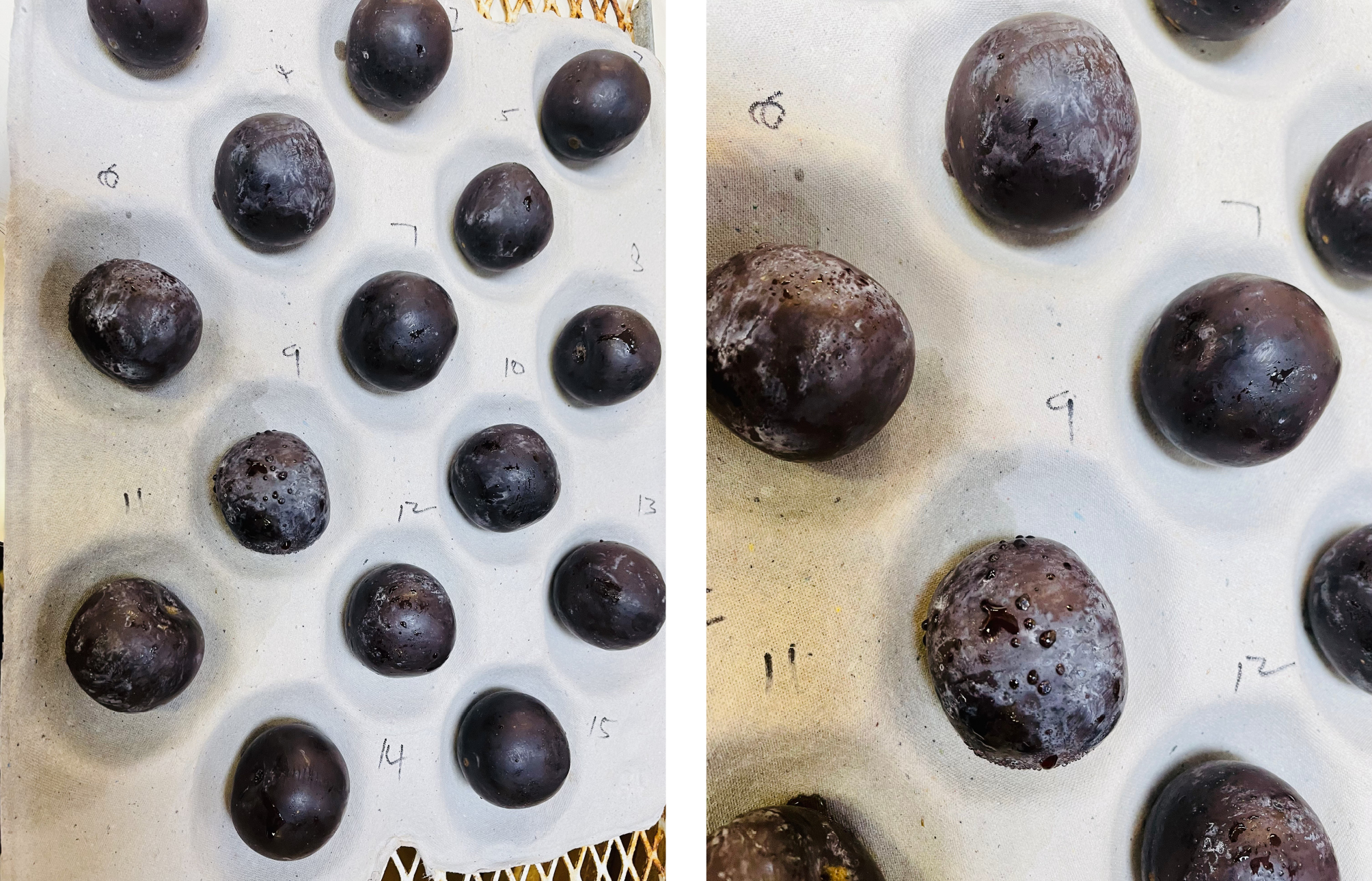
On plums, for disease incidence and severity, the ANOVA analyses showed a statistically significant factor interaction of cultivar × action × treatment × day (P < 0.001). The interaction was attributed to differing levels of disease susceptibility between the cultivars (Table 1). In ‘African Delight’ plums, orange oil at all the tested concentrations reduced B. cinerea incidence, both curatively and as a protectant. There were statistically significant interactions for the incidence data (P = 0.06), and the severity data (P < 0.001), between cultivar, action (curative or preventative), and treatment.
| Treatment | Mean grey mould incidence (%) | ||||||||||||||||||
|---|---|---|---|---|---|---|---|---|---|---|---|---|---|---|---|---|---|---|---|
| ‘African Delight’ | ‘Laetitia’ | ||||||||||||||||||
| Curative | Protective | Curative | Protective | ||||||||||||||||
| Control | 50 i-k | 74 d-f | 88 a-f | 84 a-c | |||||||||||||||
| Fludioxonil 300 mg L-1 | 24 I-p | 33 l-n | 68 e-h | 72 b-g | |||||||||||||||
| Orange oil 0.05% | 24 no | 24 m-p | 59 g-i | 74 g-i | |||||||||||||||
| Orange oil 0.1% | 23 no | 49 i-k | 75 g-i | 80 b-g | |||||||||||||||
| Orange oil 0.5% | 14 o-q | 49 l-n | 65 f-i | 82 f-i | |||||||||||||||
| Orange oil 1% | 22 m-o | 25 m-p | 55 h-j | 79 b-g | |||||||||||||||
| OR007B 0.05% | 7 q | 32 k-m | 78 c-f | 96 a | |||||||||||||||
| OR007B 0.1% | 26 m-o | 24 m-o | 80 d-f | 83 b-f | |||||||||||||||
| OR007B 0.5% | 12 pq | 37 k-m | 75 b-g | 82 b-f | |||||||||||||||
| OR79 0.05% | 35 j-o | 26 m-o | 77 d-g | 91 ab | |||||||||||||||
| OR79 0.1% | 24 op | 19 n-p | 78 c-f | 83 b-f | |||||||||||||||
| OR79 0.5% | 17 n-q | 41 j-l | 61 g-i | 84 b-d | |||||||||||||||
| Means accompanied by the same letters are not significantly different (P > 0.05). | |||||||||||||||||||
Data for each plum cultivar are presented separately. Disease incidence for ‘African Delight’ was low in the untreated controls (mean = 50%; Table 1) in the curative experiments. The orange oil treatment decreased incidence with increasing concentration. The 0.5% concentration of orange oil (least mean incidence = 14%) provided control similar to fludioxonil (mean incidence = 24%). The OR007B and OR79 treatments also reduced disease incidence, in some cases to significantly less than the fludioxonil treatment (i.e. 7% from 0.05% OR007B). For the protective treatments in ‘African Delight’ plums, the untreated controls had mean grey mould incidence of 74%, while the orange oil treatments reduced incidence to between 24 and 49% (similar to the fludioxonil treatment). Fludioxonil resulted in 33% disease incidence, which was also similar to the OR007B and OR79 treatments, where mean incidence was the least (19%) from the 0.1% OR79 treatment.
Disease incidence for ‘Laetitia’ (untreated control mean = 88%) was greater compared to ‘African Delight’ (Table 1). Disease incidence in ‘Laetitia’ plums treated curatively with orange oil showed a trend of decreased grey mould incidence with increasing concentrations, similar to that from fludioxonil (mean incidence = 68%). None of the treatments effectively reduced grey mould incidence when applied protectively in ‘Laetitia’ plums, with the most effective treatment (0.05% orange oil) reducing mean disease incidence to 74%, compared with 84% from the untreated control).
Disease severity data showed similar trends to the incidence data in both cultivars (Table 2). In ‘African Delight’ plums treated curatively with 0.5% orange oil, mean severity was reduced to 35%, lower than from fludioxonil (61%), but this difference was not statistically significant. Similarly, 0.5% OR007B and 0.5% OR79 reduced mean incidence to, respectively, 25 and 28%. Fludioxonil reduced disease mean severity to 47%, when applied protectively. Orange oil alone did not consistently lower grey mould severity from the protective applications and demonstrated variable efficacy across oil concentrations. In ‘Laetitia’, plums, curative application of fludioxonil reduced severity to 79%. Orange oil at the greatest concentration tested (1%) reduced mean severity to 60%, which was significantly less than from the fludioxonil treatment. OR007B and OR79 gave similar results to fludioxonil, with greatest efficacy in the curative experiments from the 0.5% OR79 treatment (mean = 67% severity). Overall, all protective treatments of ‘Laetitia’ gave high mean grey mould severities (92 to 100%), with no effective disease control.
| Treatment | Mean grey mould severity (%) | ||||||||||||||||||
|---|---|---|---|---|---|---|---|---|---|---|---|---|---|---|---|---|---|---|---|
| ‘African Delight’ | ‘Laetitia’ | ||||||||||||||||||
| Curative | Protective | Curative | Protective | ||||||||||||||||
| Control | 100 j-n | 100 b-d | 100 ab | 100 a-c | |||||||||||||||
| Fludioxonil 300 mg L-1 | 61 n-q | 47 k-o | 79 c-f | 93 b-d | |||||||||||||||
| Orange oil 0.05% | 64 m-p | 81 l-o | 68 e-i | 91 b-d | |||||||||||||||
| Orange oil 0.1% | 63 m-p | 36 m-q | 66 e-i | 87 b-e | |||||||||||||||
| Orange oil 0.5% | 36 q-r | 69 f-j | 73 d-g | 97 a-c | |||||||||||||||
| Orange oil 1% | 58 o- q | 81 l-o | 60 g-k | 92 b-d | |||||||||||||||
| OR007B 0.05% | 12 r | 46 m-q | 88 b-d | 100 a | |||||||||||||||
| OR007B 0.1% | 68 m- q | 34 i-m | 91 a-d | 95 a-d | |||||||||||||||
| OR007B 0.5% | 25 qr | 55 m-q | 83 b-e | 94 a-d | |||||||||||||||
| OR79 0.05% | 57 o- q | 35 i-m | 88 b-d | 100 ab | |||||||||||||||
| OR79 0.1% | 66 o-r | 27 l-q | 87 b-d | 93 b-d | |||||||||||||||
| OR79 0.5% | 29 p-r | 60 h-l | 67 e-h | 95 a-d | |||||||||||||||
| Means accompanied by the same letters are not significantly different (P > 0.05). | |||||||||||||||||||
Although there was no statistically significant interaction between treatment and the day of evaluation (P = 0.32) for the dip applications of strawberries followed by 14 d of storage at 4°C, these results are discussed. There was a significant interaction (P < 0.001) between the evaluation days (i.e., day 14, the evaluation conducted at the end of cold storage, and day 17, 3 d at ambient temperature). On day 14, mean grey mould incidence was reduced from 82% in the untreated control to means of 55% for OR79, 21% for OR007B, and 45% for orange oil alone (Table 3). On day 17, fruit became severely affected by grey mould.
| Treatment | Mean grey mould incidence (%) | ||||||||||||||||||
|---|---|---|---|---|---|---|---|---|---|---|---|---|---|---|---|---|---|---|---|
| Day 14 | Day 17 | ||||||||||||||||||
| Control | 82 b | 98 a | |||||||||||||||||
| Orange oil 0.05% | 42 c | 98 a | |||||||||||||||||
| Orange oil 0.1% | 48 c | 98 a | |||||||||||||||||
| Orange oil 0.5% | 45 cd | 94 a | |||||||||||||||||
| Orange oil 1% | 64 c-e | 98 a | |||||||||||||||||
| OR007B 0.05% | 36 de | 94 a | |||||||||||||||||
| OR007B 0.1% | 35 e | 97 a | |||||||||||||||||
| OR007B 0.5% | 21 c-e | 95 a | |||||||||||||||||
| OR79 0.05% | 58 cd | 98 a | |||||||||||||||||
| OR79 0.1% | 58 c-e | 98 a | |||||||||||||||||
| OR79 0.5% | 55 b-d | 98 a | |||||||||||||||||
| Means accompanied by the same letters are not significantly different (P > 0.05). | |||||||||||||||||||
Influence of incubation period for plums and lemon fruit
The incubation period experiments conducted with ‘Angelino’ plums gave significant interactions (P < 0.0001) between incubation period and treatment, for both severity and incidence of sporulation incidence data. Only fludioxonil at 8 h reduced disease level (mean = 69%), while the other treatments gave a disease incidence of > 80%. For disease incidence, fludioxonil reduced sporulation incidence with shorter incubation period (mean incidence = 20% after 8 h, and 37% after 24 h. The shorter incubation period for the OR007B and OR79 formulations resulted in decreased sporulation incidence, with increasing formulation the concentrations (means = 69 to 59% for OR007B, and 61 to 35% for OR79).
Data for ‘Eureka’ lemon disease incidence data showed a significant disease incidence interaction (P < 0.001) between isolate, treatment, and incubation period. In preliminary tests, thyme oil was also assessed, to compare the effect on green mould with that from orange oil. Thyme oil was subsequently excluded from the main experiments due to host tissue damage observed immediately after treatment (Figure 2, A and B).
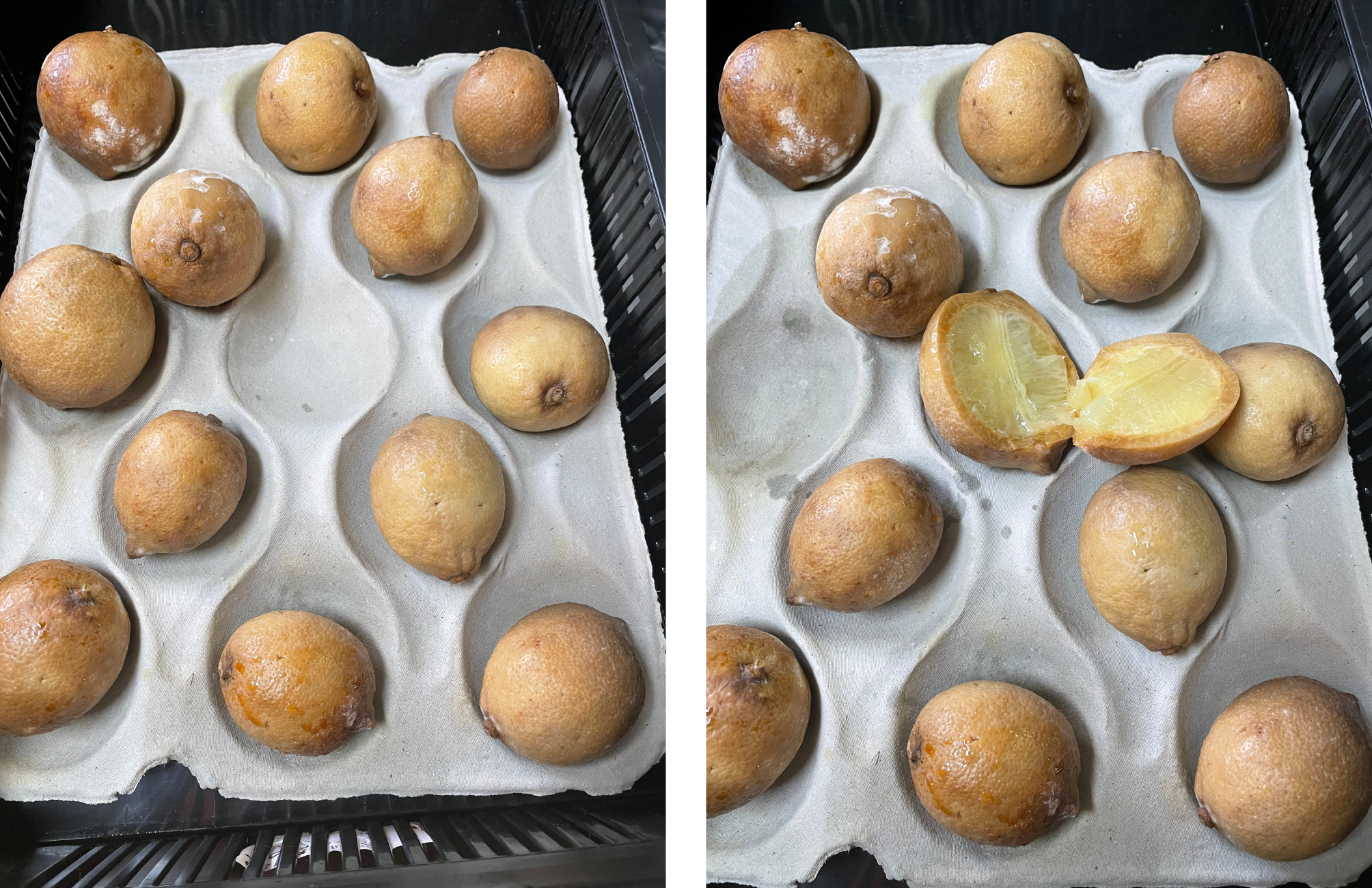
Imazalil showed reduced green mould control caused by the sensitive strain of P. digitatum, at both 8 h (mean = 0%) and 24 h (5%), while the resistant strain of the fungus was reduced to 29% at 8 h and 53% at 24 h (Table 4). Although disease levels were high from all the other treatments, the OR007B formulation showed decreasing mean levels of disease incidence (97 to 77%) with increasing concentration, for the sensitive strain after 8 h incubation. Greater amounts of sporulation incidence were observed following imazalil treatment except for the sensitive isolate.
| Treatment | Mean green mould incidence (%) | Sporulating fruit (%) | |||||||||||||||||
|---|---|---|---|---|---|---|---|---|---|---|---|---|---|---|---|---|---|---|---|
| IMZ-sensitive | IMZ-resistant | IMZ-sensitive | IMZ-resistant | ||||||||||||||||
| 8 h | |||||||||||||||||||
| Control | 96.6 a-d | 96.6 a-d | 99.4 ab | 99.4 ab | |||||||||||||||
| Imazalil 500 µg mL 1 | 0.0 n | 28.6 l | 16.2 e | 95.7 e | |||||||||||||||
| Orange oil 0.05% | 96.6 a-d | 91.1 a-d | 99.4 ab | 99.4 ab | |||||||||||||||
| Orange oil 0.1% | 96.6 a-d | 96.6 a-d | 99.4 ab | 99.4 ab | |||||||||||||||
| Orange oil 0.5% | 96.6 a-d | 96.6 a-d | 99.4 ab | 99.4 ab | |||||||||||||||
| Orange oil 1.0% | 96.6 a-d | 95.9 a-d | 99.4 ab | 99.4 ab | |||||||||||||||
| OR-007B 0.05% | 96.6 a-d | 96.6 a-d | 99.4 ab | 99.4 ab | |||||||||||||||
| OR-007B 0.1% | 84.5 gh | 96.6 a-d | 99.4 ab | 99.4 ab | |||||||||||||||
| OR-007B 0.5% | 77.2 ij | 77.9 ij | 99.4 ab | 99.4 ab | |||||||||||||||
| OR-79 0.05% | 96.6 a-d | 96.6 a-d | 99.4 ab | 99.4 ab | |||||||||||||||
| OR-79 0.1% | 96.6 a-c | 93.8 b-e | 99.4 ab | 99.4 ab | |||||||||||||||
| OR-79 0. % | 81.3 f-h | 92.4 c-e | 96.7 a-c | 99.4 ab | |||||||||||||||
| 24 h | |||||||||||||||||||
| Control | 100.0 a | 100.0 a | 100.0 a | 100.0 a | |||||||||||||||
| Imazalil 500 µg mL 1 | 5.5 m | 52.7 k | 19.6 e | 93.1 cd | |||||||||||||||
| Orange oil 0.05% | 100.0 a | 100.0 a | 100.0 a | 100.0 a | |||||||||||||||
| Orange oil 0.1% | 100.0 a | 100.0 a | 100.0 a | 97.2 ab | |||||||||||||||
| Orange oil 0.5% | 100.0 a | 100.0 a | 100.0 a | 100.0 a | |||||||||||||||
| Orange oil 1.0% | 97.9 a-c | 100.0 a | 100.0 a | 100.0 a | |||||||||||||||
| OR-007B 0.05% | 75.3 j | 100.0 a | 100.0 a | 100.0 a | |||||||||||||||
| OR-007B 0.1% | 85.4 gh | 99.3 ab | 100.0 a | 92.5 d | |||||||||||||||
| OR-007B 0.5% | 93.4 e-g | 100 a | 100.0 a | 100.0 a | |||||||||||||||
| OR-79 0.0 % | 99.3 a | 99 a | 100.0 a | 100.0 a | |||||||||||||||
| OR-79 0.1% | 97.2 a-c | 100 a | 100.0 a | 95.8 ab | |||||||||||||||
| OR-79 0.5% | 85.7 f-h | 100 a | 100.0 a | 100.0 a | |||||||||||||||
| Means accompanied by the same letters are not significantly different (P > 0.05). | |||||||||||||||||||
Influence of exposure time (lemons and sweet oranges)
A statistically significant interaction for disease incidence (P < 0.001) was measured in ‘Eureka’ lemons between P. digitatum strains (sensitive or resistant) and treatment type. In contrast, no significant interaction (P = 0.83) was detected for ‘Valencia’ oranges.
On ‘Eureka’ lemons, the untreated control fruit inoculated with the sensitive or resistant strains resulted in 100% disease incidence (Table 5). Disease symptomatic fruit inoculated with the sensitive strain and treated with imazalil were found at reduced disease incidence (mean = 3%), and the fruit inoculated with the resistant strain had mean incidence of 41%. While the resistant strain gave greater disease incidence, this was less from the orange oil and orange oil-based formulations 1% concentrations. The OR007B formulation resulted in decreasing mean disease incidence levels (73 to 66%) with increasing exposure times in the treatment bath. Similarly, the OR79 formulation gave disease incidence levels between 45 and 70%. However, this trend was not observed for the sensitive strain. ‘Valencia’ oranges showed comparable results to the OR79 formulation. The resistant strain resulted in reduced mean level of disease incidence, between 61 and 68%, and some reduction was also detected (64 and 74%) for the sensitive isolate treatments.
| Treatment | Exposure time (s) |
Mean green mould incidence (%) | |||||||||||||||||
|---|---|---|---|---|---|---|---|---|---|---|---|---|---|---|---|---|---|---|---|
| ‘Eureka’ lemon | ‘Midnight Valencia’ orange | ||||||||||||||||||
| IMZ-sensitive | IMZ-resistant | IMZ-sensitive | IMZ-resistant | ||||||||||||||||
| Control | 0 | 100 a | 100 a | 99.3 a | 100 a | ||||||||||||||
| IMZ | 60 | 3.1 n | 40.9 m | 0.2 p | 0.2 p | ||||||||||||||
| Orange oil 0.5% | 60 | 99.6 ab | 97.9 ab | 99.1 a | 96.9 a-c | ||||||||||||||
| Orange oil 1.0% | 60 | 96.6 a-d | 95.9 a-c | 99.4 a | 99.4 a | ||||||||||||||
| OR-007B 0.5% | 60 | 93.4 a-g | 82.9 d-i | 77.3 j-m | 90.1 a-g | ||||||||||||||
| OR-007B 1.0% | 60 | 73.9 i-k | 73.2 i-k | 79.8 d-j | 72.3 f-j | ||||||||||||||
| OR-79 0.5 % | 60 | 94.7 a-d | 81.5 e-j | 84 g-k | 77.4 i-n | ||||||||||||||
| OR-79 1.0 % | 60 | 73.9 i-k | 58.6 l | 67.4 m-o | 64.6 no | ||||||||||||||
| Orange oil 0.5% | 90 | 99.6 ab | 90.9 a-g | 97.7 ab | 95.5 a-e | ||||||||||||||
| Orange oil 1.0% | 90 | 91.6 a-f | 93.7 a-g | 94.8 a-f | 99.1 a | ||||||||||||||
| OR-007B 0.5% | 90 | 87.2 b-h | 80.9 g-j | 90.2 a-h | 85.3 c-i | ||||||||||||||
| OR-007B 1.0% | 90 | 78.1 h-k | 69.0 kl | 68.9 g-l | 70.5 j-n | ||||||||||||||
| OR-79 0.5 % | 90 | 94.1 a-e | 81.1 i-j | 77.1 i-m | 83.5 d-j | ||||||||||||||
| OR-79 1.0 % | 90 | 76.7 i-k | 45.5 m | 64.2 no | 61.1 o | ||||||||||||||
| Orange oil 0.5% | 120 | 90.9 a-g | 94.7 a-g | 98.7 a | 98.4 ab | ||||||||||||||
| Orange oil 1.0% | 120 | 94.4 a-d | 95.5 a-d | 99.8 a | 91.3 a-g | ||||||||||||||
| OR-007B 0.5% | 120 | 84.0 f-j | 81.2 c-i | 84.2 g-k | 83.1 ab | ||||||||||||||
| OR-007B 1.0% | 120 | 87.3 a-h | 66.8 j-l | 80.5 k-o | 75.5 k-o | ||||||||||||||
| OR-79 0.5 % | 120 | 95.1 a-d | 72.2 i-k | 83.1 f-j | 85.9 b-i | ||||||||||||||
| OR-79 1.0 % | 120 | 76.3 h-k | 70.0 j-l | 74.7 i-n | 68.0 l-o | ||||||||||||||
| Means accompanied by the same letters are not significantly different (P > 0.05). | |||||||||||||||||||
Discussion
This study is the first comprehensive investigation of the efficacy of orange essential oil products as options for postharvest disease management in plums, strawberries, and citrus. The manufacturer of these products indicated that the orange oil batch used in this study contained 97% d-limonene. This corresponded with the previous studies that have investigated composition of citrus oil, including orange oil (Caccioni et al., 1998; Sharifi-Rad et al., 2017; Ramírez-Gómez et al., 2020). The results obtained here have demonstrated the potential of orange oil for management of grey mould on plums and strawberries, using the fruit dip applications. Although these experiments were conducted in vitro, several studies demonstrated comparable results following applications of orange oil against several pathogens, including B. cinerea and Aspegillus niger Tiegh (Sharma and Tripathi, 2006; Viuda-Martos et al., 2008). Lemon oil was also reported to induce reductions of grey mould severity when evaluated on tomatoes, strawberries, and cucumbers (Vitoratos et al., 2013).
The present study showed that orange oil and orange oil-based formulations were not capable of reducing green mould caused P. digitatum on citrus, similar to results of Rodríguez et al. (2015), Wuryatmo et al. (2014), or the in vitro study by Droby et al. (2008), which found the adverse effect of growth stimulation of P. digitatum by volatiles emitted from citrus rind. Rahman (2020) on the other hand found orange oil only effectively controls P. digitatum on citrus, provided it was UV irradiated. However, the orange oil formulated products used here (OR007B and OR79), at 1% adjusted oil concentration, exhibited an interesting phenomenon during the evaluation of exposure times. When these products were tested against the imazalil resistant isolate of P. digitatum, a reduced disease incidence on lemons and sweet oranges was found compared to results of trials with the sensitive isolate. This could have been due to synergism within the formulations. For instance, apart from surfactants and inert compounds that are incorporated in the formulation, orange oil contains terpenes that have been individually extracted and tested against an imazalil resistant P. digitatum strain. Ouyang et al. (2022) showed that α-Terpineol inhibited disease by this fungus at a minimum concentration of 4.00 µL mL-1, but also disrupted cell membrane integrity, reduced ergosterol content, and inhibited squalene synthase (ERG9) gene expression. Additionally, aldehydes such as Trans-2-hexenal-β-cyclodextrin, which are present in most essential oils, could also overcome genetic mutation of P. digitatum. Yuan et al. (2023) showed that trans-2-hexenal-β-cyclodextrin interfered with the gene expression mediating the tricarboxylic acid cycle (an energy metabolism associated gene), glycolysis, and oxidative phosphorylation of an imazalil resistant strain. Since these results were not observed from the orange oil only treatments in the present study, it is likely that presence of surfactants within the formulations triggered the responses of the orange oil component compounds that were responsible for inhibition of the imazalil resistant pathogen strain. However, this concept requires further assessment to establish the mechanisms that are involved.
The attempt to incorporate thyme oil in the present study, by conducting pilot tests prior to the detailed investigation of potential bioactivity against green mould on citrus and grey mould on plums, was interrupted by elevated levels of phytotoxicity from thyme oil observed on the fruit, either directly after dip applications for citrus, or the day after treatment for plums. Although essential oils can cause phytotoxicity (Plaza et al., 2004), the present study is not the first to report phytotoxicity from thyme oil applications on fruit. Lopez-Reyes et al. (2013) demonstrated effects of thyme, oregano, savory oils against B. cinerea and Monilinia laxa on stone fruit. Although these treatments were highly effective, at 1% concentrations, phytotoxicity symptoms were observed, and at 10% the symptoms were exacerbated. Regnier et al. (2014) investigated seven essential oils (including thyme oil) for phytotoxicity, showing that of all the oils, only those from Mentha spicata and Geranium graveolens roseum did cause browning or desiccation of the fruit rinds, and incorporation of essential oils with edible coatings did not result in rind damage.
Dip application was selected to apply the treatments in the present study. This method was used as a primary first step, to establish if orange oil was a potential postharvest disease management strategy against B. cinerea and P. digitatum. The fungicides fludioxonil and imazalil are registered for dip applications to, respectively, stone fruit and citrus. The industry norm in South Africa is to use atomiser sprays as postharvest applications of fludioxonil to plums. However, with the spray applications being preferred, it was important to assess whether dip application was a viable method for oranges. Erasmus et al. (2011) showed the superiority of dip application against green mould compared to spray application, and confirmed that the approved maximum residue limit for fludioxonil on plums (5 mg g-1; DALRRD, 2021) was not exceeded. The residue level obtained in the present study was 1.03 mg g-1. These results corresponded with those from previous studies on effectiveness of spray and dip applications, where spray application gave greater fruit residues than dip applications (Erasmus et al., 2011).
It is important to evaluate both curative and protective treatments when investigating postharvest disease management strategies, as fruit becomes injured during handling and packaging stages. Although disease incidence was high after the curative treatments, the orange oil gave similar control to that achieved with the registered standard, fludioxonil. The reduced performance of fludioxonil and orange oil treatments could have been due to the high inoculum levels used, meaning that the study was not a true depiction of commercial packhouse realities. Reducing the inoculum loads should be considered in future investigations.
Curative treatments of plums gave greater control compared to protective treatments. Du Plooy et al. (2009) reported similar results, following the application of several essential oils on citrus for control of P. digitatum causing green mould. Jenneker et al. (2024) also demonstrated efficacy against grey mould of thymol (the active compound in thyme oil) in edible coatings on plums. Thyme oil has also been reported to be fungistatic for P. digitatum, and has been successfully incorporated into packaging materials for oranges (Plaza et al., 2004). On citrus fruit in the present study, however, phytotoxicity of thyme oil was observed at all the tested concentrations in two separate experiments, so thyme oil was not used in the dip application investigations.
In a study on plums, preventive applications of fludioxonil gave poor control of postharvest decay compared to curative treatments with this fungicide (Förster et al., 2007). Edible fruit coatings are hydrophobic, and must act as barriers against moisture loss and entry by fungal pathogens (Njombolwana et al., 2013). Orange oil is lipophilic and hydrophobic, and should act as a barrier against B. cinerea when used as a protective treatment, although this was not assessed in the present study.
The ‘African Delight’ cultivar was less susceptible to grey mould than ‘Laetitia’. Lopez-Reyes et al. (2013) also showed varying degrees of susceptibility of plum cultivars to grey mould. ‘African Delight’ is more prone to shrivelling than to grey mould (P. Rossouw, pers. comm.), and could have elevated epidermis resistance owing to a thicker cuticle, and increased levels of phenolics and pectin, differences which often occur between cultivars of the same species (Gradziel et al., 2003).
For strawberries, the industry heavily relies on synthetic fungicides for the control of B. cinerea during crop growth stages (Feliziani and Romanazzi, 2013; Fan et al., 2017). The available means for maintaining and preserving postharvest fruit quality are by direct cooling to 0 to 5°C directly after picking. (Haffner, 2002). The shelf life of strawberries is usually approx. 5 d, provided that temperatures are maintained between 0 and 4°C (Parvez and Wani, 2018). In the present study, beneficial effects were observed for orange oil and orange oil-based products to increased strawberry shelf-life period up to 14 days. Orange oil and commercial orange oil products could be recommended, as they pose no residue threats and are generally regarded as safe products. The 1% concentration of orange oil probably predisposed strawberries to postharvest disease, as the treated fruits y were generally softer than untreated fruit, a symptom that was suspected to be due to phytotoxicity. These results were similar to those of Lopez-Reyes et al. (2010; 2013) on long-term and cold storage evaluations of essential oils. They showed that these compounds could be useful for short storage periods. The present study evaluation conducted immediately after 14 d of cold storage at 4°C aligned closely with standard industry practices for maintaining strawberry quality. The observed loss of control during later evaluations (day 17) was anticipated, as strawberries are not typically exposed to ambient temperatures during supply chains.
This study adds to an expanding research database on the benefits of incorporating essential oils in postharvest disease management strategies for fruit products. However, their bioactivity is hampered by their volatility, which leads to oxidative deterioration especially when exposed to oxygen, light, moisture, and/or heat (Botrel et al., 2015; Maes et al., 2019). The next research step should focus on exploring fruit encapsulation, which ensures that bioactivity of active ingredients is preserved, and less amounts are released, without causing harm to host tissues, but invasions by target fungi or bacteria are controlled (Pothakamury and Barbosa-Cánovas, 1995). Organoleptic characteristics of essential oil-based products and their volatile actives need to be evaluated through tasting panels of the treated fruit, unless methods are employed to remove strongly flavoured compounds, provided this does not reduce the antifungal activity of the respective essential oils. Once an appropriate formulation has been developed for oil application, trials can be upscaled to test large amounts of fruit (i.e., 500 fruit per treatment, and at commercial scales), including storage trials to simulate export conditions.
The present study forms part of a continuing effort to assess effects of orange oil against postharvest pathogens on selected fruit types. Orange oil has potential for post-harvest disease management. Future investigations should cover other plum cultivars, and for strawberries, should incorporate potential protective effects of orange oil and orange oil-based products.
Acknowledgements
This study was funded by ORO AGRI SA (Pty) Ltd. The authors thank Elveresha Davids and Michell Leibrandt (Department of Plant Pathology, Stellenbosch University) for their technical support. The products used were supplied by ORO AGRI SA (Pty) Ltd and ICA International Chemicals (Pty) Ltd.
Literature cited
Andrade M.A., Barbosa C.H., Shah M.A., Ahmad N., Vilarinho F., … Ramos F., 2022. Citrus by-products: valuable source of bioactive compounds for food applications. Antioxidants 12: 38.
Botrel D.A., Fernandes R.V. de B., Borges S.V., 2015. Microencapsulation of Essential Oils Using Spray Drying Technology Chapter 12, In: Microencapsulation and Microspheres for Food Applications, pp. 235–251, Elsevier Academic Press, Amsterdam, The Netherlands, from https://doi.org/10.1016/B978-0-12-800350-3.00013-3
Caccioni D.R.L., Guizzardi M., Biondi, D.M., Renda A., Ruberto G., 1998. Relationship between volatile components of Citrus fruit essential oils and antimicrobial action on Penicillium digitatum and Penicillium italicum. International Journal of Food Microbiology 43: 1–2.
Cherono K. & Workneh T.S., 2018. A review of the role of transportation on the quality changes of fresh tomatoes and their management in South Africa and other emerging markets. International Food Research 25: 2211–2228.
Commission delegated regulation (EU) 2023/1656, 2023. amending Regulation (EU) No. 649/2012 of the European Parliament and of the Council as regards the listing of pesticides and industrial chemicals. Official Journal of the European Union 32023R1656.
Costa J.H., Bazioli J.M., de Moraes Pontes J.G., Fill T.P., 2019. Penicillium digitatum infection mechanisms in Citrus: What do we know so far? Fungal Biology 123: 584–593.
Department of Agriculture and Forestry (DAFF), 2010. Pesticide Management Policy (Act 36 of 1947). Pages 37–58.
DALRRD (Department of Agriculture Land Reform and Rural Development), 2021. Plums and prunes maximum residue limits (MRL) list. Food Safety and Quality Assurance. Available at https://dalrrd.gov.za/foodSafety
DALRRD (Department of Agriculture, Land Reform and Rural Development), 2023. Regulations relating to agricultural remedies. Government Gazette No. 3812.
Droby S., Eick A., Macarisin D., Cohen L., Rafael G. … Shapira R., 2008. Role of Citrus volatiles in host recognition, germination, and growth of Penicillium digitatum and Penicillium italicum. Postharvest Biology and Technology 49: 386–396.
Du Plooy W., Regnier T., Combrinck S., 2009. Essential oil amended coatings as alternatives to synthetic fungicides in Citrus postharvest management. Postharvest Biology and Technology 53: 117–122.
Erasmus A., Lennox C.L., Jordaan H., Smilanick J.L., Lesar K., Fourie P.H., 2011. Imazalil residue loading and green mould control in Citrus packhouses. Postharvest Biology and Technology 62: 193–203.
European Chemicals Agency, 2024. Classification, labelling and packaging. An agency of the European Union. Substance information: Imazalil sulphate. Available at https://echa.europa.eu/substance-information/-/substanceinfo/100.055.755
Fan F., Hamada M.S., Li N., Li G.Q., Luo C.X., 2017. Multiple fungicide resistance in Botrytis cinerea from greenhouse strawberries in Hubei Province, China. Plant Disease 101: 601–606.
Federal Register, 2014. Sweet orange peel tincture, exemption from the requirement of a tolerance. Environmental Protection Agency 40 CFR Part 80. Available at https://www.federalregister.gov/documents/2014/08/15/2014-19450/sweet-orange-peel-tincture-exemption-from-the-requirement-of-a-tolerance
Feliziani E., Romanazzi G., 2013. Preharvest application of synthetic fungicides and alternative treatments to control postharvest decay of fruit. Steward Postharvest Review 3: 1–6.
Food and Drug Administration, 2006. How U.S. FDA’s GRAS notification program works US Food and Drug Administration. Available at https://www.fda.gov/food/generally-recognized-safe-gras (02 September 2018).
Förster H., Driever G.F., Thompson D.C., Adaskaveg J.E., 2007. Postharvest decay management for stone fruit crops in California using the “reduced risk” fungicides fludioxonil and fenhexamid. Plant Disease 91: 209–215.
Fourie J.F., Holz G., 1985. Postharvest fungal decay of stone fruit in the South-Western Cape. Phytophylactica 17: 175–177.
Gradziel T.M., Bostock R.M., Adaskaveg J.E., 2003. Resistance to brown rot disease in peach is determined by multiple structural and biochemical components. Acta Horticulturae 622: 347–352.
Guo Q., Liu K., Deng W., Zhong B., Yang W., Chun J., 2018. Chemical composition and antimicrobial activity of Gannan navel orange (Citrus sinensis Osbeck cv. Newhall) peel essential oils. Food Science and Nutrition 6: 1431–1437.
Haffner K. 2002. Postharvest quality and processing of strawberries. Acta Horticulturae 567: 715–722.
Hamdan M., Jaradat N., Al-Maharik N., Ismail S., Qadi M., 2024.Chemical composition, cytotoxic effects and antimicrobial activity of combined essential oils from Citrus meyeri, Citrus paradise, and Citrus sinensis leaves. Industrial Crops and Products 210: 118096. https://doi.org/10.1016/j.indcrop.2024.118096
Hanafy S.M., El-Shafea Y.M.A., Saleh W.D., Fathy H.M. 2021. Chemical profiling, in vitro antimicrobial and antioxidant activities of pomegranate, orange and banana peel-extracts against pathogenic microorganisms. Journal of Genetic Engineering and Biotechnology 19: 80. https://doi.org/10.1186/s43141-021-00151-0
Hezakiel H.E., Thampi M., Rebello S. & Sheikhmoideen J.M. 2023. Biopesticides: a green approach towards agricultural pests. Applied biochemistry and biotechnology. Pharmaceutics 196: 5533–5562.
Jantrawut P., Boonsermsukcharoen K., Thipnan K., Chaiwarit T., Hwang K.M., Park E.S. 2018. Enhancement of antibacterial activity of orange oil in pectin thin film by microemulsion. Nanomaterial 8: 1–12.
Jenneker N., Silue Y., Meitz-Hopkins J.C., Lennox C.L., Opara U.L., Fawole O.A. 2024. Gum Arabic-incorporated thymol/salicylic acid composite coatings control grey mould and brown rot in ‘Angeleno’ plums. European Journal of Plant Pathology 170: 943–954. https://doi.org/1007/s10658-024-02888-z
John I., Muthukumar K., Arunagiri A., 2017. A review on the potential of Citrus waste for D-Limonene, pectin, and bioethanol production. International Journal of Green Energy 14: 599–612.
López-Reyes J.G., Spadaro D., Gullino M.L., Garibaldi A., 2010. Efficacy of plant essential oils on postharvest control of rot caused by fungi on four cultivars of apples in vivo. Flavour and Fragrance Journal 25: 171-177.
López-Reyes J.G., Spadaro D., Prelle A., Garibaldi A., Gullino M.L., 2013. Efficacy of plant essential oils on postharvest control of rots caused by fungi on different stone fruits in vivo. Journal of Food Protection 76: 631–639.
Lucintel, 2024. Pesticide Market: Trends, Opportunities and Competitive Analysis. 8951 Cypress Waters Blvd, Suite 160 Dallas, TX 75019, USA.
Macarisin D., Cohen L., Eick A., Rafael G., Belausov E., … Droby, S.. 2007. Penicillium digitatum suppresses production of hydrogen peroxide in host tissue during infection of Citrus fruit. Phytopathology 97: 1491–1500.
Maes C., Bouquillon S., Fauconnier M.L., 2019. Encapsulation of essential oils for the development of biosourced pesticides with controlled release: A review. Molecules 24: 1–15.
Mudzunga M.J., 2022. Phase-out of active ingredients and formulations that meet the criteria of carcinogenicity, mutagenicity, and reproductive toxicity categories 1A or 1B of the globally harmonized system of classification and labelling of chemicals. Agriculture, Land Reform and Rural Development of South Africa.
Nelson R.M., 2010. Quality challenges facing the South African avocado industry – An overview of the 2009 South African avocado season. SAAGA 33: 7–13.
Njombolwana N.S., Erasmus A., van Zyl J.G., du Plooy W., Cronje P.J.R., Fourie P.H., 2013. Effects of Citrus wax coating and brush type on imazalil residue loading, green mould control and fruit quality retention of sweet oranges. Postharvest Biology and Technology 86: 362–371.
Njombolwana N., Meitz-Hopkins J.C., Monteiro S., Lennox C. 2022. Postharvest decay control of plums using orange oil. Proceedings V IS on Pomegranate and Minor Mediterranean Fruits. Acta Horticulturae 1349: 189–194.
Ouyang Q., Liu Y., Chen Y., Tao N., 2022. Antifungal action of α-terpineol on imazalil-resistant Penicillium digitatum Pdw03. Food Science 43: 8–13.
Palou L., Ali A., Fallik E., Romanazzi G., 2016. GRAS, plant- and animal-derived compounds as alternatives to conventional fungicides for the control of postharvest diseases of fresh horticultural produce. Postharvest Biology and Technology 122: 41–52.
Parvez S. & Wani I.A., 2018. Postharvest Biology and Technology of Strawberry. In: Postharvest Biology and Technology of Temperate Fruits (Mir, S.A., Shah, M.A. and Mir, M.M., ed) Springer, Cham., Switzerland. pp. 331-348, from https://www.springerprofessional.de/en/postharvest-biology-and-technology-of-temperate-fruits/15801108
Pejin B., Vujisic L., Sabovljevic M., Tesevic V., Vajs V., 2011. Preliminary data on essential oil composition of the moss Rhodobryum ontariense (Kindb.) Cryptogamie. Bryologie 32: 113–117.
Plaza P., Torre, R. Usall, J. Lamarca N., Ninas I., 2004. Evaluation of the potential of commercial post-harvest application of essential oils to control Citrus decay. Journal of Horticultural Science and Biotechnology 79: 935–940.
Pothakamury U.R., Barbosa-Cánovas G. V., 1995. Fundamental aspects of controlled release in foods. Trends In Food Science and Technology 6: 397–406.
Radi M., Akhavan-Darabi S., Akhavan H.R., Amiri S., 2018. The use of orange peel essential oil microemulsion and nanoemulsion in pectin-based coating to extend the shelf life of fresh-cut orange. Journal of Food Processing and Preservation 42(2): e13441. https://doi.org/10.1111/jfpp.13441
Rahman M.M., Wills, R.B., Bowyer M.C., Golding J.B., Kirkman T., Pristijono P., 2020. Efficacy of orange essential oil and citral after exposure to UV-C irradiation to inhibit Penicillium digitatum in navel oranges. Horticulturae 6(4): 102. https://doi.org/10.3390/horticulturae6040102
Ramírez-Gómez X.S., Jiménez-García S.N., Campos V.B., Lourdes M. Campos G., 2020. Plant Metabolites in Plant Defence Against Pathogens. In: Plant Disease-Current Threats and Management Trends. (S. Topolovec-Pintaric, ed.) pp. 1-20. InTechOpen Ltd., London, UK, from: https://doi.org/10.5772/intechopen.87958
Rammanee K., Hongpattarakere T., 2011. Effects of tropical Citrus essential oils on growth, aflatoxin production, and ultrastructure alterations of Aspergillus flavus and Aspergillus parasiticus. Food and Bioprocess Technology 4: 1050–1059.
Regnier T., Combrinck S., Veldman W., du Plooy W., 2014. Application of essential oils as multi-target fungicides for the control of Geotrichum citri-aurantii and other postharvest pathogens of Citrus. Industrial Crops and Products 61: 151–159.
Rodríguez A., Shimada T., Cervera M., Redondo A., Alquézar B., Rodrigo M.J., …. López M.M., Peña L., 2015. Resistance to pathogens in terpene down-regulated orange fruits inversely correlates with the accumulation of D-limonene in peel oil glands. Plant Signalling and Behaviour
10: e1028704. https://doi.org/10.1080/15592324.2015.1028704.
Sharifi-Rad J., Sureda A., Tenore G.C., Daglia M., Sharifi-Rad M., Valussi M.,… Iriti M., 2017. Biological activities of essential oils: from plant chemoecology to traditional healing systems. Molecules 22: 70. https://doi.org/10.3390/molecules22010070
Sharma N., Tripathi A., 2006. Fungitoxicity of the essential oil of Citrus sinensis on postharvest pathogens. World Journal of Microbiology and Biotechnology 22: 587–593.
Shi Y., Huang S., He Y., Wu J., Yang Y., 2018. Navel orange peel essential oil to control food spoilage molds in potato slices. Journal of Food Protection 81(9): 1496–1502.
Sişman T., Türkez H., 2010. Toxicologic evaluation of imazalil with particular reference to genotoxic and teratogenic potentials. Toxicology and Industrial Health 26: 641–648.
Smilanick J.L., Michael I.F., Mansour M.F., Mackey B.E., Margosan D.A., … Weist C.F., 1997. Improved control of green mould of Citrus with imazalil in warm water compared with its use in wax. Plant Disease 81: 1299–1304.
Smilanick J.L., Mansour M.F., Margosan D.A., Gabler F.M., Goodwine W.R., 2005. Influence of pH and NaHCO3 on effectiveness of imazalil to Inhibit germination of Penicillium digitatum and to control postharvest green mould on Citrus fruit. Plant Disease 89: 640–648.
Stander C., Van Dyk F.E., 2017. Maintaining cold chain integrity: Temperature breaks within fruit reefer containers in the Cape Town Container Terminal. Southern African Business Review 21:362–384.
Talibi I., Boubaker H., Boudyach E.H., Aoumar A.A. Ben, 2014. Alternative methods for the control of postharvest Citrus diseases. Applied Microbiology 117: 1–17.
Tao H., Bao Z., Jin C., Miao W., Fu Z., Jin Y., 2020. Toxic effects and mechanisms of three commonly used fungicides on the human colon adenocarcinoma cell line Caco-2. Environmental Pollution 263: 114660.
Tao N.G., Liu Y.J., Zhang M.L., 2009. Chemical composition and antimicrobial activities of essential oil from the peel of bingtang sweet orange (Citrus sinensis Osbeck). International Journal of Food Science and Technology 44: 1281–1285.
Tripathi P., Dubey N.K., 2004. Exploitation of natural products as an alternative strategy to control postharvest fungal rotting of fruit and vegetables. Postharvest Biology and Technology 32: 235–245.
Tsao R., Zhou T., 2000. Antifungal activity of monoterpenoids against postharvest pathogens Botrytis cinerea and Monilinia fructicola. Journal of Essential Oil Research 12: 113–121.
Vitoratos A., Bilalis D., Karkanis A., Efthimiadou A., 2013. Antifungal Activity of Plant Essential Oils Against Botrytis cinerea, Penicillium italicum and Penicillium digitatum. Notulae Botanicae 41: 86–92.
Viuda-Martos M., Ruiz-Navajas Y., Fernández-López J., Pérez-Álvarez J., 2008. Antifungal activity of lemon (Citrus lemon L.), mandarin (Citrus reticulata L.), grapefruit (Citrus paradisi L.) and orange (Citrus sinensis L.) essential oils. Food Control 19: 1130–1138.
Wuryatmo E., Able A.J., Ford C.M., Scott E.S., 2014. Effect of volatile citral on the development of blue mould, green mould, and sour rot on navel orange. Australasian Plant Pathology 43: 403-411.
Yuan X., Meng, K. Shi S., Wu Y., Chen X., … Tao N., 2023. Trans-2-hexenal inhibits the growth of imazalil-resistant Penicillium digitatum Pdw03 and delays green mould in postharvest Citrus. Postharvest Biology and Technology 199: 112304. https://doi.org/10.1016/j.postharvbio.2023.112304
Zareiyan F., Khajehsharifi H., 2021. Analyzing bioactive compounds in essential oil of Citrus maxima and Citrus sinensis peel. Journal of Essential Oil Bearing Plants 24(4): 677–682.
Ziedan E. S. H., Saad M. M., El-Kafrawy A. A., Sahab A. F., Mossa A. T. H., 2022. Evaluation of essential oils nanoemulsions formulations on Botrytis cinerea growth, pathology, and grey mould incidence on cucumber fruits. Bulletin of the National Research Centre 46(1): 88.