https://doi.org/10.36253/phyto-15566
Accepted: February 2, 2025; Published: May 15, 2025
Research Papers
Antifungal efficacy of four plant-derived essential oils against Botrytis cinerea: chemical profiles and biological activities
1 Phytobacteriolgy and Biological Control Laboratory, Regional Center of Agricultural Research of Meknes, National Institute of Agricultural Research, Avenue Ennasr, BP 415 Rabat Principal, Rabat 10090, Morocco
2 Laboratory of Biotechnology and Bio-Resources Valorization, Faculty of Sciences, Moulay Ismail University, Meknes 50000, Morocco
3 Faculty of Agricultural Science, University of Hohenheim, Stuttgart 70593, Germany
4 Research Unit “Induced Resistance and Plant Bioprotection”, RIBP-USC INRAe 1488, University of Reims Champagne-Ardenne, 51100 Reims, France
* Corresponding author. E-mail: khaoula.habbadi@inra.ma
Summary. Chemical compositions and the antifungal efficacy of essential oils derived from Origanum elongatum, Mentha pulegium, Thymus vulgaris, or Corymbia citriodora were assessed against the grapevine gray mold pathogen Botrytis cinerea, isolated from Moroccan vineyards. Gas chromatography-mass spectrometry (GC-MS) analyses identified the major constituents of these oils as carvacrol (61.8%) from O. elongatum, pulegone (91.2%) from M. pulegium, thymol (47.8%) from T. vulgaris, and cineol (78.11%) from C. citriodora. All these essential oils had antifungal activity, inhibiting in vitro colony radial growth and conidium germination of B. cinerea. Among the essential oils, that from O. elongatum exhibited the greatest inhibition of mycelium growth, with minimum inhibitory concentrations (MICs) and effective concentrations (EC50), respectively, of 252.5 µL L-1 and 33.27 µL L-1 in direct contact, and 56.17 µL L-1 and 12.75 µL L-1 in fumigation. At 125 µL L-1, origanum essential oil completely inhibited B. cinerea conidium germination. In vivo tests with detached leaves of two grapevine cultivars and grape berries showed that essential oils from M. pulegium and O. elongatum reduced the lesion diameters by, respectively, 78% and 72% on the leaves, and by 58% and 50% on grape berries. The results indicate the potential of using these essential oils as natural and effective alternatives to chemical fungicides for control of B. cinerea, offering a promising strategy for sustainable and environmentally friendly disease management practices.
Keywords. Vitis vinifera, plant extracts, chemical composition, sustainable agriculture.
Contents
Plant material and extraction of essential oil
Gas chromatography-mass spectrometry analyses of essential oils
Effects of essential oils on in vitro mycelium growth of Botrytis cinerea
Antifungal efficacy of EOs on detached grapevine leaves
Antifungal efficacy of EOs on grape berries
Yields and chemical compositions of essential oils
Effects of essential oils on in vitro mycelium growth of Botrytis cinerea
Effects of essential oils on Botrytis cinerea conidium germination
Protection assays on detached grapevine leaves
Protection assays on berry grapevine
Introduction
Gray mold, caused by the necrotrophic fungus Botrytis cinerea, adversely affects a wide range of host plants, both pre- and post-harvest, including important horticultural crops in temperate and subtropical regions (Williamson et al., 2007). This widespread impact makes B. cinerea the second most important phytopathogenic fungus (Bi et al., 2023). Annual economic impacts of B. cinerea have been estimated to exceed 10 billion dollars (Boddy, 2016). Additionally, the annual expenditure for botrytis control exceeds 1 billion euros (Hua et al., 2018). In grapevine, gray mold is an important disease, causing 10 to 70% of losses (Orozco-Mosqueda et al., 2023), reducing the quality of fresh grapes (Xueuan et al., 2018) and posing major postharvest challenges (Xu et al., 2007; Adaskaveg et al., 2022).
In recent decades, synthetic fungicides have been used to prevent the onset of fungal diseases (Yu et al., 2020), and synthetic fungicides (e.g. fludioxonil, fenhexamid, iprodione, boscalid) are utilized manage diseases caused by B. cinerea (Notte et al., 2021).However, application of these chemicals has led to development and prevalence of resistant pathogen strains (Shao et al., 2021). There are also risks of food contamination with pesticide residues, which can pose threats to human health and the environment due to their high toxicity and persistence (Aoujil et al., 2024). Consequently, there is need to develop fungicides that are safe, biodegradable, and derived from natural sources for managing B. cinerea. Essential oils derived from plants (EOs) have promise for protecting plants against fungal pathogens, and mitigating the harmful effects of chemical fungicides, due to their biocompatibility, biodegradability, and cost-effectiveness (Chang et al., 2022).
EOs, characterized by their hydrophobic composition and volatility, are natural secondary metabolites produced by aromatic plants (Nazzaro et al., 2017). They have diverse chemical structures, including phenylpropanoids, aliphatic hydrocarbons, terpenoids, and phenolic compounds (Maurya et al., 2021), and these phytochemicals are responsible for EO inhibitory effects (Moghaddam and Mehdizadeh, 2016).
EOs inhibit fungal pathogens by directly reducing mycelium growth and spore germination, and by modifying cellular metabolism, mainly through metabolic disruptions and cellular damage (Tang et al., 2018). They can also affect cellular pH and electrochemical gradients of plant plasma membranes (Li et al., 2017; Yang et al., 2022), and can interfere with metabolic processes associated with changes in gene expression (Singh et al., 2024). Numerous studies have shown that EOs have antifungal properties that are effective against B. cinerea infections in different fruits, including tomatoes, apples, strawberries, and grapes (Šernaitė et al., 2020; Almasaudi et al., 2022; Di Francesco et al., 2022; Hong et al., 2023). However, the effectiveness of EOs in reducing gray mold on grapevine fruit and vegetative organs has not been assessed.
The present study aimed to evaluate the antifungal properties of EOs derived from the aerial parts of three Lamiaceae plants (Origanum elongatum, Mentha pulegium, Thymus vulgaris) and one Myrtaceae plant (Corymbia citriodora). These EOs were selected from an initial screening of 18 EOs (see supplementary file S1), against B. cinerea. The chemical compositions of the four EOs were first characterized using GC/MS analysis. Their effects on B. cinerea conidium germination and hyphal growth were assessed, through direct and vapour contact assays. In vivo efficacy of these EOs for managing gray mold infections was also evaluated on detached grapevine leaves and grape berries.
Materials and methods
Fungal isolate
Botrytis cinerea strain BC53 used in this study was obtained from the mycotheque collection of the National Institute of Agronomic Research, Unit of Plant Protection (CRRAM) Laboratory. This strain was isolated from infected grape berries during the 2021–2022 agricultural season. After cultivation on potato dextrose agar (PDA) and monoconidium subculture on water agar, the isolate was identified based on morphological characteristics and molecular analysis using the primer pairs G3PDHfor and G3PDHrev, which amplify partial fragments of glyceraldehyde-3-phosphate dehydrogenase. The nucleotide sequences obtained were compared with those available from the National Center for Biotechnology Information (NCBI) database, using the Basic Local Alignment Search Tool (BLAST) (Aoujil et al., unpublished data). For long-term preservation, mycelia of this isolate were stored at -80°C, in cryovials containing 25% glycerol.
Plant material and extraction of essential oil
Aerial parts of the four medicinal and aromatic plants (MAPs) under study were collected from locations in Morocco between February and April 2024 (Table 1). The plant samples were each cleaned, air-dried in the shade (except for eucalyptus, which was used fresh), and were then stored in the dark at 4°C until further use. EOs were each extracted from the plant samples by hydrodistillation for 2 h using a Clevenger-type apparatus. The extracted EOs were then each separated by decantation, dried over anhydrous sodium sulfate, and then stored in a dark glass bottle at 4°C. The extraction yields were calculated as the ratio of the mass of the EOs to the mass of the original plant material.
| Common name |
Botanical name |
Plant family |
Phenological stage |
Sampling site |
|---|---|---|---|---|
| Oregano | Origanum elongatum | Lamiaceae | Flowering stage | Bouiblane |
| Pennyroyal | Mentha pulegium | Lamiaceae | Vegetative stage | Meknes |
| Thyme | Thymus vulgaris | Lamiaceae | Flowering stage | Sefrou |
| Lemon Eucalyptus | Corymbia citriodora | Myrtaceae | Vegetative stage | Sidi yahya gharb |
Gas chromatography-mass spectrometry analyses of essential oils
Gas chromatography-mass spectrometry (GC-MS) analyses were carried out to determine the chemical composition of each EO. These analyses were performed using a Hewlett Packard model HP6890 gas chromatograph (Agilent Technologies) equipped with a DB-5MS capillary column (30 m × 0.25 mm i.d., film thickness 0.25 μm; Agilent Technologies) coupled to an HP model 5973 mass selective detector. The chromatographic conditions involved an initial oven temperature of 50°C, which was ramped up at 7°C min-1 until reaching 300°C. The injector temperature was maintained at 290°C. Helium gas served as the carrier with a flow rate of 1 mL min-1, and a split ratio of 60:1 was employed. Mass spectra were obtained in electron ionization (EI) mode at 70eV ionization energy, covering a mass range from m/z 35 to 400. For each EO sample, 10 μL was diluted in 990 μL of pure hexane, and 1 µL of this solution was injected into the GC-MS system for analysis. Instrument control and data processing were carried out using “HP ChemStation Software” G1701BA, version B.01.00. To aid compound identification, Kovats retention indices (RI) were calculated using a standard mixture of n-alkanes (C8 to C26, Sigma-Aldrich Co.) analyzed under identical conditions. Identification of EO constituents was achieved by comparing their RI values and mass spectra with literature data (Adams, 2007), and by computer matching against standard reference databases (NIST98, Wiley275, and CNRS libraries).
Effects of essential oils on in vitro mycelium growth of Botrytis cinerea
Direct contact assay Antifungal activity of the four EOs against B. cinerea was determined according to the method of Fontana et al. (2021). Sterile molten PDA, cooled to 45°C, was supplemented with the EOs to obtain the following concentrations: 0.97, 1.91, 3.93, 7.88, 15.77, 31.56, 63.12, 126.25, 252.5, 505, 1010 or 2020 µL L-1, in Tween 80 (1%) to increase the solubility of the EOs (Figure 1) (López‐Meneses et al., 2017). PDA containing Tween 80 (1%) was used as an experimental control. EO amended and non-amended agar plates were each inoculated with a 6 mm diam. B. cinerea mycelium plug taken from a 3-day old culture. The agar plates were then closed, sealed with Parafilm and incubated at 21 ± 1°C.
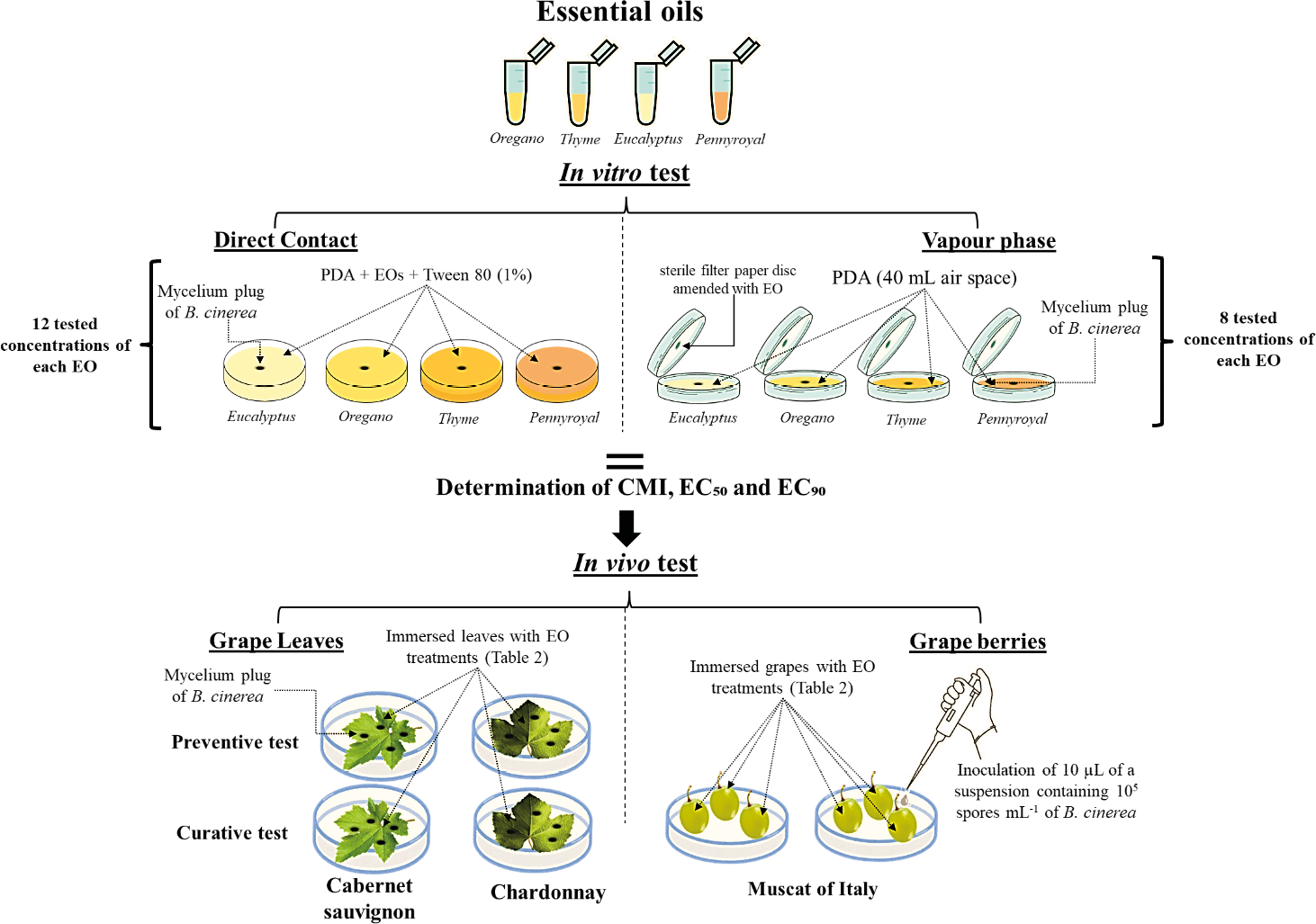
Vapour phase assay to determine the effects of volatile phase, 90 mm Petri dishes were filled with 20 mL of PDA, resulting in a 40 mL air space after adding the agar medium. The middle of each Petri dish was inoculated as previously described. The EOs were pipetted onto sterile filter paper discs (8 mm diameter) to achieve final concentrations of 5.61, 11.23, 22.47, 44.94, 56.17, 67.41, 89.88, and 112.35 µL L-1 of the Petri dish clearance volume (Figure 1) (Zhao et al., 2021). The treated discs were attached to the Petri dish lids (one disc per lid). The dishes were then inverted, immediately sealed with parafilm to prevent the loss of volatile compounds and incubated in the dark at 21 ± 1°C.
For both assays, the mean radial mycelium growth of the pathogen was assessed by measuring colony diameters in two perpendicularly opposite directions, once the surfaces of control Petri dishes were completely covered by the fungus. The inhibition rate of mycelium growth was calculated using the equation (Chen and Dai, 2012):
where (%) is the percentage inhibition of mycelial growth; D1 is the mean value of the colony radius (mm) grown in the PDA-Tween control; and D2 is the colony diameter of the treated fungi.
The fungal growth observed on the last day of cultivation was used to determine the minimum inhibitory concentrations (MIC) and the effective concentrations (EC50 and EC90) of the four essential oils. The MIC was defined as the lowest concentration of EO that completely inhibited mycelium growth of B. cinerea (Parikh et al., 2021). The EC50 and EC90, the concentrations, respectively, at which mycelium growth was inhibited by 50% and 90%. were calculated with dose-response analyses, using R statistical software (Ritz et al., 2015). Three replicates of each treatment were performed in these experiments, and the experiment was carried out twice, with each Petri dish considered as the experimental unit.
Conidium germination assays
Botrytis cinerea was cultured on PDA Petri dishes for 14 d to produce conidia. The conidia were then collected to prepare a conidium suspension, which was adjusted to contain 105 conidia mL-1 using a hemocytometer. Petri dishes were prepared containing water agar and different concentrations of EO (2500, 2000, 1500, 1000, 500, 250, 125, 62.5, and 31.25 µL L-1) dissolved in 1.0% Tween 80 (1%). An aliquot of 40 µL of the B. cinerea conidia solution was added to the agar surface of each dish (Figure 1). Experimental control dishes contained conidia exposed only to Tween 80 (1%). Dishes were then sealed with parafilm to prevent evaporation, and were incubated at 21 ± 1°C for 20 h. Conidium germination was assessed by counting at least 100 randomly selected conidia per replicate using an optical microscope. Conidia were considered to have germinated if the lengths of the germ tubes were equal to, or greater than, the diameter of the conidia (Parikh et al., 2021). The results were expressed as the percentage of conidium germination, which was calculated as follows:
Antifungal efficacy of EOs on detached grapevine leaves
The effectiveness of the four EOs for protecting Vitis vinifera L. ‘Chardonnay’ and ‘Cabernet Sauvignon’ leaves was assessed using inoculation tests with B. cinerea mycelium agar plugs. Young leaves from commercial vineyards, treated with 3 kg ha-1 copper at the time of collection and free of disease lesions, were thoroughly washed with water, then immersed in 1% sodium hypochlorite for 2 min, rinsed three times with sterile distilled water, and were then dried on filter paper. EO treatments were applied by immersing leaves for 1 min in the appropriate solutions, following the experimental design detailed in Table 2 and Figure 1. After treatment, the leaves were each wounded with a sterile needle (four wounds per leaf). Subsequently, 5 mm agar plugs containing fresh mycelium from the edge of actively growing B. cinerea fungal colonies on PDA plates were placed on the wounds, mycelium side down. The inoculated leaves were incubated in closed plastic boxes at 21°C and with a 16 h photoperiod, with filter paper soaked in water to maintain humidity. The effects of the treatments were evaluated by measuring lesion diameters at 120 h post-inoculation (hpi).
| Code | Treatment |
|---|---|
| T- | Treated with sterile distilled water (SDW) + Tween 80 (1%) |
| T+ | Treated with fungicide (fenhexamid) |
| EC50 | Treated simultaneously with the fungus and the EO at EC50 |
| EC90 | Treated simultaneously with the fungus and the EO at EC90 |
| EC50+1 | Treated with EO at EC50 24 h before fungal inoculation |
| EC90+1 | Treated with EO at EC90 1 24 h before fungal inoculation |
Antifungal efficacy of EOs on grape berries
The effects of the four EOs on grape berries was investigated using the methods outlined by Fontana et al. (2021), with slight modifications. Healthy table grapes, Vitis vinifera L. ‘Muscat of Italy’, from contaminants or injuries, were randomly selected and purchased in Meknes City, Morocco. These berries were washed under running water, surface-sterilized with a 1% sodium hypochlorite solution, rinsed three times with distilled water, and then air-dried in a laminar flow hood. (Table 2), the berries were placed in 90 mm diam. Petri dishes without lids, and were secured using double-sided tape, with 12 fruits per treatment. Inoculations were carried out injecting a 10 µL aliquot of a B. cinerea conidium suspension containing 105 conidia mL-1 into the equatorial region of each fruit (Figure 1). The inoculated fruits were then incubated in closed plastic boxes (to maintain high humidity conditions) at 22°C with a 16 h photoperiod. On the final day of evaluation, disease incidence and lesion diameters were analysed. Incidence was determined as presence or absence of typical disease symptoms. Lesion diameter was calculated from the average length and width (cm) of each lesion.
Statistical analyses
All calculations were performed using R statistical software (version 4.3.1), and Data were arcsine-transformed where necessary before statistical analysis. Analyses of variance (ANOVA) were carried out at P ≤ 0.05. Tukey’s HSD test was used to separate means when appropriate (P ≤ 0.05). The EC50 and EC90 values for each assessed EO were calculated using the ‘drc’ package, based on percentage inhibition of mycelium growth. All the histograms presented below were generated using the ‘ggplot2’ package.
Results
Yields and chemical compositions of essential oils
The EOs, extracted through hydrodistillation, ranged in colour from light yellow to brown, with each possessing a distinctive aroma. The yields of these oils varied depending on the plant species. Oreganum elongatum produced the greatest yield (3%), followed by C. citriodora (2.7%, M. pulegium at 3.2, and T. vulgaris (0.7%). The main components of the different EOs assessed in this study are presented in Table 3. Gas chromatography-mass spectrometry (GC-MS) analyses revealed distinct chemical compositions among the EOs. Forty-eight compounds were identified, with 35, 26, 11 and nine compounds detected, respectively, from T. vulgaris, O. elongatum, M. pulegium, and C. citriodora, representing, respectively, 98.4%, 98.9%, 98.67%, and 98.7% of the total oil for T. vulgaris, O. elongatum, M. pulegium, and C. citriodora. The primary constituents of the T. vulgaris EO were thymol (47.8%), p-cymene (24.1%), γ-terpinene (8.2%), and carvacrol (5%). The EO of O. elongatum was primarily composed of carvacrol (61.8%), γ-terpinene (12.5%), p-cymene (8.2%), and thymol (7%). The M. pulegium EO was predominantly pulegone (91.2%), while that from C. citriodora consisted mainly of cineole (78.1%) and α-pinene (12.2%). The main chemical classes identified in the analyses were monoterpenoid phenols (thymol, carvacrol), monoterpenes (γ-terpinene, p-cymene, and α-pinene), monoterpenoid ketone (pulegone), and monoterpenoid ether (cineole).
| Compound | Essential oil | Identification | |||||||||||||||||
|---|---|---|---|---|---|---|---|---|---|---|---|---|---|---|---|---|---|---|---|
| Origanum elongatum | Mentha pulegium | Thymus vulgaris | Corymbia citriodora | ||||||||||||||||
| Thujene | 0.92 | - | 0.57 | - | RI and MS | ||||||||||||||
| α-Pinene | 0.59 | 0.19 | 0.54 | 12.21 | RI and MS | ||||||||||||||
| Camphene | 0.08 | - | 0.16 | - | RI and MS | ||||||||||||||
| β-Pinene | 0.12 | 0.21 | 0.11 | 0.58 | RI and MS | ||||||||||||||
| Octen-3-ol | 1.17 | - | 0.32 | - | RI and MS | ||||||||||||||
| 3-Octanone | 0.10 | - | 0.06 | - | RI and MS | ||||||||||||||
| Myrcene | 1.43 | - | 1.34 | 0.4 | RI and MS | ||||||||||||||
| 3-Octanol | - | 0.41 | 0.06 | - | RI and MS | ||||||||||||||
| α-Phellandrene | 0.22 | - | 0.16 | - | RI and MS | ||||||||||||||
| δ-3-Carene | 0.08 | - | 0.07 | - | RI and MS | ||||||||||||||
| Cineole (Eucalyptol) | - | - | - | 78.11 | RI and MS | ||||||||||||||
| Cis-β-Ocimene | 0.13 | - | - | - | RI and MS | ||||||||||||||
| α-Terpinene | 1.85 | 0.53 | 1.72 | - | RI and MS | ||||||||||||||
| γ-Terpinene | 12.46 | - | 8.19 | - | RI and MS | ||||||||||||||
| Terpinolene | 0.08 | - | 0.10 | - | RI and MS | ||||||||||||||
| cyclohexanone | - | 0.30 | - | - | RI and MS | ||||||||||||||
| Isomaylisovalerate | - | - | - | - | RI and MS | ||||||||||||||
| trans-isopulegone | - | 1.43 | - | - | RI and MS | ||||||||||||||
| 1-oxaspiro-2,5-octane-4-one | - | 0.94 | - | - | RI and MS | ||||||||||||||
| Pulegone | - | 91.18 | - | - | RI and MS | ||||||||||||||
| Pipertenone | - | 1.41 | - | - | RI and MS | ||||||||||||||
| Cyclopentane | - | 0.42 | - | - | RI and MS | ||||||||||||||
| ρ-Cymene | 8.21 | - | 24.13 | 0.79 | RI and MS | ||||||||||||||
| Trans-Ocimene | - | - | - | - | RI and MS | ||||||||||||||
| Limonene | 0.23 | 1.55 | 0.38 | - | RI and MS | ||||||||||||||
| Cis-Linalool Oxide | - | - | 0.09 | - | RI and MS | ||||||||||||||
| Linalool | 0.86 | - | 3.06 | - | RI and MS | ||||||||||||||
| p-Cymenene | - | - | 0.07 | - | RI and MS | ||||||||||||||
| 1,8-Cineole | - | - | 0.12 | - | RI and MS | ||||||||||||||
| Camphor | - | - | 0.05 | - | RI and MS | ||||||||||||||
| Borneol | 0.14 | - | 0.45 | - | RI and MS | ||||||||||||||
| Terpinen-4-ol | 0.42 | - | 0.59 | - | RI and MS | ||||||||||||||
| 2-β-pinene | - | - | - | 5.27 | RI and MS | ||||||||||||||
| Cis-Dishydro Carvone | 0.06 | - | 0.06 | - | RI and MS | ||||||||||||||
| Thymol Methyl Ether | - | - | 0.04 | - | RI and MS | ||||||||||||||
| Carvacrol Methyl Ether | - | - | 0.05 | - | RI and MS | ||||||||||||||
| Carvacrol | 61.78 | - | 5.03 | - | RI and MS | ||||||||||||||
| Thymol | 7.01 | - | 47.79 | - | RI and MS | ||||||||||||||
| (E)Caryophyllene | 1.47 | - | 1.76 | - | RI and MS | ||||||||||||||
| α-Humulene | 0.06 | - | 0.06 | - | RI and MS | ||||||||||||||
| α-Selinene | - | - | 0.04 | - | RI and MS | ||||||||||||||
| α-Murolene | - | - | 0.01 | - | RI and MS | ||||||||||||||
| β-Bisabolene | 0.13 | - | 0.05 | - | RI and MS | ||||||||||||||
| γ-Cadinene | 0.03 | - | 0.07 | - | RI and MS | ||||||||||||||
| δ-Cadinene | 0.06 | - | 0.16 | - | RI and MS | ||||||||||||||
| Caryophyllene Oxide | - | - | 0.80 | - | RI and MS | ||||||||||||||
| Isoaromadendrene | - | - | - | 0.33 | RI and MS | ||||||||||||||
| Aromadendrene | - | - | - | 1 | RI and MS | ||||||||||||||
| δ- gurjunene | - | - | - | 0.35 | RI and MS | ||||||||||||||
| Total | 98.89 | 98.57 | 98.35 | 98.69 | RI and MS | ||||||||||||||
| Yield (%) | 3.00 | 2.17 | 0.7 | 2.67 | |||||||||||||||
| RI: Retention index. MS: Comparison of the mass spectra with the NIST98 NIST98, Wiley275, and CNRS libraries. | |||||||||||||||||||
Effects of essential oils on in vitro mycelium growth of Botrytis cinerea
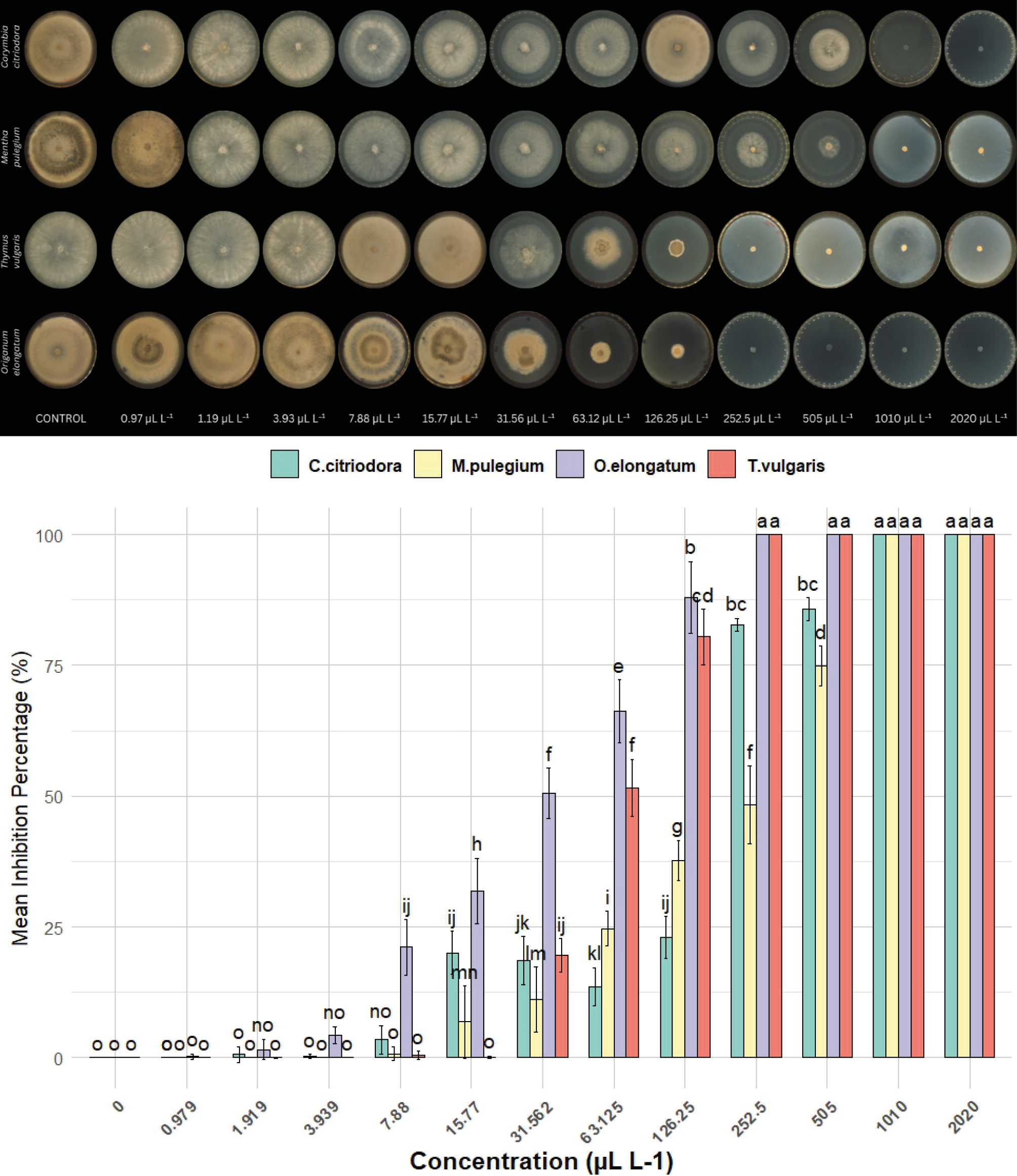
The in vitro direct contact (DC) antifungal activities of EOs from O. elongatum, M. pulegium, T. vulgaris, and C. citriodora at different concentrations against B. cinerea are presented in Figure 2. The minimum inhibitory concentration (MIC), defined as the lowest concentration that inhibited 100% of fungal growth, was 253 µL L-1 for the oils from oregano and thyme, and 1010 µL L-1 for those from pennyroyal and eucalyptus. Mycelium growth (colony diameter) was reduced (P < 0.05) with increasing concentrations of EOs, indicating dose-dependent activities. The mean inhibition zone diameters obtained from determinations of the EO MICs against on B. cinerea are presented in Table 4.
| Essential oil | Methods | R2* | MIC (µL L-1) | EC50 (µL L-1) | 95%Confidence Limits (µL L-1) | EC90 (µL L-1) | 95% Confidence Limits (µL L-1) | ||||||||||||
|---|---|---|---|---|---|---|---|---|---|---|---|---|---|---|---|---|---|---|---|
| O. elongatum | DC* | 0.99 | 252.5 | 33.27 | [30.13-36.41] | 139.17 | [121.46-156.88] | ||||||||||||
| VC* | 0.95 | 56.17 | 12.75 | [11.07-14.44] | 26.56 | [21.76-31.35] | |||||||||||||
| M. pulegium | DC | 0.97 | 1010 | 223.867 | [194.62-253.11] | 816.763 | [644.44-986.08] | ||||||||||||
| VC | 0.97 | 112.35 | 61.347 | [55.30-67.39] | 99.5098 | [81.59-117.42] | |||||||||||||
| T. vulgaris | DC | 0.99 | 252.5 | 59.799 | [53.90-65.69] | 142.040 | [132.68-151.39] | ||||||||||||
| VC | 0.96 | 89.88 | 18.495 | [1652-20.47] | 42.995 | [30.38-55.60] | |||||||||||||
| C. citriodora | DC | 0.94 | 1010 | 176.455 | [137.73-215.17] | 258.78 | [238.71-278.84] | ||||||||||||
| VC | 0.97 | 112.35 | 53.708 | [41.48-65.93] | 99.90 | [64.28-135.51] | |||||||||||||
| *R²: Coefficient of determination. DC = Direct contact assay. VC = Vapor contact assay. | |||||||||||||||||||
The negative control (0 µL L-1 of essential oil) gave no inhibition zone formation, suggesting that the diluent (Tween 80) had no antifungal activity, and did not interfere with the MIC analysis. The EO of O. elongatum was the most suppressive of B. cinerea, reducing growth of B. cinerea at low concentrations. At 7.8 µL L-1, differences (P < 0.05) were observed, with 21.1% inhibition for the oil of O. elongatum, whereas oils from M. pulegium, T. vulgaris, and C. citriodora, gave inhibition rates, respectively, of 0.8, 0.5, and 3.5%. At 31.56 µL L-1, the oregano essential oil gave 50.5% inhibition of the fungus, while the inhibition rates from oils of M. pulegium, T. vulgaris, and C. citriodora were, respectively, 11.1, 19.5, and 18.5%.
The mean essential oil EC50 and EC90 for inhibition of colony size of B. cinerea on PDA after 4 d of incubation are shown in Table 4. These values were derived from dose-response curve regression equations, and are expressed in µL L-1. Oregano oil gave the greatest inhibition of the fungus (mean EC50 = 33.27 µL L-1, mean EC90 = 139.17 µL L-1. The greatest values were from the pennyroyal oil (mean EC50 = 221.74 µL L-1; mean EC90 = 828.26 µL L-1.
In the vapour contact (VC) assays, the fumigant activities of the EOs from O. elongatum, M. pulegium, T. vulgaris, and C. citriodora against B. cinerea were also determined (Figure 3). This activity is different from that assessed in traditional DC assays. Although the antifungal activity trends in the VC assays were similar to those in the DC assays, the inhibitory effects of the oils in the VC assays were significantly more potent. All the assessed EOs inhibited mycelium growth of B. cinerea in dose-dependent ways. Oregano and thyme EOs were more inhibitory effects than those from pennyroyal or Eucalyptus at all the assessed in vitro concentrations.
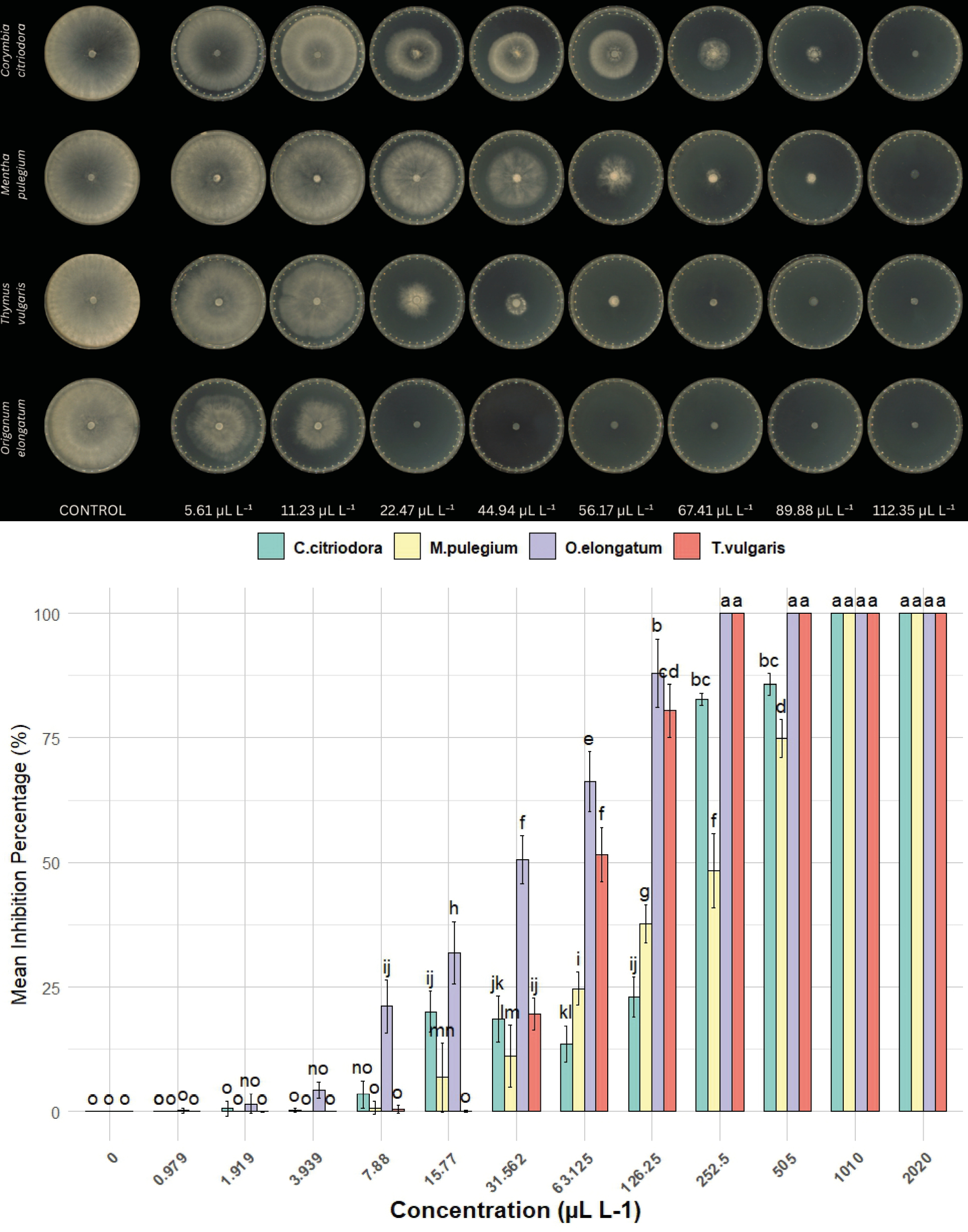
At 44.94 µL L-1, the inhibitory effect of oregano oil was 98.43%, and that of thyme oil was 84.82%, whereas the inhibitory effects of oils from eucalyptus and pennyroyal were, respectively, 48.97% and 26.81%. The mean MICs were 56.17 µL L-1 for oregano EO, 89.88 µL L-1 for thyme EO, and 112.35 µL L-1 for eucalyptus and pennyroyal EOs.
The mean EC50 were estimated using a regression model (Table 4). In VC assays, the mean EC50 were lower than those obtained in the DC assays. The lowest mean EC50 (12.85 µL L-1) resulted from oregano oil, followed by those from thyme EO (19.08 µL L-1), eucalyptus EO (48.11 µL L-1), and pennyroyal EO (61.35 µL L-1).
Effects of essential oils on Botrytis cinerea conidium germination
The effects of different concentrations of the four EOs on the B. cinerea conidium germination of were assessed using direct contact assays. The results presented in Figure 4 indicate that among the EOs tested, only that of oregano completely inhibited conidium germination at 125 μL L-1. In contrast, at the same concentration, the EOs from M. pulegium, T. vulgaris, and C. citriodora gave mean conidium germination rates not exceeding, respectively 29.0%, 47.4%, and 28.7%. At 250 μL L-¹ and greater, toxicity of the EOs to conidia was high, as the germination percentages were 0% for all the EOs except that from C. citriodora, which gave 12.5% germination. It was only at a concentration of 2000 μL L-1 that the C. citriodora EO completely inhibited conidium germination.
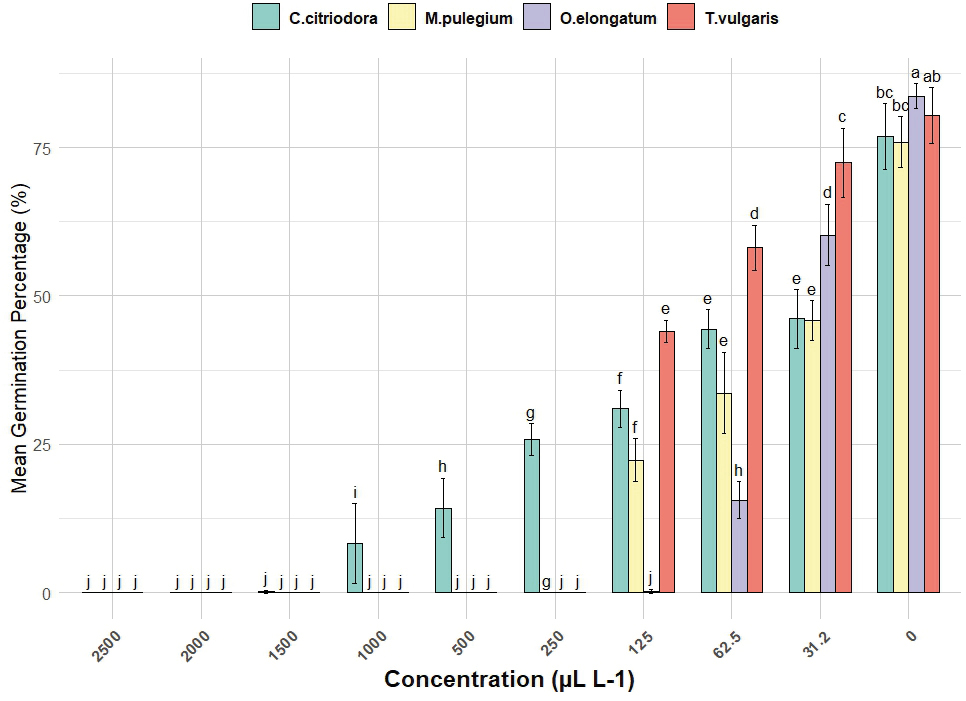
These results also showed that the EO of C. citriodora did not prevent, or only slightly reduced, B. cinerea conidium germination, even at high concentrations (1500 μL L-¹). In contrast, the oregano EO was the most effective against the fungus, even at low concentrations. For all control treatments, which contained only 1% Tween 80, conidium germination exceeded 75%.
In vivo Antifungal assays
Protection assays on detached grapevine leaves
Disease development was also monitored in vivo using the EC50 and EC90 concentrations of each EO that was determined from the in vitro assessments. The test was conducted on ‘Chardonnay’ and ‘Cabernet Sauvignon’ grapevines, which are, respectively, highly susceptible and less susceptible to Botrytis cinerea (Jeandet et al., 1992).
Illustration of the in vivo fungicidal activity of different concentrations of the four EOs against B. cinerea is presented in Figure 5. The B. cinerea isolate used in this experiment causes disease in grape berries. In the direct contact treatment trial, all four EOs applied preventively or simultaneously showed strong antifungal activity compared to untreated leaves, and significantly (P < 0.05) reduced lesion areas.
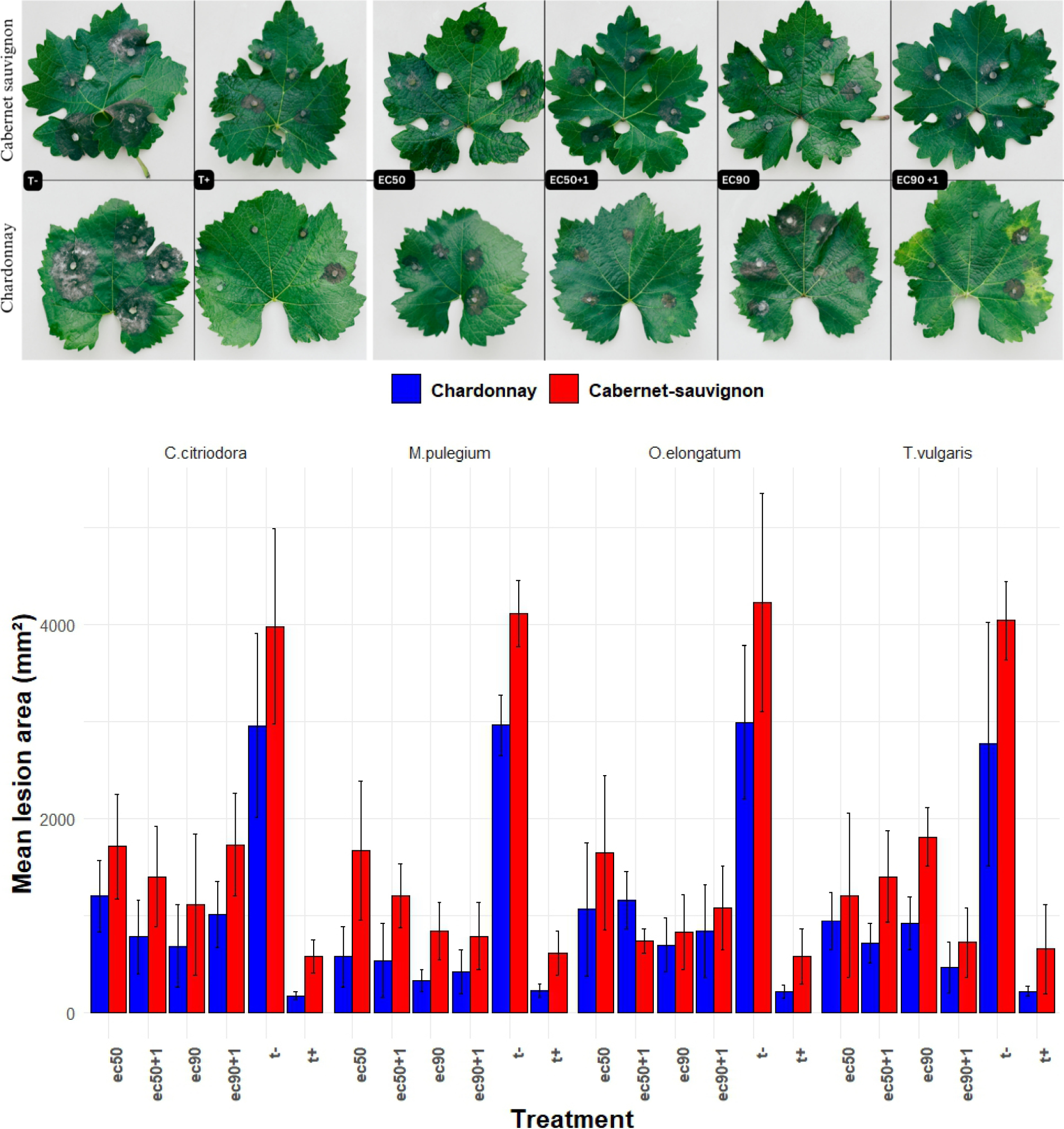
For all treatments, the effectiveness of the EOs was greatest for ‘Cabernet Sauvignon’, with mean lesion size reductions of 84.2% for M. pulegium essential oil, 72.4% for that from T. vulgaris, 68.9% for that from C. citriodora, and 68.6% for the EO from O. elongatum EOs, compared to their respective negative controls. For ‘Chardonnay’, the reductions in mean lesion sizes were 74.6% for the oil from O. elongatum, 72.7% for that from M. pulegium, 68.2% for the oil from T. vulgaris, and 62.6% for the EO from C. citriodora. Ranking of the EOs according to their impacts on leaf lesion sizes in the two grapevine varieties was as follows: The M. pulegium EO (78.5%) was the most effective, followed by that from O. elongatum (71.6%), from T. vulgaris (70.3%) and from C. citriodora (65.7%).
Protection assays on berry grapevine
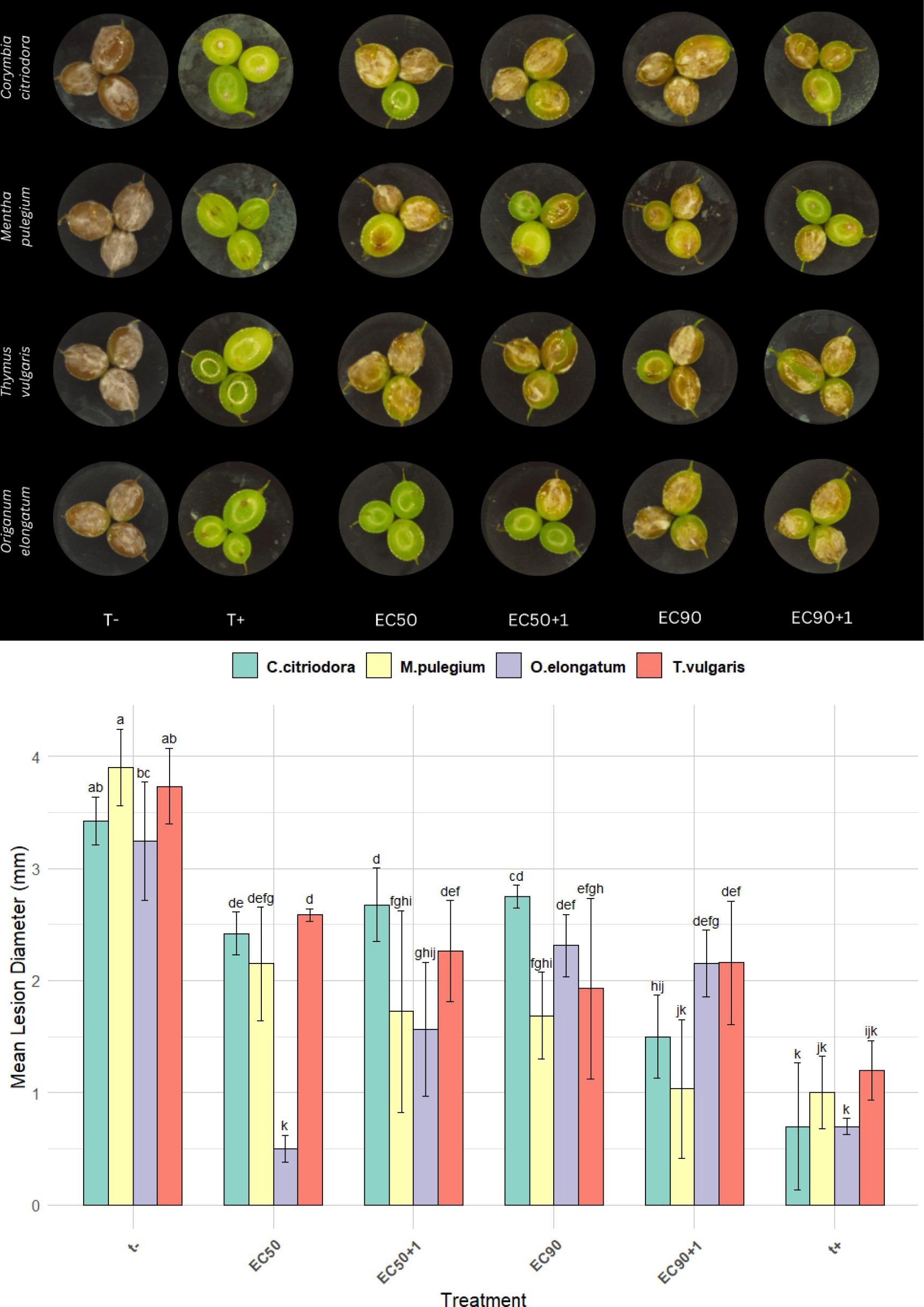
The effects of EOs from O. elongatum, M. pulegium, T. vulgaris and C. citriodora on development of Botrytis cinerea in wound-inoculated grape berries of ‘Muscat of Italy’ are shown in Figure 6. All treatments reduced the incidence and development of gray mold at 22°C over a 6 d storage period. All the grape berries not treated with the EOs were almost completely infected by the fungus. The results showed that the four EOs inhibited fungal growth, but their effectiveness varied. The most effective EO was from M. pulegium causing a 57.7% reduction in mean lesion diameter, followed by the EO from O. elongatum (49.7% reduction), then T. vulgaris (40.1%) and C. citriodora with 31.7% reduction, compared with the negative experimental controls. The most effective treatment was the preventive application of Eucalyptus, pennyroyal and thymus EOs, which reduced average lesion diameters in grape berries. For the oregano EO, the treatment resulted in the smallest lesions. The EOs showed no phytotoxic effects on the grape fruit tissues at all studied concentrations.
Discussion
Essential oils from plants and their chemical components have long been studied for their antifungal activities, particularly within sustainable environmental practices to enhance agricultural yields and food storage durability (Carrubba and Catalano, 2009; El-Mohamedy, 2017; Habbadi et al., 2018; Cheng et al., 2024; Nunes et al., 2024; Wike et al., 2024). Grapevine has also been the subject of research into alternative treatments using EOs to treat fungal infections, particularly gray mold, which is a major cause of fruit losses (Antonov et al., 1997; Walter et al., 2001; Tripathi et al., 2008; Burggraf and Rienth, 2020). Although numerous studies have reported inhibition of B. cinerea by EOs in vitro, none have assessed the in vivo protective effects of EOs on grape berries and vegetative organs of the grape varieties, ‘Cabernet Sauvignon’ and ‘Chardonnay’, which have, respectively, intermediate resistance and susceptibility to B. cinerea (Jeandet et al., 1992). The present study investigated the chemical composition and in vitro antifungal activity of EOs from O. elongatum, M. pulegium, T. vulgaris and C. citriodora in direct contact and vapour contact B. cinerea mycelium growth and spore germination assays. The study also evaluated effects of these EOs on detached grapevine leaves of two grapevine varieties and on grape berries in vivo.
The main constituents of the four EOs found in the present study (Table 2) corroborate those reported in the literature. Lemon eucalyptus EO was contained cineole and α-pinene (Low et al., 1974; Ramezani et al., 2002), while carvacrol was prominent in O. elongatum EO, and thymol in T. vulgaris EO. These results are comparable with previous research (Sivropoulou et al., 1996; Dorman et al., 2000; Aligiannis et al., 2001; Burt, 2004). However, other studies have shown that the chemical composition of thyme and oregano EOs can vary greatly depending on the plant chemotype assessed, and that the antifungal activity of the EO can vary significantly (Daferera et al., 2003; Della Pepa et al., 2019; Drioiche et al., 2022). Pennyroyal is associated with pulegone (see figure S2). This high concentration of pulegone is supported by numerous studies, which also report pulegone as the main constituent (Kokkini et al., 2002; Stoyanova et al., 2005), while other studies have reported lower pulegone levels but high amounts of menthone/isomenthone, piperitenone/piperitone, or piperitone (Lorenzo et al., 2002; El-Ghorab, 2006; Ait-Ouazzou et al., 2012; Abdelli et al., 2016; Brahmi et al., 2016). Variabilities in chemical composition could be related to effects of geographical location, genetic factors, collection period, and extraction techniques (Mechergui et al., 2016; Elansary et al., 2018). Data from the present study indicate qualitative and quantitative variations in the EO compositions of the four investigated plant species. However, GC-MS analyses have shown that terpenoids and terpenes predominate in all the four oils examined.
The present study presents in vitro inhibition proportions of B. cinerea through direct contact of the pathogen with different EOs at various concentrations. The MIC at which no fungal growth was observed for the oregano oil was is 252.5 μL L-1, greater than 125 μL L-1 reported by Zhao et al. (2021), and that obtained by Yilmaz et al. (2016), but less than the 0.5 mg mL-1 obtained by Hou et al. (2020) for O. vulgare EO. For thyme EO, the MIC was also 252.5 μL L-1, which is less than the 800 μL L-1 obtained by Abdolahi et al. (2010) , the 400 μL L-1 obtained by Fathi et al. (2012), but similar to the 200 μg mL-1 reported by Daferera et al. (2003). The MIC for pennyroyal is 1010 μL L-1, which is less than the 2660 μL L-1 obtained by Aouadi et al. (2022), but greater than the 250 ppm obtained by Singh and Pandey (2018). Similarly, the MIC for lemon Eucalyptus oil was 1010 μL L-1, which is greater than the MIC reported by Tripathi et al. (2008).
The present study results show that oregano and thyme EOs were effective against B. cinerea, even at very low concentrations. This efficacy may be due to the presence of thymol and carvacrol (see figure S2) as major components in these two EOs. This observation is supported by the results of Zhang et al. (2019), who showed that thymol and carvacrol had antifungal activity against B. cinerea at low concentrations compared to crude EO (Hou et al., 2020), inducing clear morphological changes in fungus hyphae. Zhao et al. (2021) also obtained similar results, where thymol and carvacrol at 125 mg L-1 completely suppressed gray mold. In addition, p-cymene, present as a major component in the two EOs, completely inhibited B. cinerea growth at 80.0 μg L-1, as observed in the study by Pinto et al. (2020). Efficacy of Eucalyptus and pennyroyal EOs requires high concentrations to maintain significant in vitro inhibition of B. cinerea.
In the vapour contact assays, oregano EO gave an MIC of 44.9 μL L-1, differing from the value of 31.25 mg L-1 obtained by Zhao et al. (2021). For thyme EO, the MIC was 89.88 μL L-1, greater than the 45.45 μL L-1 reported by Álvarez-García et al. (2023). These results confirm those obtained through the direct contact method, demonstrating that, of the four oils studied, that from oregano EO was the most inhibitory of B. cinerea, followed by the EO from thyme. This efficacy is likely to be due to thymol and carvacrol, which induce morphological changes by disrupting the B. cinerea mycelium and hyphal structure (Abbaszadeh et al., 2014; Elshafie et al., 2015), whereas the oils from pennyroyal and eucalyptus had reduced efficacy at low concentrations. However, the inhibitory effects of the oils in the vapor contact assays were stronger. To explain this toxicity difference, the pathogen may have been more exposed to the volatile substances released in the closed environment of the VC assay, whereas in a DC assay, the mycelia are only exposed to a small portion of a substance on the surface of the agar in assay plates. Consequently, inhibitory effects on the mycelium growth of B. cinerea in the VC assays was greater than in the DC assays, as was confirmed by Soylu et al. (2010).
Inhibition of conidium germination is crucial for evaluating the efficacy of EOs, as conidium germination is the starting point for fungal infection (Agrios, 2008). Additionally, germination leads to eventual multiplication and dissemination of pathogenic fungi. Previous studies have shown that T. vulgaris oil suppresses the germination of B. cinerea at 1000 μL L-1 (Fincheira et al., 2023), a concentration greater than the 250 μL L-1 obtained in the present study with the same EO. For the oregano oil, the values obtained were 250 μL L-1, which is less than the 3.2 μg mL-1 reported by Soylu et al. (2010) for oregano oil. For the inhibitory effect of Eucalyptus EO on conidium germination, Aguiar et al. (2014) found that at 150 mg L-1, spore germination of three assessed fungi was completely inhibited. Inhibition of fungal spore germination strongly depends on the applied EO and its concentration (Fincheira et al., 2023). Therefore, it is likely that suppression of spore germination by EO treatments could contribute to limiting the spread of B. cinerea by reducing the conidium load.
Grapevine leaves were chosen in the present study for the in vivo test because young leaves emerging at bud burst are the primary sources of B. cinerea inoculum (Balasubramaniam, 1997). The objective of the test was to evaluate whether the potential of EOs depends on the grape variety tested and the mode of application (simultaneous or preventive). The experiment showed that ‘Cabernet Sauvignon’ was better protected by the direct application of EOs, regardless of the treatment, compared to ‘Chardonnay’.
The treatments applied during the tests did not inhibit fungal growth in a dose-dependent manner. For treatments with the EC50 doses, the preventive treatments (EC50+1) were more effective than the concomitant treatments. However, for the EC90 doses, the concomitant treatments were more effective. Although all EOs were effective in reducing fungal infections, the M. pulegium EO was the most effective in controlling infections caused by B. cinerea on detached leaves of both grapevine varieties. Aouadi et al. (2022) reported in a subsequent study that, during in vivo tests, M. pulegium EO completely suppressed, by direct contact, gray mold on strawberries previously inoculated with B. cinerea conidia. Oumzil et al. (2002) demonstrated that pulegone inhibited all tested microorganisms and was the most effective against three assessed fungi. De Sousa Barros et al. (2015) studied the functional properties of EOs from different Mentha species, demonstrating that oils rich in pulegone exhibited significant antifungal activity against Microsporum canis and Trichophyton rubrum. Pulegone, a monoterpene ketone, is the principal component of Mentha pulegium EO. This compound has an important role in the antimicrobial activity of the EO (Areco et al., 2024). The second in vivo experiment of the present study was carried out on detached grape berries, to determine effectiveness of direct contact treatments. All the applied treatments resulted in reductions in B. cinerea lesion diameter. Inhibition of fungal growth on the berries varied according to the different EOs and treatments. These results are consistent with those from other studies conducted on harvested fruits and vegetables from growing plants. Soylu et al., (2010) demonstrated the ability of EOs from oregano, lavender and rosemary, applied in contact and vapour forms, to reduce disease on tomatoes infected by B. cinerea.
The present study did not assess in vivo fumigation effectiveness of EOs against B. cinerea on leaves and grapes berries. Further research is therefore required to investigate the vapour contact effects against B. cinerea of EOs on grape berries. It would be particularly interesting to conduct in vivo fumigation tests to avoid direct contact of the EOs with food commodities, therefore maintaining the organoleptic features of these oils and avoiding the alterations that occur during soaking treatments. Increasing resistance of pathogens to fungicides, and awareness of the dangers associated with the intensive use of pesticides indicate that EOs from oregano, thyme, pennyroyal and lemon Eucalyptus have potential to be effective and sustainable alternatives to conventional phytosanitary products. The present study confirms the antifungal activity of the EOs tested, which at low doses effectively protected grapevine organs against gray mold under controlled conditions. These results pave the way for more extensive studies to evaluate their long-term effectiveness of these oils under field conditions.
Conclusions
In this study, the essential oils of Origanum elongatum, Mentha pulegium, Thymus vulgaris, and Corymbia citriodora exhibited strong antifungal activity against Botrytis cinerea, a phytopathogenic fungus of major importance. In vitro and in vivo tests both confirmed effectiveness of these oils, suggesting that they could serve as viable alternatives to synthetic chemical fungicides for disease management. However, further innovation is needed to develop practical application techniques for the use of essential oils in agriculture and food production industries.
Acknowledgements
This research was funded by PRIMA-MiDiVine project 1564 coordinated by Aziz Aziz, 2021/2025 (https://www.univ-reims.fr/MiDiVine/, accessed on 1 January 2025) (Innovative Approaches Promoting Functional Microbial Diversity for Sustainable Grapevine Health and Productivity in Vineyard Systems of Mediterranean Areas), supported by the European Union, with co-funding by MESRSI (Morocco).
Literature cited
Abbaszadeh S., Sharifzadeh A., Shokri H., Khosravi A.R., Abbaszadeh A., 2014. Antifungal efficacy of thymol, carvacrol, eugenol and menthol as alternative agents to control the growth of food-relevant fungi. Journal de Mycologie Médicale 24: e51–e56. https://doi.org/10.1016/j.mycmed.2014.01.063
Abdelli M., Moghrani H., Aboun A., Maachi R., 2016. Algerian Mentha pulegium L. leaves essential oil: Chemical composition, antimicrobial, insecticidal and antioxidant activities. Industrial Crops and Products 94: 197–205. https://doi.org/10.1016/j.indcrop.2016.08.042
Abdolahi A., Hassani A., Ghuosta Y., Bernousi I., Meshkatalsadat M.H., 2010. In vitro efficacy of four plant essential oils against Botrytis cinerea Pers.:Fr. and Mucor piriformis A. Fischer. Journal of Essential Oil Bearing Plants 13: 97–107. https://doi.org/10.1080/0972060X.2010.10643796
Adams R.P., 2007. Identification of essential oil components by gas chromatography mass spectroscopy. Carol stream, Ill, Allured publishing corporation, 804 pp.
Adaskaveg J.E., Förster H., Prusky D.B. (eds), 2022. Postharvest pathology of fruit and nut crops. The American Phytopathological Society.
Agrios G.N., 2008. Plant Pathology. Amsterdam, Elsevier Academic Press, 922 pp.
Aguiar R.W.D.S., Ootani M.A., Ascencio S.D., Ferreira T.P.S., Santos M.M.D., Santos G.R.D., 2014. Fumigant Antifungal Activity of Corymbia citriodora and Cymbopogon nardus Essential Oils and Citronellal against Three Fungal Species. The Scientific World Journal 2014: 1–8. https://doi.org/10.1155/2014/492138
Ait-Ouazzou A., Lorán S., Arakrak A., Laglaoui A., Rota C., … Conchello P., 2012. Evaluation of the chemical composition and antimicrobial activity of Mentha pulegium, Juniperus phoenicea, and Cyperus longus essential oils from Morocco. Food Research International 45: 313–319. https://doi.org/10.1016/j.foodres.2011.09.004
Aligiannis N., Kalpoutzakis E., Mitaku S., Chinou I.B., 2001. Composition and antimicrobial activity of the essential oils of two Origanum species. Journal of Agricultural and Food Chemistry 49: 4168–4170. https://doi.org/10.1021/jf001494m
Almasaudi N.M., Al-Qurashi A.D., Elsayed M.I., Abo-Elyousr K.A.M., 2022. Essential oils of oregano and cinnamon as an alternative method for control of gray mold disease of table grapes caused by Botrytis cinerea. Journal of Plant Pathology 104: 317–328. https://doi.org/10.1007/s42161-021-01008-8
Álvarez-García S., Moumni M., Romanazzi G., 2023. Antifungal activity of volatile organic compounds from essential oils against the postharvest pathogens Botrytis cinerea, Monilinia fructicola, Monilinia fructigena, and Monilinia laxa. Frontiers in Plant Science 14: 1274770. https://doi.org/10.3389/fpls.2023.1274770
Antonov A., Stewart A., Walter M., 1997. Inhibition of conidium germination and mycelial growth of Botrytis cinerea by natural products. Proceedings of the New Zealand Plant Protection Conference 50: 159–164. https://doi.org/10.30843/nzpp.1997.50.11289
Aouadi G., Grami L.K., Taibi F., Bouhlal R., Elkahoui S., … Mediouni Ben Jemâa J., 2022. Assessment of the efficiency of Mentha pulegium essential oil to suppress contamination of stored fruits by Botrytis cinerea. Journal of Plant Diseases and Protection 129: 881–893. https://doi.org/10.1007/s41348-022-00623-6
Aoujil F., Litskas V., Yahyaoui H., El Allaoui N., Benbouazza A., … Habbadi K., 2024. Sustainability indicators for the environmental impact assessment of plant protection products use in Moroccan vineyards. Horticulturae 10: 473. https://doi.org/10.3390/horticulturae10050473
Areco V.A., Achimón F., Almirón C., Nally M.C., Zunino M.P., Yaryura P., 2024. Antifungal activity of essential oils rich in ketones against Botrytis cinerea: New strategy for biocontrol. Biocatalysis and Agricultural Biotechnology 59: 103233. https://doi.org/10.1016/j.bcab.2024.103233
Balasubramaniam A., 1997. Neuropeptide Y Family of Hormones: Receptor subtypes and antagonists. Peptides 18: 445–457. https://doi.org/10.1016/S0196-9781(96)00347-6
Bi K., Liang Y., Mengiste T., Sharon A., 2023. Killing softly: a roadmap of Botrytis cinerea pathogenicity. Trends in Plant Science 28: 211–222. https://doi.org/10.1016/j.tplants.2022.08.024
Boddy L., 2016. Pathogens of Autotrophs. In: The Fungi, Elsevier, 245–292.
Brahmi F., Abdenour A., Bruno M., Silvia P., Alessandra P., … Mohamed C., 2016. Chemical composition and in vitro antimicrobial, insecticidal and antioxidant activities of the essential oils of Mentha pulegium L. and Mentha rotundifolia (L.) Huds growing in Algeria. Industrial Crops and Products 88: 96–105. https://doi.org/10.1016/j.indcrop.2016.03.002
Burggraf A., Rienth M., 2020. Origanum vulgare essential oil vapor impedes Botrytis cinerea development on grapevine (Vitis vinifera) fruit. Phytopathologia Mediterranea 59: 331–344. https://doi.org/10.14601/Phyto-11605
Burt S., 2004. Essential oils: their antibacterial properties and potential applications in foods – a review. International Journal of Food Microbiology 94: 223–253. https://doi.org/10.1016/j.ijfoodmicro.2004.03.022
Carrubba A., Catalano C., 2009. Essential oil crops for sustainable agriculture – A Review. In: Climate Change, Intercropping, Pest Control and Beneficial Microorganisms (E. Lichtfouse, ed.), Dordrecht, Springer Netherlands, 137–187.
Chang Y., Harmon P.F., Treadwell D.D., Carrillo D., Sarkhosh A., Brecht J.K., 2022. Biocontrol Potential of essential oils in organic Horticulture systems: From Farm to Fork. Frontiers in Nutrition 8: 805138. https://doi.org/10.3389/fnut.2021.805138
Chen Y., Dai G., 2012. Antifungal activity of plant extracts against Colletotrichum lagenarium, the causal agent of anthracnose in cucumber. Journal of the Science of Food and Agriculture 92: 1937–1943. https://doi.org/10.1002/jsfa.5565
Cheng C., He X., Li H., Zhang Y., Sun S., … Li Y., 2024. Study on the antibacterial activity of Litsea essential oil nanoemulsion and its effect on the storage quality of duck meat. Journal of Molecular Liquids 410: 125610. https://doi.org/10.1016/j.molliq.2024.125610
Daferera D.J., Ziogas B.N., Polissiou M.G., 2003. The effectiveness of plant essential oils on the growth of Botrytis cinerea, Fusarium sp. and Clavibacter michiganensis subsp. michiganensis. Crop Protection 22: 39–44. https://doi.org/10.1016/S0261-2194(02)00095-9
De Sousa Barros A., De Morais S.M., Ferreira P.A.T., Vieira Í.G.P., Craveiro A.A., … De Sousa H.A., 2015. Chemical composition and functional properties of essential oils from Mentha species. Industrial Crops and Products 76: 557–564. https://doi.org/10.1016/j.indcrop.2015.07.004
Della Pepa T., Elshafie H.S., Capasso R., De Feo V., Camele I., … Caputo L., 2019. Antimicrobial and phytotoxic activity of Origanum heracleoticum and O. majorana Essential oils growing in Cilento (Southern Italy). Molecules 24: 2576. https://doi.org/10.3390/molecules24142576
Di Francesco A., Aprea E., Gasperi F., Parenti A., Placì N., … Baraldi E., 2022. Apple pathogens: Organic essential oils as an alternative solution. Scientia Horticulturae 300: 111075. https://doi.org/10.1016/j.scienta.2022.111075
Dorman H.J.D., Figueiredo A.C., Barroso J.G., Deans S.G., 2000. In vitro evaluation of antioxidant activity of essential oils and their components. Flavour and Fragrance Journal 15: 12–16. https://doi.org/10.1002/(SICI)1099-1026(200001/02)15:1<12::AID-FFJ858>3.0.CO;2-V
Drioiche A., Zahra Radi F., Ailli A., Bouzoubaa A., Boutakiout A., … Zair T., 2022. Correlation between the chemical composition and the antimicrobial properties of seven samples of essential oils of endemic Thymes in Morocco against multi-resistant bacteria and pathogenic fungi. Saudi Pharmaceutical Journal 30: 1200–1214. https://doi.org/10.1016/j.jsps.2022.06.022
Elansary H.O., Abdelgaleil S.A.M., Mahmoud E.A., Yessoufou K., Elhindi K., El-Hendawy S., 2018. Effective antioxidant, antimicrobial and anticancer activities of essential oils of horticultural aromatic crops in northern Egypt. BMC Complementary and Alternative Medicine 18: 214. https://doi.org/10.1186/s12906-018-2262-1
El-Ghorab A.H., 2006. The Chemical Composition of the Mentha pulegium L. Essential oil from Egypt and its antioxidant activity. Journal of Essential Oil Bearing Plants 9: 183–195. https://doi.org/10.1080/0972060X.2006.10643491
El-Mohamedy R.S.R., 2017. Plant essential oils for controlling plant pathogenic Fungi. In: Volatiles and Food Security (D.K. Choudhary, A.K. Sharma, P. Agarwal, A. Varma and N. Tuteja, ed.), Singapore, Springer Singapore, 171–198.
Elshafie H.S., Mancini E., Camele I., Martino L.D., De Feo V., 2015. In vivo antifungal activity of two essential oils from Mediterranean plants against postharvest brown rot disease of peach fruit. Industrial Crops and Products 66: 11–15. https://doi.org/10.1016/j.indcrop.2014.12.031
Fathi Z., Hassani A., Ghosta Y., Abdollahi A., Meshkatalsadat M.H., 2012. The potential of Thyme, Clove, Cinnamon and Ajowan essential oils in inhibiting the growth of Botrytis cinerea and Monilinia fructicola. Journal of Essential Oil Bearing Plants 15: 38–47. https://doi.org/10.1080/0972060X.2012.10644017
Fincheira P., Jofré I., Espinoza J., Levío-Raimán M., Tortella G., … Rubilar O., 2023. The efficient activity of plant essential oils for inhibiting Botrytis cinerea and Penicillium expansum: Mechanistic insights into antifungal activity. Microbiological Research 277: 127486. https://doi.org/10.1016/j.micres.2023.127486
Fontana D.C., Neto D.D., Pretto M.M., Mariotto A.B., Caron B.O., … Schmidt D., 2021. Using essential oils to control diseases in strawberries and peaches. International Journal of Food Microbiology 338: 108980. https://doi.org/10.1016/j.ijfoodmicro.2020.108980
Habbadi K., Meyer T., Vial L., Gaillard V., Benkirane R., … Lavire C., 2018. Essential oils of Origanum compactum and Thymus vulgaris exert a protective effect against the phytopathogen Allorhizobium vitis. Environmental Science and Pollution Research 25: 29943–29952. https://doi.org/10.1007/s11356-017-1008-9
Hong J.K., Sook Jo Y., Jeong D.H., Woo S.M., Park J.Y., … Park C.-J., 2023. Vapors from plant essential oils to manage tomato grey mold caused by Botrytis cinerea. Fungal Biology 127: 985–996. https://doi.org/10.1016/j.funbio.2023.02.002
Hou H., Zhang X., Zhao T., Zhou L., 2020. Effects of Origanum vulgare essential oil and its two main components, carvacrol and thymol, on the plant pathogen Botrytis cinerea. PeerJ 8: e9626. https://doi.org/10.7717/peerj.9626
Hua L., Yong C., Zhanquan Z., Boqiang L., Guozheng Q., Shiping T., 2018. Pathogenic mechanisms and control strategies of Botrytis cinerea causing post-harvest decay in fruits and vegetables. Food Quality and Safety 2: 111–119. https://doi.org/10.1093/fqsafe/fyy016
Jeandet P., Sbaghi M., Bessis R., 1992. The production of resveratrol (3,5,4’‐trihydroxystilbene) by grapevine in vitro cultures, and its application to screening for grey mold resistance. Journal of Wine Research 3: 47–57. https://doi.org/10.1080/09571269208717914
Kokkini S., Hanlidou E., Karousou R., Lanaras T., 2002. Variation of pulegone content in Pennyroyal (Mentha pulegium L.) Plants growing wild in Greece. Journal of Essential Oil Research 14: 224–227. https://doi.org/10.1080/10412905.2002.9699830
Li Y., Shao X., Xu J., Wei Y., Xu F., Wang H., 2017. Tea tree oil exhibits antifungal activity against Botrytis cinerea by affecting mitochondria. Food Chemistry 234: 62–67. https://doi.org/10.1016/j.foodchem.2017.04.172
López‐Meneses A.K., Sánchez‐Mariñez R.I., Quintana‐Obregón E.A., Parra‐Vergara N.V., González‐Aguilar G.A., … Cortez‐Rocha M.O., 2017. In vitro Antifungal activity of essential oils and major components against fungi plant pathogens. Journal of Phytopathology 165: 232–237. https://doi.org/10.1111/jph.12554
Lorenzo D., Paz D., Dellacassa E., Davies P., Vila R., Cañigueral S., 2002. Essential oils of Mentha pulegium and Mentha rotundifolia from Uruguay. Brazilian Archives of Biology and Technology 45: 519–524. https://doi.org/10.1590/S1516-89132002000600016
Low D., Rawal B., Griffin W., 1974. Antibacterial action of the essential oils of some australian myrtaceae with special references to the activity of chromatographic fractions of oil of eucalyptus citriodora. Planta Medica 26: 184–189. https://doi.org/10.1055/s-0028-1097987
Maurya A., Prasad J., Das S., Dwivedy A.K., 2021. Essential oils and their application in food safety. Frontiers in Sustainable Food Systems 5: 653420. https://doi.org/10.3389/fsufs.2021.653420
Mechergui K., Jaouadi W., Coelho J.P., Khouja M.L., 2016. Effect of harvest year on production, chemical composition and antioxidant activities of essential oil of oregano (Origanum vulgare subsp glandulosum (Desf.) Ietswaart) growing in North Africa. Industrial Crops and Products 90: 32–37. https://doi.org/10.1016/j.indcrop.2016.06.011
Moghaddam M., Mehdizadeh L., 2016. Essential oil and antifungal therapy. In: Recent Trends in Antifungal Agents and Antifungal Therapy (A. Basak, R. Chakraborty and S.M. Mandal, eds.), New Delhi, Springer India, 29–74.
Nazzaro F., Fratianni F., Coppola R., Feo V.D., 2017. Essential oils and antifungal activity. Pharmaceuticals 10: 86. https://doi.org/10.3390/ph10040086
Notte A.-M., Plaza V., Marambio-Alvarado B., Olivares-Urbina L., Poblete-Morales M., … Castillo L., 2021. Molecular identification and characterization of Botrytis cinerea associated to the endemic flora of semi-desert climate in Chile. Current Research in Microbial Sciences 2: 100049. https://doi.org/10.1016/j.crmicr.2021.100049
Nunes M.R., Agostinetto L., Da Rosa C.G., Sganzerla W.G., Pires M.F., … Zinger F.D., 2024. Application of nanoparticles entrapped orange essential oil to inhibit the incidence of phytopathogenic fungi during storage of agroecological maize seeds. Food Research International 175: 113738. https://doi.org/10.1016/j.foodres.2023.113738
Orozco-Mosqueda Ma.D.C., Kumar A., Fadiji A.E., Babalola O.O., Puopolo G., Santoyo G., 2023. Agroecological management of the grey mold fungus Botrytis cinerea by Plant Growth-Promoting Bacteria. Plants 12: 637. https://doi.org/10.3390/plants12030637
Oumzil H., Ghoulami S., Rhajaoui M., Ilidrissi A., Fkih‐Tetouani S., … Benjouad A., 2002. Antibacterial and antifungal activity of essential oils of Mentha suaveolens. Phytotherapy Research 16: 727–731. https://doi.org/10.1002/ptr.1045
Parikh L., Agindotan B.O., Burrows M.E., 2021. Antifungal activity of plant-derived essential oils on pathogens of pulse crops. Plant Disease 105: 1692–1701. https://doi.org/10.1094/PDIS-06-20-1401-RE
Pinto L., Bonifacio M.A., De Giglio E., Cometa S., Logrieco A.F., Baruzzi F., 2020. Unravelling the antifungal effect of red Thyme oil (Thymus vulgaris L.) Compounds in vapor phase. Molecules 25: 4761. https://doi.org/10.3390/molecules25204761
Ramezani H., Singh H.P., Batish D.R., Kohli R.K., 2002. Antifungal activity of the volatile oil of Eucalyptus citriodora. Fitoterapia 73: 261–262. https://doi.org/10.1016/S0367-326X(02)00065-5
Ritz C., Baty F., Streibig J.C., Gerhard D., 2015. Dose-response analysis using R. PLOS ONE (Y. Xia, ed.) 10: e0146021. https://doi.org/10.1371/journal.pone.0146021
Šernaitė L., Rasiukevičiūtė N., Valiuškaitė A., 2020. The extracts of Cinnamon and Clove as potential biofungicides against strawberry Grey Mold. Plants 9: 613. https://doi.org/10.3390/plants9050613
Shao W., Zhao Y., Ma Z., 2021. Advances in understanding fungicide resistance in Botrytis cinerea in China. Phytopathology® 111: 455–463. https://doi.org/10.1094/PHYTO-07-20-0313-IA
Singh K., Deepa N., Chauhan S., Tandon S., Verma R.S., Singh A., 2024. Antifungal action of 1,8 cineole, a major component of Eucalyptus globulus essential oil against Alternaria tenuissima via overproduction of reactive oxygen species and downregulation of virulence and ergosterol biosynthetic genes. Industrial Crops and Products 214: 118580. https://doi.org/10.1016/j.indcrop.2024.118580
Singh P., Pandey A.K., 2018. Prospective of essential oils of the Genus Mentha as biopesticides: A Review. Frontiers in Plant Science 9: 1295. https://doi.org/10.3389/fpls.2018.01295
Sivropoulou A., Papanikolaou E., Nikolaou C., Kokkini S., Lanaras T., Arsenakis M., 1996. Antimicrobial and cytotoxic activities of Origanum Essential Oils. Journal of Agricultural and Food Chemistry 44: 1202–1205. https://doi.org/10.1021/jf950540t
Soylu E.M., Kurt Ş., Soylu S., 2010. In vitro and in vivo antifungal activities of the essential oils of various plants against tomato grey mold disease agent Botrytis cinerea. International Journal of Food Microbiology 143: 183–189. https://doi.org/10.1016/j.ijfoodmicro.2010.08.015
Stoyanova A., Georgiev E., Kula J., Majda T., 2005. Chemical composition of the essential oil of Mentha pulegium L. from Bulgaria. Journal of Essential Oil Research 17: 475–476. https://doi.org/10.1080/10412905.2005.9698968
Tang X., Shao Y.-L., Tang Y.-J., Zhou W.-W., 2018. Antifungal activity of essential oil compounds (Geraniol and Citral) and inhibitory mechanisms on grain pathogens (Aspergillus flavus and Aspergillus ochraceus). Molecules 23: 2108. https://doi.org/10.3390/molecules23092108
Tripathi P., Dubey N.K., Shukla A.K., 2008. Use of some essential oils as post-harvest botanical fungicides in the management of grey mold of grapes caused by Botrytis cinerea. World Journal of Microbiology and Biotechnology 24: 39–46. https://doi.org/10.1007/s11274-007-9435-2
Walter M., Jaspers M.V., Eade K., Frampton C.M., Stewart A., 2001. Control of Botrytis cinerea in grape using thyme oil. Australasian Plant Pathology 30: 21–25. https://doi.org/10.1071/AP0059
Wike N.Y., Olaniyan O.T., Adetunji C.O., Adetunji J.B., Akinbo O., … Yerima M.B., 2024. Stability of essential oil during different types of food processing and storage and their role in postharvest management of fruits and vegetables. In: Applications of Essential Oils in the Food Industry, Elsevier, 281–284.
Williamson B., Tudzynski B., Tudzynski P., Van Kan J.A.L., 2007. Botrytis cinerea: the cause of grey mold disease. Molecular Plant Pathology 8: 561–580. https://doi.org/10.1111/j.1364-3703.2007.00417.x
Xu W.-T., Huang K.-L., Guo F., Qu W., Yang J.-J., … Luo Y.-B., 2007. Postharvest grapefruit seed extract and chitosan treatments of table grapes to control Botrytis cinerea. Postharvest Biology and Technology 46: 86–94. https://doi.org/10.1016/j.postharvbio.2007.03.019
Xueuan R., Dandan S., Zhuo L., Qingjun K., 2018. Effect of mint oil against Botrytis cinerea on table grapes and its possible mechanism of action. European Journal of Plant Pathology 151: 321–328. https://doi.org/10.1007/s10658-017-1375-6
Yang F., Mi J., Huang F., Pienpinijtham P., Guo Y., … Xie Y., 2022. Trans-cinnamaldehyde inhibits Penicillium italicum by damaging mitochondria and inducing apoptosis mechanisms. Food Science and Human Wellness 11: 975–981. https://doi.org/10.1016/j.fshw.2022.03.022
Yilmaz A, Ermis E, Boyraz N, 2016. AFL_Investigation of in vitro and in vivo anti fungal activities of different plan. Journal of Food Safety and Food Quality 122–131. https://doi.org/10.2376/0003-925X-67-122
Yu L., Qiao N., Zhao J., Zhang H., Tian F., … Chen W., 2020. Postharvest control of Penicillium expansum in fruits: A review. Food Bioscience 36: 100633. https://doi.org/10.1016/j.fbio.2020.100633
Zhang J., Ma S., Du S., Chen S., Sun H., 2019. Antifungal activity of thymol and carvacrol against postharvest pathogens Botrytis cinerea. Journal of Food Science and Technology 56: 2611–2620. https://doi.org/10.1007/s13197-019-03747-0
Zhao Y., Yang Y.-H., Ye M., Wang K.-B., Fan L.-M., Su F.-W., 2021. Chemical composition and antifungal activity of essential oil from Origanum vulgare against Botrytis cinerea. Food Chemistry 365: 130506. https://doi.org/10.1016/j.foodchem.2021.130506